| From the Or Ami Center for Jewish Parenting The First in a Series Adapted in part from Talking to Kids website
I know this firsthand because I saw it firsthand when I spent a week at the Hazelden Drug Treatment Center in Minnesota last winter for training in their addiction counseling and spiritual care program. At Hazelden, I met nice people – nice Jewish kids too – who lost themselves amongst the heavy onslaught of mixed messages and parental leniency regarding drinking and drug use. Now they are trying (some for the second and third time) to kick their habit. I came away with a clear sense that we adults – parents, grandparents, siblings and friends – have an important responsibility to educate ourselves about the realities of drugs and alcohol use and abuse. We then need to talk with (not “at”) our young people, listen openly, and help them create strategies to deal with the pressures and enticements of alcohol and drugs. Alcoholism and drug use is as old as the Bible, when the High Priest Aaron lost two sons to alcohol and when even Noah came off the ark, got drunk and cursed his sons (Gen. 9:20). There are no guarantees that our conversations will protect our kids. But there is plenty of evidence that, absent ongoing, serious conversations, our children are vulnerable to the neverending pull of the pot and pills. |
Booze and Barbituates: Distinguishing Between Fact and Fiction  The issue of drugs can be very confusing to young children (and older ones too). If drugs are so dangerous, then why is the family medicine cabinet full of them? And why do TV, movies, music and advertising often make drug and alcohol use look so cool? We need to help our kids to distinguish fact from fiction. And it’s not too soon to begin. National studies show that the average age when a child first tries alcohol is 11; for marijuana, it’s 12. (Jewish studies show that most Jewish kids first try alcohol at Bar/Bat Mitzvah parties or at Passover.) Older kids raid their parents’ medicine cabinets for pills that will give them a high. (Click here to learn about these “Pharming Parties.”) And many kids start becoming curious about these substances even sooner. So let’s get started! |
 Talk with Your Kids Talk with Your Kids
Role Play How to Say “No” Code for Pick Up Encourage Choice |
Establish a Clear Family Position on Drugs and Alcohol 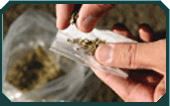 It’s okay to say, “We don’t allow any drug use and children in this family are not allowed to drink alcohol. The only time that you can take any drugs is when the doctor or Mom or Dad gives you medicine when you’re sick. We made this rule because we love you very much and we know that drugs can hurt your body and make you very sick; some may even kill you. Do you have any questions?” It’s okay to say, “We don’t allow any drug use and children in this family are not allowed to drink alcohol. The only time that you can take any drugs is when the doctor or Mom or Dad gives you medicine when you’re sick. We made this rule because we love you very much and we know that drugs can hurt your body and make you very sick; some may even kill you. Do you have any questions?”
Provide Age-Appropriate Information If you are watching TV with your 8 year-old and marijuana is mentioned on a program, you can say, “Do you know what marijuana is? It’s a bad drug that can hurt your body.” If your child has more questions, answer them. If not, let it go. Short, simple comments said and repeated often enough will get the message across. You can offer your teen the same message, but add more ten what marijuana and crack look like, their street names and how they can affect his body. Or together read the youth-run drug facts website freevibe.com. The teen brain is a work in progress. Click here for more on how marijuana use affects the teen brain. Be a Good Example |
| If You Suspect Your Kid is Using … Even kids under age 12 can develop a substance problem. If your child becomes withdrawn, loses weight, starts doing poorly in school, turns extremely moody, has glassy eyes — or if the drugs in your medicine cabinet seem to be disappearing too quickly — talk with your child and reach out. If your teen is involved with alcohol or drugs, move ahead thoughtfully. Begin by downloading this brochure: Suspect Your Teen is Using Drugs or Drinking. Next, break the silence. Seek out help. Contact your rabbi who has experience with drug counseling. Contact Los Angeles’ Alcohol Drug Action Program of Jewish Family Service. Contact Beit Teshuva, a Los Angeles based recovery house. Get help to guide you through the darkness. |
| Questions and Answers for your Kids Why do People Take Bad or Illegal Drugs? There are lots of reasons. Maybe they do not know how dangerous they are. Or maybe they feel bad about themselves or don’t know how to handle their problems. Or maybe they do not have parents they can talk to. Maybe they think it is cool. Why do you think they do it? Why are Some Drugs Good and Some Drugs Bad for You? |
| Talkback Through Or Ami’s Center for Jewish Parenting, we are committed to providing parents (grandparents and all adults) with information, ideas and strategies for raising healthy children with good Jewish values. Why? Shmirat haGuf, taking good care of our bodies, and acknowledging their sacredness, is inherently a Jewish value. Our Center for Jewish Parenting now asks for your help. Help us help you (and others): * What are your concerns about talking to kids about drugs and alcohol? We are all in this together, striving to raise healthy kids with good Jewish values. So share your answers. Help Or Ami illumine the path ahead for all of us. [Need a confidential conversation with Rabbi Kipnes? Click here to email me!] |

Someone asked me: “So is it your position that we should as parents demand (lovingly) and expect complete abstinence from our teens?”
I responded: “Not necessarily. We should lovingly be very clear as to our expectations. We should be very clear about the consequences. We should be very involved in conversations with them. We should be very educated about what drug/alcohol does to the teen brain.”