Tag: Tikkun Olam: Changing the World

Kvell or Kvetch? Celebrate or Complain?

Kvell or Kvetch? Celebrate or Complain? That’s the choice we each can make. Thus Torah teaches: I place before you Blessing and Curse… At Or Ami, we choose to count our blessings and kvell (celebrating or sharing our joy). Here are three things we kvell about this week:

Kvell #1: Mitzvah Day. On Sunday, November 2, we helped strangers, foster kids we will never meet. We created 400 comfort bags to ensure that when these children are pulled from neglectful or abusive homes, they have their own toothbrush and t-shirt, a journal to write in, a book to read, and a teddy bear to cuddle. Our sanctuary became a sacred assembly line. Earlier that morning, Mishpacha Family Learning participants explored the nuances of the 36 times Torah teaches us to care for the stranger (more times than the commandments to observe Shabbat or keep kosher). Why kvell? Because the lessons of Torah infuse our community and goad us to transform the world with compassion and justice. We thank all who participated and donated the items, and especially Laurie Tragen-Boykoff and Shari Gillis for organizing Mitzvah Day. (As a member of a caring community, you might email them directly – copy me – to kvell and thank them.) Check out the pictures here.

Kvell #2: Honoring our Volunteers. Recently Or Ami was received the national Fain Social Action award for our work with Foster Care Outreach. Besides being our second Fain award in just six years, it trumpets something we all know: that helping others, particularly the most vulnerable children, animates the very soul of our synagogue. We kvell as we honor all those who lead us to such national recognition. Please read the next article and let us know if you can join us on Friday, November 20th as we honor who volunteered and donated to Prom Prep, Mitzvah Day, Childspree, Shoes that Fit, and ACAC program. A caring community recognizes and thanks those who promulgate the values of caring. Please respond so we can kvell about your caring.

Kvell #3: Office Reorganization. Creating an atmosphere of warmth and caring within our congregation is the responsibility of the whole community. In Leviticus, God tells the WHOLE Israelite community, K’doshim t’hiyu (be holy). The whole community, not just the leaders. That’s why we kvell when we recognize how caring are the office staff members at Or Ami. Their compassion and competence allows us to take our office organization to the next level. Beginning this week, Susie Stark will become the Assistant to the Rabbi (and Cantor), focusing on ritual, B’nai Mitzvah, henaynu (caring community), communications, development and our ever-expanding programming. This position will allow Susie, often called the caring face and voice of Or Ami, to assist me in deepening our caring community. Elisabeth Moore, our Financial Manager, will assume the duties of Office Manager, ensuring that our staff, our facility and our procedures exude the same competence and compassion that she has already brought to our financial office. Many of you have already commented (kvelled) at how, under Elisabeth’s gentle touch, the challah (from a new bakery) tastes sweeter, the building seems more organized and the financial questions are answered quickly and with patience. Except for ritual, B’nai Mitzvah, pastoral and other rabbinic issues, you will want to talk first to Elisabeth when you call. Of course, Kathy Haggerty continues to work diligently to ensure your needs are met with a smile. And we say l’hitra-ot (see you soon) to Lori Cole who leaves our synagogue community to focus on home and family (though we fully hope and expect she will be offering a helping hand during busy periods).

Finally, a kvetch (complaint). JKJK (teen code for “Just Kidding”). I have nothing to kvetch about, because I am actively attempting to follow the rabbinic dictum to count 100 blessings each day; I teach that we might start by just counting 18 blessings daily. If I spend to much time kvetching, I might miss opportunities to kvell. So join me in kvelling and counting blessings.

Blessing the Pets

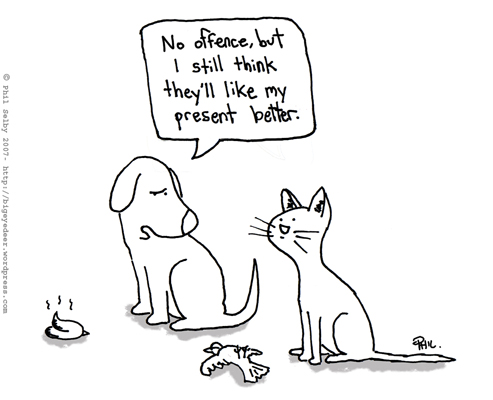
I grew up with dogs as pets: Dukie (a great dane who knocked me over so I hit my head on the sandbox), Cookie (small cute), Candy (about whom, it is reported that when my parents wanted to adopt her out, I offered to keep her in my room and care for her myself), and others. Still, the idea of having a pet as an adult, never really entered my mind. I am a believer that – excepting my wife, of course – I don’t want anything in my house that won’t grow up and sometime move out on its own. (I know, the kids will probably move back in after college. Its expected, and probably hoped for by Michelle and me.)

So every year, come the reading of the Torah portion Noach, I find myself feeling a little guilty for not providing my children with a pet. I think they would have loved it; alas, the guilt…
Over the years, with the help of a cluster of Congregation Or Ami congregants – especially Marina Mann – I have come to appreciate the intensity with which people bond with their pets. They have taught me that my pastoral counseling skills can be extremely helpful to those who mourn the loss of a beloved pet. They encouraged me to collect prayers so that people whose pets have died can have some Jewish way to mark the death. We have become involved as a synagogue with The Gentle Barn, a farm that takes in animals that have been neglected and abused. Some years we have sponsored trips by the Foster Children we support (120 at this count) to The Gentle Barn where children who have been neglected or abused find solace and wholeness caring for animals who have been neglected or abused. And this week, our family Shabbat service will center around blessing God’s creatures.
Kabbalists teach that there are five kinds of souls, or as I prefer to teach, five aspects of our souls. Animals possess three of them. We honor them as created by the hand of God, possessing a spark of the Divine within. We remember that Adam was commanded to be a shomer adamah, a guardian of the earth, watching over the earth and its creatures. In fact, Adam was on a first name basis with all the animals (Adam gave them names.)
In a world where humans are eradicating species left and right, it is time once again to
take seriously our responsibility to care for all of God’s creatures. They are part of God’s creation. They are part of our world. They are part of our (okay, “your”) families.

I Wrote President Obama about Darfur

Even with my concerns about anti-semitism in Europe, the nuclear issue in Iran and other hotspots around the world, I took a moment to sign onto a letter to President Obama, co-signed by 100 rabbis, urging a sane, responsible policy toward the Sudan (and the continuing problems in the Darfur region). The letter, organized by Dr. Rafael Medoff, director of The David S. Wyman Institute for Holocaust Studies, in Washington, D.C., is below:

Dear Mr. President,

We were heartened by your statement last year that “There must be real pressure placed on the Sudanese government. We know from past experience that it will take a great deal to get them to do to the right thing.”

The Jewish community’s memories of the Holocaust provide a powerful reminder of the importance of taking strong action to stop genocide, and to punish the perpetrators of genocide.

We therefore hope that your policy with regard to Darfur will include the imposition of the strongest possible sanctions on the Sudanese government, pressure on Sudan’s allies to stop propping up its genocidal regime, and practical steps to implement the International Criminal Court’s warrant for the arrest of Sudanese president Omar al-Bashir.

Learn more about what is happening regarding Darfur and the Sudan at Jewish World Watch.

Ger Hayiti: Feel the Heart of the Stranger

Sermon by Rabbi Paul Kipnes, Congregation Or Ami, Calabasas, CA
Yom Kippur 5770/2009

[For full endnotes, textual references and lyrics of songs sung/quoted, see Rabbi’s writings on our Or Ami website.]

A story: In the year 120 CE, in the land of Israel, a horrible plague swept through the holy land. So many took ill. Thousands succumbed. The plague took beloved friends and co-workers. By the time it ended, 24,000 had died. Whole families were wiped out.

Devastated, people struggled to understand why this plague had come. In an age before the Centers for Disease Control, they turned to their rabbinic leaders for explanation and comfort. Following the best pre-scientific knowledge of their day, these ancient rabbis concluded that the plague must be punishment for some appalling sin they committed.

Which fit. Because it was a time of terrible partisanship in the halls of Torah study. Here they were talking Torah and their arguments were supposed to be l’shem shamayim, for the sake of heaven. Yet as the disagreements intensified, words sharpened, and attacks by one study group on those who disagreed with them became vicious. Soon discussions about Jewish law became forums to destroy each others’ reputations, livelihoods, lives.

Then the great 2nd century scholar Rabbi Akiba figured it out. The plague’s cause to sinat chinam, the baseless hatred that the students had for each other. Searching for a cure, he turned to Torah. There in Leviticus, he read V’ahavta l’ray-a-cha kamocha – love your neighbor as yourself.

Having witnessed the way that so many students of Torah were engaged in the holiest of endeavors – the study of Torah – yet were still insensitive towards others, Akiva proclaimed that this great sin could only be remedied with gemilut chasadim, lovingkindness.

V’ahavta l’rayacha kamocha set a high standard of behavior. It was not about feeling love. Rather, each action we take which affects others must pass a specific litmus test: Would we want to be on the receiving end of that action? Rabbi Akiva challenged: Loving yourself, you must take the needs and desires of others into account. Do so and the world will quickly be cleansed of hatred and violence. So he rallied his surviving students to this new cause, an aspiration for holy living which accompanied holy learning.

Cantor and Chorale sing the Chorus and Verse from Cantor Doug Cotler’s song, Amar Rabi Akiva

Accepting the plagues as the result of sinful behavior, Akiva’s 2nd century colleague Ben Azzai suggested another fundamental principle in Torah to guide us. Lifting up a verse from the Creation story in Genesis – b’tzelem Elohim, that we were created in the image of God – Ben Azzai taught that though we may seem different, act differently, speak different languages, we are connected by the miraculous process of our creation. B’tzelem Elohim, being created in God’s image, proclaims that each human being is equally blessed, because we all are born with intrinsic value and worth.

B’tzelem Elohim set a new standard for our actions: since God is neither white nor black, male nor female, Jew nor non-Jew, and since every human being is an image of God, there is no preferred image. Therefore all people should be well treated as equals. If each person harbors God’s image within, we have the responsibility to care for, protect, and embrace every person. Even those we do not know. We need to open our hearts to the strangers in our midst, and to create communities of inclusion, where prejudice and hate give way to love and respect.

What a wonderful world that would be!

Cantor and Chorale sing a Chorus and Verse from Sheryl Braunstein and Paul Kipnes’ song, B’tzelem Elohim

Another story. We all know Moses, our people’s greatest hero. He is one who wrestled with the challenges of being a stranger in a strange land. Saved at birth by a non-Israelite princess. Raised in Pharaoh’s home. Struggling for decades with the secret of his birth. Moses watched his people struggle under the whip and sword. Until one day, after witnessing the abuse heaped upon an Israelite slave by his Egyptian taskmaster, Moses became incensed. Furious, Moses killed the taskmaster. When the act became known, Moses fled into the wilderness. There, he met Yitro, a Midianite priest, and there he fell in love with Tzipporah, Yitro’s beautiful headstrong daughter. In this wilderness, Tzipporah gave birth to their first son. Moses aptly named his son, Gershom, which means Ger hayiti b’eretz nochriya. Gershom, meaning I was a stranger in a strange land.

Some rabbis point to the naming of Gershom as one of the pivotal incidents in the onset of the Exodus. Before God could call Moses to service, before Moses could go down to Egypt to rescue the Israelites, he had to embrace an existential reality – that a fundamental part of his identity was the experience of being an outsider. To lead God’s people, to nurture the community toward holiness, Moses needed to feel in the very beating of his heart, the heart of the stranger.

We all know what it is like to feel like a stranger. You step into a room filled with people who look at you, and then return to their conversations, as if you were not there. You sit alone in class or in the office, and nobody turns to say hello. You enter a synagogue – somewhere else, of course – and no one makes you feel welcome. Though we all descended from one human, Adam, most of us have a tendency to categorize people as “like us” or “not like us” – by skin color, by race, by religion or sexual orientation, by socio-economic status. Most of the time, if we hang out with our own crowd, we feel secure that we are part of the group. But step outside the circle, and we feel the heart of the stranger. We feel misplaced, different.

Then at Mt. Sinai we received the Torah, and with it a moral imperative to remain keenly aware of people living at the margins. Did you know that the commandment to protect the defenseless in society from exploitation is the most often repeated injunction in the entire Torah, appearing more often than commandments to love God, keep kosher, or observe Shabbat? According to one count by the Talmud, no less than thirty-six times are we directed to protect the most vulnerable among us. In ancient Israel, it was understood that strangers, as outsiders with few support systems, were defenseless against injustice.

Later, we Jews saw Israel, our holy land, twice destroyed. Two times we experienced being scattered throughout the world, separated from our holy places, the source of our identity. Then in the Middle Ages, a sense of our own insecurity deepened, created by years of living at the whim of city-state rulers, who at a moment’s notice could expel us with just the knowledge in our heads and whatever we could carry on our backs. Those realities entered our hearts, pumping through our veins the blood of being the stranger.

Now, at every Passover seder, we eat bitter herbs and matzah and relive our flight from being a stranger. Every Sukkot, we re-experience wandering by living in sukkah booths. Every Shabbat, we sing Mi Chamocha, thanking God for bringing us out of Egypt. Again and again in the Bible and in our rituals, the memory of our slavery points us to one commandment: You shall not subvert the rights of the stranger… Remember that you were a slave in Egypt.

What does it really mean today to feel the heart of the stranger? Sometimes it just makes you sick.

A story: this summer Michelle, the boys and I visited the National Civil Rights Museum in Memphis, Tennessee. Located at the Lorraine Motel, where Dr. Martin Luther King, Jr. was assassinated, the Civil Rights Museum chronicles key episodes in the oppression of blacks and the subsequent struggle for civil rights. There, we learned in depth about the cynical machinations of racism that permeated our country’s legal, business and governmental system. There, we saw how nefarious forces over a short period of time had transformed forbidden slavery into a then acceptable system of brutal racial discrimination. The Museum’s depictions of the brave struggle for Arkansas school desegregation, of Rosa Parks’ sitting up front of the bus, of the Greensboro lunch counter sit-ins and of Freedom Summer illuminated the radiant power of an organized caring community to roll back prejudice. There we learn how one inspired man, working with other insightful, motivated people, turned this country back on the road toward justice.

Yet walking through the museum was emotionally draining. The photos and news clippings, eyewitness accounts and whites-only signs, were startling. It defied sensibility that in America, in my lifetime, lawyers and preachers, judges and governors, bus drivers and businessmen, Jews among them – could wrap themselves in the cloak of Biblical morality to justify the subjugation, and later separation, of the races. I was ashamed at how our country treated its own citizens. How deadened do you have to be inside to ignore our biblical mandates of b’tzelem Elohim and love thy neighbor as yourself? How numb do you have to be to the heart of the stranger to lynch someone who is marching just so they can sit at the front of the bus?

The institutionalization of racial discrimination in America back then, and the continued marginalization and often exploitation of other groups of people – blacks, Hispanics, Asians, the physically and mentally disabled, gays and lesbians, the working poor – defies every fundamental principle Judaism holds dear: that we were created in God’s image, that we must love our neighbors as ourselves, that we were strangers in a strange land. What is a Jew to do, when we hear of prejudice and discrimination, especially when the Bible is used to justify injustice?

Our Jewish hearts, like those of the Biblical prophets of Israel before us, must become incensed by this twisting of our values to support a status quo. Our responsibility is to speak out and act up to ensure those pushed to the margins are embraced and cared for.

We feel the heart of the stranger. That’s why Jews have been at the forefront of every significant social movement then and now: civil rights, women’s rights, anti-apartheid, ending genocide in Darfur, end of sanctioned torture, and more. We feel the heart of the stranger. It’s why Rabbi Abraham Joshua Heschel marched arm in arm with Dr. Martin Luther King Jr. in Selma. The heart of the stranger. It is why so many Or Ami congregants step forward in droves to support children in foster care, kids they never even met. The heart of the stranger.

I’m proud that Congregation Or Ami strives to live up to the standards set by Akiva, Ben Azzai and Moses. Nothing makes me kvell – beam with more pride – than when people speak about Or Ami as the place where people previously felt like they were on the margins of the community are welcomed back into the center. Our sanctuary is filled with people who “are young and old; able-bodied and have special needs; single and couples, divorced and blended families; people of various sexual orientations; multiracial people and multiethnic families; people whose lives range from whole to broken, and from struggling to wealthy.” We are a mosaic of Moses’ people.

So this year, let’s continue to cultivate within the heart of the stranger.

Perhaps next time you see a person with a different color skin than yours – perhaps black or brown, white, reddish or yellow – you will look first beneath their skin color to honor the image of God that resides within.

Maybe when a client or co-worker walks into the office – the Persian or Israeli, the Muslim woman wearing the head covering, we will withhold that knee-jerk prejudging – and try to will love that neighbor as ourselves.

Perhaps when we see someone walking down the street, or bussing our plates at a restaurant, and we start to wonder if he is an illegal immigrant, we will remember that we too were often strangers in a strange land.

And when we see the poorest of the poor, sitting on the sidewalk or sleeping under a park bench, we will shine them a smile. And then when we go home, let’s call our city councilors or write our congress people, to tell them that we feel shame that God’s children are living in the gutters. And then we will write a check to a hunger organization, and volunteer at the SOVA food pantry, and vote for people who will help erase homelessness and poverty from our streets once and for all.

And when we listen to cable news and hear tirades about why we cannot, should not, enact serious reform of our inexcusably deficient healthcare and health insurance system, remember that the stranger sitting in the row right in front of us might be someone whose mother or father, or cousin or friend, or they themselves, cannot get the care they need because our current system, that might serve you and me well enough, stands idly by while our neighbors bleed. Hopefully our hearts will do more than bleed for them. Hopefully we will stand up and advocate for them.

And next time we think about the men and women, who share love, but cannot marry, because they happen to be of the same gender, we will remember our Torah, which sees the b’tzelem Elohim in all people, would bless monogamous, consensual, gay or lesbian marriages, and you will honor and bless them too, as do I, your rabbi.

It is Yom Kippur, and we stand together to ask forgiveness for our sins. For the ways we have harmed others by our actions, and by our inactions as well. For standing idly by while our neighbors bleed, suffer, or struggle. For numbing ourselves to the heart of the stranger, and pretending that we weren’t once strangers too.

Because we are all neighbors, commanded to treat each other with love. Because we all are created in the image of God, making each of us valued and worthy. Because we remember what it is like to be marginalized, oppressed and ignored.

On this day especially, may God grant us the courage:

To break the chains that bind us
And make oppression disappear.
To help the stranger find a bed.
To remember that [we] must share our daily bread.

Torah teaches Tzedek, tzedek tirdof. May we remember Justice, justice, I will pursue you.

Cantor Cotler sings his song, “Justice, Justice”

Dodgers Honor Or Ami & Me on Disability Awareness Night

On Thursday, June 4th on the Dodger’s Stadium field, I will receive the EP Maxwell J. Schleifer Distinguished Service Award for Or Ami’s support of people with disabilities. The ceremony will take place sometime between 6:00 and 7:00 pm before the game. Come cheer on the Dodgers, Or Ami and the important work we do!

Our Congregation Or Ami believes that we are all created b’tzelem Elohim (in God’s image) and so we welcome all, including those with disabilities. We are extremely proud of our support of families with children with disabilities. Come cheer on the Dodgers, Rabbi Kipnes and Or Ami. Read our webpage welcoming people/couples/families with disabilities. (More nachas/joy: Congregant Dina Kaplan won the award last year.)

Brad Gore nominated me, writing:

It is my pleasure to nominate Rabbi Paul Kipnes for the EP Maxwell J. Schleifer Distinguished Service Award.

Rabbi Kipnes is by profession a community rabbi committed to opening up the Jewish community to people with disabilities, by avocation a tireless supporter of families with children with disabilities, and by familial ties, the brother of a man with Asperger’s. Rabbi Kipnes has touched the lives of thousands of families and inspired countless others to seek openness and equal access for people with disabilities.

BACKGROUND
In 1992, Rabbi Paul Kipnes convinced his then congregation, 900-family Temple Beth Hillel, Studio City, CA, to hire a Special Needs Coordinator to ensure that every child with special needs receives the support and attention he or she needs to grow spiritually, emotionally and intellectually as a member of the Jewish community. In 1998, the first policy Rabbi Kipnes asked his new community, Congregation Or Ami, Calabasas, CA, to enact was that “any child of a member who worked to the best of his/her ability had the right to a Jewish educational experience… and the privilege of becoming a Bar or Bat Mitzvah.” With that simply worded policy, Rabbi Kipnes ensured that families of children with disabilities – physical, mental, emotional or any combination – would find acceptance and a home in the Jewish community of the West San Fernando and Conejo Valleys. Rabbi Kipnes has spoken at national Jewish conventions on equal access, and consults with rabbis and congregations locally and throughout California on creating religious openness for Jewish families with disabilities. Whether in High Holy Day sermons or on his blog, Rabbi Kipnes is a tireless advocate for warmly welcoming people with disabilities into temples and the Jewish community.

HIS PHILOSOPHY ABOUT SPECIALNEEDS CHILDREN IN THE COMMUNITY
Rabbi Paul Kipnes teaches that “There is a sense that children with special needs, physically, emotionally, mentally, don’t have a place in the synagogue, in the Jewish community. That’s just not true, particularly here at Congregation Or Ami. We have celebrated B’nai Mitzvah services with children with autism, emotional developmental problems, intense dyslexia, Tourette’s syndrome… The Bible and Judaism are available for all of us.”

Rabbi Kipnes and his community emphasize that no matter what a child’s needs are, it’s never a question of if a child can become a Bar or Bat Mitzvah, it’s when the ceremony will take place. Rabbi Kipnes explains, “With special needs children, there are two values being played out, simultaneously. Working with Brandon Kaplan (one special needs teen), for instance, we saw that Brandon is a kid like any other kid created in the image of God, worthy of love. But Brandon is also a special kid and there is an honor and joy to the congregation that he participates to the fullness of his abilities. So he’s normal and special, but here’s the secret: so is every other kid.”

CREATING THE BRANDON KAPLAN SPECIAL NEEDS PROGRAM
Rabbi Kipnes and Congregation Or Ami created the Brandon Kaplan Special Needs Program to support the creation of Jewish educational, communal, and spiritual experiences for special needs children and their families within the West San Fernando and Conejo Valleys, irrespective of whether they are members of Congregation Or Ami. Oftentimes children with intellectual, learning or physical disabilities, and special health care needs and their families lack the Jewish spiritual support and educational opportunities available to able-bodied children. The Brandon Kaplan Special Needs Program helps to provide a safe, secure, enriching experience for these children, and in doing so we contribute to the overall quality of the entire family’s life. These families are already over-burdened by the extraordinary costs of providing specially trained teachers and aides, specialized educational tools and materials, therapies, and facilities. It is currently one of the few Jewish organizations in the West San Fernando and Conejo Valleys actively offering support to non-member families who are struggling to create Jewish experiences for their special needs students.

DEVELOPING A SPECIAL NEEDS SUPPORT GROUP
Rabbi Kipnes opened the doors of Congregation Or Ami to host a twice monthly Special Needs Support Group including no cost specialized childcare, which provided support, information and resources to parents of children with special needs. The Support Group is co-sponsored by local and county Jewish organizations including the Union for Reform Judaism, HaMercaz (the Jewish Federation’s Special Needs program), Heschel West Day School and Kadima Heschel West Middle School, among others. Members of the Los Angeles Jewish community who received support included families with a son moved to a specialized facility, a profoundly disabled teen (who signs, but does not speak), 20+ year old young men, children with autism, and children with epilepsy-induced learning disabilities.

TRAINING THE NEXT GENERATION OF RABBIS AND JEWISH EDUCATORS
Rabbi Kipnes believes that the key to gaining full equal access in the Jewish community for people with disabilities entails raising up a new generation of leaders committed to equal access. For the past four years, Rabbi Kipnes, in partnership with Hebrew Union College-Jewish Institute of Religion in Los Angeles (HUC-JIR), has mentored rabbinic and education students, usually in their 3rd or 4th year of a 5 year Masters degree program, on how to support special needs students and families. Each intern engages in regular phone calls to special needs families to gauge their experiences and develop plans to better integrate them into Jewish learning. With their mentor, Rabbi Kipnes, they explore pastoral counseling issues related to families with children with disabilities. They apprentice during decisions about whether and how to mainstream students for education. They learn to utilize a team approach to Jewish Special Needs Education bringing rabbi, educator, Bar/Bat Mitzvah tutor, classroom teacher, temple administrator and parents together to develop a synagogue IEP (Individualized Educational Plan) for special needs students and to work with educators and teachers to create classroom lesson plans appropriate for both special needs and able bodied students. This internship with Rabbi Kipnes is a much sought after placement for students at HUC-JIR.

USING NEW TECHNOLOGY TO SPREAD THE MESSAGE OF EQUAL ACCESS
Rabbi Kipnes has presented at national Jewish conventions on the use of new technology to teach and offer support. He has pioneered the use of temple webpages to trumpet the message of openness. Congregation Or Ami is one of the first congregations to have a webpage devoted to individuals and families with special needs. He ensured that the message of access appears in prominent places on the webpage, including on the temple’s home page. Review the Special Needs Webpage. His blog is provides insights, reflections and inspiration, with special focus on concerns of special needs families. Commenting upon Jewish issues, communal endeavors and poignant moments with special needs students, the blog garnered the attention of members of the local community and Jews all over the country. Review the blog.

CELEBRATING BAR/BAT MITZVAH CEREMONIES WITH JEWS WITH DISABILITIES
Whenever asked if a child with this or that special need could become Bar or Bat Mitzvah, the central Jewish “coming of age” ceremony, Rabbi Kipnes’ answer is always an emphatic “yes!” The Congregation has celebrated B’nai Mitzvah services with children with autism, emotional developmental problems, intense dyslexia, Tourette’s syndrome, Fragile X Syndrome and more. Young Brandon Kaplan’s Bar Mitzvah ceremony, reminded everyone that children with special needs can and should have access to all aspects of religious life. When 20 year old Matthew participated in a Sabbath service, the entire community celebrated but none more than the young man with Fragile X Syndrome. As his mother reflected, “Nervous though he was, he rose to the occasion and sang the blessings beautifully, with the flair of his personality shining through. I was so touched by your attention to him, allowing him to be himself.” Read about his participation.

CELEBRATING PEOPLE WITH SPECIAL NEEDS
Congregation Or Ami hosts an annual Shabbat (Sabbath) service, led by students with profound disabilities. The service was designed around their needs. The Temple engages a sign language interpreter. Worshippers come from all over Los Angeles and Ventura Counties, from the Chaverim program of Jewish Family Service, and from local synagogues. Parents of children with special needs receive special blessings from the rabbi, and expressed deep appreciation for the support. Other worshippers described the being deeply moved by the experience. In addition, the rabbi’s sermon at High Holy Day Community Family services focused on Special Needs children. Moreover, Rabbi Kipnes ensure that members of his congregation regularly volunteer to support Brandon’s Buddies, which brings together children (special needs and others) for fun, sports and other activities. They sponsor a team in the Shane’s Inspiration walk. They bring a group each year to Game Day at Dodger Stadium for Special Needs Families.

CONCLUSION
Rabbi Paul Kipnes has touched the lives of thousands of families with children with special needs throughout the Greater Los Angeles County. Because of his efforts, they have greater access to the Jewish community, special needs advocacy and education support. Because of his enthusiasm, families with special needs feel welcomed in the Jewish community. Because of his dedication, their children have reached religious maturity. Because of his inspiration, they have an open invitation to become more deeply involved in religious life. Through his many projects and efforts, Rabbi Paul Kipnes has demonstrated inspirational leadership in an effort to expand awareness about how people with disabilities can be productive citizens in our society. As such, I wholeheartedly encourage you to award Rabbi Paul Kipnes with the EP Maxwell J. Schleifer Distinguished Service Award.

The Read Red Carpet Treatment: Prom Prep

This year, Congregation Or Ami won the Irving Fain Social Justice Award from the Union for Reform Judaism for our multifaceted project: Supporting Children in Foster Care. We are proud of all of the activities that make up this Project, including Prom Prep, Mitzvah Day, Back to School and Holiday Child Shopping Sprees, and Adopt a Child Abuse Caseworker. Read about this year’s Prom Prep (pictures here) in an early version of an article by Elyse Glickman, that appeared in the Jewish Family magazine this month:

The Real Red Carpet Treatment

Volunteers from Calabasas’ Congregation Or Ami and Encino’s Valley Beth Shalom team up with Los Angeles’ Department of Children & Family Services to create the ultimate “dress for success” prom event.

By Elyse Glickman

The senior prom is more than just a fancy party. It’s a right of passage marking a young woman’s transition from high school into womanhood and real life. Though looking glamorous and ending childhood on a high note is front and center, the prom can be as important, meaningful and emotional a day as a wedding or a landmark birthday.

For some girls, especially those who came of age in foster families, and sometimes under the most challenging of circumstances, the opportunity to experience the prom can be life-changing. Prom Prep 101, coordinated by Los Angeles’ Department of Children & Family Services (DCFS), and supported by Jewish community and church volunteers throughout the city, was conceived to not only provide essentials for foster girls’ senior proms, but also life after the prom. Though the program’s original name was “Feel Like a Princess Day,” program coordinator and ACAC (Adopt A Child Abuse) Caseworker Lovette Panthier wanted its name to reflect its more grown-up, self-esteem building objectives.

“We recruit volunteers through word of mouth and synagogue correspondence,” explains Susan Gould, president at Congregation Or Ami, introduced to the program by one of her fellow congregants, Laurie Tragen-Boykoff, several years ago. “Once someone has participated in the program, she always comes back the following year, and usually brings daughters or friends. This is a fantastic way to bring of our congregation’s main tenets, People Matter, to life. By demonstrating and living tzedaka, we teach our youth to take action to help heal the world. My daughter Joanna and I have participated in this event for several years. We have done everything from soliciting dresses from stores to collecting gently-used dresses, working the accessory tables and escorting young ladies at the event. I am thankful my daughter wants to continue participating in this event, as she says it makes her feel grateful for what she has. Furthermore, she is still in touch with Kaylee, the first girl we escorted.”

Thanks to the leadership of Gould and Debbie Echt-Moxness (who took over Prom Prep 101’s management when Gould became Congregation Or Ami’s president), congregants have not only donated volunteer time but also thousands of dollars to maintain the program. Ongoing outreach into the community and communication with program coordinator Panthier as well as Patti Jacobs and Bess Resnick, the event co-charis at Valley Beth Shalom, meanwhile, have this year resulted in generous donations from Wells Fargo Bank as well as dresses from Trendy Collection, Noell and many Jewish congregation members. Other donations, overseen by Rabbi Noah Z. Farkas include shoes from David Miles of Treasure Depot BH, jewelry by Jay and Kathy Ottenstein, and beauty products from OPI and Avon. Professional hairstylist Laurie Heaps will be recruiting the army of hair and makeup artists, while Steve Cohen of Starlite Caterers provides a sumptuous meal for girls and volunteers. Panthier also mentions that this year’s class of prom queens will also receive a copy of the acclaimed self-esteem book Exactly as I Am by Access Hollywood reporter Shaun Robinson.

Echt-Moxness, however, stresses the human touch temple volunteers (such as Arlene Wolff), church volunteers (Donna Mae Pitluck, Shirley Thomson andJanet Fisher), speakers (Sheryl Marcus of the Fashion Institute) and organizers (including Randi Simenhoff) bring to Prom Prep 101 give the girls memories and self-assurance that endure long after their prom’s last dance.

“Many of them come in reluctant, shy and withdrawn,” observes Echt-Moxness. “By the time they walk the red carpet at the end of the day, their spirits are shining, their faces glowing and they are smiling ear to ear. It’s as if they are saying, ‘Ready or not, World, here we come!’ Though we don’t actually give them self-confidence, strength and inner beauty, the way we treat them bring those gifts within each girl out into the open. I see each of these girls like a gem waiting to be set. Though their spirits have been dulled by their life experiences, the day of generosity and loving kindness is like a polish. Volunteers, meanwhile, act as mirrors allowing the girls to see their special-ness in a new, different way.”

Echt-Moxness adds that some of the most life-changing moments for both teens and volunteers take place when young daughters of volunteers tell their escort how beautiful she is. “Beyond dresses and accessories, the feeling of being looked up to is one of the most important gifts teens take home,” she muses. “However, the gift goes both ways. My daughter Molly praised the teen she was working with, and the teen was so moved, she got down on her knees—difficult with all the extra material in the way–took Molly’s hands and said, ‘You are beautiful, too, and don’t you ever forget that!’ The glow on both of their faces and hearts was priceless.”

Charlisa Warner, who did Prom Prep 101 last year, stresses that she’s carried both the material and priceless gifts she received from the event into her new life as a college student. The 19 year-old has even channeled her resulting personal growth into a new business, www.tru-been.com, a web site designed to provide information and resources to girls like herself who are leaving the foster care system and entering adulthood.

“Prom Prep 101 gave me confidence in ways I did not expect,” says Warner. “Before Prom Prep 101, I was the kind of girl who was scared to go to prom. I was intimidated, did not know very many boys, and felt I wasn’t pretty enough. During Prom Prep 101, I learned I am a beautiful person from the inside out. (My experience at Prom Prep 101) has also motivated me to go out and help more people out there like me. I am grateful to my social worker for telling me about the opportunity to be a part of Prom Prep 101. Also, it brought me closer to my foster family because they encouraged me to go through the program, and going to the prom made me finally feel like a normal high school student doing normal high school things. If it wasn’t for this, I wouldn’t have had a dress, the first dress I ever owned, which made me feel like anything was possible.”

Sarah Machat, meanwhile, experienced Prom Prep 101 as a volunteer, and says her work reaching out to girls her age brings extra personal meaning to her Social Work major. “Volunteering for Prom Prep has opened my eyes a lot,” confides Machat. “The most important thing I have learned is that little things can make such a big difference in somebody’s lives. Though I mostly work on the sidelines during the Prom Prep events, I remember there was one girl who was pregnant but still interested in going through the program. Her willingness to ask for help, even though she was more vulnerable than many of the other girls and showing, revealed her inner-strength coming to the surface. It was gratifying to see her confidence in herself rise by the end of her makeover.”

Though she comes from a middle class background, Machat reveals she has an astonishing number of things in common with Warner, including dedicating significant personal spare time to the cause. The freshman serves as Director of Community Service for Alpha Phi (Eta Kappa Chapter) at University of California, Irvine, and is conducting a dress and accessories drive through UC Irvine’s Greek System to offer Prom Prep girls a fine and diverse assortment of goods.

“A kid who has had a tough life and grew up with very little suddenly becomes a role model for a younger child who has plenty,” concludes Congregation Or Ami’s Rabbi Paul Kipnes, an active supporter of Prom Prep 101 and the efforts of Jewish community members committed to the cause year after year. “This occurrence is not only life-changing but equalizing. It reminds us all that we are all people with hopes and dreams, and everybody alive has something positive to teach or contribute to society. Though its hard to track many of the girls after they graduate, we hear stories through their social workers about how many of them have gone on to get good jobs or go to college. We know we are through these programs not only boosting the self-esteem of these girls, but also showing them they have more options than they realized.”

Jewish Spiritual Stimulus Package

These are difficult times. As our financial markets continue to nosedive, we are forced to find new resources of strength to pull ourselves up out of the abyss. In a world of individuals, we might expect to do this alone. Circle the wagons and protect your own. Survival of the fittest.

But Judaism teaches a different way. We hold each other up like we hold up Torah.

Two teachings, actually. First Talmud teaches Kol yisrael areivim zeh bazeh – all Jews are responsible for one another, reminding us that we will never be alone. Because we are responsible for helping each other. Since communal ties are stronger than individual pain, we are commanded to hold each other up through the most stressful of times. Then we learn from Torah, tzedek tzedek tirdof – justice, justice you shall pursue. The doubling of the word tzedek (justice) reminds us that pursuing justice is paramount. We seek social justice when times are good AND we seek social justice when times are bad. A difficult economy provides no excuse to shirk our responsibilities. We care because we care. Both for for those we know and for those we do not.

Thus Congregation Or Ami has been enacting our own Jewish Spiritual Stimulus Package, a comprehensive plan to reach out to congregants. Supported by our Board of Directors, this Stimulus Package includes no pork. Rather our Stimulus Package addresses three goals: (1) to provide real resources for job acquisition, financial relief and mental/physical health; (2) to offer low/no cost activities for individuals and families to break the isolation brought on by crisis; and (3) to utilize all forms of communication (high tech internet and low tech one-on-one conversations) to reach out, check in and take care of our congregant community.

For a community that values B’tzelem Elohim (we are created in God’s image), that we are each valued, and in Petucha (openness), where we courageously talk about the difficult truths in life, this Jewish Spiritual Stimulus Package answers the call of Henaynu, that we are there for each other through both joyous and difficult times. May we weather the storm together. Remember, I am always here to listen and help.

In response to this article, I received an email:

I wanted to thank you for your inspiring article this month. I always find your words meaningful and empowering but this month really touched a chord.

We also so appreciated getting a call from a congregation member asking how we were doing. It meant a great deal.

As you are so aware, this is hard times for everyone. It is wonderful to know that there is a caring community there to help and to listen.

I wish you and your family a wonderful Pesach and Shabbat Shalom.

I forwarded this email, anonymously, to Or Ami’s Board and Staff with the following message:

She is specifically referring to my article in the bulletin. But understand this…

After 16 years in the rabbinate, I have learned that the rabbi often comes to personify the community/institution. While this congregant is thanking ME for MY article, she is also thanking this congregation, its leadership and staff for all of our efforts to reach out to people during these hard times.

She is thanking:

  • The people who made calls for/with Kim Gubner to check on people
  • The people who have hosted hikes, and adult gatherings, job search assistance, and no cost childcare and…
  • The people who have caringly dealt with those who cannot pay their commitments
  • The people who warmly welcome others coming into services, to programs, on the phone
  • The people who take the occasional abuse from others because the stress is so great, it must spill over somewhere
  • The people who wrote articles, blurbs, announcements which communicate our caring and outreach.
  • The people who … are you!

Thank you for all you are doing to make sure our Jewish Spiritual Stimulus package is successful in touching people’s lives during these difficult times.

You all – staff, board, clergy, interns – and everyone in between. You are amazing, and I am proud to be part of this community.

To which Or Ami’s Board and Staff members responded with the following comments:

  • I feel such a sense of pride for Or Ami as we all do and it shows in all that we are and what we do!
  • Everyone is so very supportive and caring for each other. We have such a wonderful home at Or Ami.
  • It is truly an HONOR to be part of this amazing community! Let’s keep this feeling forever, no matter how large Or Ami grows!
  • Thanks for great leadership, to the Or Ami Team, all of you are great which is the reason we joined, got involved and have stayed. We don’t just say we are a warm loving community we show it in our actions day to day. A nicer group of people you could not find anywhere. My life has been enriched through our membership at Or Ami and most importantly building friendships and relationships with so many of you.

How enriching that a Jewish Spiritual Stimulus Package has touched many: those who are receiving its assistance, those who are watching from the sidelines, and those who are responsible for delivering the assistance!

Come to the Jewish Blog Carnival

A very nice edition of Haveil Havalim, the Jewish Blog Carnival, is now up over at Ima on and off the Bima. Check it out!

Founded by Soccer Dad, Haveil Havalim is a carnival of Jewish blogs — a weekly collection of Jewish & Israeli blog highlights, tidbits and points of interest collected from blogs all around the world. It’s hosted by different bloggers each week and coordinated by Jack. The term ‘Haveil Havalim,’ which means “Vanity of Vanities,” is from Qoheleth, (Ecclesiastes) which was written by King Solomon. King Solomon built the Holy Temple in Jerusalem and later on got all bogged down in materialism and other ‘excesses’ and realized that it was nothing but ‘hevel,’ or in English, ‘vanity.’

Post categories include:

  • Israel on our minds and our blogs…
  • Jewish Life and Culture…
  • And Everything Else… (Jewish and blogged)

Check it out here.

#8 – Candle of Concern

Chanukah nears its end as we light this final candle. Although Jewish families around the world have increased the light each evening, we face a world still contains significant darkness. Though our homes shine with brightness:

  • Skies over Southern Israel are streaked with dark exhaust trails of the hundreds of Hamas missiles sent to stir up fear in the hearts of Israelis young and old
  • The streets of Gaza are littered with the debris from an operation that need not have happened had Hamas walked paths of peace instead of cynical terrorism
  • Huts in Darfur, Sudan and in refugee camps in Chad exist in the shadow of our century’s first genocide
  • Gay and lesbian couples in California live with deep sadness that their love (and marriages) are still not recognized
  • Years of greed that consumed our country still casts a long shadow over our nation’s economy, and over the lives of so many who are suffering its effects
  • Homeless still live on our streets, food pantry lines are growing longer, kids are still being pulled Menorahfrom their homes to escape abuse and neglect…

May the light of the Chanukah candles inflame our passions so we deepen our efforts to shine our light into the long nights ahead.

Israel: Time for Concern
Responding to the Operation in Gaza

After a phone conversation with my 19 year old niece Yonina, who sits on a base in Israel awaiting word that her unit is moving forward into the trouble conflict, I invite you to pray with me: for the peace of Israel, for safety for Israeli soldiers, for those harmed in Israel and in Gaza, and for a speedy end to this conflict.

Rabbi Eric Yoffie, president of the Union for Reform Judaism, shared this Response to the Gaza Violence:

For the past three weeks, Israel has lived under an increasing barrage of rocket fire from the Hamas-controlled Gaza Strip. More than 80 missiles landed on a single day. Israel’s first responsibility, like that of any nation, is to protect her citizens. The military action that Israel launched Saturday morning was clearly intended to do just that.

Israel’s action is as tragic as it is necessary and predictable. While we mourn the loss of life, no democratic nation in the world would permit a hostile force on its border to target its civilian centers with constant missile attacks. Israel has demonstrated extraordinary restraint as nearly 8000 rockets have been launched at Israel’s cities in the last 8 years. When Israel withdrew every civilian and soldier from Gaza in 2005, the attacks did not stop for a single day.

We believe that military action must always be the last resort. But more and more Israeli cities are now in range of Hamas’ rocket-firing army of terror, and we know that the traumatized children of Sderot and neighboring towns can no longer be expected to live in constant fear. Read on

Looking for updated news media about what’s happening in Israel and Gaza? Click here for Israeli and Jewish news.

Looking for insights into the Gaza situation? Read Rabbi Kipnes’ blog about Gaza.
May the light of Chanukah provide insight and enlightenment to all those who have a hand in this conflict.

Don’t forget to leave a comment on the blog.

Chag Chanukah Samayach – Happy Sixth Night of Chanukah.

#3: Be the Shamash

Chanukah Candle #3. Shalosh, tres, three. Happy Third Night of Chanukah (a special one for me because it is also my birthday!)

Blog Tzedakah:
The nine of you who left comments yesterday ensured that collectively, we donated $27 of my money to the Brandon Kaplan Special Needs program which ensures that kids with special needs and their families receive the support they need within the Jewish community. Learn more about the program here and here. If you want, donate yourself there.
It’s my birthday today (1963 I’m 45). In honor of that birthday, I invite you to help shine the light of my special community Congregation Or Ami. There are three ways of honoring my birthday:

  1. Now leave a comment (below) today and I make a tzedakah donation to the Or Ami Matching Grant program, which ensures that the light of this special community – my congregation – shine brightly for those in need. Or Ami reaches out to people dealing with cancer and other illnesses, struggling to recover from drug and alcohol abuse, finding joy in the face of disabilities, living in foster families, seeking the light of spiritual wholeness and more. Through the generosity of two families, all donations to the Or Ami Matching Grant Fund will double in value. So if you leave a comment, my tzedakah donations are doubled.
  2. If you want, you can donate yourself. If you donate $18, it is worth $36. If you donate $100, it is worth $100. We have until December 31st to raise $61,000 to receive the full matching grants. We are over $43,541.00 toward that goal. If you want to donate, click here.
  3. Do both. Leave a comment AND make your own Matching Grant tzedakah donation. Remember, though, for every comment made today, I’ll make my own tzedakah donation to help shine the light of Or Ami. So just make a comment below.

Chanukah Blog Thots:

Ever wonder why we had to have that ninth candle, the Shamash? Couldn’t we just use a match or use the newest candle to light the others? Actually, the Shamash (Hebrew for “helper” or “server”) is a role model for us all.

The Purpose of the Shamash
Since these lights commemorate a holy miraculous event, they are not to be used for normal household needs. Obviously keeping this restriction was more of a challenge before the availability of electric light. Since not one of the eight chanukiah (Chanukah menorah) lights may be used for the pedestrian task of lighting another candle, how do the Chanukah candles get lit? That’s where the shamash comes in. It is lit to do the lighting work. To prevent onlookers from assuming the shamash is part of the chanukiyah candle count, the shamash is set apart from the others on the chanukiyah. It is placed either higher or lower than the rest.

Another Shamash Role
Another shamash role Should the chanukiah light accidentally come to be used to read the fine-print directions on a newly acquired battery-operated toy, for example, don’t feel bad. One might excuse the mistake with the thought that the shamash’s light, not the rest of the chanukiah flames, was utilized.

A Chassidic Lesson
Chassidim found inspiration by looking at the shamash’s usual placement above the rest of the Chanukah candles. The shamash is the candle that serves the others. In a chasidic court, the shamash was the person who attended to the personal needs of the rebbe. A glance at the chanukiah’s configuration tells of the rewards that doing for others brings. Because the shamash lowers itself to serve the others it ends up with an exalted position on the chanukiah.

This Chanukah, be the Shamash
We just came back from watching the movie, Seven Pounds. It inspired me and may inspire you, although there are better ways of dealing with pain and other ways to drink l’chaim.

Let’s all strive to find a way to rise above the commercialization of this American holiday season. Find a way to become the one who serves other, who lifts them up, and who helps them. Not just the twice a year, Thanksgiving-time and Christmas-time, do a good deed. Not just the “random acts of kindness” model of helping others. Rather, systematically transform your way of living so you become the one who helps others. Spend time each day planning on how you can transform the lives of other people.

We are taught that the world is sustained by three things: Torah, Avodah (worship or serving the Divine) and Gemilut Chasadim (acts of lovingkindness). Be the Shamash and you are doing all three: using your wisdom to imitate the Divine by doing goodness.

So this Chanukah, commit yourself to Be the Shamash. Like any flame that kindles the light of others, your flame will not be diminished. You will continue to throw off the same amount of light. But I promise you, you will feel warmer.

Happy Chanukah!

Are These the 7 Years of Famine Dreamed by Joseph and Pharaoh?

More Torah cartoons at www.g-dcast.com

Hmmm, 7 years of plenty followed by 7 years of famine.
Joseph got it right and saved up.
America apparently didn’t. We consumed our riches instead of planning for the future. Where could we have been if we:

  • produced energy efficient automobiles (now we are bailing out the car companies)
  • provided real oversight of Wall Street (now we are tossing bad money after good to bail them out)
  • regulating the mortgage industry (now we are watching the house of cards come tumbling down)
  • curbed greenhouse gases (now we are watching the glaciers melt and…)

Unlike Pharaoh and Joseph, we let greed about “I want to enjoy it now” overwhelm the urge/need to plan for the future.

#1: A Candle of Hope

#1, one, uno, echad, harishon, un, first night, now
it all starts with one who hopes.

Welcome to the Rabbipaul’s 8 Blogs for 8 Nights of Chanukah, the first of eight awesome blogs to brighten your Chanukah celebration. [All the Chanukah celebration resources you want are here.]

Blog Tzedakah: Leave a comment (below) on this blog to shine the light. For every comment made today, I’ll make a tzedakah donation to help foster kids seeking a brighter future.

Tonight is dedicated to remembering what it is all about. Chanukah, I mean. Sure, you have the story here which you have to retell (Rule #1 of Chanukah: no storytelling, holiday observance not completed). But beyond the oil and Maccabees and the evil King Antiochus and the miracle, was an amazing sense of “yes we can”.

What was going through the mind of that unnamed young kohen (priest) when he realized he only had enough oil to last for one night? Did he think he should save it for a special occasion, perhaps the first Shabbat, hoarding it to celebrate that significant holy day?

No, thinking “yes we can,” he had faith and hope and poured that oil into the menorah, lighting it in the face of all claims it would burn out. Like Nachshon before him, the early Zionists after him, he sensed that im tirtzu ein zo aggadah – if you will it/hope it/if you work for it, then it is no dream.

What would our lives be like if we lived with that as a mantra? That we can move toward new realities even when others discourage us. Realists among us will scoff at the idea. And the flighty will dance about it. But the rest of us will need to work at it – holding onto hope in the face of darkness. We know, for example, that to turn our country’s economic situation around, we will all, at some point, need to believe in it again. Not perhaps at this very moment, but sometime, soon. We know with our children that we have to take educated risks, watching carefully, but allowing them to take risks, drive off with the car, stay out later, climb a bit higher. Even love is about calculated risk, opening your heart for another to love.

  • So if you are tired after a long day, light the candle.
  • If you are concerned about the future, light the candle.
  • If you are worried about your portfolio, light the candle.
  • If you can’t figure out what to do about your challenging children, light the light.
  • If you can’t decide what to do about your aging parents, light that light.
  • If your love has gone sour, shine that light of hope.
  • If you business is going south, shine a beacon of possibility.
  • If your love life is brightening your heart, light a light to shine for others.
  • If your social activism is changing the world for the better, shine that beacon into other’s darkness.
  • If you are lonely or alone, light that light into your darkness.
  • Remember, we are all lighting lights in these days ahead.

It only takes one candle to brighten the darkness. So start today.

This Chanukah, be that unnamed kohen/priest. Take a chance for a better future. Kindle a lamp to shine the way ahead. Be your own hero. Yes you can!

In case you forget how possible it is to really make the lights sing and dance for you, click here. Each Chanukah candle will sing to you its own tune. Click the shamash (central helper candle) and they sing forth together. (Seriously, try it… but then come back and leave a comment, so we can send more tzedakah to the foster kids. Or donate your own to our ACAC/Adopt a Child Abuse Caseworker program at www.orami.org/donate.

The lyrics to the song you will hear are about spiritual and physical victory over the darkness (in case you forgot):

Mi yimalel givurot Yisrael
Otan mi yimne
Hen b’khol dor yakum hagibor
Goel ha-am.

Shma! Ba-yamim ha’hem ba’zman ha’zeh.
Macabim moshia u’phodeh
U’vyameinu kol Am Yisrael
Yitakhed yakum lehigael.

Shma! Ba-yamim ha’hem ba’zman ha’zeh.
Macabim moshia u’phodeh
U’vyameinu kol Am Yisrael
Yitakhed yakum lehigael.

Who can retell the things that befell us?
Who can count them?
In every age, a hero or sage
Arose to our aid.

Hark! In days of yore in Israel’s ancient land
Brave Maccabeus led the faithful band
But now all Israel must as one arise
Redeem itself through deed and sacrifice.

On Inviting Rev. Warren to Give Invocation at Obama Inauguration

Politically it was both brilliantly strategic (if you want to show yourself as being open to diverse opinions and a wide variety of religious perspectives) and very disappointing (for it does not move us beyond this nonsensical discriminatory way our state and country deals with gay men and lesbians). Thus I signed onto a letter to President Elect Obama, saying (you too can sign on here) :

Dear President Elect Obama:

I am disappointed by the invitation to anti-LGBT and Prop. 8 supporter Rev. Warren to give the invocation at your inauguration next month.

But I am writing to you today as a Human Rights Campaign supporter urging you to turn the corner on this controversy by officially committing to HRC’s Blueprint for Positive Change — a concrete plan for LGBT equality:

— Issue an Executive Order within the first 100 days that reaffirms protections for federal workers based on sexual orientation and expands them to also include gender identity;

— Work with Congress to sign Hate Crimes legislation into law within 6 months;

— Support only a fully inclusive Employment Non-Discrimination Act (ENDA);

— In the first 100 days develop a plan to begin the process of eliminating the failed “Don’t Ask, Don’t Tell” policy; and

— Work with Congress to end unequal tax treatment of domestic partnerships benefits.

Yesterday, you defended your selection of Rev. Warren by saying “I am a fierce advocate for equality for gay and lesbian Americans.”

I ask you to restore my trust by pledging to support HRC’s Blueprint for Positive Change.