Tag: Tikkun Olam: Changing the World
After the Elections: A Statement on Civility
Now that the election is (finally) over, and the continual and embarrassingly numerous negative attack ads have ceased to populate every form of media, it is time to reflect upon the incivility that permeates our country and our conversations.
I was pleased to be able to sign on to this Statement on Civility being promoted by the Jewish Council for Public Affairs. (If you agree with it, sign on yourself).

In American society, especially in our diverse Jewish community, we value robust and vigorous debate about pressing issues. Such debate is one of the greatest features of our democracy and one of the hallmarks of our people. We revel in our tradition of debate: A frank and civil exchange of ideas helps to inform our decisions, provoke new ways of thinking, and sometimes even change our minds.
And yet today, the expression and exchange of views is often an uncivil, highly unpleasant experience. Community events and public discussions are often interrupted by raised voices, personal insults, and outrageous charges. Such incivility serves no purpose but to cheapen our democracy. When differences spiral down into uncivil acrimony, the dignity of individuals and community is diminished, and our precious democracy is weakened. People holding diverse views cease to listen to each other. Lack of civility makes it more difficult, if not impossible, to open minds, much less find common ground.
Therefore we as a community and as individuals, must pledge to uphold the basic norms of civil discussion and debate at our public events. We do this not to stifle free expression of views, but rather to protect it.
We will discover civility in the guarding of our tongues and the rejection of false witness. We will find it wherever we show care for the dignity of every human being, even those with whom we may strongly disagree. We will find it by listening carefully when others speak, seeking to understand what is being said and trying to learn from it.
This pursuit has deep roots in Torah and in our community’s traditions. Our Sages saw the fruit of arguments that were conducted l’shem shamayim, “for the sake of Heaven.” They fervently believed that great minds, engaged in earnest search and questioning, could find better and richer solutions to the problems they faced. They refrained from insisting on uniformity. They sought to preserve and thereby honor the views of the minority as well as the majority. They did so through their understanding of the great teaching of Eilu v’elu divrei Elokim chayim, “both these words and those are the words of the living God.”
As a community, we must commit ourselves and ask others to open their hearts and minds to healthy, respectful dialogue based on our love for our neighbors and our people.
We therefore agree to treat others with decency and honor and to set ourselves as models for civil discourse, even when we disagree with each other.
We commit ourselves to this course to preserve an essential element of a community – the ability to meet and talk as brothers and sisters.
No Less Than Thirty-Six*: Frume Sarah on Immigration
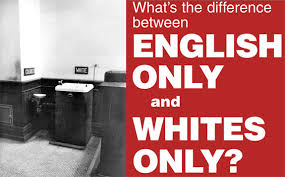
Add this to the list of “Posts I Wish I had Written”
This one was written by Frume Sarah
The amount of times the Torah commands us to care for, protect, or support the stranger. More than any other mitzvah.
When the professor of a class turns to the board (chalk, white, or Smart) and writes something down, you can be certain it is going to appear on the final. Literary repetition in the Bible is God’s Smartboard and will most certainly be on the Test. Though the phrasing may reflect word changes, the thematic repetition as a narrative tool indicates the importance of this leitmotif. God is really, REALLY serious about the treatment of strangers.
An undercurrent of hate and fear in this country has surged forth in recent weeks with the passage of an illegal-immigration bill, signed into law, in the state of Arizona. While the country was busy debating the constitutionality and humanity of Arizona SB 1070, also known as the “Support Our Law Enforcement and Safe Neighborhoods Act,” the Arizona Department of Education ordered school districts to remove from the classroom teachers whose English was heavily-accented or whose speech is ungrammatical.
Yes, we have immigration laws that must be upheld. Yes, it is important that our children have teachers who model proper grammar. But the way in which these laws and policies are being written and implemented leave little question as to the motivation driving them.
Hatred of the other. The stranger. The immigrant. The alien. The man with dark skin. The woman who swallows “the ending sounds of words, as they sometimes do in Spanish.” It’s not the Caucasian man born in Europe. Or the woman from South Carolina.
The drug trafficking that makes its way across the border is a legitimate concern. As is the manner in which we attempt to control it.
As this issue continues to be debated in the public arena, let us not forget that we too were “strangers in a strange land.” Throughout most of our history. Rashi suggests that when the Torah says “you know the feelings of the stranger,” it is the recollection of our painful experience in Mitzrayim that instructs us to “know how painful it is when (we) oppress him” (Comment on Exodus 22:20, 23:9).
Mere days remain before we stand again at Sinai. Now is the time to heed God’s Call. Now is the time to take God’s Test.
Please take a moment and sign an Open Letter Supporting Humane Immigration Reform. It was drafted by Justice Team members from IKAR.
*36, 33, 24 — different sources share different numbers.
Do Women Count in a Minyan? Of Course!

Just prior to a shiva minyan (after a funeral) service at the mourner’s home, I was approached by a congregant who asked me “Rabbi, are women included in the minyan?” This veteran Or Ami congregant, an active Jewish woman, surely knew that our congregation, and this rabbi, recognize the uncompromising egalitarianism intrinsic to Judaism. Unlike our orthodox brethren (of Jewish, Catholic, Muslim and other faiths too) who graft a foreign patriarchal stream into a once egalitarian tradition and thus do not count or fully include women, we count women as full partners in the minyan (the 10 adult Jews needed for a communal prayer service).
Knowing that she must have been teasing me, I said with a straight face, “sure, as long as you don’t sing the prayers out loud…” She, a few other longtime congregants and I all chuckled at that, and I turned back to my preparations for the service.
My wife contends that sometimes my sarcastic humor is not evident to people who do not know me. Case in point: a few moments later, another congregant approached, saying that some of the other non-Or Ami guests were shocked to learn that the mourners were part of a synagogue which, apparently orthodox, did not include women in the minyan! Unfortunately, their shock turned initially to embarrassment as I explained to them the underlying joke. After the service, we finally laughed about the whole situation.
It did give me pause. I would have hoped that most of the Jewish world, by now, would have embraced our God-given egalitarianism so that anachronisms – like not counting women as part of a minyan – would be a thing of the past. Alas, this is not so.
In many places around the world, women are still considered secondary or second class citizens. Sure, there is an attempt at apologetics to explain away the differentiation. But in truth, they remain of secondary status. And in Israel, these attitudes lead to other, more drastic situations:
- In ultra-orthodox areas of Israel, some buses are segregated and women are expected to sit in the back.
- At the Kotel (Western Wall) in Jerusalem, women are confined to a small area on the side (the men’s area is huge). Women cannot pray with tallit or chant from Torah, as is traditional in progressive Jewish movements around the world.
- Women cannot be divorced in orthodox Judaism without a “get” (Jewish divorce document) from the husband. Thousands of women in Israel cannot remarry because their husbands will not give them a “get.”
The Reform Movement has worked for full equality of women – ordaining them as rabbis and cantors, having them serve as Temple presidents, inviting them back into the center of Judaism as was intended. May the attitude, that there is anything okay with the segregation of women – on buses, in prayer, in a minyan – soon be an artifact of the past.
We Met Randy: Survivor of a War Fought by Conscripted Child Soldiers
 Congregation Or Ami Social Action Chair Laurie Tragen-Boykoff writes:
Over a hundred of us at Congregation Or Ami joined together last Wednesday evening to hear from a young man who spent eight years of his life running from a mad man. In order to avoid capture and conscription as a child soldier, Randy told us of walking four miles each evening and sleeping in abandoned warehouses with hundreds of other children trying to escape the same fate. He escaped capture and he survived.
Through the efforts of Invisible Children, a very unusual grass roots organization, Randy, and other children – both who were caught and those who were not – have been given a second chance. By Invisible Children’s beautifully creative efforts to bring this ongoing crisis to light in America, hundreds of children have become the benefactors of Invisible Children. They are being reintegrated into their families and schools. A new generation of leaders is being raised; hopefully it will be a generation that will prevent the likes of mad men – Joseph Kony, Adolph Hitler, Saddam Hussein, Osama Bin Laden, and Cambodian genocide’s Pol Pot – from ever bringing genocide into the world again.
Or Ami congregants were inspired and moved to act. Scores of us ended the evening by providing ongoing educational scholarships and other needed support. And your children came through, as well:
Teen Josh Wolfson writes: I was very inspired by Invisible children, not just because of the horrible situation they are in, but because they made me realize how much I have. I live in a beautiful city like Calabasas, I go to a great temple, I get an excellent education, and I get all that handed to me because I was born into a great family. I was dealt a tremendous hand, yet these kids, they aren’t even given any of those cards. They grow up in situations that most adults could not even handle, and I feel like, if I can help with the issues in one of these talented kids lives, with just 35 dollars a month, than I will give up that much for as long as I can.
Teen Ian Sharon: During Temple Teen Night, we had the experience of witnessing the tragedy in northern Uganda. We watched a video about the war in northern Uganda, and how one man can tear a family apart. A man named Kony is forcing his men to kidnap children in the middle of the night and forcing those children to fight for his LRA army. If his child soldiers cry, he will hurt them or even kill them. If a child soldier escapes and is caught, he will be executed. Now, Kony and his men are capturing children in Sudan, the Democratic Republic of the Congo, and the Central African Republic. The Invisible Children organization camps outside of the White House, and also lets communities like ours know about the horror and the terror of Kony’s actions. I even bought a bracelet and explained the horror to all of my friends, telling them to tell other people. I am helping the Invisible Children by letting my voice be heard, unlike the child soldiers in Northern Uganda.
Though Invisible Children has helped empower the people of Northern Uganda, the conscription of child soldiers is a plague, spreading to the Sudan, Congo and Central African Republic. There is still much to do and an enemy of children and people everywhere to defeat. For further information, contact Social Action ChairLaurie Tragen-Boykoff or visit the Invisible Children website.
At the Wall, Which Side is the Right One? The Kotel Belongs to the Entire Jewish People
Rabbi Eric Yoffie, president of the Union for Reform Judaism, wrote:
I am saddened and dismayed by recent events at the Western Wall. These events are a tragedy — a blow to the State of Israel and to the unity of the Jewish people.
Love of Israel unites Jews everywhere. Love of Jerusalem unites Jews everywhere. For many of these Jews, the single most important symbol of both Israel and Jerusalem is the Western Wall.
Why turn that symbol into a source of division? Why should the Wall be an ultra-Orthodox synagogue rather than a place that belongs to us all — a place where all Jews can find space to pray, to gather, and to celebrate the Jewish homeland and the Jewish people?
Twenty years ago I proposed a solution to the problem of access to the Wall, and it remains the best answer. There is ample room to divide the Wall into three areas: one for men to pray according to Orthodox custom; one for women to pray according to Orthodox custom; and one for non-Orthodox prayer and secular and civil ceremonies of various kinds.
However, instead of moving in the direction of equal access for all to one of Judaism’s most important religious and national sites, exactly the opposite has happened.
When a small group of women — traditional in observance and modestly dressed — has tried to organize occasional prayer services, which involve only those practices clearly permitted by halachah (traditional Jewish law), the women are spat upon, cursed and hustled away by the police, who generally do little or nothing to protect them from the harassers.
Ceremonies of national significance — tributes to fallen soldiers, the welcoming of new immigrants — were long held in the public areas behind the prayer section of the Wall, but they have now been curtailed or stopped altogether. The reason? Religious authorities who control the Wall have demanded that ultra-Orthodox standards be applied to such gatherings — meaning, for example, that the sexes must be segregated and that singing by women is prohibited.
Non-Orthodox religious youth groups that used to gather regularly in the same plaza area away from the Wall to enthusiastically pray and sing during their visits know that such services are no longer permitted.
When challenged, the religious authorities at the Wall talk of the “Robinson Arch” solution, which is an insult and no solution at all. Non-Orthodox Jews are permitted to pray at Robinson’s Arch, an archaeological site at a distance from the Wall that is not seen by most Jews as being part of the Wall at all.
The argument that permitting Reform and Conservative Jews to pray in the area of the Wall will lead to chanting by Catholics or Buddhists is absurd. Reasonable accommodations regarding non-Jewish religious ritual have been made at every other religious site in Israel. If anyone has been unreasonable, it has been the Jewish authorities at the Wall, who attempted to prevent Pope Benedict XVI from wearing his crucifix during his visit to the Kotel. The Pope rightly ignored them.
It may be that for now the law is on the side of those who impose these restrictions, and that others who wish to challenge them may have to accept the penalty for doing so. But it seems to me that recent events were more an attempt to intimidate and harass religious women than to enforce the law.
What is most important here, however, is that our goal in these troubled times is make Jews everywhere feel closer to Jerusalem and to the Jewish State. Driving Jews away from the Wall is self-defeating and foolish. To put it simply, the more Jews who visit the Wall — for religious, civic or national purposes — the better off we are.
And since there is not a single, universally accepted religious standard that governs Jewish religious life, we should make no attempt to impose one at the Kotel. What we need, rather, is to be respectful of each other’s choices and customs.
Throughout the generations, the Kotel has been a source of inspiration to Jews everywhere. It is a concrete symbol of our love for Jerusalem and our common Jewish destiny. The Wall belongs to the entire Jewish people; it must be a place that unifies our people, where all Jews are welcomed and all are respected.
A Prayer for the People of Haiti
 A prayer for the people of Haiti,
who, on a good day,
must take heroic measures
just to wake the next,
And who must now find a way
to live through the end of the world:
O Compassionate One,
whose relief work is beyond our capabilities
Breathe life today into those buried alive
and strengthen the response capacity
of Your relief workers in this world
To hear those who have yet to be saved,
To hear those who have been saved
but whose limbs and lives are crushed,
To hear those who pray
For those who can no longer pray for themselves.
O Source of Speech,
embedded in the language of love,
Fortify the souls of those who call out now in rescue
O Life Force,
expressed in the language of loss,
Send strength to those who, with their last strength
Now seek nothing more than finding loved ones
A prayer for the people of Haiti,
who on this day
take heroic measures
just to survive,
And with the world’s help,
Will find a way
to live into
an new world,
Though one rebuilt
on the rubble of unfathomable loss.
O Source of Response to need,
Be the blessing
Of prayers realized.
And we say: Amen
Adapted by Rabbi Shawn Zevit from a prayer by Bradley Burston, Israel News
With thanks to the Union for Reform Judaism for sharing this resource with me
My favorite place to donate to help Haitians is the Reform Movement Haiti Relief Fund:
In the wake of the horrific destruction that has hit Haiti, our national organization, the Union for Reform Judaism (URJ), has opened its disaster relief fund to aid those devastated by the severe earthquake. With a still-unimaginable number of casualties, relief and support is being directed to help rescue and recovery efforts scale up rapidly. A number of our partner organizations are already on the ground or on their way to provide assistance. Donations to the Union for Reform Judaism Haiti Relief Fund can be made online at www.urj.org/relief or by sending a check to Union for Reform Judaism, Attention: Development, 633 Third Avenue, 7th floor, New York, NY, 10017.
Background: Our Reform Jewish community has a long history of generosity when natural disasters devastate communities, when houses of worship burn in the fires of racial prejudice, when terrorism causes havoc, and when other disasters cause untold harm across the planet. In such times, the Union for Reform Judaism activates the Union Disaster Fund for contributions, which are then forwarded to appropriate agencies. In recent years the Union Disaster Relief Fund has provided help to the victims September 11, floods in Europe, earthquakes in South America and Southeast Asia, Black churches that were burned in Southern United States and the Grand Forks community when it flooded. In the wake of the hurricanes that battered the Gulf Coast in 2005, more than $3 million in donated funds were raised to help the victims and agencies that are assisting them and the congregations of Louisiana, Mississippi, Texas and Florida.The Union for Reform Judaism is a member of the Jewish Coalition for Disaster Relief, which allows a unified Jewish response to natural and man-made crises that occur outside of North America.
Kid Tzedakah: A Plastic Bag Filled with Coins
 Three children walk up to a rabbi after services, requesting to speak with him. The oldest, almost eleven, speaks for the other two nine year olds. With maturity and poise, she explains that each Shabbat and during other holy days and regular days, the three of them put tzedakah into their tzedakah box. It is part of their regular ritual welcoming Shabbat and it is very meaningful to them. When the box became too full, they opened it, counted it, and with a small donation from their parents to make it even, they have $54.00. (Actually, they actually collected $55 but used one dollar to “seed” their next tzedakah collection drive, ensuring that this donation was a multiple of chai (18=life). So pictured above is the gallon-sized ziploc bag filled with pennies, nickles, quarters and dimes, plus a few bills. Kid tzedakah, I call it.
Kid tzedakah may be the most important kind of tzedakah of all. Although Kid Tzedakah is not listed on Maimonides’ Ladder of Tzedakah (8 Rungs of Tzedakah) which weights the different ways of giving, I believe that we should place Kid Tzedakah somewhere in the top three. Kid tzedakah is the ziploc bag or piggie bank or tzedakah box filled with coins which young children bring into their synagogues and give to the rabbi, or bring to other organizations and donate to support other causes. Kid Tzedakah usually amounts to a multiple of 18, never over $72 or $90. It never is listed on donor boards or donor honor rolls. But it is the most precious of all.
Kid tzedakah is the way that one generation ensures that the other understands the importance of giving. It is the process, set up by parents, to make giving tzedakah a regular practice of the next generation. For a certain generation, Kid tzedakah was given to Keren Ami (the fund for Israel, usually through the Jewish National Fund) whose blue and white tzedakah boxes once sat in every Jewish home. Today, sometimes Kid tzedakah is synagogue-based, when our children donate regularly at the beginning of the Religious and Hebrew School classes. Other times, it is the ritual of placing a few coins into the tzedakah box before lighting Shabbat candles. Some people allow the children to collect the coins that come out of parents’ pockets and place them weekly into the tzedakah box.
Kid tzedakah may be the lifeblood of the Jewish people, ensuring that our children understand that giving of our resources – money, and yes, time and energy – is central to being a Jew. That when we sing in our prayerbook – L’takein olam b’malchut Shaddai – that we fix the world, returning it to the idea envisioned by God – this is the essence of Judaism. That the ritual of giving must continue into their adult lives.
So thank you, Gross family children, for giving your $54 of Kid Tzedakah. We will use it to help families in our community who are struggling through this difficult economy. We will ensure they have food on their tables and a roof over their heads.

So All Jews Can Worship Together at the Kotel

As we prepare for Shabbat, for relaxation, spirituality and community, we take a moment to recognize that there are some who would like to dictate how all Jews should celebrate this holy day. In Israel, some ultra-orthodox are pressuring the Israeli government to transform Israel’s holiest religious sites into orthodox synagogues, excluding progressive Jewish women. Before, or after you celebrate Shabbat, take some time to read and speak out:
FROM: Rabbi Robert Orkand, ARZA President, Response to Interrogation of Anat Hoffman, Executive Director of IRAC
RE: Interrogation of Anat Hoffman, leader of Israel’s Women of the Wall
On behalf of almost a million and a half American Reform Jews, I react with dismay and alarm to the recent report that Anat Hoffman, leader of Israel ’s Women of the Wall, was interrogated and fingerprinted on January 6 by Jerusalem police. She was told that she may be charged with a felony for violating the rules of conduct at what many consider to be Judaism’s most sacred site. The action against Ms. Hoffman who is the Executive Director of the Israel Religious Action Center, follows on the arrest in November of Nofrat Frenkel a member of the Conservative movement and a medical student. The crime: wearing a tallit (prayer shawl) not at the Wall itself, but at an area that had been previously designated a place where Women of the Wall can gather for a once-a-month worship, as they have done for the past 21 years.
These recent actions at the Wall insult all Jewish women for they are being reminded, as they have so many times in the past, that they are second-class Jews at a place that is not a synagogue but rather, an historic site of great importance to all Jews, not just those who are Orthodox. The insults to which Women of the Wall have been subjected cannot be repeated in polite company. The fact that the police have seen fit to arrest women who went to the Wall for peaceful prayer and not those who have screamed that the Nazis should have murdered these women is a stark reminder of the lengths to which the ultra-Orthodox in Israel will go to force their religious practice on an entire nation.
One must wonder why the people of Israel tolerate a religious fanaticism that is no different than what we have witnessed in Iran and elsewhere. There have been riots on Shabbat by ultra-Orthodox Jews protesting the opening of a parking lot near the entrance to the Old City of Jerusalem. There have been riots in Jerusalem protesting the fact that an Intel plant operates on Shabbat. There are now segregated busses in Israel on more than 90 routes, with demands that the number of routes be increased. There is a growing crisis in Israeli education due to the fact that there is not a core curriculum required of every Israeli student, which means that increasingly students are being exposed to a narrow religion-based curriculum and are not learning the subjects that will allow them to function in a modern society. In short, Israel is the rare democracy today that tolerates and even worse endorses religious discrimination against Jews. The promise of Israel’s “Declaration of Independence that Israel will be a homeland for all Jews appears to be nothing more than a dream.
Make no mistake: What appears to be a growing religious crisis in Israel is as much a threat to Israel’s survival as are the external threats, perhaps more so. Israel has shown that she can protect herself from armies and terrorists. Protecting herself from religious extremism may be Israel’s biggest challenge—a challenge that cannot and must not be ignored by those who care about Israel’s soul.
____________________________________
FROM: Anat Hoffman, IRAC Executive Director—Personal Call to Action A Call to Action—Make the Wall for all Jews
On January 5th, 2010, I, Anat Hoffman, Executive Director of the Israel Religious Action Center, and leader of Women of the Wall was called in for questioning and fingerprinted by the Israeli police. They warned me that I was being investigated for the felony offense of wearing a tallit, and holding a Torah at the Western Wall.
My interrogation comes less than two months after the November 18th, 2009 arrest of the Women of the Wall member Nofrat Frankel for wearing a tallit and holding a Sefer Torah at the Wall.
We are asking you today to contact your local Israel Ambassadors and Consulates and tell them that you will not tolerate religious discrimination or be forced to practice the religious ideologies of the Ultra-Orthodox community. You can write your own letter or sign the letter we have attached. (see below)
Israel must understand that the will of a small fundamentalist minority cannot take the Wall away from Klal Yisrael.
- Please send your letter to your Ambassador Michael Oren
- Send a letter to your local Israeli consulate
- Please also send this communication to your friends and family so that the message will come from as many people as possible
- Other ways that you can show your support are to purchase a Women of the Wall tallit (Karen@irac.org) or by making a donation to IRAC’s work advancing Jewish pluralism and tolerance in Israel and fighting to end religious coercion and discrimination. http://www.irac.org/Donate.aspx
- Lastly, organize a solidarity rally or prayer service for the Women of the Wall on the next Rosh Hodesh, Erev Shabbat January 15th 2010
____________________________________
Local and International Advocacy Action within the Jewish community
Dear________________________
On behalf of the Jewish people fighting for religious pluralism in Israel , I am outraged that one of our leaders, Anat Hoffman, was interrogated and fingerprinted by Jerusalem police on January 5th, 2010. Police told Hoffman, Executive Director of the Israel Religious Action Center and leader of Women of the Wall, that she may be charged with a felony for violating the rules of conduct at what many consider to be Judaism’s most sacred site.
Hoffman’s interrogation came less than two months after the November 18th, 2009 arrest of the Women of the Wall member Nofrat Frankel for wearing a tallit and holding a sefer Torah.
We will not tolerate this discrimination and abuse to continue among our own people. Women are treated as second-class citizens at a holy and historic place that has great symbolic importance for all Jews.
We are shocked by the brutal and callous insults to which Women of the Wall have been subjected. Many of these curses cannot be repeated in polite company. Israeli police have seen fit to arrest women who go to the wall for peaceful prayer, and make no attempt to reprimand those who spit and curse at them, a stark reminder of the power enjoyed by the Israeli ultra-Orthodox, and their success in forcing their religious practices on an entire nation.
If this were to happen in any other country in the world, the Jewish community would be up in arms. Israel is the rare democracy today that tolerates and even endorses religious discrimination against Jews.
Make no mistake: What appears to be a growing religious crisis in Israel is as much a threat to Israel’s survival as are the external threats, and perhaps more so. Israel has shown that she can protect herself from armies and terrorists. Protecting herself from religious extremism may be Israel’s biggest challenge—a challenge that cannot and must not be ignored by those who care about Israel ‘s soul.
We cannot allow this discrimination to continue any further. We must protect our religious rights in Israel.
Pass on our message to the Israeli government, that the Kotel is the beating heart center for the whole of the Jewish people, and not an Ultra-Orthodox synagogue. The arrest and intimidation of women praying at the Wall must stop and it must become a place in which all Jews can pray and connect spiritually to Israel.
Rosa Parks Redux? Why Can’t Women Wear a Tallit at the Western Wall: Israeli Reform Jewish Activist Questioned by Police
According to JTA,
Israeli police questioned a prominent Reform movement activist in connection with the wearing of prayer shawls by women at the Western Wall.
Anat Hoffman, the director of the Israel Religious Action Center, said she was fingerprinted Tuesday and that her case was being referred to the attorney general for prosecution.
Hoffman was brought in for her involvement in Women of the Wall, an activist group that presses for rights for women at Judaism’s holiest site.
“I think it was a meeting of intimidation,” Hoffman told JTA.
The interrogation follows the November arrest of Nofrat Frenkel, an Israeli medical student and Women of the Wall member who was detained after donning a tallit at the site.
RAC’s Tep Ten List of Top Ten Lists
 Our Religious Action Center of Reform Judaism (RAC) in Washington DC represents our progressive Jewish values in our nation’s capital. They educate, raise awareness, explain Jewish values regarding current issues, and help local congregations engage their Congresspeople on issues of concern.
They also write an engaging RACblog. RAC Press Secretary Kate Bigam wrote their List of the Top 10 Top 10 Lists. I loved it. What were your favorite lists?
1. Grist’s Top Green Stories of the ’00s
Like others, Grist decided to go a step beyond a simple “Best of 2009” list by covering the aughts in their entirety. Starting with the greening of Paris Hilton (among other celebs), the list takes a more serious tone when it lists the environmental movement’s newfound climate focus and American politicians’ newfound willingness to talk about climate as a serious legislative issue as among the top environmental stories of the decade. With the snappy catchphrase “Local gets vocal, organic goes manic,” it also includes a shout-out to the sustainable food movement, which the Reform Movement embraced this year at our Biennial Convention.
2. TIME Magazine’s Top 10 Religion Stories of the Year
Included in TIME’s “Top 10 of Everything of 2009” compilation is this gem of a list that includes year-toppers titled things like “Secularism of Bust.” Among them is “Keeping the Faith-Based,” highlighting President Obama’s decision to “create the new Presidential Advisory Council on Faith-Based and Neighborhood Partnerships to weigh in on matters ranging from funding of social-service and poverty-alleviation programs to the more controversial issue of abortion reduction.” The RAC’s Director, Rabbi David Saperstein, was named by president Obama to serve on this council.
3. The International Women’s Health Coalition’s Top Ten Wins for Women’s Health and Rights in 2009
This list of the world’s advancements in women’s rights tackles issues in the Unites States, the UK, Bolivia, Nigeria, Cameroon, and Yemen, among others. But as blogger Lorena Espinoza Peña writes on Feministing.com, “As important as it is to celebrate victories surrounding women’s rights and health, it’s also important to acknowledge when there’s still much more work to be done.”
4. Odyssey Networks’ Top Interfaith Stories of 2009
Odyssey Networks asked its members, “Which activities and events of 2009 best illustrate the important and hopeful work being done by faith communities working together?” The list represents their recommendations along with the suggestions of the folks at Odyssey and is presented alphabetically rather than ranked – members are asked to vote on the story they feel is most important. In one story, “Speaking and Acting on Health Care Reform,” our own Director Rabbi David Saperstein is featured (photo above).
5. Religious Clause’s Top 10 Church-State, Religious Liberty Developments In 2009
Church-state blogger Howard M. Friedman, Professor of Law Emeritus at the University of Toledo, submits his choices for the biggest religious liberty stories of the year. “The choices are based on the long-range implications of the developments on legal doctrines and on future of relations between government and religion,” he writes. Highlights include the Rifqa Bary case, of a Christian teenager at odds with her Muslim parents, court cases against Scientology in France and Germany, and conservative Christian groups’ opposition to the Matthew Shepard and James Byrd, Jr. Hate Crimes Prevention Act.
6. Religion Newswriters Association’s Top 10 Religion Stories
More than 100 religion journalists voted President Obama’s June speech in Cairo, Egypt — in which he pledged a new beginning in Muslim-U.S. relations — the top religion story of the year. During his talk, Obama invoked the Qur’an, Talmud and the Bible while declaring that America was not at war with Islam. The second-rated religion story was health care reform; in addition to the top ten, the Religion Newswriters Association also compiled a list of 13 more noteworthy religion stories that made headlines this year.
7. Politics Daily’s Top 10 Economic Stories of 2009
The title reads “Jobs, Housing, Bailouts and — Yes — Tiger Woods,” so you know this is probably going to be a list a bit off the beaten path. Still, the first economic story listed is “‘Great Recession’ ends but unemployment hits 25-year high,” so golf stars aside, the list is still addressing the most pressing economic issues of our time – in a year when the economy has been a topic at the forefront of everyone’s minds. Other issues that make the cut in this arena include health care reform, the housing crisis, the UN Copenhagen Climate Conference, “tea parties” and more – including Tiger.
8. MSNBC’s “Decade’s Top 10 Political Lines”
NBC writers compile “what we consider to be the most memorable political lines/statements/quotes of the decade, which shaped or cemented perceptions, were repeated endlessly, and impacted American politics.” The usual political suspects make the list – Presidents George W. Bush and Barack Obama, Vice Presidents Cheney and Biden, Presidential hopefuls John Kerry and John McCain, now-Secretary of State Clinton – but there are a few surprises, too, including some profanity. Most notably, keep your eye out from a famous two-liner yelled just this year on the House floor and even a political joke from an old Saturday Night Live alumna.
9. The Forward’s “The Aughts and Us: 2000-2009: A Look Back at What a Decade Brought”
Ten Jewish leaders write one paragraph each on 10 of the ways life changed for Jews in the first decade of the 21st century, from the Diaspora’s presence online (makes it easier to kibbitz, fundraise, etc.) to the lasting threat of terrorism brought about by September 11th (and it’s impact on Jews, in particular). The final write-up is from Rabbi Eric Yoffie, President of the Union for Reform Judaism, about the emergence of Birthright Israel. He says, “It has demonstrated that at a time when commitment to Israel is supposedly withering, even the most disengaged young Jews have a yearning for connection to the Jewish state.”
10. TIME Magazine’s Top 10 Editorial Cartoons of 2009
Who says politics isn’t animated? Rounding out our list of Top 10 Top 10 Lists is TIME’s compilation of the best visual jokes of the year, but don’t be fooled by imagery that invokes Saturday morning cartoons – each of these drawings packs a political punch that highlights the biggest gaffes and missteps of 2009.
The More Tzedakah, The More Peace
 Why give of our time and energy to others?
Jewish tradition teaches in Pirkay Avot (the Talmudic Teachings of our Ancestors) that the giving of tzedakah (charitable donations or the gift of our time) increases the shalom (peace) in our world. Experiences over the past weekend, hearing from Or Ami congregants who gave of their time and energy, provided a wealth of evidence of the validity of this teaching.
So many people gave the tzedakah of their time:
- Chaperoning Foster Care kids (previously strangers to them) during our award-winning Foster Kid Childspree
- Playing with children with disabilities at Brandon’s Village, a universally accessible playground
- Delivering sufganiot (jelly-filled donuts) to fellow congregants in celebration of Chanukah
To read their email reflections on the experience is to understand that when we give of ourselves to others, we are filled with a warm sense of wonder and, yes, shalom (here translated as “wholeness”). Next time you are wondering if you have enough time to give, to volunteer, remember these reflections and ask yourself instead “Do I have enough shalom (peace/wholeness) in my life?” Then go volunteer – because it is right (tzedek) and because it is good for you!
- Lucille Goldin, Vice President (Calabasas resident): I was honored by shopping with a young mother who has a five month old baby girl. Her first question was can I put my money with my babies to get her a stroller as I really need one because she is getting very heavy to carry. Kohl’s doesn’t carry strollers. She then told me how cold it was were they lived because the walls are very thin, I didn’t ask, we just made sure to get the baby some very warm sleepers and warm clothes. Between the sale Kohl’s had and our coupons we not only did well for her daughter but were able to get her some jeans, and shoes which she so desperately needed. Today I am going to Babies are Us to get her a stroller and I plan to drop it off with Lovette who will see it gets to her case worker for delivery to her. When we said goodbye yesterday her mother said in Spanish (which she translated) God bless me and was tearful. I hugged her mother and went to hug her. She was hesitant at first and I could see she was on the verge of tears. She did in fact give me that hug and then broke down and cried so overwhelmed from the bags she was carrying out of the store. I believe this will be the nicest gift I receive this year. It really is a gift to be able to help others.
- Jill Marder-Meyer (Westlake Village Resident): Foster Care Childspree is an incredible occurrence and, as always, my daughter and I had an wonderful time participating. We chaperoned a 9 year old boy who had a great time buying shoes, a necklace for his mother and a remote control helicopter for him to play with his father in the park. Though we encouraged him to buy warm clothes or other essentials, he said he didn’t need them. …He was happy to have the belt, shoes, hat and gifts that, without Childspree, he wouldn’t have been able to get. Not only did he take his money to buy things for his Mom and Dad. He asked me if I liked this job. I said, “I love it, why?” He said, “I just wanted to know.” He then asked us if we needed anything, he would buy it for us. How warm to have a 9 year old boy caring about others and not just what he could have for himself. What a mitzvah for us to be able to participate in this event. Thank you Kim Gubner (Childspree organizer) and Congregation Or Ami for allowing us to be a part of this.
- Randee Hilborne (Los Angeles resident): Five of us chaperoned a 3 year old girl (her brother was the 9 year old that Jill wrote about!) and we shopped with her and her mother! I spoke in length with the mom and she was so appreciative of all we were doing for her kids. I also met the grandmother as well who couldn’t stop thanking us. The little girl was adorable-loved with my two kids and loved being with the other two high school friends we brought along. She was so fun and was so happy to be able to pick out things. She couldn’t stop talking about her “princess dress” and her “Dora light up” shoes!! She was so proud and excited; she was really bubbling over with pride! Her mom was a doll and we took her phone number. She told us that her kids loved to read and so we decided as a family that we are going to share some of our books with them. You just cannot help but become attached to your families you are with and just want to give and give! We are so blessed to be part of the Congregation Or Ami community and everything we do to help out others. … I actually met a shopper in Kohls who asked me what we were doing. She asked about Or Ami was so touched and thought how wonderful it was what we were doing. That really meant a lot to me and made me feel so good inside. Also, met one of Kim’s friends who is not a member of Or Ami and just decided to donate and be part of the shopping spree. She felt so blessed … and also honored to be part of what we were doing for the community. Childspree was an incredible day as always!
- Andrea Setterstrom, non-member: I was fortunate to be asked by my very best friend, Lucille Goldin to share in this wonderful Childspree event. Although I am not of the Jewish community, I was proud to be included amoung such admirable people who gave of themselves with either their organizational skills, time, money or treats. You opened your hearts to every person, needy or volunteer who was present. I was the second volunteer to meet my recipient. He was a nine year old boy who was as cute as you could imagine. I thought I might get some insight into what sort of things he needed by asking questions about school, sports, etc. What I learned is that he was very determined not to get what I thought he needed but to get ONLY what he liked…TOYS. He didn’t wear jeans, sweats, hoodies, long sleeve shirts, shorts, hats, belts or anything that wasn’t black. He didn’t need socks, undies or shoes. What he needed was a remote controlled helicopter, a baseball and a star wars figurine. After much negotiation, we compromised and he had a ball filling my arms with the baseball, helicopter, star wars figurine and some much needed t-shirts, pajamas, and a very special gift for his sister complete with wrapping paper and a musical card. He was so proud of his accomplishment and when we met his 22 year old sister at the end, she was absolutely shocked to see clothes in his bag. I have no doubt that he is the proudest of the special heart necklace for his sister who takes care of him; he promised to hide the gift until Christmas. What I discovered was that my arms were filled with much more than the items he purchased. They were filled with the joy of experiencing this special moment with my new friend who could not hug me enough when the evening came to a end. He even insisted on serving me refreshments while I was standing in line to pay for his purchases. What a gentlemen! He has stolen my heart as have all of the people who put this event together.
No less than 36 times does the Torah command us to care for the stranger. As I teach over and over again, that is more than the amount of times it tells us to celebrate Shabbat, keep kosher or do just about anything else. Our participation with Childspree – under Kim Gubner’s inspirational leadership – ensured that we continued to fulfill this mitzvah, even in the midst of an economy that might have given any of us an excuse to turn inward instead of outward. Our tzedakah – our time and charitable donations – brings a sense of peace to those receiving the gifts and to those who chaperon others.
Congregation Or Ami shines because of people like these volunteers – who turn inward to help each other and reach out to help those most vulnerable outside our community.

Tikkun Olam: The Backstory
 Recently, 31 Or Ami adults gathered for our monthly New Dimensions Shmooze ‘n Study at a congregant’s home. Over hors dourves and drinks, we chatted, connected and then sat down for some learning.
Our discussion about community quickly turned to the community building power of Tikkun Olam (fixing the world or social justice work), which led to a discussion about the origins of the idea of Tikkun Olam.
Recognizing that many people do not know where origins of Tikkun Olam, I share here an article from Reform Judaism Magazine: Social Action: Tikkun Olam: The Backstory – An RJ conversation with Howard Schwartz.
What is the origin of tikkun olam?
While most modern Jews interpret the term—meaning “repair of the world”—as a synonym for social action, what they don’t know is that this idea is rooted in the last great myth infused into Jewish tradition, the creation of the renowned 16th-century Jewish mystic, Rabbi Isaac Luria of Safed, known as the Ari.
Did the Ari originate the term?
No. Tikkun olam first appeared in the Mishnah (2nd century CE) and meant “guarding the established order.” It is also part of the Aleinu prayer: “perfecting the world under the rule of God.” Later, in the 12th century, Maimonides spoke of tikkun olam in the context of rabbinic rulings and customs that would “strengthen the religion.”
How then did the Ari’s use differ?
In these earlier definitions, it is God who is doing the repairing. The Ari was the first to propose that the Jewish people are God’s partners in repairing the world, and he did so by constructing a cosmic myth around the term, beginning with the creation of the world and ending with the Messianic Era.
Please summarize the myth for us.
At the beginning of time, God’s presence filled the universe. When God decided to bring the world into being, to make room for creation, He contracted Himself by drawing in His breath, forming a dark mass. Then God said, Let there be light (Gen. 1:3) and ten holy vessels came forth, each filled with primordial light.
God sent forth the ten vessels like a fleet of ships, each carrying its cargo of light. But the vessels—too fragile to contain such powerful Divine light—broke open, scattering the holy sparks everywhere.
Had these vessels arrived intact, the world would have been perfect. Instead, God created people to seek out and gather the hidden sparks, wherever we can find them. Once this task is completed, the broken vessels will be restored and the world will be repaired.
Did the Ari invent all the myth’s aspects?
Quite the contrary: Every aspect of the Ari’s myth can be found in earlier biblical, rabbinic, and mystical Jewish interpretations and principles. For example, the Ari elevated the concept of tzimtzum, the idea that God contracted to make space for Creation. This perspective assumes that God’s presence occupies physical space—a biblical teaching. God told Moses to build a tent of meeting, but “Moses was unable to enter the tent because a cloud had settled upon it and the presence of God filled the Tabernacle” (Exod. 40:34-35). Similarly, the shattering of the vessels recalls Moses’ rage when he saw the golden calf and “hurled the tablets from his hands and shattered them at the foot of the mountain” (Exod. 32:19). So too were the holy vessels of the Ari’s myth like the heavenly tablets—crafted by God.
Scattered sparks also appear in Ezekiel 10:2, in which angelic figures scatter fiery coals from the Temple altar over the city of Jerusalem (“Fill your hands with glowing coals from among the cherubs, and scatter them over the city”) and bring to mind the Israelites who gathered the manna that fell from heaven (Exod. 16:17). Just as the manna fell to nourish the body, so the holy sparks serve to nourish the soul.
A midrash about the light created on the first day inspired the idea of primordial light inside the vessels. Here the ancient rabbis noticed an apparent contradiction: On the first day of creation, God says, “Let there be light” (Genesis 1:3); and on the fourth day, God created the sun, the moon, and the stars (Gen. 1:16-18). If God did not create the sun until the fourth day, they asked, what was the light God called into being on day one? The rabbis identified it as a primordial light—perhaps the light of paradise, or the light that emerged when God wrapped Himself in a garment of light (Psalms 104:2).
What, then, happened to this light? According to the Talmud and other rabbinic sources, God withdrew it from the world, and it became known as the ha-or ha-ganuz, the hidden light. Some said the light was taken back into paradise when Adam and Eve ate the forbidden fruit. From the perspective of the Zohar, the 13th-century foundational text of Jewish mysticism, this light is hidden in the Torah: Whenever a person studies the Torah with great concentration, a ray of the primordial light will illuminate both the Torah and the person, reflecting his/her new understanding of it.
In the Ari’s myth, the primordial light God sent forth on that first day is the same light scattered around our world as holy sparks, which each of us is called upon to seek out and gather.
How do we go about finding and gathering these mysterious, elusive sparks?
The Ari explained that the sparks are raised up whenever the Torah is studied or one of God’s commandments is fulfilled. This is a radical explanation of why we perform the mitzvot. Whereas before these rituals and prayers were regarded purely as God’s commandments, the Ari now attributed a beneficial spiritual effect to them: Studying the Torah as well as observing its laws and partaking in all other devotional and loving acts are the means to gather the sparks, and thus engage in the great mitzvah of tikkun olam.
How might the Ari’s life have influenced his interpretations?
The Ari lived in the 16th century, not long after the expulsions of the Jews from Spain and Portugal. He was well aware of the great dislocation that had followed in the aftermath of that trauma. Jews who for generations had been part of an advanced Sephardic culture on the Iberian Peninsula were suddenly scattered throughout the world, living in foreign and unfamiliar lands. Until they learned of the Ari’s myth, many of these exiles found themselves isolated and spiritually bereft. The notion of tikkun olam brought them almost immediate consolation and a sense of purpose by explaining why God had dispersed them—to gather the holy sparks that had fallen on these distant lands. Learning that their exile was part of God’s plan for tikkun olam also raised their hopes for an ingathering of all Jews with the coming of the Messiah. Little wonder that, within a year of its formulation in the Galilean town of Safed, the Ari’s myth had spread throughout the Jewish world.
Does the Ari’s myth give Jews a special role in the repair of the world?
The Ari viewed Israel as having a singular destiny based on God’s covenant with the Jewish people. However, the idea of God creating humans to remedy a Divine error suggests a more universal meaning: A repaired world can be realized only if the whole of humanity engages in collecting the sparks.
Did this myth continue to evolve?
Yes. Consistent with the ongoing myth-making process in Judaism, after the Ari’s death, his teachings, known as Lurianic kabbalah, became the leading expression of kabbalah, deeply influencing Sephardic and Hasidic mystics. Their commentaries sometimes embellished the Ari’s myth. The hasidic master Rabbi Menachem Mendel of Rimanov (1745–1815), for example, stated that “when the task of gathering the sparks nears completion, God will hasten the arrival of the final redemption by Himself collecting what remains of the holy sparks that went astray.” Later, Rabbi Kalonymus Kalman Shapira (1889–1943) linked the Ari’s myth to a famous midrash about prior worlds that God is said to have created: “At the time of creation, God created worlds and destroyed them. The worlds created and destroyed were the shattered vessels God sent forth. Out of those broken vessels God created the present universe.”
How do you account for the continued appeal of tikkun olam?
The concept of human partnership with God to heal heaven and earth is both engaging and energizing. In a sense, tikkun olam expands God’s original covenant with the Jews at Sinai by adding a metaphysical and spiritual dimension to our ethical and moral obligations. The Ari was a rare genius who understood the need for a guiding myth for the Jewish people and joined together an array of Jewish legends to create a single, seamless, unifying myth. This myth’s integration of mind, body, and spirit has given tikkun olam its timeless appeal.
[Howard Schwartz is a professor of English at University of Missouri-St. Louis, a Jewish folklorist and mythologist, and author of, most recently, Tree of Souls: The Mythology of Judaism and Leaves from the Garden of Eden: One Hundred Classic Jewish Tales.]
Interfaith Efforts for Ending Workplace Discrimination
 This morning, I signed onto a letter with a broad array of clergy from different religious faiths to support the Employee Non-Discrimination Act to ensure fair treatment of Lesbian, Gay, Bisexual and Transgender (LGBT) Americans in the workplace. Supported by our Union for Reform Judaism and our Washington-based Religious Action Center for Reform Judaism (Read Rabbi David Saperstein’s testimony before Congress), this interfaith letter is also supported by a half a dozen other mainstream Jewish organizations. The letter will be sent to members of Congress. Most significantly, the letter emphasizes that which we learn from Torah: We affirm the sacred dignity and worth of all human beings – lesbian, gay, bisexual, transgender, and heterosexual, men and women – for all are created equal, b’tzelem Elohim, a reflection of the divine (Genesis 1:27). You can help end Workplace Discrimination by just making a few calls.
Dear Member of Congress,
As clergy and faith leaders from a broad diversity of religious traditions, we call on you to support H.R. 3017 and S. 1584, the Employment Non-Discrimination Act (ENDA), to ensure the fair treatment of Lesbian, Gay, Bisexual, and Transgender (LGBT) Americans in the workplace.
We believe it is immoral to deprive anyone of the means to feed, clothe, and care for themselves and their families. When LGBT people are denied the right to work simply for living honestly, their basic humanity is fundamentally denied. As clergy and faith community leaders, we know firsthand the devastating effects the loss of a job can have on individuals, families, and communities. Though we are all pained by the economic hardships befalling our nation, loss of a job because of discrimination against one’s identity incurs an even more devastating sense of personal loss and humiliation. This prejudice is not benign – it hurts real families in our congregations.
We affirm the sacred dignity and worth of all human beings – lesbian, gay, bisexual, transgender, and heterosexual, men and women – for all are created equal, a reflection of the divine (Genesis 1:27; The Quran 95:4). Our faiths unite us in a moral obligation to treat others with the respect we desire for ourselves and to pursue justice by preventing further harm from coming to those most marginalized by our society (UdanaVarga 5:18; Mahabharata, Anusasana Parva, 113.8; Isaiah 10:1-2; Matthew 25:40; Prophet Mohammed(PBUH): Bukhari & Muslim). As heirs to these prophetic traditions, and indeed the narrative of this nation, our advocacy is grounded in the belief that advancing equality also means ensuring economic opportunity for our LGBT brothers and sisters. Swift enactment of an inclusive Employment Non-Discrimination Act is needed.
ENDA is a common-sense, measured approach to removing discriminatory barriers to employment for LGBT people while respecting the sacred texts and teachings of America’s diverse faith traditions. This bill broadly exempts from its scope all religious organizations protected by Title VII of the 1964 Civil Rights Act thereby honoring the free exercise of religion and conscience we each hold dear as religious leaders in our respective houses of worship, seminaries, religious federations, organizations and other faith-based institutions.
Extending the full, long overdue rights and responsibilities of citizenship to the LGBT community is a pressing moral, social and economic priority. We urge Congress to pass the Employment Non-Discrimination Act (H.R. 3017, S. 1584) to uphold the American promise of justice and equality for all.

Why Bother Being Ethical? A Follow Up
Dr. Bruce Powell, founder of New Jewish Community High School in West Hills, spoke at Or Ami last week about How to Explain to our Teens Why Bother Being Ethical in an Unethical World. It was Fabulous. He was Inspiring. Straightforward. Contemplating still Dr. Powell’s teachings, I came across a sermon by Rabbi Stephen Pierce of Temple Emanu-El in San Francisco. Poignant, insightful, meaningful. Do read it:
Coziness, Drowsiness, The Lulling Effect, False Profits and Truth Decay—Restoring Trust After the Bubble Decade Of Economic Triumphalism, Materialism, Arrogance, Exploitatioin, Malignant Narcissism, and Betrayal
A sermon delivered on Kol Nidre 5770 Rabbi Stephen S. Pearce, PhDOur era is on trial! The financial mess created by uncontrolled greed created an ethical vacuum and destroyed faith in the advice of so- called “experts” and government regulators who reassured us that our assets would grow at an uninterrupted rate, home equity would continue its meteoric rise, and retirement funds would be protected from volitivity— even as the world economy descended into the abyss. harvard Law School economist kip Viscusi called this sad state of affairs “the lulling effect”— the government’s imprimatur that makes people feel safer than they really are. Where did we go wrong? Jean Twenge and W. Keith Campbell, authors of The Narcissism Epidemic: Living in the Age of Entitlement, provide a stinging indictment of what led to the current turmoil:
Understanding the narcissism epidemic is important because its long-term consequences are destructive to society. American culture’s focus on self-admiration has caused a flight from reality to the land of grandiose fantasy. We have phony rich people (with interest-only mortgages and piles of debt), phony beauty (with plastic surgery and cosmetic procedures), phony athletes (with performance-enhancing drugs), phony celebrities (via reality TV and YouTube), phony genius students (with grade inflation), a phony national economy (with $11 trillion of government debt), phony feelings of being special among children (with parenting and education focused on self-esteem), and phony friends (with the social networking explosion). All this fantasy might feel good, but, unfortunately, reality always wins. The mortgage meltdown and the resulting financial crisis are just one demonstration of how inflated desires eventually crash to earth. Read on, page 3.