Tag: Tikkun Olam: Changing the World

Call for Climate Action


I signed onto interfaith petition to President Elect Obama on Climate Control. You can sign on too here.

Call for Climate Action
Interfaith Petition to
President-elect Barack Obama

We, the undersigned, of diverse faith traditions, stand together as brothers and sisters dedicated to finding solutions to global warming and the threat it poses to Creation. We urge you to take swift and meaningful action to avoid catastrophic climate change.

Global warming is a moral crisis that people of faith care deeply about. It endangers the lifesupport systems for all that God created and puts the most vulnerable at immediate risk. It is the world’s poor, who have contributed least to this problem, who will suffer the most.

Inaction cannot be an option. Interfaith Power and Light represents over 5,000 congregations of
all major religions throughout the country. For the past eight years, our congregations have been
changing light bulbs, installing solar rooftops and geo-thermal systems and shrinking our carbon
footprints. We’ve shown that it can be done. But we know that our actions alone will not be
enough to stem the tide of global warming.

It is past time for the U.S. to take a leadership role in this crisis. You have thoughtfully addressed climate change policy in your campaign and have embraced clean energy policy solutions. As president, we ask you to enact those solutions into law.

Please act quickly to ensure the future of our planet, and of generations to come, by implementing our clean energy agenda:

1. Make Climate Policies Equitable and Just
• Provide energy efficiency to low-income families
• Create 5 million green collar jobs
• Provide adaptation assistance to undeveloped nations
2. Green the Electricity Sector
• Move America toward a 100% clean energy future by maximizing energy efficiency,
modernizing the grid, and greatly expanding power generation from renewable energy
resources
3. Cap Emissions and Auction the Permits
• Reduce emissions by 35% below 1990 levels by 2020 and 80% by 2050
• Work with other nations to accelerate these reductions as needed to avoid further warming
beyond 2º F
• Auction 100% of credits and direct revenue to developing a massive clean energy
transition, creating green jobs, and protecting vulnerable communities
4. Clean up Transportation
• Invest in clean mass transit infrastructure, increase fuel economy standards, and develop
alternative fuels
5. Stop New Coal
• Put a moratorium on new coal-fired power plants until and unless carbon emissions can be
captured and permanently sequestered

The Most Important Man in the Torah?

My colleague David Vorspan, Rabbi in Residence at New Community Jewish High School, provided me with my most meaningful Torah insight on vayeshev this morning. On his blog, he writes:

The Most Important Man in the Torah?

Who is the most important person? Perhaps it is the unidentified man in this week’s torah portion, Vayeshev (see Genesis 37:15). Joseph is in search of his brothers who are tending to their flocks. Joseph was told by his father they were in Shechem, but when he arrives, they are not to be found.

A man (unidentified) comes to Joseph as he is wandering about and asks who he is looking for. When Joseph replies that he needs to find his brothers and had this man seen them, the stranger says, “They have gone from here, for I heard them say: Let us go to Dothan.”

Had this man not directed Joseph to the correct location, Joseph would have returned to his home, unable to complete his mission. And the rest of Jewish history would have been entirely different!

Joseph would not be sold into slavery. He would not become second to Pharoah. His family would not have come to Egypt in search of food. And remained in Egypt living the good life in Goshen. And been eventually enslaved. And freed by Moses. And. And….

It doesn’t take much to change history or have an impact on another’s life. Giving someone good (or even incorrect) directions. A gentle criticism. A timely smile. A supportive shoulder. A caring phone call.

Our rabbis tell us not to believe that fulfilling a big mitzvah will get us a bigger reward than for fulfilling a less significant mitzvah. We don’t know this to be true. And therefore, every act we do, big or small, is important.

Even something as simple as pointing and saying, “They went that-a-way.”

Kids Say the Most Amazing Things: Confirmation Class 2008

Question: What do you get when you take four most thoughtful, compassionate, committed Jewish teens, with whom I have studied Judaism for eight to twelve years, and put them together up on the bimah at Erev Shabbat services?

Answer: A very moving Confirmation Class service.

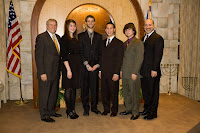
Congregation Or Ami’s service last night was deeply meaningful. Our Confirmands – Alex Krasnoff, Ross Meyer, Jonny Wixen, and Sarah Wolfson – led the prayers and in between, offered their reflections on a series of questions:

  • If asked by a non-Jewish person what you cherish about Judaism, what would you say?
  • What do you believe or think about God?
  • Having studied Judaism for 10-13 years, what ideas or parts of Judaism are most significant or meaningful for you?
  • What has Judaism taught you that will help you later in life?
  • How do you feel connected to Israel?
  • When have you felt the most Jewish and why?

Some of their responses include:

If asked by a non-Jewish person what you cherish about Judaism, what would you say? I would talk about Tikkun Olam, or fixing the world. What is most important to me about Judaism is that Jews care about more than just our community but also the world. At every Jewish camp or temple I have ever attended, there has always been an emphasis on community service. Community service is something that I love and my passion for helping others is influenced heavily by the Jewish community and Judaism. It is great to be a member of a faith that is comprised of a community that cares about others.

If asked by a non-Jewish person what you cherish about Judaism, what would you say? I cherish Judaism because it provides me with a moral code about how to live my life. Judaism teaches that if I follow its laws, then I will live a productive and happy life. Judaism also allows me complete spiritual freedom. I do not have to be spiritual to be Jewish. I do not have to believe in that the biblical times were historical, and yet I still am able to gain so much from Judaism. Judaism has not taught me one particular thing that will help me later in life. Judaism has shaped HOW I live my life. Many of my most defining characteristics are either due to Jewish teachings or from my experiences in my Jewish community. I live a Jewish life. I learned many of my morals and beliefs through Jewish teachings, and I strive to life my life as Judaism teaches me.

One of the most meaningful things I have learned throughout my studies it to be accepting of others. It is important to accept other people for who they are and what they believe in. Not only does it help to prevent problems, by not dwelling on peoples differences, but also you might become friends with them. Another thing I have learned it to help those in need. One of the reasons helping those in need is important is because if you were in need, you would want someone to help you. The reason I like to help those in need is the wonderful feeling I receive from helping someone else.

What has Judaism taught you that will help you later in life? Judaism is full of life changing ideas and lessons. I know that I will use my studies later in life to help me make large decisions and live a fulfilling life. Judaism teaches us to be patient with one another, which I feel is really important if I want to go far and be happy. The idea of repentance on Rosh Hashana is an extremely important idea to me. I feel that it is crucial to reflect, but not regret, and then in a healthy way move on. If I can live these values, which Judaism has taught me, I know I will go far.

Having studied Judaism for 10-13 years, what ideas of Judaism are most meaningful for you? Judaism, at least Reform Judaism, has adapted to modern times. We are not forced to follow traditions just because that is how it has always been done, when those rituals have no relative meaning to modern times. Also, Judaism allows me to choose what I believe in and yet still provides a way to live my life to its fullest. This is what I love about Judaism the most, that Judaism instructs on how to live a successful Jewish life, yet does not require you to believe in every aspect of Judaism.

Rabbi Kipnes teaches that the strength of Judaism is its teaching that every aspect our Torah and tradition is open to questioning and challenge. Even the existence of God…

What do you believe or think about God? I do not believe that God exists. I prefer to believe that in a society as advanced as ours, people can be weaned off of the opiate of the masses. I do think that there is a place for religion without God. I think that religion is a great place to build a safe community, and to teach valuable morals and lessons. It is not that I ever lost my faith in God. It is that I never had it. To be frank, I think that science makes a much more logical and compelling case for creation. I believe that history makes a better case than the bible, although I think that neither science nor history account for life’s little unexplainable miracles.

What do you believe or think about God? Deism is the belief that God created the world but has no business in it today. I do not believe that God is someone that directly controls our daily lives. I believe more in free will instead than destiny. My understanding of God is slightly different from the God in which most people seem to believe. I believe that God is what you make for yourself.

In what ways do you feel connected to Israel? I wish I had a stronger relationship with Israel, the Holy Land. I feel connected in the sense that it is our ancestor’s land and that I have read and been taught many wonderful things about it. But I have never been. I want to go to Israel very soon. If I am fortunate enough, I will go on my birthright trip within the next few years to deepen my connection.

In what ways do you feel connected to Israel? I never really felt a connection to Israel until I visited Israel with Congregation Or Ami’s first Family Trip two winters ago. I found Israel to be a magical, beautiful place. I developed a connection to Israel the more I thought about how Israel was a nation that had risen from a horrible tragedy, existing among unfriendly neighbors. There is something very powerful about having a Jewish state in such an unfriendly and extremist area. I think that Israel is something that we need to protect for not only historical reasons but also because regardless of its past, today it is a Jewish state with Jewish families, people who have made their lives there. That right to exist must be protected. It is in that cause that I feel most connected to Israel.

I feel connected to Israel not only through the fact that I am Jewish but also through the friends I made that live in Israel. The first time I went to Israel I was too young to really appreciate it. Then in the 6th grade, I went back to Israel to visit my Great Grandmother and it was so meaningful that I do not know how to explain what I felt when I was there. Then last summer I was a counselor at my summer camp and became friends with a group of Israelis. Now I am trying to find time to go back to Israel so I can visit them and see the sights once more.

When have you felt the most Jewish and why? I felt most Jewish a few summers ago as I stood before a row of cribs in South-east Vietnam. I had traveled there with my parents and other Or Ami members on Or Ami’s Humanitarian Mission to the Orphanages in Vietnam. I felt most Jewish not just because I was with a group from the temple, but because of the emotions that I felt during those three weeks. I knew that being there was crucial to my growth and development as a boy becoming a man. That experience showed me that there are so many things to be thankful for and that it is our duty to give back whatever and whenever. It illuminated for me the Jewish ideal of Mitzvot, that we all have the responsibility because of our good fortunate to give back to others.

When have you felt the most Jewish and why? I felt most Jewish when I hosted a foreign exchange student from Spain and she attend a High Holy Day service with me. Before the service, I had to explain Judaism to her. Although I do not believe in God, I found in explaining Judaism to her, that I do have an extraordinary connection to the community and the lessons of our religion.

Holiday Childspree: Shop with Foster Kids

Or Ami is again in the news, when our Adopt a Child Abuse Caseworker program took to the mall to chaperone 40 foster kids through Kohl’s Department store in our annual Foster Childspree. View more pictures here.

In full, the article in the Acorn newspaper was written by Coordinator Debbie Echt-Moxness, reporting:

Seventy Or Ami volunteers gathered at Kohl’s Department Store on Sunday, December 7th for the annual Adopt a Child Abuse Caseworker Holiday Shopping Childspree. Participants chaperoned foster kids throughout Kohl’s, helping them pick out new clothes and toys for the holidays. Or Ami means Light of our People, and this “light” was definitely shining on the faces of these kids and the volunteers who had the honor of being with them. When Mervyn’s Department store could no longer participate, Kohl’s enthusiastically stepped forward. When prior sponsors were unable to provide the gift cards, Or Ami members jumped in with new sponsorships. Grants from the Gogian Foundation, secured by Calabasas resident Kim Gubner, and the Department of Child and Family Services, allowed the congregation to expand Childspree to 40 children!

As Thousand Oaks resident and Congregation Or Ami social action chair Debbie Echt-Moxness recounts, “Miraculously, as I walked through the store and I saw the previously scared looks on the faces of the foster kids transformed by kindness (and new toys) into ear to ear smiles. It was so heart-warming. Spirit-warming, really, if there is such a word!”

One Oak Park resident, face alight with a smile, commented, “We get to go shopping, on someone else’s dime, to help kids in need. How much better can it get?”

When the Bible teaches that we are to care for those least able to care for themselves, it mentions orphans specifically. Judaism teaches that our Biblical ancestors understood that children without parents to care for them deserve special attention and support. These winter holidays (and for Jews, most all holidays) provide important opportunities for giving to others less fortunate than we are. There is no better way to teach it to our kids than to participate in the mitzvah of giving together.

Mankind is No Island… Shot Entirely on a Cellphone

Tropfest NY 2008 winner, “Mankind Is No Island” by Jason van Genderen

Torah teaches us to care for the stranger, the widow, the orphan, the poor… Are we doing our job? Is it enough to go serve in a shelter or food pantry on Thanksgiving or New Years?

According to the Los Angeles Coalition to End Hunger and Homelessness, there are:

  • 73,702 homeless people on any given night in Los Angeles County
  • 40,144 homeless people in the City of Los Angeles alone
  • 141,737 homeless people annually in Los Angeles County (COC)

Can you stand to look at the problem straight in the face? If so, check out these lives that need our help:

Gender

  • Approximately 59% of the homeless population is male, 24% female, and 2% transgendered[1]

Ethnicity

  • African Americans are over-represented in the homeless population, comprising over 50%, while in Los Angeles County they comprise just over 9% of the general population
  • Nearly 24% of the homeless population is Hispanic/Latino, and 19% is Caucasian

Age

  • Median age of Los Angeles COC homeless is 45 years old
  • 15% of the homeless population (10,116) are children under the age of 18

Veterans

  • 12% of homeless people are veterans.

Education

  • 41% of the homeless population have a high school diploma or GED
  • 7% have an Associate’s, Bachelor’s or higher degree

Shelter

  • 83% of the County’s homeless population is unsheltered
  • Of the 35% of homeless who tried to access a shelter, 45% of the individuals state they were turned away

Homeless Families

  • 24% of Los Angeles’ homeless are homeless families
  • 16,643 homeless individuals comprise over 6200 homeless families in Los Angeles County
  • 82% of homeless families are unsheltered

Domestic Violence

  • 20% of women reported experiencing domestic violence
  • 11% of homeless individuals stated that they were currently experiencing domestic violence

Victimization

  • 27% of homeless people report being a victim of assault since becoming homeless
  • 42% of homeless individuals report being victims of police harassment since becoming homeless

Health Care

  • 48% of homeless people use the emergency room as their primary source of health care
  • Over 53% had been to the emergency room at least once in the last 12 months
  • 22% have needed medical attention since becoming homeless but were unable to receive it

Disabilities

  • Nearly 31% of homeless survey respondents are mentally ill and almost 35% are physically disabled
  • Overall, around 74% of homeless individuals report a disabling condition

Need Affordable Housing[2]

  • Over 40% Los Angeles renters use more than 30% of their income to pay rent
  • 10% of Los Angeles affordable housing needs have been met

—–
[1] Does not add up to 100% because homeless children were not assigned genders.

[2] Building Healthy Communities 101. “Housing Affordability.”

*Continuum of Care (COC): does not include cities of Pasadena, Glendale, or Long Beach.

Milk: Another Jewish Boy Working for Social Justice

My wife and I saw Milk earlier this month, a poignant film about Harvey Milk, gay rights activist, politician, martyr. Each of us recalled elements of the story: Orange County-born wife remembered the havoc state Sen. John Briggs caused; I remember Anita Bryant’s joyous, musical homophobia. Both nauseated us.

Watching the movie, one could not be but energized by Milk’s skillful marrying of passion, political activism, realpolitik balanced with values… by his ability to give hope to countless who needed hope.

Yet again, we find a Jew whose life, informed by the story of our people, steps into the forefront of an important social movement. From slavery to freedom, degradation to hope. Sure, Milk was a secular Jew, but, according to his nephew, his life was informed by our Jewish story:

As the Jewish Journal reports:

… Stuart Milk explains, that concern for the underdog stemmed from his uncle’s understanding of basic Jewish principles.

“He was 15 at the end of World II, and I can definitely say that he was deeply affected by the Holocaust,” Stuart Milk says. “So, yes, the Jewish sensitivity to civil rights absolutely had an impact on Harvey. In fact, he was the one who told me about how much support Jewish organizations and Jewish individuals gave to minorities. He often said that Jews feel they cannot allow another group to suffer discrimination, if for no other reason than that they might be on that list someday.”

“Furthermore,” he says, “Harvey was the first to tell me that in addition to the Star of David, which Jews were forced to wear in Nazi Germany, there were pink triangles that gays had to wear, and that almost a million gays were put to death.”

Electric Cars: Israel’sLeading the Way Again

The Associated Press (December 8, 2008) writes:

Instead of filling up at the pump, soon Israeli motorists will be able to fill their cars up at the plug.

That’s the idea behind Monday’s demonstration of the parking lot of the future, equipped with stations to charge the battery-powered cars scheduled to ply Israel’s streets in 2011. Israel’s government has endorsed the project, which aims to blanket the country with electric cars and plugs.

The California-based company, Project Better Place, is building the infrastructure to switch Israeli drivers over to battery power. The group has built 400 wired parking spots, mainly in and around Tel Aviv, since it launched the initiative in June.

Demonstrating the first 10 stations in a Tel Aviv mall parking lot, organizers explained that drivers can charge their cars while shopping.

Charging stations are 3-foot-high pedestals with curly-cued cords attached. A triangular plug fits into a socket where a car’s gas tank usually is.

Pini Leiberman, manager of infrastructure for Project Better Place, says the group hopes to wire 100,000 parking spots in Israel by 2010. The plugs will energize a fleet of electric cars being developed by the Renault-Nissan Alliance scheduled to hit the streets of Israel in 2011.

The car prototype was first demonstrated in May. Israel’s government believes it’s a way to reduce Israel’s dependence on oil and reduce pollution.

However, there are concerns that the cars can drive only short distances before they need to be charged. Leiberman said wired parking lots like the one displayed Monday can help solve the problem. He added that in 2010 there should be charging stations every 25 miles (40 kilometers).

Also, Leiberman said the company is developing battery changing stations, so drivers with no time to charge can trade drained batteries for charged ones.

Drivers who recharge at parking lots will pay by the mile. Computers will look at how much electricity the car needs and calculate the cost.

Leiberman said he did not know what the cost per mile would be, nor what the cars will cost, but pledged it would be lower than gasoline-operated cars.

That could be critical. Persuading Israeli car owners to trade their gas guzzlers for short-range vehicles could depend on whether the overall outlay is significantly lower, including the cost and effort of installing special plugs at their homes. There are also concerns about pollution from spent batteries and added drain on Israel’s already sagging electricity grid.

Israel Corp., a local partner of Better Place, has invested $200 million in the project, the company said, to pay for the entire electric car infrastructure in Israel.

If Project Better Place’s plan works, Israel would become the first country to have large numbers of electric cars on its streets. Test runs are set for next year.

The Danish energy company DONG Energy AS adopted a Better Place model in march, hoping to have electric cars running on power generated from wind turbines by 2011.

Hawaii and California were among the first states to sign onto the plan, the company said.

Nothing But Nets: Make a Great Miracle Happen There

Looking for a tzedakah project to shine the light of healing and hope during Chanukah? Each year, malaria infects 500 million people, causing over one million deaths, devastating the society and economy of affected regions.

Wondering what the “Jewish” is? The Talmud, Sanhedrin 4:9, teaches: WHOEVER SAVES A LIFE SAVES THE WORLD ENTIRE.

Why work with Africa’s poor? Rabbi Joshua (in Talmud Sanhedrin 98a) asked, “Where shall I find the Messiah?” “At the gate of the city,” Elijah replied. “How shall I recognize him?” “He sits among the lepers.” “Among the lepers!” cried R. Joshua, “what is he doing there?” “He changes their bandages,” Elijah answered. “He changes them one by one.” That may not seem like much for a Messiah to be doing. But apparently, in the eyes of God, it is a mighty thing indeed.”

For just $10, you can purchase a bed net and help prevent the spread of this terrible disease in Africa through the United Nation Foundation’s Nothing But Nets Initiative. Learn more here.

Condemning Israeli Settler Violence

American and Israeli newspapers are filled with stories about the ongoing settler violence in Hebron, following the Israeli government’s evacuation of the settlers from the Hebron house.

Ha’aretz reported that the IDF declares Hebron area closed military zone after settler rampage. Ha’aretz journalist Avi Issacharoff went so far as to write that the Hebron settler riots were out and out pogroms. The more conservative Jerusalem Post reports that The young men from Kiryat Arba exact their ‘price’ in the valley.

So let’s be clear. We condemn the this violence by these settlers. One cannot justify these actions against innocent Palestinians. And this is not the first time we have read about such settler violence.

So we must applaud the words of Rabbi David Saperstein, Direcctor of the Religious Action Center of Reform Judaism (Dec. 5, 2008):

In light of the High Court ruling, we laud the Israeli government’s support of the evacuation of the contested site. The government, army and police must continue to take decisive, tough action to ensure that the saddening violence and destruction of recent days is met with the firm rule of law, bringing to justice the perpetrators of these crimes. The violent actions against Palestinian persons and property by Jewish extremists must be halted just as the violent response of Palestinians must be halted. We call upon the Israeli government to do everything within its power to ensure that all innocent civilians, regardless of nationality or religion, are protected from vigilantism. Violent attacks threaten the viability of a future based on a peaceful two-state solution to the conflict. As Shabbat falls, with the Unites States government advising citizens to avoid Jerusalem for fear of further violence, we pray for the peace of Jerusalem, denounce the hatred driving these heinous acts, and reiterate our message that to honor God, one must honor every human being as being created in the image of the Divine.

Everyone Does Better When Everyone Does Better

This from American Jewish World Service’s D’var Tzedek on Parshat Vayetze:

The bumper sticker on my brother’s car reads, “Everyone does better when everyone does better.” This statement brims with optimism: it is a vision of shared work and shared gain. Yet as I repeat this phrase, the terms begin to flicker: Is the “doing better” economic or moral? Who is considered to be part of “everyone”? Jacob finds himself part of a quotient of work and gain in this week’s parshah that helps illuminate the nuance in this slogan.

Jacob is a migrant worker. He flees from a dangerous situation at home and takes refuge in Haran.1 In this foreign area, he does arduous agricultural work for his uncle, Lavan, who assumes the role of deceptive and abusive employer. Because Jacob arrives destitute, Lavan easily takes advantage of him. From Lavan’s perspective, this presents a wonderful opportunity for economic growth, both for himself and for his community.

According to Midrash, the Haranites are cognizant of this exploitation. Lavan gathers everyone and reminds them that Jacob’s labor has improved their economic situation. “Do as you think fit,” the people respond. Lavan then announces that he will dishonestly persuade Jacob to stay seven more years. “Do whatever you please,” they say.2 The community tacitly encourages Lavan. They believe that their prosperity will be multiplied collectively: Everyone does better when everyone does better.

Millions of migrant workers today suffer the consequences of this thinking. They are exploited in much the same way as Jacob, and this exploitation is supported by the communities around them—either explicitly or implicitly. In Thailand, Burmese immigrants work long hours for little pay in unsafe, abusive environments.3 In the U.S., Mexican born farm workers toil in dangerous conditions,4 and many earn incomes below the poverty level.5 Powerful nations reap the benefits, gaining a flexible labor supply and avoiding social costs of health care, fair wages and overtime pay.6 Our country, and each one of us, depends on migrant work being done cheaply across the globe.

This system is possible because migrant workers, like Jacob, are perceived as marginal, invisible. They are not part of “everyone.” Because rights are not granted or acknowledged, the migrant worker has no recourse and must accept whatever horrendous situation an employer offers.

This story takes the optimism out of what I originally thought was a buoyant bumper sticker. Yet Jewish tradition responds. It condemns exploitation such as that experienced by Jacob. Deuteronomy teaches, “Do not oppress the hired laborer who is poor and needy, whether he is one of your people or one of the sojourners in your land within your gates.”7 Our tradition mandates that we not exploit workers—foreign or domestic. As employers, we must embrace ethical labor practices. Our tradition is telling us to read the slogan differently: to “do better” is to act in a moral way. In this case, when we act ethically, we improve ourselves: Everyone does better when everyone does better.

Secular labor law similarly concedes that treatment of workers is primarily a moral issue. This is evident in the language of the International Convention on the Protection of the Rights of All Migrant Workers and Members of Their Families (ICMW). This document focuses on human rights and “the inherent dignity of every human person,” rather than on economic concerns.8 Yet it is telling that only 27 countries have ratified the ICMW, none of them major migrant worker-receiving states. Greed is trumping morality in our world. Migrant workers in our own country
and across the globe lack basic legal protections.

Unless we actively defend the rights of migrant workers, we are as complicit as the residents of Haran in the suffering of others. We cannot expect the millions of migrant workers to be their own advocates—their situations make them highly vulnerable, leaving them with too much at stake. Jacob is unable to effectively challenge Lavan until he is independently wealthy, a mere fantasy for most migrant workers.9

From the perspective of economic greed, it may seem wise for us to turn a blind eye and let this unjust tradition of exploitation continue. But perhaps there is a reason it is our own ancestor who was exploited, a role that has repeated itself in other places in Jewish history. It is incumbent upon us to speak out on behalf of migrant workers, the collective descendents of Jacob’s experience, domestically and internationally.

Everyone does better when everyone does better.

This bumper sticker is not about imbalanced economic growth. It is about finding our own humanity.

NOTES:
1 Genesis 27:41-45
2 Bereshit Rabbah 70:19
3 Amnesty International. “Thailand: The Plight of Burmese Migrant Workers.” June 8, 2005.
4 The Department of Labor’s Occupational Safety & Health Administration lists agriculture as the second most dangerous occupation in the
United States. PBS, “On the Border,” NOW, May 28, 2004.
5 US Department of Labor. “Findings from the National Agricultural Workers Survey (NAWS).”March 2000.
6 December18. “Migrant Workers: Issues and Concepts.”
7 Deuteronomy 24:14-15
8 General Assembly of the United Nations. “International Convention on the Protection of the Rights of All Migrant Workers and Members of Their Families.”
9 Genesis 31: 38-44

Sam Berrin Shonkoff is currently the Jewish student life coordinator at Stanford Hillel. He earned a Bachelor of Arts degree in Religious Studies from Brown University and has also studied in Jerusalem at Hebrew University, Pardes Institute and The Conservative Yeshiva. Sam’s passions include backpacking, meditation, friends and family, writing, dancing and social action. He believes that mindful engagement with Torah can be a way for us to encounter ourselves and others more intimately. Sam can be reached at samshonkoff@gmail.com.

What Killed the Campaign for Darfur?

Haaretz Chief Correspondent Shmuel Rosner explores: What killed the campaign for Darfur?He raises some important questions about whether the tendency of “save-Darfur” activities to be suspicious of agressive action let the world off the hook. Rosner writes:

Richard Just over at TNR [The New Republic] is doing a masterful job sorting through a long list of Darfur-related literature, and recapping the failure of the international community to deal with the genocide in this region. It is a long piece and worth reading, and it makes a lot of good points. For me, the most obvious and striking point deals with the unsolvable inherent contradiction between the need for urgent decisive action in Darfur and the tendency of “save-Darfur” activists to be suspicious of such aggressive action (particularly of American military intervention).

Just writes:

Eventually the movement coalesced around the idea that U.N. troops were the answer. In the wake of the Iraq debacle, the idea of sending U.N. peacekeepers to Darfur represented for many activists a sort of safe compromise?troops would be put on the ground, but American power would not be wielded. It was military action that they could endorse without opening a dissonance in their worldview. Even Prendergast, one of the most hawkish Darfur activists (and one of the smartest), endorses the U.N. option in his book as the solution that makes the most sense. To be fair, he has also suggested elsewhere that the United States should keep other military options on the table; but this latter position certainly places him outside the mainstream of the Darfur activist community.

Just is not the biggest fan of President Bush, and isn’t shy of putting some of the blame with him. But he is also honest enough to ask: “did liberals demand the right things of him? Did we push for what would really save the people of Darfur? Or did we get trapped by the inclinations of our worldview, and advocate for too little?” (I think the answer for these questions is a pretty clear now). However, as Just writes, the activists clamoring for UN help were conveniently forgetting one important thing (aside from the fact that the UN is not exactly known for its military competence): For the UN to act, one needs other countries to participate, many of them countries to which activists and their outrage mean nothing. Just dedicates only one paragraph in his article to the faults of China. But choosing the UN meant enabling the veto power of China over action in Darfur – which then, unsurprisingly, blocked effective measures against its ally Sudan.

A couple of months ago, I[Rosner] wrote in an article for Slate about the lessons of Darfur (an article for which I received numerous angry emails from activists arguing that my perception was too grim):

The campaign to save Darfur is alive, but it is no longer kicking. You could say that it has achieved all its stated goals: public awareness, international pressure, congressional action, the administration?s involvement. Well, all but one: The crisis in Darfur is not yet solved, and the campaign to save Darfur is running out of options.

While paying the understandable lip-service to the notion that it is not yet time to give up (“it is too soon to succumb to a retrospective spirit”), Just has convinced me that my assessment was correct. His article does not offer a new course of viable action, and goes into detail when it recounts the many complexities making this conflict harder to end. No wonder that the two presidential candidates aren’t making Darfur a centerpiece of their agenda. No wonder that voters do not demand such an agenda from the candidates. The old-style, activist-driven battle for Darfur is over. Choosing China over Bush is one reason that it ended before it even really began.

Bush Does the Right Thing for Darfur!


Wall Street Journal carried an opinion piece entitled, Bush Does the Right Thing for Darfur: A critic praises the president’s stand on war criminals and international law. In it, Kenneth Roth, executive director of Human Rights Watch, writes:

Human Rights Watch rarely lauds the Bush administration. But when it comes to supporting international efforts to prosecute Sudanese leaders for their slaughter in Darfur, the administration so far has it right. The International Criminal Court’s prosecutor is seeking an arrest warrant for Sudanese President Omar al-Bashir for genocide, war crimes and crimes against humanity for the atrocities he allegedly directed in Darfur. Sudan’s government is trying to convince the United Nations Security Council to suspend the prosecution. On the one hand, Khartoum has launched a charm offensive, announcing on Nov. 12 yet another cease-fire and peace initiative. On the other hand, it is subtly threatening violence against civilians, peacekeepers and humanitarian workers should prosecution proceed. Backing Sudan are Libya and China, as well as South Africa — whose concept of African solidarity tends to favor African persecutors over their African victims. Surprisingly, the toughest governmental defender of the proposed indictment is the Bush administration…

Read on.

Is Obama’s Mideast Peace Platform Coming into Focus?

Haaretz is reporting that

Eight weeks before Barack Obama is sworn into office, signs have emerged over the weekend that point to what is turning out to be the new administration’s plan to resolve the Israeli-Palestinian conflict.

We read that:

Despite the attention being paid to Clinton, no less important is the move made two days ago by Scowcroft and the man who succeeded him in office as national security adviser to Jimmy Carter, Zbigniew Brzezinski. In an op-ed piece penned for the Washington Post, Scowcroft (whom John McCain considered naming as a special envoy to the Middle East) and Brzezinski (who was close to Obama during the initial stages of his candidacy for president) offered a kind of first draft of “The Obama Plan.”

The former NSA chiefs – who represent a wide, bipartisan consensus by dint of their service to Democratic and Republican presidents – praise President Bush’s peace efforts over the last year and call upon Obama to lend “priority attention” to the Israeli-Arab peace process. Even though they do not name names, one can clearly notice an effort to influence on the election results in Israel so as to favor moderate candidates – Tzipi Livni and Ehud Barak – over Benjamin Netanyahu.

  • The crux of their plan to solve the conflict centers on four principles which they believe Obama ought to adopt and publicly declare as policy:
  • An Israeli withdrawal to the 1967 lines, with slight alterations that are to be mutually agreed upon.
  • Compensation for Palestinian refugees in lieu of exercising the right of return to pre-1948 Israel.
  • Jerusalem as a “real home” to two capitals.
  • A demilitarized Palestinian state.

Very interesting conversations going on!

An Ethical Will for My Children

Some years ago, I wrote this ethical will for my children. With a few adjustments, I shared it with the congregation as a High Holy Day sermon. I still stand by these values.

As Congregation Or Ami’s New Dimensions (activities for adults only) prepares for a seminar on Writing an Ethical Will (Monday, November 17, 2008 at , I went back to my Ethical Will to see what I wrote. I still like it:

On Aaron’s Advice: An Ethical Will for My Children
Rabbi Paul J. Kipnes, Congregation Or Ami, Calabasas, CA
Rosh Hashana 5763 / September 2002

When Becky asked me to officiate at a minyan after her father Aaron’s funeral, I stepped forward without question. Friends help friends. It was only as I stood there, for two nights, before our extended group of friends, before Becky, that I realized the daunting task of trying to find words of wisdom to comfort someone whom I considered more a family member than a friend. Doctors do not operate on their loved ones; rabbis probably should not officiate for family members either. It is just too close.

But there we were. We prayed the prayers, moving forward without comment. Becky seemed to take strength from the regularity of the ritual and comfort from the companionship of the community surrounding her. I worried about what to say to bring uplift to her heart, solace to her soul. I was saved, however, by none other than Aaron himself – yes, the deceased. Before heart surgery ten years earlier, being well aware that “you can never be sure when the end will come,” Aaron, wrote an ethical will to make sure that his ideals would survive. A short, two-page letter to his loved ones, the ethical will bequeaths to them the values he holds most dear. As the letter was read aloud, Aaron himself comforted his daughter and his grandchildren, and led us all with wisdom and humility to a meaningful moment of kedusha, of holiness.

A few weeks later, emboldened by Aaron’s example, I sat down to write. You don’t need 10 years as a rabbi officiating at funerals to know that all it takes is some freak accident, unexpected disease or, however unlikely, some terrorist action to end your life prematurely. So I accepted for myself Aaron’s implicit invitation to impart words of comfort and wisdom to those who would survive me. I will share now but a few of the words I have written down in an ethical will to my family. Should I live to watch my three children mature, make their way in the world, and create their own lives and family, I hope to have passed on these values both in name and by example. But if not, God-forbid, I want them, and you, to know what is in my heart as you all continue to live your lives. With the High Holy Days upon us, this just might be the most important sermon I write this year.

To My Beloved Children:

We live in a world in which celebrity seems more important than what good you have accomplished. Where America’s leading businesses and business watchdogs lied to thousands of investors who counted on their honesty to plan for their future. … Where anti-Semitism – unadulterated hate – has raised its head in Europe, endangering our people yet again. … Where the bravado, self-interest and violence of the Palestinian leadership destroyed our realistic heartfelt offers to end the Mideast conflict. These are frightening times for our people, for all people.

With so many spurious values abound, I find myself contemplating the awesome responsibility we have to guide you in life. As you navigate the uncharted waters of life, I wonder, have we filled your life raft with a strong enough set of ethics and ideals to keep your heads above the raging waters?

The key, it seems, is to remember that you have all you need to bring goodness to yourself and into the world. Do not allow yourself to be limited by others, whether because of your gender… or your religion, race, orientation or age. These provide you with unique tools with which to navigate our world. You can do anything you put your mind to, anything you truly wish to accomplish. By the way, that is the central lesson of the modern Bar and Bat Mitzvah. Having completed an arduous, complex task, you will have learned that nothing is too difficult or beyond your reach.

When each of you was born, we celebrated with a Jewish ceremony. Surrounded by family and friends, and delicious desserts baked by PaPa and LaLa, we shepped nachas, shared the joy. At its most basic level, these ceremonies proclaimed that you were Jews and that we intended to bring you up as Jews. More significantly, it taught, even before you could understand it, that you are inheritors of a sacred tradition. As you grow, immerse yourself in our Jewish values and become our ideal, an Or LaGoyim, a light unto the nations.

My children, you are part of Am bachor, a chosen people. Not necessarily better than others. Merely chosen for a special responsibility. You are chosen to receive Torah values and effectuate them in our world. To help you understand this, we have prioritized our lives around enabling you to gain a strong Jewish education, learning the teachings of Torah. Torah encompasses all that is good and worthy. Hafach ba v’hafach ba d’chula ba – turn it and turn it, everything is in Torah: our stories and traditions, rituals and ceremonies, ethics and values. Taken together, Torah goads us into making our special contribution to this world.

Of course, the pursuit of wisdom begins with Torah, but should not conclude with Jewish learning alone (although your ability to evaluate the world will be severely limited without it). As Am hasefer, the People of the Book, we value secular scholarship too, for its own sake and as the key to our survival. Complete your studies with vigor; pursue college and advance degrees thereafter. Jewish knowledge and secular studies, combine these and you will be able to more easily pursue your dreams. It is a marriage made in heaven.

Speaking of marriage, back in ancient days, I would have had the privilege of picking out your spouse. Today, thankfully, you choose your own. Allow me to share with you what I have learned about love and marriage. Look not to movies or Madison Avenue advertisements for guidance in your search for a soul mate. Look, rather, for a partner who loves you, who helps you realize your fullest potential, with whom you feel enabled to expand your horizons. And find someone who has a commitment to Jewish life. With them you will share a heritage, and an ethical and spiritual encoding that was programmed into you at the moment of conception, nourished within you from the time you nursed at your mother’s breast. With such a partner, your life will be easier and, I believe, fuller. Yet whomever you choose, Jew or non-Jew, a male or a female, know that we will love you and your partner, and will try to support the life you build together.

I have learned that marriage takes as much if not more work than whatever you get paid to do, but the rewards of these efforts far exceed the paycheck you bring home. Continue to date your partner throughout your life. Make your time with him or her a priority, even when you have children, and share the responsibilities equally. That sage Dear Abby wrote, infatuation is to marriage like fireworks are to fireflies. Though infatuation (even lust) will light up your skies with an overwhelming display of light and noise, a mature, strong marriage – like a firefly – will provide you with a beacon of light to guide you home after a long lonely day in the world. And that, the beacon of light shining forth from my wife’s love, is what keeps me sane in our crazy world.

Mishpacha, your family needs to be a high priority. Mom and I made decisions about where we wanted to live based on our desire to raise you in proximity to your grandparents. Yes, family has the ability to push your buttons like no other, but they also have the ability to accept you and love you unconditionally. Find a way to love your family and they will sustain you through the most challenging of times. Let yourself be separated from them when you are adults, and the tragedy of separation will be passed on as a model for your children as they develop their familial relationships. So call your adult siblings regularly and your parents even more. Throughout your life, make Shalom Bayit, peace in the home, one of your goals, and you will find unparalleled strength as you to venture out into the world.

About work, I have learned this: Find a career path that will allow you to bring goodness into our world. Making money for money’s sake, or even just to support your family, will slowly consume your soul. At the end of the day, you will not sustain yourself without seeking a greater good because the sole pursuit of money and material things is unending. And by the way, don’t try to keep up with the Jones’, because you can never keep up with the Jones’, because there will always be more Jones’ who always will have more.

Be ethical in all that you do – especially at work. Not because otherwise you will get caught – which ultimately you will. Rather, be ethical because it is the right thing to do. Always remember that Hebrew National hotdog commercial. It says it all. You are “responsible to a Higher Authority.”

As you prioritize your time, seek out a synagogue that speaks to your heart. Help it fulfill its mission to educate Jews and to respond Henaynu, that we are here to support each other. Attend services frequently. They will heal and uplift your soul in ways that you will recognize only after you have expended the energy to show up. Al tifros min hatzibur, do not separate yourself from the community, since within community, can we best feel God’s loving Presence.

Pray for the peace of Jerusalem. Sha’alu Shalom Lirushalayim. Nowhere is the need for shalom more clear and yet often more difficult than in relationship with the State of Israel. But Kol yisrael areivim zeh bazeh – all Jews are responsible for each other. As you know, I am drawn to Israel even now, when most people are staying away. I have traveled there in both good and in difficult times. And I will again. Ahavat Yisrael, the love of Israel that courses through my veins, calls me to stand on her soil and to speak with her people, even at times that others deem dangerous. Just as I cannot imagine a world without you, neither can I imagine a world without Israel. As such, we all must wrap our arms around this tired little nation, comfort and support her, and tell her that Od yavo shalom, peace one day will come.

We can discern in our hearts a special love for Israel as we learn about her past and her present and as we visit her unique, precious places. As this love and connection grows – even before it fully matures – we need to support Israel with our time, energy and money; and dedicate ourselves to her wellbeing b’chol l’vavcha uv’chol nafshecha uv’chol m’odecha – with all our heart, soul and might. That too is part of the purpose for which God placed us on this earth.

You know that I have been studying Talmud with my colleagues. I recently studied the Talmud’s short list of six responsibilities of a parent to his or her children. Curiously, number six was “teach your children to swim.” Why swimming of all things? Did the rabbis witness their own set of tragedies and understand the simplicity of prevention? I wonder if they recognized the poignant symbolism inherent in swimming: that on occasion we all will be thrown into waters over our heads and we need the skills to keep ourselves afloat. In teaching you to swim, we endeavor to provide instruction in more than just the physical act of treading water and self-propulsion. We confirm that within each of us are many diverse tools – physical, emotional, spiritual – to help us navigate the currents of life. We have taught you the power of seeking out others for help and the wisdom of listening closely to their advice and counsel. I hope we have taught you that turning to others for support – friends and school counselors, rabbis and therapists – is the mark of courage and strength, not of weakness or shame. So seek out help when you need it.

Life, you may be learning, is filled with mysteries. The greatest perhaps is why God placed us upon this earth. Recently, I have discovered a hint of that ultimate purpose. Embedded in Torah, in a portion we read every Yom Kippur, are the words: Kedoshim tihiyu ki kadosh Ani Adonai Eloheichem – you are holy because I, the Eternal your God am holy. Life, I believe, is supposed to be about Kedusha, holiness, about those significant yet indescribable moments of inspirational uplift that result from right-minded actions and intentions. Holiness, like spirituality, is not just a state of being; it is a manner of acting within the world by being compassionate, pursuing justice and seeking truth. When we do this right, our actions reflect shutaf Adonai, a partnership with God.

Well, these are the values I cherish. Values which carried me through the dark days of years gone by. I hope they carry you through too. I wrote these down, on Aaron’s advice, as a way to guide and comfort you in the years ahead. Perhaps one day soon you too will follow Aaron’s example and write down your ethical will. It truly is a holy task.

For now, mine kinderlach – my children and the children of my Torah teaching – honor my memory, and your family’s memory, and the tradition passed down midor lador, from generation to generation since the time of Moses, by being holy, by being kadosh. I know you are… May you know you are…

I love you. Love, Daddy.