Category: blog archive

Four Favorite Jewish Spiritual Practices

Person: “Rabbi, what can I do to make my days feel more meaningful?”

Rabbi: “Try some mitzvot and Jewish spiritual practices.”

What’s a spiritual practice?
A spiritual practice refers to regular, purposeful actions we do in order to transform our lives from everyday regularity and habit into sacred, meaningful moments. Whether chosen from the 613 mitzvot (Jewish obligations) of Torah or from other customs passed down, spiritual practices can uplift and inspire.

Jewish mitzvot direct us to live lives infused with meaning and value. Our blessings reveal the underlying message of our mitzvot (religious commandments), when we say asher kiddishanu b’mitzvotavwho makes us HOLY through Jewish obligations. We do Jewish actions in the hope that they will lead us to holy, spiritual living.

Four Favorite Jewish Spiritual Practices:

1.  Counting 3 Blessings
In a notebook or on a smartphone, keep a running list each night of three experiences or moments daily for which you are thankful. If you miss a day or two, don’t sweat it. Start again on the current day.

2.  Bedtime Shema and Hashkiveinu
Spend three minutes (that is all it takes) reaffirming the oneness of existence and the hope for a safe sleep by reciting or singing these prayers. Read about the bedtime Shema, then say the prayers in Hebrew and listen to them in song.

3.  Morning Modeh Ani
Upon waking, recite a morning meditation giving thanks for your life and soul. Read the prayer in Hebrew and listen to it in song.


Modeh Ani (for a male) OR Modah Ani (for a female)
L’fanecha, Melech chai v’kayam, sheh-heh-cheh-zartee neesh-ma-tee, b’chemla rabbah emunah-teh-cha.

Poetic Translation: Thankful am I in your Presence,
Spirit who lives and endures,
for You have returned to me my soul with compassion.
Abundant is your faith!

4.  Midday Mincha: “Mincha” refers to the afternoon prayers. Set an alarm for sometime between 2-4 pm. When the alarm sounds, turn away from your computer, your phone, and your responsibilities. For 3-5 minutes, just sit quietly doing nothing but just “being.” Perhaps get out of your chair and sit on a couch or another place in the office. Perhaps close your eyes.

What are your favorite spiritual practices that can make your day more meaningful?

Patti Wolfson Invites You to National Policy Conference

Patti Jo Wolfson, beloved faculty member and master teacher at Congregation Or Ami in Calabasas, attended the recent National Policy Conference of the America-Israel Public Affairs Committee (AIPAC). She wrote this letter to the community:

I’ve just returned from the 2013 AIPAC Policy Conference in Washington DC. This was my 7th Policy conference and each year I return even more invigorated and more determined to introduce the Congregation Or Ami community to the wonders of AIPAC. Congregants David Litt, Steve and Allison Martini, Chaniel Cooper, and educator Jodi Levine joined me with 13,000 other pro-Israel activists from all 50 states. The theme for this year’s conference was “Shaping Tomorrow Together”.

The program highlights included the ways that America and Israel are working together to build a prosperous future in science innovation, military marvels such as the Iron Dome, and advances in the humanitarian projects. We saw a live demonstration of a paraplegic walking again with the Israeli invention, ReWalk. We heard from an Israeli soldier who worked in the Iron Dome Unit and saw, first hand, how many lives were saved, including his own family, because of Iron Dome’s ability to shoot rockets out of the sky. We heard Israeli and African farmers explain how Israel is developing agricultural projects in Africa to help feed starving nations there.

We witnessed speeches from any distinguished speakers such as Israeli Defense Minister Ehud Barak, US Vice President Joe Biden, Canadian Foreign Minister John Baird, and Israeli Prime Minister Benjamin Netanyahu (live via satellite) and many important members of our United States Government from both sides of the aisle. Everyone came together to support the friendship between two allies.. Israel and America.

I hope you will consider joining Rabbi Paul, his wife Michelle and myself and the following Congregation Or Ami members, who have already register for the 2014 AIPAC Policy Conference in Washington DC: Jodi Levine, David Litt, and Allison and Steve Martini. We are planning on bringing a delegation of 20 Or Ami members.

I guarantee that attending the AIPAC National Policy Conference will bring joy and satisfaction to your life, just knowing that you are doing something to help the homeland of the Jewish people. It excites and comforts me to know that America’s leading pro-Israel lobby, AIPAC, works with Democrats, Republicans and Independents to enact public policy that enhances the U.S.-Israel relationship. We are making a difference!

In the meantime, Miss Jodi and I are planning a summer informational event for interested COA members to learn more about AIPAC. Please let me know if you are interested in being added to our guest list.

Overjoyed,

Patti Jo Wolfson
pattijowolfson@gmail.com

Reform Rabbis Respond to Seismic Shifts

A paradigm shift is overtaking the American Reform Rabbinate. This is not the first time we have encountered such seismic pressures; yet the intensity far surpasses anything I have before experienced in my 21 years as a rabbi. Uniquely, the annual convention of the Central Conference of American Rabbis confronted these shifts head on.


The Jewish World is Changing… Rapidly
Recent literature has been slowly nibbling around at the edges, suggesting that as the world was changing, so too the American Jewish world was changing. Hayim Herring addresses it; Dr. Ron Wolfson does too. The CCAR Journal devoted a whole issue to it (New Visions of Jewish Community, co-edited by Rabbi Alan Henkin and myself). Like everyone else, rabbis are struggling to figure it out. 

We are confronted by the perfect storm: an economic downturn which is siphoning off resources from the Jewish community at an alarming rate; the community’s aging which, as Rabbi Richard Address has been warning us, is creating new pressures on the community; the pervasiveness of technology which is flattening the preexisting hierarchies of Torah study and ritual life and obviating the need for a synagogue for so many people; and the increasing disengagement of younger generations of Jews from the organized Jewish community.

Addressing the Economy, Relevance, and Technology
So when 600 reform rabbis and their spouses and partners gathered in Long Beach, CA for the CCAR  convention, we were primed for learning. On one level we rabbis did everything we have done in the past: experienced inspiring worship, engaged in thought-provoking Torah study, and grappled with the latest perspectives on Israel, social justice, youth work and the like. On a more pervasive level, each rabbi at the convention, and the group as a whole, struggled openly and humbly with these titanic shifts in the Jewish world.

After a year of sharing stories of shifting economic priorities, concerns about the relevance of synagogues and the denominational movements, and questions about technology changing human interactions, we embraced our mutual desire to work together to shift focus, skills and intentions so that rabbis can lead our communities and places of work through the era of rapid change.

In large group presentations, intimate intentional conversations, and professionally facilitated seminars, we endeavored to define the shifts taking place in our Jewish and secular worlds. We explored how we could face those changes, working together, to lead the Jewish community forward.

Unorthodox Presentations at a Non-Orthodox Convention
In this pursuit, we learned from an unorthodox bunch of presenters. A filmmaker, a politician and a doctor (acclaimed documentary filmmaker Tiffany Schlain, and LA Board of Supervisor Zev Yaroslavsky, and UCLA Hospitals CEO David Feinberg) spoke about how narrative, community building and the pursuit of customer service excellence could lead us through the shifts. A genetic testing web company founder and a Facebook VP (Anne Wojcicki, co-founder and CEO of 23andMe and Marne Levine, Vice President, Global Public Policy at Facebook) illuminated realities and issues raised by the prevalence of technology in our lives; they urged us to face these shifts by embracing the technologies and the conversations that must follow.

In separate sessions, an Emmy award winning TV producer (Howard Gordon of 24 and Homeland fame), a Pulitzer Prize winning author (Michael Chabon of The Amazing Adventures of Kavalier and ClayThe Yiddish Policeman’s Union and Telegraph Avenue fame), and nationally-known Jewish newspaper editor-in-chief (Rob Eshman of the Los Angeles Jewish Journal) explored the use of narrative storytelling to capture and mold the experiences we seek to explain and perpetuate.

We reenvisioned the conversation about Israel with the help of Los Angeles-based Israel Consul General David Siegel, who as part of the Prime Minister’s inner circle is able to bring forward his insights on Jewish pluralism. Siegel is the son of the conservative rabbi who created the Israeli conservative Masorti movement and a member of a Progressive Jewish synagogue. The perspectives of a bevy of Israeli Progressive rabbis made it clear that colossal shifts were happening vis-a-vie religious pluralism in Israel while simultaneously we may be seeing a drawing closer to Israel by American Jews.


Reform CA: Organizing a Jewish Religious Voice for Justice
Most significantly, we gave birth to two new community organizing movements, each seeking to transform the pursuit of social justice, one in California and the other throughout the United States. First, we officially founded Reform CA, a movement of Reform Rabbis and Jews dedicated to ensuring that our Jewish values have a voice in the pursuit of a better California. Simultaneously we created Rabbis Organizing Rabbis as a nation-wide group committed to serious social justice activism through the prism of pluralistic progressive Reform Jewish values. Both groups recognize that with the world changing so quickly, there is a need for steady, value-based perspectives  to guide us toward truth and right in the face of power and might. Both groups agreed to address comprehensive immigration reform as our first issue, with the Trust Act as the Californian effort of choice.

Addressing the Shift

Too soon the convention ended, leaving us to ponder: what ideals, perspectives or knowledge will help guide us forward?  I suggest five:

  • Listening is Key: As Dr. Ron Wolfson’s new book Relational Judaism suggests, successful rabbis need to spend more time listening to our congregants or members and their concerns. Such conversations will enable us to connect up individuals with each other, creating communities of shared concerns.
  • Community Conversations Build Relationships: Since individuals are able to access learning online and ritual as a fee-for-service experience, successful rabbis will strive to facilitate conversations within the community over a wide swath of issues. These conversations build relationships, increase commitment, and deepen the connection to everything from Torah to ritual to issues of personal importance.
  • Torah is Real: As always, the narratives of Torah provide poignant touchstones to the realities of our lives. Successful rabbis will use everything the world has to offer – video, conversation, outside-of-synagogue locations, social media, personal storytelling and more to invite the Jew out of the pew to read him/herself into Torah and our Jewish tradition.
  • Technology Tells the Story: Jeremiah Knight, noted marketing/advertising expert and brother of convention chair Rabbi Asher Knight, illustrated how successful social media campaigns tell stories, invite simple but meaningful actions and provide constant connection to the story and the values they embody. Successful rabbis embrace social media for what it is: a primary means of connection and learning for multiple successive generations of people. Instead of arguing pilpul – whether online interactions are as significant and real as in-person connections – successful rabbis will utilize everything at our fingertips to connect, engage, listen and learn.
  • The Personal Trumps the Programmatic: While we crave meaningful experiences of learning and dynamic ritual, most Jews eschew programs which seek to teach or transform. Successful rabbis will shift the shape of Jewish engagement from “programmatic” to “relational.” As Rabbi Kerry Olitzky, CEO of Jewish Outreach Institute, has been teaching for years, successful rabbis move beyond their desks to stake out public space – in the foyer, the youth lounge, the local bookstore, the supermarket kosher aisle and the coffee shop – to meet people where they are.

There are so many more lessons with which we must grapple; these are but five. Perhaps the take-away from the CCAR Convention is this: the Jewish world is undergoing tremendous shifts, the train has already left the station, and we rabbis have an opportunity and a choice: to face the reality and embrace the possibilities, or to ignore and become even more irrelevant.

As Torah teaches, u’vacharta bachaim, we ought to choose that which bring Judaism back to life.

Why Rabbis Attend CCAR Conventions

So much work to be done, classes to prepare for, articles to write, administration to supervise, and yet I am going away for four days to the national convention of the Central Conference of American Rabbis. Why?

Innovation Requires Retreat Time for Reflection
To serve as rabbi of an innovative, engaging 21st century religious institution like Congregation Or Ami requires I constant effort to remain ahead of the curve (or as we say now, “ahead of the shift”). Rabbis do this at national gatherings of rabbis, where – egos left at the door – we can explore best practices, engage in critical and self-critical thinking, and become current in the literature and scholarship of Judaism and contemporary religious thought.


Torah Speaks in Many Evocative Voices
We explore how Torah and Jewish texts speak to the most significant issues of our day. We reconsider how to engage marginal subgroups including people recovering from addictions and divorcing couples, from newer generations of young people to the aging Jewish population, and from other American religious groups to other denominations of Jews.

Attending a Circle of Practice for technologically proficient rabbis led me year ago to introduce into our congregation the use of Facebook, Twitter, Visual T’filah, and even High Holy Day mid-service texting. A CCAR conference workshop a few years back began the shift in my thinking that, when combined with Rabbi Julia Weisz’s ideas and the Union for Reform Judaism’s vision, led to a top-to-bottom revamping of our youth engagement program. Another convention session pushed me down the path toward complete integration and inclusivicity for people with special needs.


Becoming a Better Rabbi
I have learned how to be a better administrator, a more caring pastoral rabbi, and a better husband and parent (many discussions on balancing work and family). I rediscovered my social justice commitment at one convention and my dedication to pro-Israel organizing at another. Practical rabbinical sessions have addressed staff supervision, program financing, leadership partnerships and fundraising in a difficult economy.

Chevruta: Other Rabbis as Sounding Boards
Then there is the chevruta (collegiality/friendship). One study places clergy as the profession with the fourth highest rate of burnout, high levels of depression and stress, and prevalent bouts with anxiety and weight issues. Being with other colleagues, people who understand the unique challenges of this calling, creates a safe, sacred space for self-reflection, in a place where mentor and veteran rabbis are easily accessible for discussion and guidance.

Stepping away from the daily processes of the synagogue for these four days is challenging, but with the help of our Cantor Doug Cotler and an Or Ami leadership committed to ensuring the clergy remains fresh and rejuvenated, I know that this time spent away will recharge my batteries and reinvigorate my rabbinic presence.

Todah Meirosh (thank you ahead of time)
So I say Thank You to Or Ami’s temple board and our staff, for allowing, even insisting, that their rabbis attend these rejuvenating conventions. Each time I have returned to the congregation with ideas to deepen and transform our community.

I wonder what I will bring back after this convention?!?

One blesses the bad as one blesses the good. One blesses the good as one blesses the bad.

Ever wonder how we as Jews might deal with the bad things that happen? In my inbox appeared this Torah Reflections on the Hebrew Month of Nisan, written by Dorothy A. Richman of the Bay Area Jewish Healing Center. Such wisdom here! [BTW: The month of Spring and of Passover begins as the Rosh Hodesh New Moon appears Monday evening, March 11, 2013.]

“One blesses the bad as one blesses the good. One blesses the good as one blesses the bad.”
—Mishnah Berakhot, Chapter Nine

Blessings are what we as Jews use to articulate our spiritual experiences. Just as lighting a candle with a blessing means that we are bringing light and holiness into our lives, so, too, do we make a spiritual moment out of a physical act when we say blessings before and after eating.

The possibilities for inspiring our blessings seem unlimited: gratitude for seeing the light of the morning (“Pokayah ivrim”: we bless the Creator who opens our eyes); praise for the garments which cover our body (Malbish arumim: we bless the One who clothes the naked); awe at the sight of the sea (Oseh ma’aseh b’raysheet: we bless the Creativity of Creation). There are traditional Jewish blessings for things we taste, do, smell, hear, see…the rabbis of the Talmud suggest that each person could offer a minimum of one hundred blessings each day.

Yet, as the quote from the Mishnah shows, we do not only make blessings over the joy or pleasure in our lives. If you hear good news, the proper blessing is Baruh Atah Adonai, Elohaynu Meleh ha-Olam, ha-Tov v’ha-Maytiv, Blessed are You, Creator of the Universe, Who makes the good and the even better! Upon hearing bad news, one says, Baruh Atah… ha-Olam, Dayan ha-Emet, Blessed are You…Judge of Truth.

Why does the Mishnah go out of its way to tell us that the bad requires a blessing, too? Why does it then repeat the idea, letting us know that the good is blessed in a similar way to the bad? In my experience, good news and bad news don’t necessarily come separately: every new beginning is an ending; every start is a farewell. Sometimes, the very things we have been praying for bring us pain; other times, things we would have given anything to avoid bring us blessing we could not have imagined. Perhaps when we bless the bad as we bless the good, we bless the possibility in each experience to bring us joy or pain. We bless the gift of the moment and at the same time we bless the gift of perspective, the sight which will only come later and interpret the experience as good or bad.

The month of Nisan is a month of special joy in our spiritual calendar. In it, we celebrate Pesah, the Feast of our Freedom, breaking physical and spiritual bonds into liberty and movement! Yet a day into this celebration, we enter the period of the ‘Omer, a time which many observe with mourning practices. Our joy and our grief come together, in the calendar and in our lives.

There is a special blessing which is traditionally said during the month of Nisan (beginning this year on the evening of March 11th). Upon seeing trees blossoming for the first time in the year, one says, Baruh Atah Adonai, Elohaynu Melech ha-Olam, shelo heesar b’olamo davar, u’vara vo briyot tovot v’ilanot tovim l’hanot bahem b’nay adam. Blessed are you….Who has withheld nothing from this world, and Who has created beautiful creatures and beautiful trees for humans to enjoy.

The Nisan prayer is a prayer celebrating growth. We bless the Holy One whose world models for us seasons of turning in and turning out, moments of joy with moments of loss, a world where blessing is in the good and the bad.

This Nisan, may we find blessings in the moments we have, and may we find many moments to offer blessings.

Adults-Only Purim: Inappropriate, yet Purimly-Acceptable

Cotler, Weisz & Kipnes: Clergy Rockers

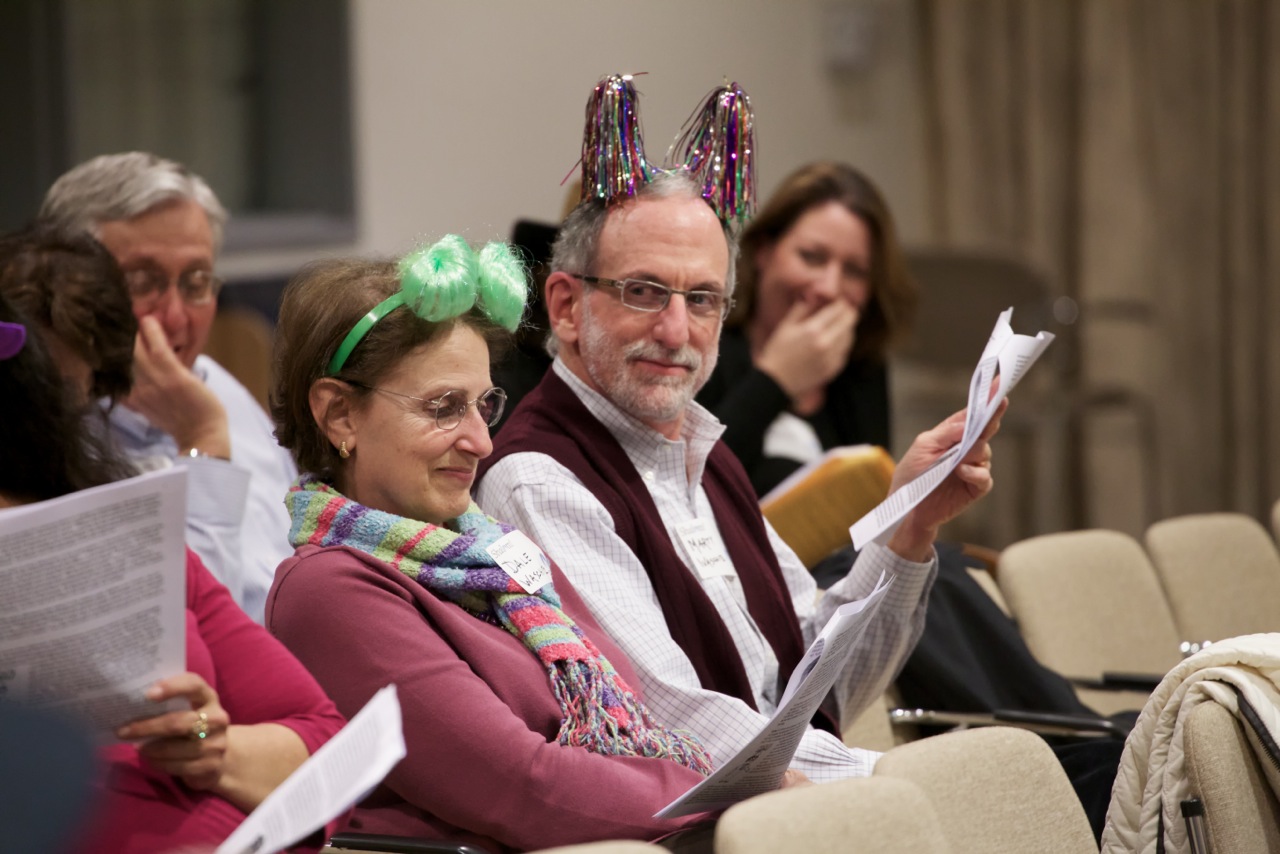
We laughed so hard. At Cantor Doug Cotler’s cleverly funny songs, at Rabbi Julia Weisz’s ridiculously hysterical costumes, at Rabbi Paul Kipnes’ inappropriate yet Purimly-acceptable riffs on Megillat Esther, the story of Purim. We laughed out loud, belly laughed. And in between, we reflected on lessons of transcendent importance. We adults, we did.

“It was one of the most unorthodox service I have yet to attend at Congregation Or Ami. I say this in the most positive way,” wrote David Silverstone. “Our two Rabbi’s and Cantor should receive an Academy Award at this years Oscars for their creative and entertaining performance. With out question, Rabbi Paul should receive the award for best Performance in a documentary, Rabbi Julia for best costume design and Cantor Doug who already has a Grammy Award to his credit should now be the recipient of his first Oscar.”

Not Pediatric Judaism… Not Your Father’s (uptight) Shul
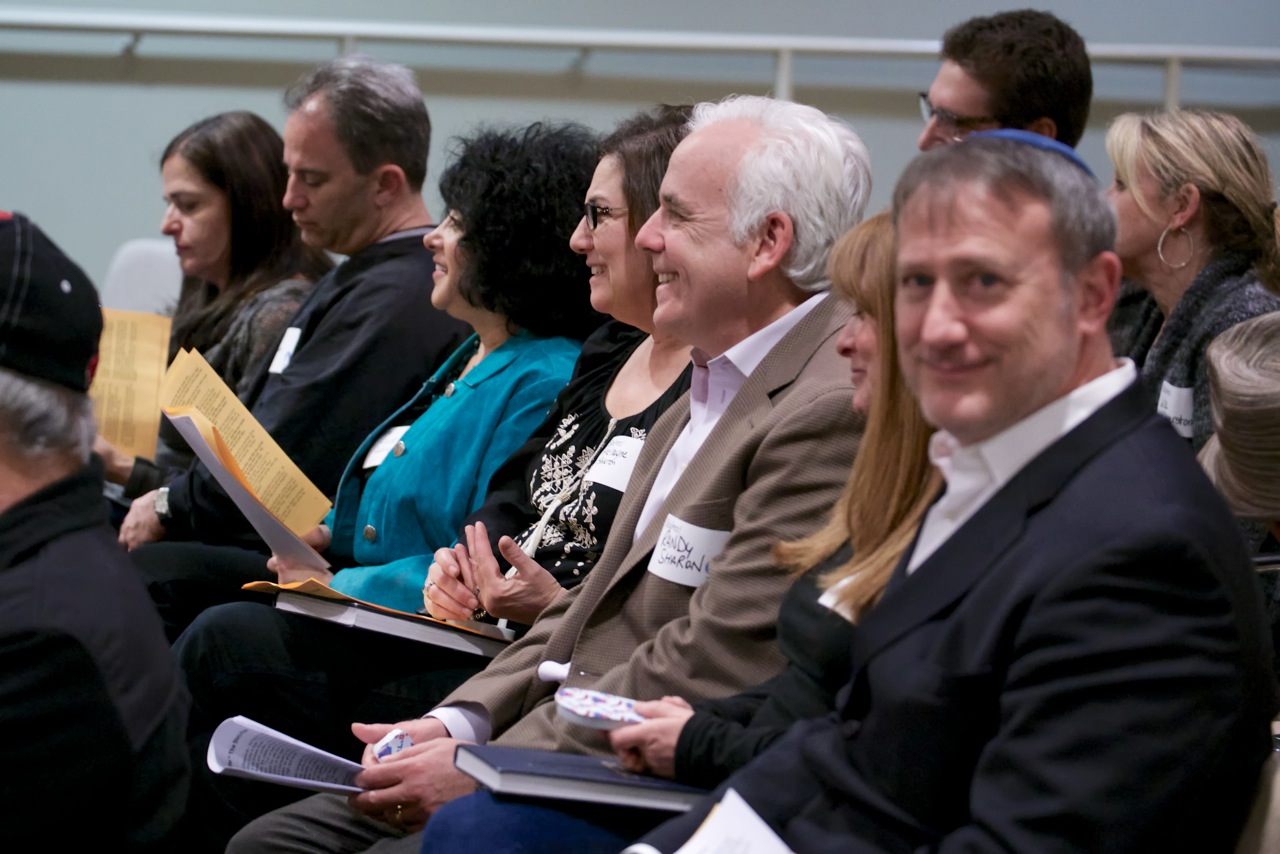
Once again, Congregation Or Ami gathered on erev, erev Purim (the night before the night of Purim) for an adults-only Purim celebration. The flyers and other PR were clear: this Shabbat eve would not be appropriate for children. Kids could come to Purim itself for our Multigenerational Purim Celebration. But this Friday night before was reserved for adults.

Not because there would be drunkenness. The pre-service wine and cheese gathering allowed for socializing but to my trained eye, no one really got tipsy (not even me. My ridiculousness came a different kind of high… being high on Purim-induced joy).

The adults-only experience grew out of the need of adults to have a safe space where they can be learners without fear of being teased for their lack of knowledge about the stories and traditions of our people. Creating an adult-only experience allowed adults to give voice to their questions and ideas. Pediatric Judaism gave way to questioning, grasping, and comprehending.

Melinda Pittler explained that “the adult Purim service was nice to enjoy adult only time, dressed in costume and spinning our gorgers. It was fun because how often do we get to see our Rabbis and Cantor with “tattoos, mohawks and wigs” while leading a service?”

The Whole Megillah – Farcical, xenophobic, dangerous
How empowering it was to read the whole Megillah! (Okay, we sped-read through some sections, but for the most part, we read the whole text in English.) We laughed at the farcical nature of the story, making fun of the blatant male chauvinism and xenophobia (fear of strangers). We boo’ed Haman, and the unbounded evil he epitomizes.

We contemplated why all other mitzvot (religious obligations) are set aside for the reading of the Megillah except met mitzvah (the burial of an unattended corpse) (Rambam, Hilchot Purim 1:1). We concluded that the Purim story reminds us of the miracle; focuses us on the danger of leaving evil unchallenged; invites us to focus on where else God is hidden yet present in our lives; and pushes us to celebrate the simchas more than we ruminate over the sadness.

As Nina Treiman wrote, “The adult Purim celebration was funny, yet still educational, because we experienced it through unfiltered lenses.” Robert Rosenthal: The best advice I can give you is “don’t quit your day job”. Thanks for the laughs. We had a great time.

Letting Our Hair Down
So donning costumes and silly hats, we let our hair down and celebrated. Adults being silly with adult while sitting in the sanctuary.

Sharon Weiss wrote, “The adult Purim Celebration was an excellent time. It was great to be in an environment of laughter in our temple and to celebrate together. One of my favorite parts is seeing our clergy interact with each others and knowing they really like each other. I also really liked Cantor Doug’s Politically-Correct version of the Megillah. I walked away smiling and happy.”

Judaism as it is supposed to be experienced. As pure, unadulterated joy.

Chag Purim Samei-ach – Happy Purim!

Drawing: How I Spent My Day 2/19/2013

Worked with an insightful Bar Mitzvah student to make sense of his Torah portion
Sent our youngest son off to Israel with his school
Spoke with prominent Rabbi about creating a Jewish religious voice to help reform California
Considered new ideas about engaging men and parents of teens
Taught B’nai Mitzvah students and random kids around temple
Answered email
Weighed church/state separation issues
Read online info about situation in Israel and around the world
Counseled congregants
Edited lesson plans for Mishpacha
Took steps for our Get the Word Out task force
Focused on development projects

And…

All in a day’s work.

NFTY Convention: Where Complete Acceptance Trumps “Mean Girls”

The most amazing things happen when we bring together 1000 teens for five days for the convention of the North American Federation of Temple Youth, one of the largest gatherings of Jewish teens anywhere. It is the way that these teens open up about the pressures, worries, fear and self-doubt that bubble just beneath the surface of their smiling faces.

So the NFTY convention organizers, and their Union for Reform Judaism partners, interspersed – between the fun, food, inspiring prayer, motivating speakers, meaningful social justice activism, and Jewish learning – a series of serious workshops which allowed the teens to bear their souls within the supportive security of a loving groups of teens, and the guidance of nurturing, trained adult youth workers.

Talking Truth about Leaving Home
“Take two post-it notes, and write on them your top two concerns, anxieties or agitations about leaving home and family as you go off to college. Stick them on the wall. Now without talking, read through all the answers and as a group collect together similar responses until we have a small number of categories.”

These instructions guided 34 Jewish teenagers, who chose to grapple with the myriad of issues surrounding “Leaving Home and Family … on the path to college.” With openness and honesty, they wrote about, and later talked about, their concerns:

  • What do I do to maintain my good relationship with my younger sibling?
  • Finding balance in communication with parents – How often is too often? How much should we talk/text/skype?
  • Money, money, no free money
  • How do I ensure I’m making the most of my parents’ investment in me?
  • Moving toward increased independence
  • Who will take care of me when I get sick?

Then in triads, each shared his/her concerns as the others listened nonjudgmentally and brainstormed supportively.

Convening the Conversation, Then Getting out of the Way
Between us, my wife Michelle November and I have plenty of experience working with youth. The former director of the North American College Department for the then Union of American Hebrew Congregations, 16-year synagogue Program Director, and active Camp Swig/Newman alumna, Michelle now works intensively with teens and their parents as the Associate Director of Admission for Los Angeles’ New Community Jewish High School (in West Hills, CA). A former Jewish summer camp director, NFTY regional advisor (CRaFTY), and chair of the Camp Newman rabbinical camp committee, I serve as rabbi of Congregation Or Ami (in Calabasas, CA), whose leadership heard and responded to the call of the URJ’s visionary Campaign for Youth Engagement. Together we have two college kids and a third in high school.

Michelle and I have made it our life’s work to support and guide Jewish young adults through the highs and lows of their exciting existence. Still, for the conversation, like so many other talks with teens, our task at convemtiom was to gently guide, slide in the Jewish and the compassionate, but mostly to get out of the way.

Crowdsourcing Confidence and Kindness
Sitting on the floor, back in one circle, the students took turns revealing what they feared. Then crowdsourcing took over as the group offered ideas from their collective experiences:

  • Connect regularly; a short text on the way to class assures your parents that you are alright (and can keep overly involved parents connent but at bay).
  • Remember that when you go off, things at home change. When you come back, don’t expect everything to just go back to how it was.
  • Skype with younger siblings; text them asking questions about what they are doing.
  • As the intensity picks up in the months before you leave, be quick to be apologetic after the inevitable outbursts that occur at home.
  • Rabbis, youth advisors, Hillel directors and teachers are still and always there for an unbiased supportive, non-judgmental conversation.
  • Go out with siblings within the first 24 hours back at home; individual time to reconnect is crucial.
  • Reach out to the relatives and family friends in your new city; connect with classmates of your parents friends; you never know who might become a good friend or major support.

The workshop concluded with a group hug /slash/ prayer circle in which we asked the Holy One for courage, patience, and perspective as we walked these uncharted path to our future. We sought strength and sechel (smarts) to remember that we are precious now, and we will be equally precious later as we traverse the paths. And we offered thanks for the loving support of a Jewish community that cares.

Why NFTY and Jewish Camping Really Matter
Michelle and I spend significant time, energy and money placing our own and our synagogue’s young people into NFTY events and Jewish summer camps. We evangelize about the incomparable benefits of sending or pushing teens in this direction. Why?  Because NFTY and Jewish summer camps are the antithesis and antidote to the “Mean Girls” syndrome.

Where else, outside of home, do teens find unconditional love and complete acceptance? Where else do Jewish teens receive positive messages about who they are and nurturing guidance of Jewishly motivated adults? Most importantly, where else in their pressure cooker, anxiety-filled existence do they have a place where they can share their innermost thoughts and worries, and we adults know that they will find support, openness and loving direction to put them on a path toward healing and inner peace?

This is why NFTY and Jewish summer camps matter. This is why parents – and grandparents, rabbis, cantors, educators and temple leadership – should be inviting, cajoling, begging, bribing, pushing and financing their teens to attend NFTY events and Jewish summer camps.

What Happens in Vegas…
They say that what happens in Vegas stays in Vegas. We say that what happens in NFTY stays within our teens long after they graduate into college and beyond. In a world where the pressures and anxieties of young adulthood easily overwhelm, NFTY and Jewish camping help adults hedge our bets for our kids’ future.

So get your kids into NFTY and Jewish camping. Support your synagogue efforts to expand and fund their youth engagement activities. The future we secure will be our own.

NFTY Convention: Where Prayer is Spine-Tingling, Bone-Shakingly Inspiring

Teens can be so surprisingly inspiring.

At home, we sometimes used to struggle to feed balanced meals to our 3 teenagers. Imagine trying to feed 1000 as these Jewish teens sat together to for Shabbat dinner. And that was only the beginning.

We are gathered at a hotel in Los Angeles for the NFTY Convention, perhaps the largest Jewish teen gathering around. NFTY, of which our kids are third generation members, has brought together teens from all over the US and Canada (and also, I heard, teens from Israel and a half dozen other countries) for five days of fun, socializing, Jewish learning, energetic music, teen issues, social justice activism, eating, talking, laughing, singing, dancing, praying …

Oh, the praying…

This is not your Grandfather’s Davening (worship)
Growing up in many a synagogue, most teens experience prayer as a formalized experience. Lots of responsive readings mixed in with serious music. Over time, our Ashkenazi ancestors, and their American Reformer descendants, articulated a formalized experience, with precise words and structure, and instructions of when to stand and sit, and just how to bow. Services at the NFTY convention were anything but that. I imagine some of our Jewish ancestors might be turning over in their graves if they watched these 1000 NFTYites pray.

Why?

Because our teens sang energetically, chanted meaningfully and swayed with joy and abandon. It was meaningful. It was exciting. And just so inspiring. It was more early chassidism then early reformer.

The early European chassidim transformed the Jewish prayer experience from the staid to the emotional. They taught their adherents to open themselves up by singing and dancing, to lift themselves beyond the “here and now” to the hopeful and the passionate.

Prayer can be spine-tingling, bone-shakingly uplifting
Yes, spread out all over the ballroom floor, our teens sat and sang a beautifully melodic prayer. But as the energy built up, the inspiration ramped up, and before we knew it, kids popped up onto their feet. Singing and swaying, dancing and clapping, they became the modern definition of hitlahavut, joyous enflamed passion.

Perhaps that best describes this indescribable experience. More than prose, this teen tefilah is poetry in its wholesomeness and all encompassing nature. It is chassidic hitlahavut, combined with Martin Buber’s I-Thou relationalism, mixed in with Debbie Friedman-inspired musicality.

I turned to Rabbi Rick Jacobs, President of the Union for Reform Judaism, the parent body of our congregations, and the older sister to NFTY. Praising the scene we were witnessing, I shared my frustration at my inability to find the words to capture the wonderful spiritual transformation we were witnessing. He nodded knowingly, as he smiled appreciatively, clearly touched by the expansive displays of prayerfulness surrounding us. We clapped on.

God was in the House!
Most synagogues would celebrate if a dozen teenagers showed up at Shabbat services on a regular Friday night. How would it feel when 1000 attended? Awesome. Just awesome.

Rabbi Jacobs began his story drash asking, “Is NFTY in the house?” The thunderous response assured us all that they were.

Had the question been a bit different – Is God in the house? – I feel confident, the answer would have been the same.

Prayer that Wows
Thanks NFTY. Thanks URJ. Thanks Rabbi Dan Medwin of the CCAR for the Visual Tefilah. And the unnamed shlichay tzibur (prayer leaders). For a spiritual, musical, inspirational tefilah.

Yes, God was in the House!

Saving the Jewish People… on a Sports Field

How do we save the Jewish people? 
With more Jewish day schools or more creative religious education? With greater outreach to interfaith families? By transforming the B’nai Mitzvah process? Or by focusing on Jews in their 20’s and 30’s?

Yes, yes, yes and yes. Much has been written about each endeavor, and undoubtedly we will discover that each offers a significant, if partial response to the challenges our Jewish people face.

We Found the Solution on a Sports Field
Recently, however, as I watched a group of teens lead a group of at risk kids through a day of sports, I realized that at Congregation Or Ami, we may have discovered yet another piece of the “Save the Jewish Future” puzzle. We found it on the sports field, of all places.

Called Future Coaches, this teen engagement program is part of a constellation of teen activities known at the temple as Triple T: Tracks for Temple Teens. Inspired by the Union for Reform Judaism’s Campaign for Youth Engagement, Future Coaches begins with a simple premise: that many boys (girls too) find meaning and purpose in sports and that we, the Jewish community, need to capitalize on that reality. (Read about the summer 6-Points Sports Academy.)

A few times a month Future Coaches participants – most are boys between 7th and 10th grades – gather in our sanctuary to learn from four congregant dads, who between them have over fifty-six years of coaching experience. These dads – Brian Buckley, Frank Catone, David De Castro, and Paul Gross – plan each session, with Jewish content input from the rabbis.

Future Coaches Analyze then Organize
Each session includes a review of what makes an excellent sports player or a talented coach. Sometimes they analyze YouTube sports videos; other times they learn leadership skills from a professional leadership coach.

Each session also focuses around a Jewish value, which is illuminated in the YouTube video or in the skill workshops. They have explored kavod (respect), emet (truthfulness), shmiat ha-ozen (attentiveness and good listening), shmirat haguf (caring for the body), among other values. These Jewish values become touchstones as the Future Coaches explore and practice coaching techniques.

Coaching and Connecting with At-Risk Kids
Three times a year, the future coaches break into working teams to plan the upcoming sports day. Teams include scheduling, team building and event planning. The dads reserve a local sports field and arrange for a local caterer to provide a buffet of breakfast foods, sandwiches, snacks and drinks for game day.

We are partnering with New Directions for Youth (NDY), an organization which helps at-risk youth gain confidence, improve academic achievement, and develop appropriate social skills. For a few years now, Or Ami has taken groups of NDY children on Back to School shopping sprees, fishing trips, and fun outings.

No sooner do the NDY kids arrive than our Or Ami future coaches – clad in special “coach” t-shirts – get to work. They usher the NDY kids over for breakfast and then divide them into teams for the first round of games. I watched a laughter-filled water balloon fight, followed by 3-on-3 basketball, a mud-sliding game of capture the flag, and flag football. Arts and crafts projects filled the down time. Our Or Ami future coaches alternated between playing, coaching and refereeing.

Each New Directions for Youth participant went home with a sports medal, an age-appropriate reading book (also donated), a full stomach, and memories of a great day.

My Epiphany about the Jewish Future
The epiphany came while I was schmoozing and taking iPhone pictures with the dads and the teens. Of the 19 Or Ami students in attendance that day, all but five of them would have disappeared from temple life had this program not been available. None of them wanted to continue in a class situation. Most academic or religious topics would have bored them.

That’s the brilliance of Future Coaches. Accepting that for many students, and most boys, sports is the priority of their teenage years, Future Coaches meets them where they are and then stealthily engages them into learning about Jewish values and participating in Tikkun Olam. Sure, it is not Talmud or Comparative Religion. But for these 19 young men and women, it is just what anchors them to Jewish communal life.

So Go Ahead
Ask the Future Coaches teens what they accomplished on game day. They might respond that they had a great day at the park. They might say they befriended a bunch of kids over sports. But we know better.

In the midst of the sports and the food, our teens displayed leadership, served as role models for at risk kids, and lived out wholesome Jewish values. All within the context of their synagogue. For 15 of the 19, Future Coaches saved them for Jewish life.

Not bad for a sunny day in the park.

Be Careful, Don’t Curse Your Parents, or else…

Nothing is more energizing in the midst of Torah study than gaining new insight about the text. I love working with Bar/Bat Mitzvah students because they approach the Torah text with new perspectives that so often illuminate a chiddush (new insight). I relish the moments when the student leads me to discover something entirely new in the Torah. 
This Shabbat’s Bar Mitzvah, Ethan Shanfeld, inspired me when he pointed out a verse I do not remember focusing on previously. Then he went ahead and taught us about it. 
Did you realize that in Torah, there is a verse that states: if one curses one’s father or mother, he or she shall be put to death? It goes without saying that this law is not, and should not, be actualized in any community – Jewish or otherwise – anywhere. 
Then what is it’s import? I’ll let Ethan’s own words explain it:

My Torah portion, Mishpatim, is in the Book of Exodus or Shemot. You just heard me chant Chapter 21, Verses 12 through 29, which deal with the laws of the Torah. Some of these laws, when read literally, may seem pretty extreme. But, I don’t believe we are supposed to interpret the Torah literally. The stories and laws of the Torah, when taken metaphorically, provide us with valuable lessons on how to act and how to be a good person.

Verse 17 of my Torah portion illustrates my point. It says, “Um’kaleil aveev v’eemo, mote u’mat” – whoever curses his father or mother shall be put to death. I don’t think any of the kids here prefer a literal interpretation of that. But, we can certainly learn from this law of the Torah. 

I’m guessing that a lot of the kids sitting in this congregation have said something to their parents that they regret. In the heat of our frustration, we don’t always choose the most respectful words. Just the other day I told my parents they were annoying, and I may have mumbled a couple words that I shouldn’t have.

Thankfully, we don’t adhere strictly to the law of the Torah. If we did, I wouldn’t be standing here today. But, I did get in trouble for my disrespectful words. No iPhone the next day. The law, on a metaphorical level, has great meaning. 

We should always respect our parents. They love us. They care for us. They make sure we have all the necessities, and the comforts, of life. The Ten Commandments tell us to “honor our father and mother”. I certainly love and respect my parents. And, as a Bar Mitzvah, I will make an effort to think before I speak. I definitely will not curse my parents.

I asked my parents what they thought of the Torah law that imposes a death sentence on any child who curses his parents. They noted that the law is ridiculous on its face, but they understood the message behind it. They explained that being a parent is difficult and tricky at times. You want to be your child’s best friend, but at the same time, a parent’s main responsibility is to make sure their child grows up to be a responsible, respectful and good person. And that means that parents must discipline their children when they act out and are disrespectful. Certainly, cursing your parents is one of the most disrespectful acts a child can do.

While death is obviously not the solution, there are valuable lessons behind the law of the Torah. We must appreciate our parents. We must show respect. And, we must learn from our actions.

Campaign for Youth Engagement Continues: Bringing Teens to the 4th-6th Grade Retreat

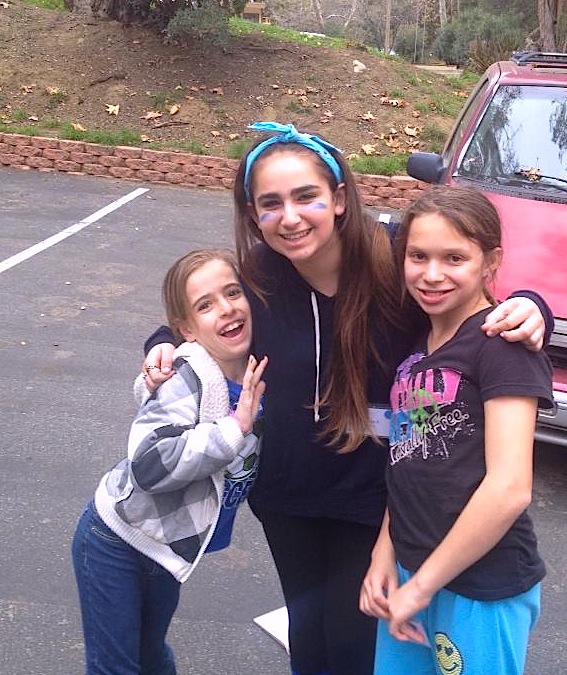
The teenage girl puts her arm around the fourth grader. They both smile. The younger child feels warmth, love and a sense of “I matter” from her protector, a cool positive Jewish role model. The teen feels a sense of purpose, of meaning and a sense of “I matter” from a child who looks up to her as a positive Jewish role model.

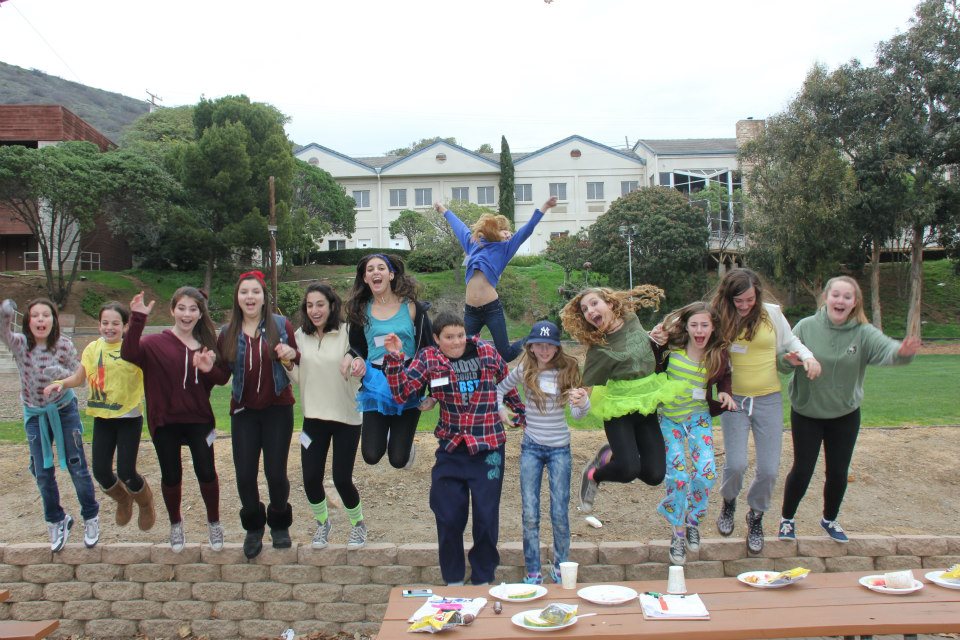
For which child’s benefit did Congregation Or Ami organize this 3 day retreat at Malibu’s Camp Hess Kramer? Ostensibly, for the younger child as this weekend was designated a 4th-6th grade retreat. Yet anyone who has witnessed the powerful effects of empowering teens to be counselors (actually CITs, counselors in training) recognizes quickly that upon assuming some responsibility for the safety and emotional health of younger charges the teens are themselves transformed. One might argue that the teens benefit the most from these retreats.

Why did Or Ami bring more than 20 teens to a younger kids’ retreat? To transform them into leaders, to engage them as positive Jewish Role Models. It worked so well!

A Call for Youth Engagement
When our national organization, the Union for Reform Judaism issued a clarion call for communities to reengage our youth, Or Ami listened and responded. “Find new pathways for them to build relationships with each other and with the clergy,” we were told; it will transform everyone, we were promised. This would change the meaning of synagogue to them, helping stem the erosion of post-B’nai Mitzvah families from the synagogue.

Triple T: Tracks for Temple Teens
So Or Ami’s clergy-lay team listened to the interests of the teens themselves and their parents, and we committed to the new notion that any path that leads a child from Bar/Bat Mitzvah student into Jewish connection is as equally valuable as a class taught by the rabbis. So at Or Ami some teens become Future Coaches, learning about the art of sports coaching and the Jewish values that inform that process, and then they plan and run sports clinics for at risk youth. And other teens become VolunTEENS, learning about Jewish social justice and organizing skills, and then creating social justice projects for themselves and others to fix the world. Some teens visit Jewish cultural places with Jewish Culture Chug while others engage each other socially and Jewishly in LoMPTY, a teenager-led NFTY temple youth group. Every path (or Triple T or Track for Temple Teens, as we call them) is valued as a roadmap toward Jewish commitment, connection and knowledge; each path transforms the participant in subtle and significant ways. Each delivers and reaffirms Jewish values along the way.

Madrichim: Synagogue-based Counselors
And then there are our Madrichim, teens who work with our younger students in our Kesher, Mishpacha and our Hebrew tutoring programs. They spend time with each rabbi, with a master teacher and with leadership mavens. Then they lead prayer services, run holiday programs and help children master reading Hebrew letters. They organize games during breaks, and perform in Torah-based skits during family programs. And all the while, they serve as positive Jewish role models, showing their younger charges that being Jewish, knowing Judaism and being connected to synagogue is cool and meaningful.

Teen Madrichim at the Retreat

So why take more than 20 teens to a 4th-6th grade retreat? Because the teens discover within themselves qualities of selflessness, patience, compassion and teamwork. Because each moment they spend focused on the care and feeding of younger children is a moment that creates responsible leadership for the next generation.
And because as the teens lead the educational programs – on this weekend, about the qualities of a Jewish hero (see Color Games, Hero Worship and Counter-Cultural Learning)- they begin embody the values and become the heroes themselves.

We are so blessed to have dedicated young people who want to be leaders and counselors. They made the retreat so meaningful for so many.  Thank you all!

Color Games, Hero Worship and Counter-Cultural Learning

How would you describe the qualities of a hero?

Ask the 4th-6th graders who attended Congregation Or Ami’s retreat, or their 8th-12th grade Madrichim, and you will receive a very clear answer. A hero has:

Power
Wealth
Wisdom
Honor

Yes, that’s what our staff taught our students this weekend.

In the midst of our weekend, we were divided into color teams for our color games. Elsewhere called a “color war,” at Or Ami we focused on the games, and less on the battles. Through relay races, art projects, cheer creation and more, the teams had fun, made noise (oy, so much noise) and explored how to be heroes in the midst of competition.

Of course, our take on heroism is a particularly Jewish conception of these qualities, derived from a famous Talmudic passage from Pirkei Avot.

Power, teach the rabbis, is not about being physically stronger. Rather, it’s about having the strength to control one’s passionate.

Wealth is not about having the most money. It’s about being content – finding comfort – in what one has. (Stop trying to keep up with the Jones’s – or the Steins).

Wisdom is not the accumulation of information, which is easy to do in this internet-connected world. Our rabbis teach us that true wisdom is found in those who learn from every person.

Finally, the honorable individual is she or he who gives honor to others.

Did we mention that our students met real life heroes? First, during Shabbat services, the staff and Madrichim shared stories about their own everyday heroes. Then on Shabbat morning, we met Or Ami parents who were paramedics and other heroically helping careers.

In a world that idolizes celebrity, money, and power, it was refreshing to spend a weekend focused on those qualities: real life wisdom, contentment with what one has, self-control and honoring others.

We thank Rabbi Julia Weisz, Master teacher Patti Jo Wolfson, nurse Caryl Kaplan, rabbinic students Jonathan Rothstein-Fisch and Rachel Marks, our faculty and our Madrichim for creating a safe, fun, learning, nurturing camp weekend. We created friendships, deepened relationships, celebrated Shabbat and more.

What were your child’s favorite parts?

8 Tips on How to Be a Positive Jewish Role Model

What does it take to be a positive Jewish role model?

  • Talk Jewish: Jewish talk is filled with kindness, caring, and concern for the poor, the widow, and the stranger. It involves more kvelling (praising) than kvetching (complaining). Talking Jewish is thoughtful and hopeful.
  • Show enthusiasm for learning: As Am haSefer (people of the book), we value the contents of our brains. Jewish role models strive to accumulate wisdom, recognizing that when our minds are open, the world opens up with new possibilities.
  • Read Jewish books and see Jewish-themed movies: Fiction or non-fiction, historical or fanciful, the Jewish arts can nurture a deeper Jewish self-awareness.
  • Involve yourself in social justice causes: Ever since Moses, Aaron and Miriam stood up to Pharaoh to speak up for the downtrodden, Jews have been in the forefront of every significant social justice cause. Jewish role models get involved because we remember the experience of being at the mercy of others.
  • Plan a(nother) trip to Israel: Visiting Israel unites the Jewish past and present. Through the mitzvah (religious deed) of Aliyat haNefesh (spiritual journey of the soul), we seek intellectual, spiritual, and personal transformation.
  • Sing along at services: The act of praying is an active experience. Engage your brain, move your lips, open your mind, and you may be inspired. Of course, first you need to go to services!
  • Give tzedakah to Jewish organizations: Jews believe that we have been given sufficient resources so that we may give generously to help others. Your investment in Jewish organizations and synagogues ensures that there will be a Jewish future.
  • Light Shabbat candles: Once weekly, alone, with family, or with friends enrich or celebrate—YOU CHOOSE your life by marking the holy day. Let the candles adorn your dinner table or light them as you get ready to go out, and then blow them out.

Nurturing the Next Generation of Jewish Songleaders

Recently, Congregation Or Ami sponsored two teens – 10th graders Sophie Barnes and Josh Gellerman – to attend the NFTY NASHIR Songleading Weekend in Seattle, Washington. As Cantor Doug Cotler has made it a priority to nurture new Jewish songleaders, musicians, composers and singers, we were excited to send these musical teens for training. Both Josh and Sophie recently reflected on their experiences:

Sophie Barnes and Josh Gellerman Lead Jewish Songs

Sophie writes: In early January, I attended a NFTY NASHIR Song leading weekend with about 30 teenagers from all over the country and Canada. We learned all about being a song leader in a Jewish community and to lead services for the children in religious school. The convention was held at Temple Beth Am and was lead by many talented, professional song leaders. I have been singing my entire life and performing has always been a passion of mine, but I had never tried song leading before. I went into the weekend barely knowing anything about song leading and by the end I felt like a professional.

Josh writes: I flew to Seattle for the Nashir Songleaders Retreat, and after being picked up at the airport, I was driven to Temple Beth Am. Once I arrived, I went to the youth lounge and basically just hung out and jammed with about thirty other kids who were there for the program. The trip turned out to be a lot more Jewish than I had originally thought that it would be. Every day, we all gathered for services. One thing that I noticed and really liked about Beth Am is that – much like Congregation Or Ami – every service is more like a concert. While of course we still prayed with spoken words, the congregants seemed to really connect with the spirituality through music.

Josh: Both of the nights that we were in Seattle, we stayed with very nice families who attended Beth Am. It was very generous of them to let us into their homes, as they were very accommodating and pleasant.

Sophie: Over the weekend we learned multiple Jewish songs and many techniques on how to be a song leader. We also participated in a bunch of workshops that taught everything you could possibly need to know about song leading.

Josh: The next morning we had interactive services for two hours where we all sang and prayed with the cantor. The whole time that I was there, I was constantly learning new things.

Sophie: We helped lead Shabbat services, taught and lead a song to our peers, and then worked up to finally getting to lead the kids in the Temple Beth Am religious school.

Josh: After services, we split up into our home group to do a “teach,” where we demonstrated how we led songs. I played Cantor Doug Cotler’s, “Listen.” We then went to workshops where we learned better ways to song-lead. A notable addition to the staff was made when Alan Goodis joined the leadership crew. I suggest you check out some of his music.

Sophie: The fact that we were able to learn so much in one weekend was truly amazing. I absolutely loved leading the kids and it was something I will never forget. I came home from the weekend with a whole new outlook on song leading, and I also returned from the weekend with tons of new friends. I reconnected with old friends and made many new ones. When we weren’t practicing our song leading, we were in a circle jamming on our guitars and singing. It was so eye opening to see that there were so many Jewish teens that have the same exact interests as me. I got so much out of the weekend and it helped me realize how much I love being a part of the Jewish community. It was an overall amazing experience and I am so glad I was able to be a part of it.

Josh: All in all I am really glad that I went. I learned a lot of new things about songleading and service leading that I will bring back home with me, not only a song-leader but also as a musician. A bonus from the trip was finding an immediate connection to a greater Jewish youth community. I made new friends from not only our own San Fernando Valley, but from Canada as well.

Josh and Sophie: Thanks again, Congregation Or Ami, for recommending us and sponsoring us for this weekend. It was great! We look forward to doing songleading for the congregation and religious school.