Category: blog archive

“That Bar Mitzvah was Torture,” Complained the Teenage Friend

Ever sat through a painfully boring Bar/Bat Mitzvah service?

I received this email from one disgruntled member:

Dear Rabbi: 

Here is one – honest and true 

We went to a Bat Mitzvah on Saturday at an out of town synagogue. I know it’s a different denomination of Judaism – but others have felt the same at Reform Temples too – so trust me when I say that it compels me to write that I am still reeling from the experience. 

I respect history, culture, tradition, etc. I know that traditions are important…. 

As we leave, my son tells me that sitting in that room is worse than torture. I can’t disagree. In a world of electronic stimulation, and much more, that service was as close to torture as you can possibly get. 

Modern religion has lost touch with any semblance of something compelling, interesting, or worse, any sense of taking home something valuable. If the only lesson to be learned is that there is a place AFTER, three hours of sheer boredom doesn’t compel many to want to hear about it. 

Good news – our Congregation has an amazing sales proposition in comparison with that type of synagogue offering. Our services have actual Real Live people who discuss interesting, current events and relate them to history. We walk away feeling energized – not exhausted, enriched by something of value, and possessing a sense of purpose, direction, clarity, and confidence. 

Just thought I would rant and share.

So I wonder:

  • What does it take to make the Bar/Bat Mitzvah experiences meaningful to the teens and to the adults?
  • Have we descended into ritualism that the service is not meaningful to most worshippers, except perhaps for the symbolic passing down of the Torah, parent speeches, the kid’s D’var Torah, or participation in an aliyah?
  • Besides one’s own loved one’s Bar/Bat Mitzvah service, what has inspired you at other Bar/Bat Mitzvah services?

I’m interested, really, in your insights. Please share.

Out Come the Sandals: Camp Newman is Beginning

Soon I trade my shoes in for sandals and my briefcase in for a backpack. Pants are replaced by shorts; a baseball cap I place of my kippah. The change in clothing reflects a change in the location of my work from the synagogue in Calabasas to a summer camp in Santa Rosa. While my outer garments are significantly more relaxed than my regular temple clothes, they do not indicate a more relaxed few weeks for me. Rather the change in clothing just makes it easier to “get down and dirty” with the 350+ young people who attend and the 150 college students who lead the camp. 
At camp I lead multiple three session series of outdoor activities – entitled OMG WTF (Oh My God, Where’s Thy Faith). These sessions, held under the blue sky on the hilltops of Sonoma, guide 8th and 9th graders to encounter the Holy One. Together  they meet such Jewish thinkers as Martin Buber and Abraham Joshua Heschel; in small groups they plan and lead t’filah (worship services).  Our Torat Chayim bunk activity provides us with a chance to wrestle with the challenging messages of the weekly Torah portion. As significantly, it offers the young people with a chance to ask their most burning questions to a patient rabbi who cares. We mentor college student counselors and graduate school Rashim (unit heads) as they nurture young Jews. And we refresh our own souls. 
For the last 16 summers, my wife Michelle November and I have traveled to Camp Newman, the Union for Reform Judaism’s summer camp in Santa Rosa, CA. There, we chaperone our synagogue’s delegation of 45 youth and adults. 
We go because Congregation Or Ami highly values the Jewish summer camp experience, recognizing camp as one of the most significant Jewish enculturation and identity building modalities, second only to an active Jewish home. We go because we were shaped as Jews by the URJ summer camps – Michelle at Camp Swig and me at Kutz Camp. We go because camp is part of a quartet of Jewish influences which nurtured our four children: camp, Israel, Jewish day/high schools, and our synagogue Congregation Or Ami. 
For many people, summer is about relaxing. For us, our children, our congregation, and the delegation we chaperone, summer is a time for engaging Jewishly, searching deeply for our spiritual path, and for rejuvenating our souls. 
Come back to my blog for more updates from URJ Camp Newman. 

“He Stood between the Dead and the Living”

Insights on Korach (Numbers 16:1−18:32)
By Rabbi Lisa Edwards
cross posted at ReformJudaism.org

In the middle of Parashat Korach comes a short story that I find to be one of the most moving in all of Torah. It arrives unexpectedly in the midst of yet another chilling story of rebellion. The parashah begins with more than 250 “Israelites, chieftains of the community, chosen in the assembly, men of repute,” who, under the leadership of Korah, Dathan, Abiram, and On turn against Moses and Aaron, saying: “You have gone too far! For all the community are holy, all of them, and the Eternal is in their midst. Why then do you raise yourselves above the Eternal’s congregation?” (Numbers 16:1-3).

In their accusation, the leaders of the rebellion might seem to echo God’s own language at Mount Sinai, calling the Israelites “a kingdom of priests and a holy nation (goy kadosh)” (Exodus 19:6). Their logic, that when all are holy, none is above another, sounds right. But if the “rebels” merely echo God’s earlier sentiment, why does their rebellion anger God so much that the earth opens up and swallows them?

Twentieth-century Jewish theologian Martin Buber1 explains God’s remarks at Mount Sinai by calling our attention to the “if” clause: ” If you will obey Me faithfully and keep My covenant, you shall be My treasured possession . . . you shall be to Me a kingdom of priests and a holy nation,” (Exodus 19:5-6). Korah’s error, teaches Buber, is in thinking that holiness is a given rather than a state that each of us must strive toward, working in partnership with God.

Buber’s teaching shines a light on the actions of Aaron, who, in the terrifying consequences of the rebellion, risks his life to try to save the rebels. God said to Moses and Aaron, “Stand back from this community that I may annihilate them in an instant!” (Numbers 16:21). Moses and Aaron bravely convince God to do otherwise, falling on their faces and saying together, “O God, Source of the breath of all flesh! When one person sins, will You be wrathful with the whole community?” (16:22). In response, instead of annihilating the whole community, God takes the lives of “only” the rebel leaders, their families, and their followers. First “the earth opened its mouth and swallowed” Dathan, Abiram, and Korah along with their households (16:32), then a fire came forth from God and consumed the 250 other leaders (16:35), and then a plague fell suddenly on the people, killing an additional 14,700 (17:11,14).

More than these numbered dead, it is how the plague is stopped that brings my tears. At the instruction of Moses, Aaron made an offering of expiation for the people. Then Aaron did something he was not instructed to do-he “ran to the midst of the congregation, where the plague had begun among the people . . . and he stood between the dead and the living, until the plague was checked,” (17:12-13).

What makes me cry? This month, June 2013, marks a sad occasion-the thirty-second anniversary of the first-reported cases of AIDS in the United States. As a rabbi in a community devastated by illness and loss in the early years of this modern-day plague, I am blessed to know many people who, like Aaron, “ran to the midst of the congregation, where the plague had begun among the people” and “stood between the dead and the living until the plague was checked.” They are those who were lovers, partners, spouses, parents, children, health care workers, researchers, friends, family, neighbors, grief counselors, clergy, therapists, teachers, activists, legislators, journalists, writers, filmmakers, archivists; those who were infected, and those who were never or not-yet infected but fearing it; those who, despite their fears, despite the uncertainties and unknowns, “ran to the midst of the congregation,” and did what they could to try to stop the plague and ease the suffering, to soothe the ones still living who had lost the ones they loved; those who took a stand between the dead and the living in all sorts of ways including bearing witness and telling the stories. When I read of Aaron’s brave gesture, I think of those whose love or sense of decency activated them, those who continue to inspire us in a myriad of ways.

When the first-century sage Hillel told us: “Be one of Aaron’s students, loving peace and pursuing it, loving people and bringing them to the Torah” ( Pirkei Avot 1:12)2, surely he was thinking, in part, of the actions of Aaron at this moment in the wilderness. It is Aaron, who risked his life by choosing to stand up for the living-even though those living were challenging him and his brother Moses, threatening them, making their life difficult. It is Aaron, who, despite the anger raging between the people and God, understood that these people were God’s people.

It is Aaron, lover and pursuer of peace, whose actions bring an end to the enmity and the violence. In the next scene, God brings a different amazement-not the earth swallowing whole families, not a plague killing thousands, but a much subtler, far gentler miracle: God causes Aaron’s staff-a symbol of his leadership-to sprout, bringing forth flowers and almonds. God then instructs Moses, as a reminder to the people, to place Aaron’s blossoming staff in front of the stone tablets of the Pact-the second set of stone tablets, Judaism’s enduring symbol of second chances.

The frightened, angry Israelites, still stinging from the punishments doled out by God, don’t yet understand the message, but we, who look from a greater distance, can. Still today, no matter what challenges we face, these images of bloom and stone remind us of Judaism’s rock-solid foundation and perpetual growth, making us grateful to Aaron and God for their abiding invitation to embrace the Covenant and choose life.

NOTES:
 Moses: The Revelation and the Covenant, Martin Buber (New York, NY: Harper Torchbooks, 1958), p. 190
Pirke Avot: A Modern Commentary on Jewish Ethics, ed. and trans., Leonard Kravitz and Kerry M. Olitzky (New York, NY: UAHC Press, 1993), p. 8

Rabbi Lisa Edwards, Ph.D. is the leader of Beth Chayim Chadashim in Los Angeles. Founded in 1972 as the world’s first lesbian and gay synagogue, today BCC is an inclusive community of progressive lesbian, gay, bisexual, transgender, and heterosexual Jews, and their families and friends. Rabbi Edwards’ writing appears in books including Kulanu: All of Us (a URJ handbook for congregational inclusion of gay and lesbian Jews) and The Torah: A Women’s Commentary, published by URJ Press and Women of Reform Judaism.

Living Life after a Diagnosis of Cancer: Mike’s Musings

How does one live on after the doctor to say, “You have cancer”?
Who can easily integrate the diagnosis with the life they have been living up until that moment?

This year we have heard from too many people dear to us that they have cancer. The prognoses vary; the fear is too real.

And then there are those for whom the prognosis is:
Less than a year.
Between 1-3 years.
No more than 5.

The whole community is shaken: Those who receive the diagnosis. Those who hear about the diagnosis. Those who want to help and realize that there is really so little that we can do to make this better.

We vow to live life more fully. We promise to let go of the small stuff. And yet…

Reflections of a Man with Cancer
May we learn from Mike Moxness, a member of Congregation Or Ami, shares this reflection just after the one year anniversary of his diagnosis with cancer. Mike writes:

June 2, 2013… Dear friends and family, 

It has been a bit over a year since I started this journey. While I am happy to celebrate a year of survival and I am grateful for the life that I lead now, the reflections on the past year have been difficult. I have learned to live in the present and not dwell on the past or worry about the future. It was challenging to think about those dark days when I had to be fed by IV and my time in the hospital. It scared me to think that the darkness may come again in the future. A year of survival is worth celebrating but I am much happier on a regular day, living in the present, being thankful for my current health and life.
I also thought about how I have lived over the past year and asked myself “would I make any changes”?

Not really. While I wish I had more time for exercise and spending time with family and friends, I think I have lived the best possible year under the circumstances. I will try to make the most of every day in the coming year and take advantage of my health. I wish I could bottle up and give everyone the peace that comes with day-by-day living.

I see so many stressed out about the future; all I can say is:
Let it all go. It will all disappear when you are confronted with your own mortality and you will realize how much time you wasted worrying about the small stuff. It is a hard transition to this new perspective and I often fall backwards. But it is easier getting back to the new frame of mind each time. 

Thank you for all of your support over the past year. We are so appreciative of your role in our lives.  Love, Mike

For Mike and others fighting/struggling with/dealing with cancer:


A Prayer For Cancer Treatment
© 2011 Alden Solovy and http://www.tobendlight.com. All rights reserved.

Today is the day,
G-d of old,
That I [begin to receive][begin another cycle of]
Treatment for my cancer,
This disease,
This intruder,
This malaise that has invaded my body.
Grant healing power to the [surgery][radiation][and][chemotherapy]
To which I surrender myself with [courage][fear][hope][strength][and]
[_______ (add words that best describe your feelings)].
Reduce the side effects and eliminate any complications from this procedure
And grant me a full and complete recovery from this disease.

Grant me the clarity to make sound choices for my treatment and my life.
Grant my family comfort and relief.
Ease their burdens and ease their minds.
Grant my physicians insight and perseverance.
Grant my caregivers knowledge and skill.
Grant scientists and researchers tools and understanding to develop new treatments for this cancer, speedily, in our day.

G-d of compassion,
Grant me a path to healing.
See me through this day and the days ahead with dignity.
Strengthen my resolve to live fully and to love deeply.

Blessed are You,
G-d of health and healing.

Facing the Worst Kept Synagogue Secret

Do you want to know the worst kept synagogue secret? It is not about politics at the pulpit or the fact that most Jews do not regularly attend Shabbat services. No, the worst kept synagogue secret is that almost 90% of the young people who become Bar or Bat Mitzvah in our synagogues are absent from our programs by the time they graduate high school.

Elsewhere I have written about Congregation Or Ami’s recent attempts to rethink the whole enterprise of youth engagement. We have kvelled about early indications that our efforts are raising our community’s youth engagement by 20% (and we await results from this year’s re-registration to be able to gauge the real effects).

Thanks to the leadership of Or Ami President Helayne Sharon and Board member Cheryl Lederman, and their partnership with Rabbi Julia Weisz and our Triple T Task Force, we have counted successive achievement. The Future Coaches, A.T.M., and Madrichim tracks meld with the Triple T and 4th-6th grade retreats interwoven with LoMPTY, NFTY regional events, and Jewish summer camping to create seamless synergy [insert links about these programs from blog]. Yet that dastardly data point – 90% drop off – still haunts us.

Group-Thinking Youth Engagement
Perhaps that’s really why I flew up to Berkeley, CA. The Reform Movement’s Campaign for Youth Engagement team – including URJ VP Rabbi Jonah Pesner and CYE Head Rabbi Bradley Solmsen – invited us to participate in a thought-process to test the viability and advisability of new and renewed ideas about youth engagement. It might have been Or Ami’s quick and effective embrace of the URJ’s Campaign for Youth Engagement that led to an invitation.

Fortunately the strategic thinking consultancy offered multiple ROI (returns on investment) for Or Ami: the opportunity to share reflections with the movement’s leading thinkers might help them design the future of youth engagement as well as trend spotting prospects for Or Ami for our never-ending quest to reinvent ourselves and our outreach to Jewish youth.

So there we sat: a Jewish camp director, a NFTY North American director, a URJ district Rabbi, a Jewish camping foundation leader, a very articulate NFTY regional president, leaders of the Reform CYE, a synagogue rabbi, and the principals from two strategic thinking centers. The principals shared their research on current Reform Youth engagement and the ideas that bubbled up. We group-processed the ideas, searching out strengths and weaknesses of each idea, and the opportunities each presents and the threats each poses to the current situation.

ROI: My Takeaways from Time Away from the Synagogue
I came away with a number of insights:

  • That our youth engagement needs to be about more than events and classes;
  • That relationship building and Jewish “evangelical” outreach are the current challenges;
  • That seamless synergy between projects, programs, efforts, and outreach is the name of the game (breaking down silos);
  • That we do not know a lot about the youth who are involved in our programs, but we know even less (drastically little) about the youth who are not in our programs (and that such information could be critical to designing meaningful outreach to them); and
  • That prioritizing youth engagement requires placing our youth in decision-making positions on the boards in the “adult movement arms.”

The strategic thinking process of the URJ may or may not embrace these ideas. Too many factors play into the process. Still, the discussions were rich and the energy was infectious. And I return to Congregation Or Ami energized to explore next steps in our efforts to chip away at that 90% post-B’nai Mitzvah unaffiliated rate.

Which Leads Me to Ask
What would you suggest are the ideas and ideals which should animate our synagogue’s campaign for youth engagement?

Putting Our Lives and Priorities into Perspective

When we hear that a dear one is very ill, we pause and count our blessings. For a moment, our lives and priorities are put into perspective. What would it take to embrace that new outlook and make it stick?

My List:

  1. Count your blessings each day. 
  2. Give thanks for at least 3 things daily. 
  3. Let go of old slights, current irritations, long held anger. 
  4. Say “I love you” more. Give more hugs. 
  5. Make another donation to a place that brings goodness into the world. 
  6. Volunteer – change the world for the better. 
  7. Smile! 

 What would you add to the list?

Jewish Clergy Letter to the Boy Scouts of America

I signed onto this letter to the Boy Scouts of America about its policy that excludes gay scouts and scout leaders from its ranks. I was Life Scout, member of the Order of the Arrow, Junior Assistant Scout Master, and BSA Camp staff member (at Camp Wahtutca in New Hampshire; the Boy Scouts had a significant positive influence – especially on my leadership skills – during my formative years.

The Religious Action Center for Reform Judaism in Washington, DC, is shepherding a letter from Jewish clergy. For years the Boy Scouts of America has maintained a policy that excludes gay scouts and scout leaders from its ranks. Later this month the Boy Scouts National Council will consider a proposal to lift the ban on gay youth but uphold its policy of prohibiting LGBT adults from serving in the organization:

We write as rabbis and cantors to add our voices to the call for the Boy Scouts of America (“BSA”) to end the ban on gay scouts and scout leaders. Many of us are former scouts, the parents of scouts or children who aspire to scouting, and admirers of the mission and purpose of the BSA. Each of us, however, opposes the BSA’s discriminatory policy that excludes gay scouts and leaders.

The BSA ban causes real harm to gay youths, adults and their families around the country. LGBT youth, and often the children of LGBT parents as well, face alarming amounts of bullying, harassment, discrimination, and – most distressingly – LGBT youth experience significantly higher rates of suicide. These children and their families must not be denied the opportunities to achieve and the structures of support that the Boy Scouts already provide to so many.

The book of Proverbs tells us, “Train up a child in the way the child should go, and even when the child is old, they will not depart from it” (Proverbs 22:6). For many children across America the Boy Scouts has proven an excellent way of sharing such life lessons and building character. Like the Boy Scouts, our Jewish tradition emphasizes the values of personal responsibility, service to the community and a broader commitment to justice. These values apply equally to gay and straight individuals. Indeed, how can we teach service to a community when that community excludes our friends, family members and neighbors?

We are pleased to hear that the Boy Scouts of America will consider a proposal to end the ban against gay scouts. However, we were deeply troubled to learn that the ban on LGBT scout leaders would remain in place. We believe that each human being is created b’tselem elohim, in the image of God. That stamp of the divine does not change between childhood and adulthood. Indeed, LGBT adults can and do provide exemplary role models for both straight and gay youth.

As Jewish clergy, we urge you to fully lift the BSA’s policy of discrimination that currently impacts both children and adults. When that occurs, we look forward to participating again in the worthy work of the BSA.

Other Jewish clergy may sign on here.

When Dating Between Married People IS Appropriate

While people join a synagogue for a plethora of reasons. As scholar Ron Wolfson notes in his book Relational Judaism, most place finding a community and friends near the top of our lists. Yet with multiple pressures on synagogues to educate, celebrate, engage, worship, and counsel, relationship building seems to fall through the cracks.

Recently our Congregation Or Ami’s educational leadership made an active decision to integrate more relationship-building and more parenting “How To” opportunities into our Mishpacha Family Alternative Learning program. A good decision, it nonetheless led to a complex pedagogical problem: how does one weave content learning, relationship building, and parenting “How To” into one coherent experience? It was a daunting task.

Our solution? Encourage our married (and unmarried) congregants to date.

Speed Dating – Synagogue Style
For this, we turned to Speed Dating, a late 1990’s social phenomenon which spread like wildfire across the country. In classic Speed Dating, two concentric circles of chairs face each other, or sometimes across tables. Assuming heterosexual relationships, one gender sits in the inside circle while the other gender sits in the outer circle. Every two people face one another and “date” for a specified amount of time, usually 5 minutes. Then the outer circle stands up and rotates a few spaces clockwise. Sitting across from a new partners, each pair introduces and dates.

Our modified “Mishpacha Speed Dating” invited pairs to share names, names and grades of children and other basic info, and then to answer a specific question. The questions/prompts, developed from that week’s content – the Joseph narratives of Genesis – explored into issues of parenting. Since Mishpacha program parents began the session reading a detailed summary of the narrative, the context made sense.

Beyond Hobbies and Movies: Questions that Led to Great Conversations
We asked questions designed to spark conversation and sharing:

  • As a group, Jacob and his four wives (Leah, Rachel, Bilhah and Zilpah) were prolific parents, giving birth to twelve sons and at least one daughter (Dinah). We would like to think that he and they enjoyed parenthood. What have been, for you, the joys of parenthood?
  • Jacob gave his son Joseph a “coat of many colors” as an expression of his love. We give our children many gifts, and there are many intangible “gifts” we often wish to impart to them. What quality or value do you wish to impart to your child but have found it challenging to do so? Invite your partner to offer suggestions about creative ways to share this “gift”.
  • Joseph and his brothers took sibling rivalry and “bad behavior” to the extreme, when the brothers – having contemplated and rejected killing Joseph – threw him instead into a pit and sold him into slavery. Some commentators argue that father Jacob’s silence on the matter allowed these behaviors to fester and grow. What challenge are you facing with your child that you have not been able to resolve? (If you have more than one child, choose one. After presenting, ask your partner for suggestions and advice.)
  • Toward the end of the Joseph narratives, father Jacob blesses each of his sons. Some believe the blessings include two parts: a realistic yet positive assessment of the child’s best qualities, and a hope for how the child will grow in the future. For one child, what are your blessings for him or her. Although Jacob’s blessings include some uncomfortable truths about his children, keep your blessing focused on the most positive qualities only.

Minimal sharing followed each Mishpacha Speed Dating interaction because during each of the 6 iterations, the pairs seemed to have plenty about which to talk.

Let the “Dating” Continue: Connecting through Parenting
The forty adults in the room shared a common bond, finding both incredible joy and at time numbing challenge from parent our children. We recognized that none of our kids came with instruction manuals, and that even second and third children seem at times to defy the instruction manuals we “write” as we raise the first. As such, it was helpful to have other parents – and a group of other parents – with which to share, commiserate and consult when the challenges are most gut wrenching. So the secret was out of the bag: here in Congregation Or Ami, especially amongst the participants in our Mishpacha program, we have compatriots in the lifelong process of raising children. So we invited participants to turn to one another – as we did today – for advice and support.

Making New Friends through Risk Taking
Life can be complicated and exhausting, and few of us easily make new friends in our middle years. So here’s an invitation and challenge we shared with participant adults: you have each spent time with a minimum of 5-6 people today and with others at previous Mishpacha sessions. Surely you found one or two people with whom you felt a commonality. Take a chance; date them. Invite him or her for a cup of coffee, a glass of wine, or perhaps lunch. See if there is a friendship that might grow from this encounter. It is a risk, but when it works, it can be life’s greatest blessings.

They Loved It!
That week’s Mishpacha session seemed to turn a corner, providing participants with a little of each, and whet appetite for even more. Speed dating, like many daily encounters, is an opportunity for learning, friendship and new experiences. While we DISCOURAGE people from actually dating, we encourage them to “Friendship Date.” As congregant parent Talee Sands commented on our Facebook pictures, “This was one of my most favorite activities.” And as congregant couple Kristin and Al Brenner emailed, “Al and I truly enjoyed our session today. It has inspired further thought and perspective, and great conversation.”

Using the ATM to Bring Teens into Temple

The entire American Jewish world, it seems, is focused on how to engage or reengage the younger generations of Jews. Foundations are funding, denominations are discussing, and Federations and synagogues are searching for the latest and greatest strategies to engaging these lost generations. Our own Union for Reform Judaism kicked off its Campaign for Youth Engagement, on the theory that unless we engage young people in their early years, we surely will lose them in their later high school years and beyond.

While the solution to this contemporary challenge necessarily needs to be multi-pronged and multi-focal, at Congregation Or Ami in Calabasas, CA we have stumbled upon some success in the most unlikely of places: at the A.T.M.

Paying Jewish Kids to Play?
For most of us, A.T.M. refers to the computerized kiosk which dispenses cash. Young people are drawn to them second only to their parent’s credit card. At Congregation Or Ami, our teens do seek out A.T.M., not for money, but instead to make deposits (of their talent) to the temple.

At Or Ami, A.T.M. stands for “Art, Theater, Music,” a teen engagement program that is part of our constellation of teen activities known at the temple as Triple T: Tracks for Temple Teens. Inspired by the URJ’s Campaign for Youth Engagement and by similar programs at URJ Camp Newman’s Hagigah Festival, A.T.M. begins with a simple premise: that many young people find expression and relief from stress through arts and music, and we, the Jewish community, need to capitalize on that reality. (Read about our Future Coaches track: Saving the Jewish People… On the Sports Field.)

Creating Their Own Production Company
A few times a month, a diverse group of 7th-11th graders meet with a talented Jewish musician, and sometimes also with a young actress. Following a semester’s study of trends in Jewish arts, theater and music, our teens explored a variety of Jewish topics, settling on the issue of Jewish identity as their focus. Through class discussions and values clarification exercizes, they delved into the multitude of experiences which influence Jewish identity development. Then the teens labored to create their own musical theater production.

As a group the teens wrote and edited a script, and utilized multimedia – music, singing, rap, video and more – to articulate the story of a teen developing her Jewish identity. Background sets were painted, props collected, stage hands selected, and costumes created. Their regularly scheduled A.T.M. sessions were supplemented with extra rehearsals during their free time.

A Festival of Jewish Arts
Rabbi Julia Weisz beautifully wove the A.T.M. musical theater production into a teen-led Shabbat service, forming Or Ami’s first Festival of Jewish Arts. Teens from all the Triple T tracks, joined parents and temple leadership, for this multimedia service.

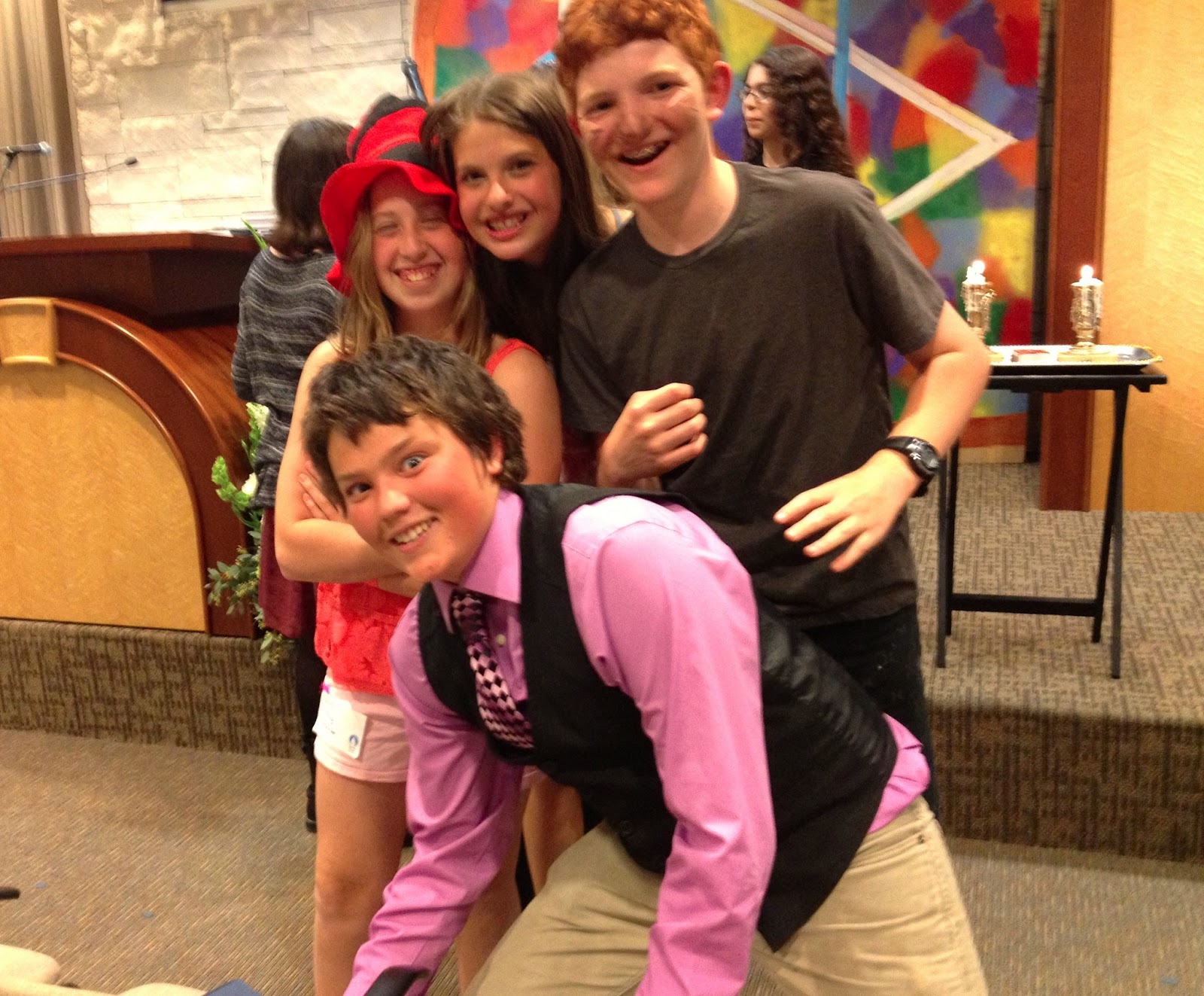
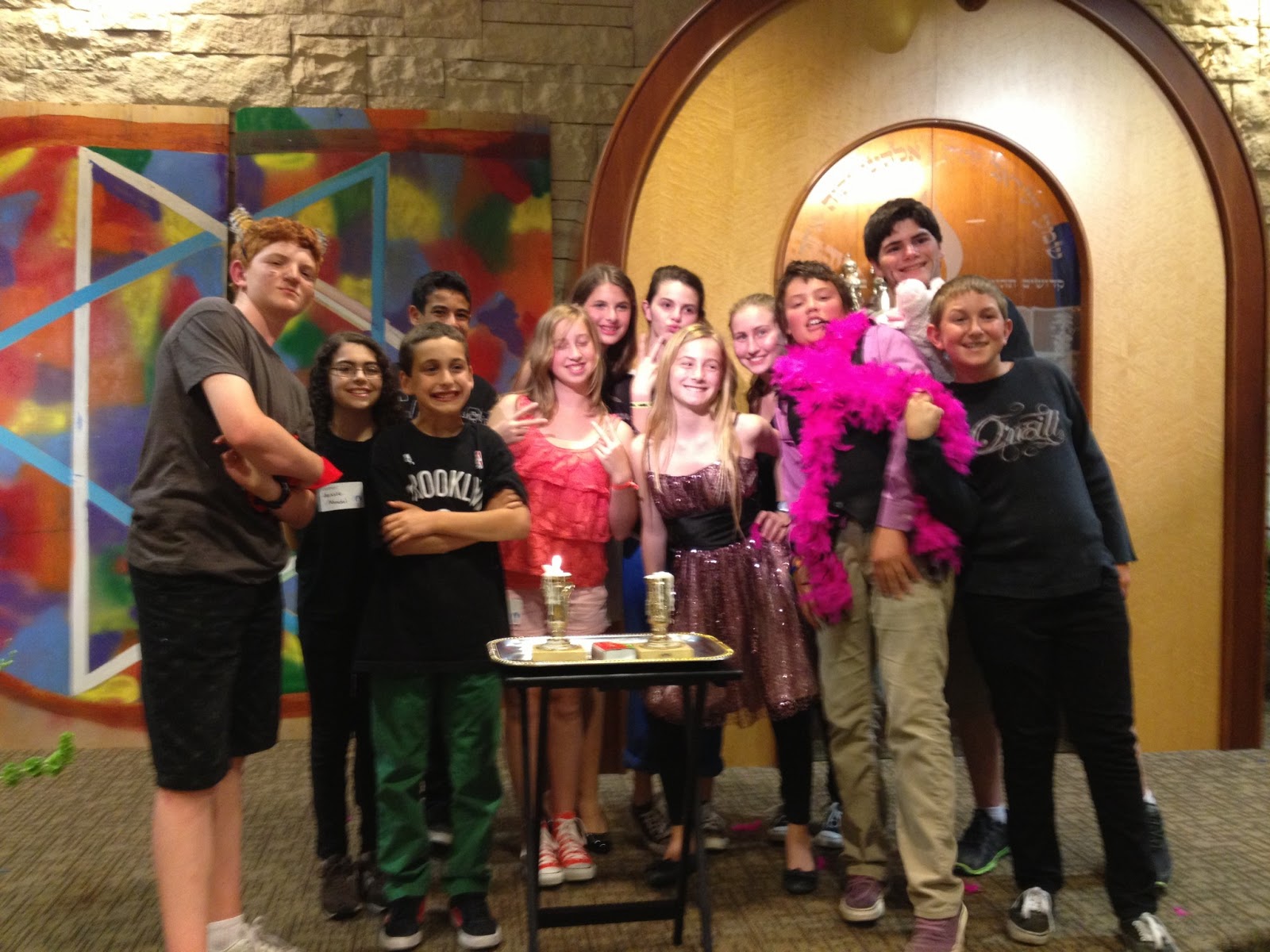
The service began with a video presentation in which one student (who happens to be on the autism spectrum) interviewed other students about their experience in A.T.M. Throughout the service, teens from other Triple T tracks led prayers after introducing them with kavannot (inspirational creative writings) on the theme “What prayer means to me.” We were particularly inspired as one teen, whose father is fighting cancer, shared his interpretation of the Mi Shebeirach prayer for healing and then led us in the healing prayer. The musical theater production, a modern drash if you will, was engaging and inspirational.

The Kvelling Began As the Curtain Came Down
Our teens, their parents, and our entire temple community kvelled continuously that night and in the nights that followed, as each tried to capture the essence of the Jewish experience that embraced their teenage children. The comments from three parents are indicative of what we are hearing:

Parent Lesli Kraut: I was very inspired by the Festival of Jewish Arts Shabbat Service. Remembering back to when I was a teenager, my parents forced me to be involved in a local youth group chapter. I didn’t want to go and definitely did not feel like I belonged. Our teens, including my own son Andrew, want to be at Temple. They are engaged, excited and most of all comfortable with their Judaism. It is so wonderful watching them interact with each other and knowing that they share a special bond and a sense that they definitely belong. Thank you, Congregation Or Ami!

Parent Mike Moxness: When my son Aaron presented his interpretation of the Mi Sheberach and led the prayer, I couldn’t stop the tears from falling. I have been living with advanced cancer for the past year and I have always taken great solace in this part of the service. It exemplifies the caring community of Or Ami and I truly believe that all the prayers offered up on my behalf have helped me survive. Having Aaron sing those words brought up strong feelings of gratefulness for all the support we have received. I am especially grateful for the home our kids have found in Or Ami’s youth programs. It provides a place of comfort in this turbulent world. All teenagers face many challenges, and letting them express their thoughts without judgement is incredibly important. It is difficult for most kids to talk about painful experiences, however, giving my son the podium for a few minutes in front of a supportive community helped the healing continue.

Parent Addy Chulef-Mindel: I want to let you know that after the Festival of Jewish Arts Shabbat Service, my daughter Jessie said, “I feel that Or Ami is my second family…” We are thrilled that we joined Or Ami, and Jessie looks forward to continuing to make new friends and doing Tikkun Olam (acts which fix the world). Having the feeling of community, and the opportunity to help and give back is where Jessie finds meaning–and that’s what Congregation Or Ami is all about.

So Go Ahead
Ask the A.T.M. teens what they accomplished at the Festival of Jewish Arts. They might say that they put on a musical play. They might respond that they made great friends and had a lot of fun. But we know better.

In the midst of the scripts and the sets and the rehearsals, our teens utilized their artistic and musical talents to grapple with what it means to be Jewish. All within the context of a Jewish night for teens. Although we did not pay them to participate, they each came away with something even more valuable:  A deeper understanding of their Jewish identity.

Is Passover Over Yet?


The end of the Chag (holiday) of Pesach is upon us, and so many who have kept Passover are counting down the moments until they can eat their beloved pizza, morning toast and all kinds of cakes and cookies. I even heard one person pining for a bowl of oatmeal.

Is it really that difficult to do without chametz food for seven days (or eight depending upon your custom)? It seems so for so many.

Does the discomfort and hunger for that which is forbidden help us meditate on our mytho-historical memory of leaving Egyptian Slavery in search of the Promised Land – or – does it just add to the list of things about which Jews can kvetch?

Thou shalt not crave
This year, I do not yet seem to crave anything. I have eaten plenty thanks to a smaller than usual Seder and a larger than expected supply of delicious leftovers. Still, I look forward to moments when I don’t have to think about the food I put in my mouth.

That discipline – being totally aware of what I eat – like keeping kosher, seems to parallel my doctor’s orders that I drop 15 pounds. The only way to do that is with daily exercise and by thinking before eating.

Thinking before eating.
The Jewish blessing and curse. Blessing, because it elevates the habitual action of eating, making it a sacred act of holiness. Curse, because it forces us beyond our base human needs and wants.

Do I think about slavery every time I eat during Passover? Heck no! But I do take pause, check the ingredients, figure out how many days remain in the Chag, and therefore get pulled back into the exodus. My mind sometimes wanders back to our Seder or forward to the different groups we talked about who are experiencing oppression today.

A constant reminder
That would not happen naturally. So I need something to goad me back to that mindset. What could be a more constant reminder than having to think before I eat.

So I may not be counting down the days until Passover ends. But I am counting forward about the things I can do to eradicate oppression from our world.

Chag Pesach Sameach – happy Passover.

How to host a huge Seder without cooking a lot

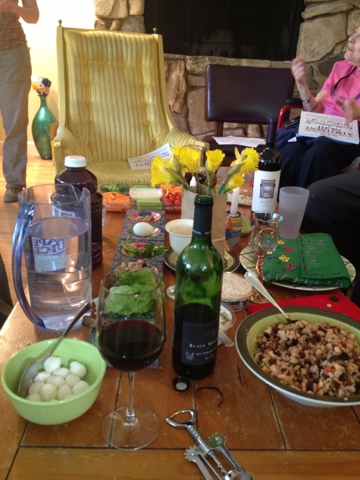
Although we started out with the smallest guest list in years, we ended up with the most well attended Seder that we have ever hosted. Thanks to technology, tradition and trust, we had more people at our Seder table than ever before.

Technology
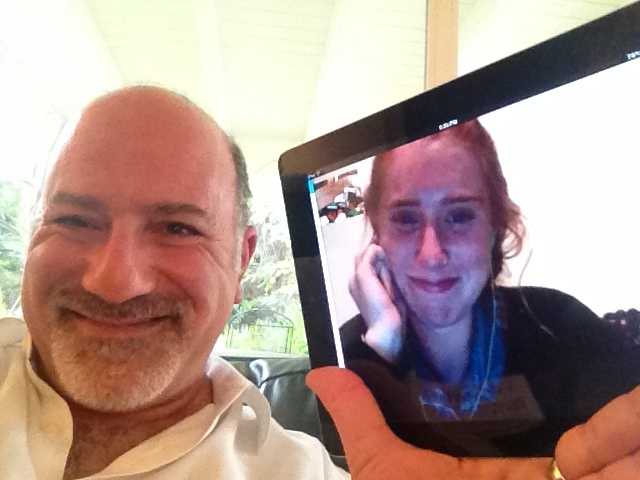
Although our family is spread all over the globe, we managed to bring them together with the help of a few computers, an iPad and some patience. We Skyped them in – my parents from Cape Cod, my nephew and niece from the Boston-area, and our daughter from Ecuador. My sister and I coordinated a bicoastal seder, though the finicky internet ended the experience far too early. When her turn to read, we even held up our haggadah for our South American-based student to participate.

The world is so big, but technology joyfully makes it feel so much smaller. And since our family is spread out, holidays no longer need to feel so separating. Technology has allowed us to double the size of our Seder without having to set more places or even cook more food.

Tradition
Our modest home stretched to accommodate the next group of visitors. 2 million Israelites came by to share the experience. Their experience. Reading the Magid (story) of their exodus, we felt their presence wih us. (Here’s the math: 603,550 Israelite men of fighting age counted in the Torah. Double it for similar aged women, give them an average of 2 kids each, add in the old, ailing and disabled, and we get close to 2.5 million.) Of course, from an historical standpoint, it’s unclear if the Exodus actually happened as reported. Still, the mythohistorical Israelites came over for Seder dinner, but thankfully they didn’t eat.

Trust
We went interfaith for parts of our Seder, welcoming in 3 million undocumented foreigners living in the state of California. They live in terror, especially when they find themselves victims of crime, because they are fearful that going to the police will lead to automatic deportation. This is a terrible way to live, for any human beings, let alone people who are mugged, sexually assaulted or forced to work without pay by unscrupulous slave-driving bosses.

Using a Haggadah supplement produced by Reform CA, a group of Reform Jewish Rabbis and laypeople, we committed ourselves to standing up for the stranger. Words from Torah became the rallying cry for us; the Trust Act, a piece of legislation before the California Assembly, serves as our vehicle to combat this focused oppression. Even though they left with their bellies empty – apparently not everyone likes matzah and gefilte fish, the cry of the 3 million resounded throughout our Seder.

Guests Kept Coming
We spoke with the women of Israel who monthly pray at the Kotel (Western Wall), in hopes of opening up this Jewish site to prayer and ritual as we liberal Jews experience it.

We talked with Palestinians and Israelis – a passionate bunch they were – who want nothing less than normalized relations as members of two states living side by side in peace.

Lo Dayeinu
It would NOT have been enough if only seven of us sat around the coffee table on living room couches to read through the Haggadah. The Seder is meant to be shared – with far flung relatives, with our ancient ancestors, and with modern victims of oppression.

Because only seven of us ate, we had leftovers for a week. More significantly, with the house cleaned up and the Seder plates put away, we still carry with us the extra responsibility – burden?!? – of our new friends.

Repairing the Injustice by Passing the TRUST Act

In preparation for Passover, the festival commemorating our people’s passage from oppression to freedom, from fear to faith, I signed on to this letter by Reform CA, to pass the Trust Act in California (here’s a backgrounder on the Trust Act):

The imperative of Jewish history commands us to speak out loudly. As a wandering people that has often depended upon the good graces of nations for protection from physical harm and economic hardship, we are sensitive to the needs of another immigrant population. 

And as Californians, we are proud that our state has been the leader in this country for compassionate and just legislation. We know that when California sets the standard for public policy, the nation takes notice and follows 

It is for these reasons that we endorse, support, and encourage the passage of the Transparency and Responsibility Using State Tools (TRUST) Act. The TRUST Act will serve to redress the daily injustices faced by undocumented immigrants in California.
Joining our voices with police officials, immigrants rights groups, other faith communities, and many more, we sign this petition in order to raise our voices to our state legislators and to Governor Brown and implore them to action – to vote yes on The TRUST Act and to sign it into law. 

***

A Jewish poet once wrote:

“Give me your tired, your poor, your huddled masses yearning to breathe free… Send these, the homeless, tempest-tost to me.”

Reform CA is delighted to launch our first campaign on statewide immigration reform through the California TRUST Act. With Pesach quickly approaching, we are reminded of our own Exodus narrative of journey and wandering, finding ourselves in so many generations the stranger in a strange land. At our seder, we hear our own cry for redemption echo in our charge to care for the stranger in our midst. As Reform Jews and Californians, we seek compassionate and fair laws for our immigrant brothers and sisters who call California home.

We are working to get thousands of signatures as we demonstrate to our elected officials the strength of the California Reform Movement. Sign our petition now – tell the California Legislature that it’s time to pass the TRUST Act and restore stability and security to our immigrant communities.
When we are young, we are often told by a loving parent that if we are lost or hurt or scared, we should find a police officer who can help us. Unfortunately, millions of California parents who are immigrants without documents must tell their children the opposite, to avoid police officers, because under current state law, contact with an officer can result in deportation. In addition, undocumented immigrants who are victims of spousal abuse or who witness a crime are afraid to reach out to local police for protection because doing so risks their own deportation.

By signing this petition here, we, the Reform Jewish community of California, say it is time to repair this injustice.

***

I am also including this Passover Seder ritual to help bring awareness of this issue to the people gathered around our seder table.  I invite you to do so also.

When Rabbis Disagree, Can They Do So Respectfully?

It is easy to condemn the views of others. We Jews particularly need not be afraid or enraged when someone makes theological claims that challenge our views. Unlike extremists in other religious groups, Jews allow for every argument about and with God.

I faced just that situation when a rabbi I did not know called a recent Torah commentary I wrote a “chillul Hashem” (an action that disgraces, harms or shames God).

On March 1st, the Jewish Journal of Los Angeles printed God’s Road Rage, my Torah commentary on Ki Tisa. Arguably edgy, with a few lines that I would edit out in the future (“There God goes again, getting pissed off!”), the commentary makes a theological claim that was sure to make traditionalists uncomfortable: that God is not perfect, but learns and grows and changes.

In response, Conservative Rabbi Robert Elias (Knesset Israel of Hollywood) wrote:

Describing the Almighty as a terrible tot, throwing temper tantrums and much worse, is shocking and unworthy for the author and the publisher. If this is the God [Rabbi] Kipnes believes in, why become a rabbi? Why bother to pray? Why stand up for the Torah?

If you were in my shoes, would you dismiss the critique as theological fundamentalism? Or would you want to defend your position?

Here’s what I did:

Upon receiving the comments of Rabbis Elias, whom I did not know, I did what any thinking person should do when confronted by those who seem offended by my comments: I picked up the phone and called. Then I met for coffee with Rabbi Elias.

Rabbi Elias and I spent over an hour, talking, getting to know each other, speaking about our families, our lives and careers. We talked about the ideas, which he found so offensive – mostly the theological claim that God is not perfect – but equally the way I couched the idea within the article. We shared the fact that we both believe deeply in God, and that we love the multifaceted nature of Torah. We agreed to disagree on this God concept.

As I hoped, the conversation became a learning opportunity to bridge the theological gap, explain perspectives, and perhaps build a connection Jew to Jew, rabbi to rabbi. That’s how Jews disagree and yet remain one community.

I thanked Rabbi Elias for agreeing to meet. He said he was surprised to hear from me, and thanked me for picking up the phone to talk about his concerns.

I apologized that my words so offended him. He suggested that I include those words in my response to the Jewish Journal. And so I did.

As I concluded my response to the Jewish Journal:

We encounter [those who disagree with us] with thoughtfulness to discern where there might be truth that we overlooked. I believe in God with all my heart, soul and might. And I humbly apologize to those for whom my words offended their understanding of God.

Is it Kosher to Walk in The Great Race on Shabbat?

It is rare indeed when a rabbi has a free Shabbat (Sabbath). With 54 B’nai Mitzvah a year, I joyously find myself in the sanctuary almost every Shabbat, being inspired by our young people as they lead services, chant from Torah and teach us about the intersection between Torah and life.

When a Shabbat comes along during which I do not need to be in shul (synagogue), there are five items on my short list that I want to accomplish. Each helps me observe the holiest day of the week.

What this Rabbi Seeks to Do 
on a Shabbat Away from the Shul


First, I try to be out in nature. Our tradition teaches m’lo chol ha’aretz k’vodo – the whole earth is filled with God’s glorious creation. Moreover, God is sometimes called HaMakom – The Place, because every place is where God is. On Shabbat particularly, the day we are called upon to recognize as a sign of the covenant between God and the Jewish people, I want to be out in nature to revel in God’s greatness.

Second, I want to be involved in Tikkun Olam – fixing the world. On Shabbat, rather than acting upon the world, we are invited to sit back, notice and celebrate the blessings of this world. Taking it one step further, many activities which heal this world are by definition opportunities to celebrate and advance the blessings of this world.

Third, I want to be involved with learning. Shabbat is a day of study. Most often we Jewish understand studying as referring to Torah, the repository of God’s wisdom. Yet we know that all knowledge comes from the Holy One and has its roots in Torah. So on Shabbat, I try to learn myself, help others learn, or more generally, support the enterprise of education itself.

Fourth, I try to be with my family and our community. Our sages teach Al tifrosh min hatzibur – do not separate yourself from the community. Shabbat, given as a day of rest, provides us a chance to gather with those closest to us, to celebrate life and its blessings.

Fifth, I recite blessings and prayers to honor the Holy One and celebrate the holiness of the Sabbath day. On Shabbat in the outdoors, I can recite the words of Yotzeir Or (which praises the Maker of Light who is the Creator of All Things), the Shema (which recognizes the Oneness of all Creation), and Oseh Shalom (which asks the One who makes wholeness and peace to help us bring wholeness and peace to the world and everyone in it).

Supporting Local Schools
The Great Race of Agoura Hills was established in 1986 by a group of parents looking to raise money for their children’s elementary schools. Now professionally produced by Endurance Events and in its 28th year, The Great Race of Agoura Hills is one of the largest running events in the Los Angeles area and continues to donate to many schools in Agoura Hills and Oak Park.

The proceeds from The Great Race benefit seven elementary schools in Agoura Hills and Oak Park as well as the athletic programs at Agoura H.S. and Oak Park H.S. In the past, the event has helped to pay for programs that were not funded by the state. However, with huge state budget cuts to education, these schools face financial hardships and must find many more ways to raise more funds to just to maintain their exisiting programming and staffing levels.

Come Walk with Me – and Celebrate Shabbat
So, is it kosher to walk in The Great Race on Shabbat? I say “yes” and therefore, on Saturday, March 23, 2013 – after praying at the synagogue on Friday night – I will be walking in The Great Race of Agoura Hills. In doing so, I will be doing Jewish because I will be:

  • Out in nature, amongst the hills of Agoura
  • Doing Tikkun Olam, as I help support the improvement of our local schools
  • Involved with learning, as I support an event that raises funds for our schools
  • Connecting with community, as with family, I participate in the race and then welcome the community at Congregation Or Ami’s post-race booth. 
  • Reciting blessings, particularly one which praises the Creator of all for bestowing upon me a body which is able to walk distances and recognize the beauty surrounding us.

Whether being outside is as much of a religious experience for you as it is for me (I once wrote that I most often encountered the Holy One in our national parks), I invite you to join me and thousands of others for a run or walk out in nature to change the world by supporting deeper education for all our young people.

Visit the Congregation Or Ami Post-Race Booth
And if you walk, run or just wander around the race area, come by the Congregation Or Ami booth to say hello and Shabbat Shalom (a Sabbath of Peace) and to receive a fun giveaway. You may register for the Great Race of Agoura Hills here.

[Can You Volunteer at our Booth?
BTW,  thanks to Vic Cohen for heading up the booth. If you can volunteer an hour at the booth, please let me know and I will put you in touch with Vic.]

Prayer for Fertility Treatments

Alden Solovy is a talented psalmist/liturgist/poet. A great guy too. On his website, http://tobendlight.com he shares new prayers written for so many of those unique moments which call out to be marked with a blessing. His words capture the yearning of our hearts.

Today’s he writes:

This is a prayer for use by a woman beginning or continuing fertility treatments. It’s one of several new prayers on pregnancy, both the joys and the potential challenges. In coming weeks look for prayers for a man in fertility treatment, on waiting for pregnancy test results and on confirmation of a high-risk pregnancy. I’ve already posted a general prayer for pregnancy and two for use after the loss of a pregnancy. These prayers will appear in my forthcoming book, Jewish Prayers of Hope and Healing.

For Fertility Treatment (Women)

G-d of Mercy,
I have prayed,
I have cried,
I have shown my sorrow to heaven,
In the name of fulfilling Your command,
In the name of fulfilling my birthright.
Mother.
Vessel of life.
Vessel of love.
Source of joy.
Source of generations.

Rock of Ages,
Has my body betrayed me?
Are my hopes and dreams
Empty, barren, lost?
Grant me courage and fortitude
As I begin/continue fertility treatments.
Grant my doctors wisdom
And my body strength,
So that I my know the holiness and wonder,
The radiance and light,
Of carrying life and giving birth,
In the fullness of health,
In the fullness of joy,
With awe and thanksgiving,
With gratitude and humility,
In service to Your Holy Name.

© 2013 Alden Solovy and http://www.tobendlight.com. All rights reserved.