Category: blog archive

A Prayer for Physicians

Too many who are dear to me (and to our congregation) of necessity must turn to their physicians to help chart the course of their futures.

For the doctors of Steve and Craig and Mike and Jill and Ken and Craig and Teri and Aidan and… and… and…, we pray.

Doctors (and other caregivers) are amazing repositories of knowledge of the art of healing. With compassion and skill, they match symptoms with diseases to diagnose what ails. With confidence and hope, they match diseases with treatments in hopes of alleviating discomfort and, where possible, to bring about a cure.

My friend Alden Solovy, gifted liturgist, whose website www.tobendlight.com collects his original prayers for almost every situation, offers this prayer for physicians:

G-d of Old,
We are flesh and blood,
Imbued with Your divine spark,
Strong, but vulnerable.
You have blessed us with men and women
Who dedicate their lives to health and healing,
Preventing disease, reducing pain,
Prolonging lives, providing hope. 

G-d of life,
Watch over our physicians –
And all who work in the healing professions –
As they serve us during times of health and
In the times of our deepest needs.
Bless their hands with kindness,
Their eyes with courage,
Their hearts with sincerity
And their souls with love,
So that they become
A fountain of healing.
Bless them with fortitude and strength. 

Rock of Ages,
Bring an end to pain and suffering,
So that all may know
Your compassion and Your grace.
Bless doctors throughout the world
With Your warmth and shelter,
Even as we bless them
With our eternal gratitude and love.

© 2013 Alden Solovy and http://www.tobendlight.com. All rights reserved.

Send this prayer along to your favorite doctors. Let them know that we pray for their skills, their hearts, their work.

For Many Jewish Youth, Gay Marriage is a New Normal

I woke early one morning in June to hear the decisions of the United States Supreme Court on a pair of cases about marriage equality. Joy mixed with disappointment. I celebrated the return of marriage equality to the State of California and the effective end of the ill-named Defense of Marriage Act (DOMA) through the extension of benefits to gay and lesbian married couples. At the same time, the Supremes dodged an opportunity to make Marriage Equality the law of the land. Still, there is hope as advocates work within the states to move equality forward.

Some people expressed frustration at the slow pace of full equality. I am not one of those people. I see that great strides have been made and more will come.

Why?

  1. Because at its root, marriage equality is grows out of our Jewish value of B’tzelem Elohim (in God’s image), and the inalterable Jewish value that all of us – including gay men and lesbian women – are created in that image, thus deserving to be valued and inherently demanding equality. AND
  2. Because of young people like Dani and her friends who are increasingly becoming the dominant voice in our land. 

The Youth Shall See Visions


Dani is an 11-year-old young person from our Congregation Or Ami (Calabasas, CA) who recently spent a month at the URJ Camp Newman summer camp.

Dani inherently gets this rightness and justice of marriage equality. The challenges raised by opponents seem irrelevant to her. Homosexuality and the resulting call for marriage equality are a new normal for her and her friends.

Dani’s mother Debby explained it this way:

Dear Family & Friends, 

I wanted to share with you the story of how Dani and her friends celebrated the Supreme Court’s decision about Prop. 8.

One of the role-playing games that girls play these days is a variation on the time-honored game we used to call “House.” Modern girls now call the game “Family.” Everyone is assigned a role: one is the mother, one is the father, and the others are various sisters, brothers, and inevitably babies. Occasionally there is a dog or cat or horse involved. The girls have never hesitated to take on male roles, and they will spend hours playing the game (which usually involves a lot of scolding of the children and heavy sighing by the frazzled and overwhelmed mother). 

Dani was away for 4 weeks at her beloved URJ Camp Newman when the announcement that the Supreme Court dismissed the Prop 8 appeal reached Dani and her beloved cabinmates. They responded by deciding that they should all get married. So the ten girls, ages 10 to 12, formed five “married” couples for the rest of their time at camp (though there was flexibility in who was married to whom from day to day).

That they so readily and seamlessly (and joyfully) adapted the game of Family to include same-sex couples truly brought home for me how far we have come as a society in overcoming ignorance, intolerance, and fear when it comes to accepting, embracing, and role-playing different kinds of loving couples.

Dani and her cabinmates’ game does not mean that equality has been achieved yet, but how this one group of girls responded provides us a glimpse into how today’s children will act when they are tomorrow’s adults. 

Statistically, it is quite possible that one of those 10 girls may already know or later discover that she herself is a lesbian. Imagine her having this silly yet loving pre-teen memory to hold dear as she chooses how to make her own way into a world that may not always embrace her sexual orientation as warmly and naturally as her cabinmates did in the Summer of 2013.

To those of us who seek full equality for gay and lesbian individuals and couples, Dani’s game playing is so moving.

Two friends of Dani’s mom reacted even more passionately:

Said one,

I am fighting back tears as I type this. My heart is too full to say much, but please know I find this a beautiful sentiment to a subject that is so hard for a lot to stomach. The fight is constant and continues, of course, but knowing this is the future is very empowering.

Said the other,

I remember playing “house” (and yes, that’s definitely what we called it then) with the cute as a button little blonde across the street, and I ALWAYS had to be the boy. It never dawned on us that we could both be the girl and live happily ever after…

Debby allowed me to publish this story after she asked Dani what she thought about sharing this on your blog. Dani does not have a problem with it.

To quote Debby, 

I think the thing that feels so remarkable about Dani’s story and about the kids my daughter is friends with is that they do not view being gay as a big deal or particularly interesting or special – or negative. Obviously, there are still plenty of kids in the country who do NOT feel this way, but the momentum feels to me to be moving in the direction of: why should I care (or have any say in approving) who someone else loves?

Right, why should I care about or have any say in approving who one marries?! Relationships between two mature, consensual, supportive adults, who see in each other B’tzelem Elohim  deserve equality.

May that equality, blessed by our communities, soon become the law of our whole country.

Drumming our Way to a Spiritual Shabbat

Ken Meyer Leads the Drumming
(All Pictures by Michael Kaplan)

We learn in Torah that Miriam took a timbrel in her hand and led the Israelite women sing, as they, her brother Moses and the Israelite men crossed through Yam Suf, the Sea of Reeds. We regularly tout the spiritual uplift that comes from music of shofarot (rams’ horns) and of singing.

This timbreltof in Hebrew, a percussion instrument, part mini-cymbals, part drum – was new to the Israelite orchestra. If our ancestors added this instrument into the mix, shouldn’t we?

There is something about rhythm, about holding a beat, that is primal. Drumming brings people together; it forms disparate elements in a group. Drumming transforms individuals into a community.

In the Torah, no doubt the tambourines and drumming gave purpose and direction to the Israelite tribes as they walked through the sea. Just as the heartbeats of choir members beat in sync, so too the drumming might have kept the Israelites on the exodus on task.

Drumming can Greatly Enhance Jewish spirituality

Sheryl Braunstein Sings
While Aaron Meyer Plays Piano

On a recent Friday night, at a backyard Shabbat service at the home of Rabbi Wendy Spears and Eitan Ginsburg, Congregation Or Ami worshippers gathered for a musical drumming Shabbat. Playing a range of instruments – drums, tambourines, maracas, and sticks among others – worshippers explored the hypnotizing and meditative experience of praying with a beat. Soloist Sheryl Braunstein, pianist Aaron Meyer and drummer Ken Meyer led us through a rhythmic service. Same prayers, same tunes, but with an entrancing beat. Rabbinic intern Jonathan Rothstein-Fisch told a story about our responsibility to respond to the beat hat calls to us. Then Ken Meyer led us in a “call and response” drumming activity.

Drumming Leader Ken Meyer explained,

It was a meaningful service to me for several reasons. It is always great to be outdoors on a beautiful summer evening… I am so glad I came to help. I have been drumming for over 50 years. By giving each of the congregants an instrument of some kind to play, they were more active participants; no experience was needed and anyone of any age could join in. Since everyone can easily make a sound, we all played various beats to the songs. We even created another new version of Cantor Doug Cotler’s prayer-song, Listen.

Sometimes I think that non-musical congregants might feel awkward when asked to sing, especially if they think they might sing out of tune or off pitch. With percussion instruments, there is no such worry. 

When we did the drumming-only “call and response” section of the service, we kicked it to a higher level of participation. It was great for community building, group bonding, teamwork, cooperation, and stress relief. It was also a lot of fun. This all led to a higher degree of spirituality for me.

Following the service, we invited other worshippers to reflect upon the spiritual rhythmic experience. The discussion continued longer than expected because the experience was so meaningful. Their experiences varied.

An Intense Active Full Body Experience

A Few of the Drumming Participants

Steve Greenberg said, Drumming along with the group got my body to pray along with my brain. It brought us together so that it felt like I was praying with the whole of my being.

Rabbi Wendy Spears wrote, I loved the sense of connection that the drumming vibrations gave us. It felt like all of our hearts were beating in a synchronous rhythm. There was a different sense of active participation when we added our hands to our voices in song.

Kevin Palm explained, Friday night’s “out of the box” Shabbat service kept worship fresh and did two things for me: It made me an involved participant by having to match the beat and participate wholly in the songs and prayers. Simultaneously, it proved once again that we don’t need to be in a synagogue to create a holy place – we can create one anywhere including a backyard, a campfire, a park… anywhere…

A Sense of Communal Connectedness

Aaron Koch wrote, The experience of everyone joining together in the collective rhythm of prayer, created a feeling of connectedness, community and Shalom.

Dianne Gubin emailed, Friday night’s Drum service was a memorable and touchstone experience for me. It was really fun and creative to be so fully engaged in services. Soloist Sheryl Braunstein, pianist Aaron Meyer and drummer Ken Meyer were easy to follow and quickly had everyone drumming together… I love the variety of services we have at Or Ami!

Soloist Sheryl Braunstein noted, The rhythm connected us all to each other and to the prayers. I loved Jonathan’s story and story telling!

A Liberating Participatory Experience

The Lachers and the Koches

Ralph Lacher responded, A liberating environment seemed to grow as the evening of Shabbat drumming and humming matured into a communal singular voice. The experience was a very enjoyable stress reliever that had a child like quality of innocence.

Rabbinic Intern Jonathan Rothstein-Fisch texted, For someone who is not musical I looked forward to being able to play an instrument no matter how out of sync I was because I knew it was acceptable.

Of course, Congregation Or Ami will again hold a Shabbat Drumming Service again soon. Still, this experience leads me to wonder…

What are other ways that we might enhance (and change up) the communal prayer experience?

Rabbis Are Parents Too! Naming Noam Privately and Publicly

Picture by Michael Kaplan

I have officiated at more than 100 britot (brises) for newborn baby boys and girls (and plenty of older adopted children as well). None made me more nervous than the bris I recently led.

Ask anyone about my anxiousness. My office assistants would laugh as they shared how concerned I was that every synagogue room was clean, dusted, and set up properly. Our cantor would remark that I was doubly attentive about the choices and placement of music. The parents would note the abundance of calls and texts to ensure that every aspect of the ceremony detail was … perfect.

Why all the Nervous Energy and the Extra Detail Work?
Because we were naming Noam Daniel Weisz, son of my partner rabbi, Julia Weisz and her husband David. I was officiating at a ceremony for a colleague with whom I spend inordinate amounts of time visioning, problem-solving and planning. One for whom I have tremendous respect and appreciation. I was honored with great responsibility: balancing the communal need to welcome our “temple baby” with Julia and David’s own needs as parents. Yup, this bris had to be extra special.

Split Personalities: The Bifurcated Existence of Jewish Professionals
Communal leaders – rabbis, cantors, educators, Federation leaders and others – spend vast amounts of time building relationships, creating community, and designing meaningful Jewish moments for others. When our own s’machot (joyous moments) approach, we are pulled in two directions. On the one hand, with the communities in which we work, we want to share our joy, find consolation, or be role models of how to mark both experiences. On the other hand, Jewish professionals have the need and right to have a personal (non-rabbinic) life cycle experience.

Julia and David set a perfect tone of balance when they decided to divide the brit milah ceremony into two parts: the bris (circumcision) which would be held in a separate room for family only, and the naming which would take place in the sanctuary as a public ceremony. Such Solomonic wisdom from so young a couple!

The Bris: Blessings Between Family Members

Picture by Michael Kaplan

The bris was intimate, musical and moving. We were connected midor lador (from generation to generation) and mimedinah lamedinah (across state borders) as Noam’s out-of-state relatives, including Super Nana and Super Zayda (great grandparents), watched the live streaming webcast of the ceremony and as Noam’s Aunt Jo FaceTimed in from Texas, where she was required to participate in the first days of her graduate school nursing program. His three living grandparents schepped nachas (shared the joy) in person with the rest of us.

Mohel (urologist) Dr. Andy Shpall explained the ritual, led the ceremony, and, in 30 quick seconds, circumcised young Noam with calm and professionalism. Cantor Doug Cotler, master musician, played background music and added in appropriate Jewish songs to focus our attention on this transcendent, joyous moment.

Cantor Doug and I caught each other’s eyes, and together recognized the blossoming kedusha (holiness). We wordlessly agreed to extend this portion of the day’s festivities to encircle the sparks of holiness. An extra song added. Then family members each blessed baby Noam with words that completed the sentence, “May you be blessed with…”

Eyes welled up as Mom (Julia) and Dad (David) blessed their baby. Family gathered close together and we pulled Aunt Jo’s iPad picture closer. Touching, hugging, holding each other, they all embraced Birkat Kohanim blessing. Eyes welled up poured out tears, as family celebrated the simcha.

Transition Time: Returning to the Rabbi Role
As family members were ushered downstairs to the sanctuary (where our lay leaders ensured that front row seats awaited them), we gave the Mom and Dad transition time. They spoke with the mohel about care for their circumcised infant. They took moments to hug each other. They held little Noam. Breathe in the blessings; breathe out the pre-bris worries. Breathe in; breathe out. Breathe in; breathe out.

The Naming: Schepping Nachas (Sharing the Joy)
The naming gathered a substantially larger group, mixing Rabbi Julia’s and David’s colleagues, friends, Or Ami congregants and family. Cantor Doug bonded the group by teaching them Nachas, Nachas, his new, original song for celebrating any significant moment of meaning. Paired with Siman Tov uMazel Tov, Nachas, Nachas brought old world yiddishkeit to our decidedly new American Jewish ceremony.

Grandparents shared readings about the significance of a name. Following the tradition – part superstition, part practical – of waiting until the bris to announce the baby’s name, David and Julia shared Noam Daniel’s name and its derivation from his deceased great-grandfather Oscar/Naphtali and his deceased step-grandfather Daniel. The congregation ooo’ed and ahhh’ed as the baby slept and cuddled. Hebrew blessings confirmed his Hebrew name and our prayers for his speedy recovery from the circumcision.

Allowing “Julia, our Rabbi” to Be “Julia, his Mommy”
How do communities care for the caregiver? Just as some adults have difficulty parenting the parent, congregations do not naturally know how to care for their Jewish professionals. Without such tools in their toolbox, it rests upon the shoulders of the leaders – clergy and president/board chair – to set the expectations. So as part of this ceremony, we explained to the assembled that today – and for the weeks (and years) following – Rabbi Julia and David need to be able to be like any other parents. Today especially, we celebrate with them and allow them just to relax into the most sacred of roles – the parents of a child.

Therefore, as part of the naming ceremony, we shared the congregation’s vision for Rabbi Julia’s maternity plan. We reminded the community that for the next three months, while on maternity leave, “Rabbi Julia” becomes “Just Julia.” We who have been so lovingly and tirelessly cared for by our Rabbi Julia, will want to care for her by allowing David and her to focus solely for baby Noam and each other. So as we see her in the mall, out at dinner, up online, we will NOT discuss Temple issues or updates with her. All temple related issues or concerns can be shared with her assistant Nancy Acord or with Rabbi Paul Kipnes. Message delivered, we moved toward conclusion.

Birkat Kohanim: A Benediction for a Baby and Family
Since the blessings of the community are as significant as are those of the clergy, we asked everyone to stand up and form one complete, unbroken chain of hugs or hand-holds, reaching all the way forward to Noam’s grandparents and from them to Noam’s parents, and to him. Quickly the large gathering became even more intimate. The assembled repeated the words of Birkat Kohanim (the Priestly Benediction) to Noam.

It was a moment of kedusha (holiness). To purposely misquote our patriarch Jacob, Achen, yeish Adonai bamaqom hazeh vanochi ken yadati – Surely God was in this place, and we all knew it!

Throughout the service, we lovingly treated Rabbi Julia and David as just two parents (not a rabbi and her spouse). We articulated the hope and expectation that she gets to be mommy first for her child, rabbi next. You see, Rabbis and other Jewish professionals (as mommies and daddies) can have rich, deeply meaningful spiritual lives, if we just need to educate our communities, articulate the expectations, and pre-think a process to address issues that might arise.

How does your community work to care for your caretakers and leaders?

Rabbi Nancy Wechsler-Azen Kvells about Camp Newman

Rabbi Nancy Wechsler-Azen, of Congregation Beth Shalom (Carmichael, CA), recently returned from two weeks as rabbinic faculty at URJ Camp Newman in Santa Rosa, CA. She sent us this letter about her amazing experience:

Dear Camp Newman Leadership:

As I reflect on my two weeks as rabbinic faculty for the 6-7th grade session Shomrim, I am truly moved by the experience. I think I am one of the ‘vatikim,’ having spent some 13 years growing up and serving on staff at Camp Swig, and nine summers on rabbinic faculty at Camp Newman. With all of those experiences, this summer I felt the magic of Camp Newman in some new ways that I’d like to share with you all.

High Quality Staff: Positive Jewish Role Models
I felt that there was a quality among the staff that showcased new levels to the Newman experience. From the morning shtick when Hebrew man appeared along with the presentation of a middah/value for the day, through the programming and how staff treated campers, deep Jewish soul instruction was present in a very engaging and delightful way. The songleaders were a team – no one stood out as the “ego” or super star. Everyone worked seamlessly together. What came through was incredible support and collaboration.

Having been at Camp Newman for some years, I felt as well the very high quality of the staff. The staff always love the campers, however in addition, I experienced a very high level of programming where the value of the day integrated into whatever program we were doing. Simple blackberry picking became an experience in cooperation as they picked for each other. Kindness for campers frequently moved me to tears. There was something set into the very fabric of the session so that children with various challenges were not only tolerated by the other campers, but loved. I witnessed again and again how a particular child, who would otherwise be ignored or teased in the non-camp world, was joyfully accepted.

Enhanced Musical Repetoire and Singing Experience
As a former songleader at Camp Swig, I always pay close attention to the musical repetoire and how songs are taught. I saw that there was some experimentation with teaching songs in the Chadar Ochel with a powerpoint system allowing for both learning new songs, even more complex songs, but still making space for the current custom of dancing around. I also was thrilled with the sound system on the basketball courts for Shabbat. The quality of singing, the gentleness of the older campers toward the younger campers, and the method of leading dance from the small stage in the middle, made for a safe and exhilerating Shabbat.

Joyous Prayer
This is a Reform Jewish summer camp and the campers really know their prayers. They exhuberantly bless the ritual washing of their hands, they are pretty ecstatic about the blessing before eating and even more joyful singing Birkat Hamazon with its inclusive prayer for our cousins, the children of Ishmael. There is some shtick, but it is precious shtick and kept at a respectful pace by the blessing leaders.

In the 6-7th grade session I worked with, the campers really knew the basic meaning of each prayer and were eager to lead, to write their interpretations and to participate in story telling. We would pray at the Creek on Shabbat Morning till the end of Amidah and then walk up to another place for Torah reading. There was a trust among the counselors and the campers about respecting the beautiful space and participating in prayer there. The way I saw it, gently tossing pebbles into the water and watching the rippling out of circles was like the impact of Camp Newman and the broader affect it has on their lives.

Calm Intentionality in the Senior Camp Leadership
Perhaps more than any other summer, I feel a calm intentionality from the senior staff. Rabbi Erin is a grounded presence. She always knows what is going on and what needed to go on – aware of both a specific child in need, as well as the perspective of how the camp is running and how the staff is collaborating. You feel here calm, grounded, aware presence directly when she speaks at Shabbat services and you sense it by how she speaks with all of us. Ruben creates a stable and vibrant energy from the first loving chorus of “Heveinu Shalom Aleichem” at the start of camp that only builds till the last night when campers shout with everything they’ve got, “I love being Jewish.”

Faculty Flowing into the Rhythm of Camp
At the start of my two weeks here, Rabbi Paul Kipnes (Camp’s Dean of Faculty) spoke to the faculty about how we fold into an already working system. It was a very meaningful talk – reminding the faculty that we are here not for our own ego gratification nor to make things how we think they should be, but to respect what has been going on and flow into that stream. Putting egos at the door and seeing ourselves more as open vessels created within me even greater appreciation for all the work that had been put in place.

Before even arriving at camp, I was sent, along with all faculty, the names and email information of the leaders, the Rashim, of the session I’d work with along with the invitation to contact them. What a great thing! It took no time at all to email them just to check in and say how happy I was thinking of being at the session with them. In addition, we were invited to collect some texts on a particular value or “middah.” This too made me feel that I could be part of the collaboration with such talented young leaders.

High Quality Jewish Learning
As I near my 25th year of Rabbinic Ordination, I know, hands down, that Jewish summer camp is the very best way to nourish the Jewish spirit. As rabbis, we can preach our best sermons, we can sing our songs, we can shmooze at onegs and do all the things that we are supposed to do to feed our congregants’ Jewish identity. However, I am convinced that it is the high quality of Jewish learning at Camp Newman, the loving counselors and specialists and the grounded, organized and deeply committed leaders who are the ones who make the magic happen.

URJ Kutz Camp Set Me On My Jewish Path

That’s me at the front of the boat

You could say that the texture of my life was molded during six summers I spent at the URJ Kutz Camp: NFTY Leadership Experience. Those summers – two as a Program Participant, two as a Resident Advisor/Program Director, and two as Head RA – set my life on a course that would weave together an intense love of Judaism, a versatility with creative and innovative programming, and a deeper appreciation of who I am. So much of what I do today as a rabbi draws on the nurturing and nourishment I received at Kutz.

I went to Kutz because my youth region NEFTY (now NFTY-Northeast) and my temple rabbis presented Kutz as the ultimate teen leadership experience. Kutz, I was told, was an incubator for future leaders of the adult Jewish community. So That summer I headed off to Warwick, NY.

At Kutz I Found a Second Home
There I made Jewish connections that defined me. There I experienced a whole bunch of really intense relationships. There I honed a set of informal educational programming skills that propelled me into rabbinical school, through a Masters in Jewish Education at HUC-JIR’s Rhea Hirsch School of Education, and ultimately into my current synagogue. In fact, Congregation Or Ami in Calabasas, CA derives much of its ta’am (flavor) and focus from the welcoming warmth and innovative Judaism that I experienced at Kutz.

Kutz Expanded my Horizons
At Kutz I met the giants of Reform Judaism. We studied Jewish prayer with HUC-JIR’s Dr. Larry Hoffman, Talmud with orthodox Rabbi professor Michael Chernick, Jewish philosophy with Dr. Eugene Borowitz and the Biblical Five Megillot with UAHC leader Rabbi Bernie Zlotowitz. UAHC president Alexander Schindler spoke an inspired us, UAHC VP Danny Syme warned us about the dangers of cults and other Reform Movement dignitaries shared with us issues at the heart of what it means to be a Reform Jew.

At Kutz, we heard from Abbie Nathan, the renegade Voice of Israel radio personality, we connected to Israel through shlichim David and Miri Varon, and we were regaled with musical compositions by a Russian immigrant/former refusenick who conducted the Moscow orchestra.

Kutz Refined Jewish Leadership Skills
Smitty (Rabbi Allan Smith, UAHC Youth Division Director ) guided my development as a youth worker, PJR (Paul J. Reichenbach, now URJ director of Camping and Israel Programs ) nurtured my programming abilities, and Rabbi Ramie Arian (then NFTY Director) led me to develop the beginnings of a philosophy of youth engagement. With dear friend Elaine Zecher, we created a programming partnership that continued into our rabbinates and our work in the CCAR.

Empowered through Song
At Kutz, music spoke louder than words as we sang together under the musical leadership of Merri Arian and Jewish composer and HUC-JIR professor Benji Schiller. Successive, talented song leaders taught us the latest Jewish and Israeli tunes. I learned so many Jewish values through song, texts from Pirkei Avot, Talmud, liturgy, and Tanakh that to this day animate my moral core.

Inspired by Rabbis
At Kutz I met and connected with energetic, creative, youth-focused rabbis and rabbinic students who led me on journeys into aspects of Judaism I might not have encountered until years later. Rooted in Jewish texts and social justice values, they instilled within me a conviction that Judaism speaks to every issue – religious, social, sexual, public policy, economic and more. There I first encountered the Religious Action Center of Reform Judaism which years later would provide me with a life focusing internship. And more, at Kutz I learned that one day I wanted to inspire teens just like they inspired me.

Faced Teen Issues
At Kutz, guided by Social Worker Ira Schwietzer (Ducky), we face a whole array of teen issues. We wrestled with the intersection between sex and love, the need to break a friend’s confidentiality if she is contemplating suicide, and the importance of dating and marrying Jews. We talked about peer pressure, body image and relationships with parents.

Found Abiding Love
Oh, and at Kutz, my life was forever enhanced when I met my wife Michelle November, then Director of the UAHC College Department. A year later, connecting at a Youth Division conference, we agreed to go on a second date (the date which sealed our relationship).

Kutz Molded Me
Yes, the URJ Kutz Camp: NFTY Leadership Experience molded me into the Jewish leader I have become. It prepared me in many ways for this role. It pointed me toward issues in the Jewish and secular worlds that still consume my interest and time.

I have not been to Kutz for over a decade; my camping attention is focused on URJ Camp Newman where I am Dean of Faculty, and where our three kids have gained similar values and experiences.

But I will always cherish Kutz as an important center for Jewish leadership development and as the place that made me… Me.

How did Kutz Camp help mold you into the person you are today?

Breaking Down Walls of Silence

Our Biblical prophets worried about people who lived on the margins of society. With fiery exhortations, Isaiah, Amos and Micah implored ancient Israelites to take care of those who need help to take care of themselves. They spoke of God’s demand that we break down walls of silence and invite those on the margins into the center.

The orphan became the responsibility of the community, because who else would take care of parentless B’nai Yisrael, children of Israel? The widow, living when society did not legislate many rights for women, became the responsibility of her father, and by extension, the entire patriarchal community. The stranger – either an Israelite from another community or a righteous gentile who threw in his or her lot with the Israelites for times of plenty and scarcity – gained the community’s support just as did any of the B’nai Yisrael.

Were the Prophets Alive Today…


Biblical prophets, were they alive today, might be take note of how far we have come in our pursuit of economic justice – through social policy, legislation and changes in ideology – to help the stranger (the immigrant), the widow (and women in general) and the orphan (children in our midst). These very same prophets would cry out about many remaining injustices, including discrimination (and racism) against immigrants; inadequate care for victims of abuse, incest and rape; and poor conditions in our foster care systems.

I also suspect that were they alive today, these mouthpieces of the Divine would turn their bullhorns to condemn a whole different categories of social injustice. They would shine the light of social critique on communities of caring – like synagogues, churches, mosques, schools, professional organizations and bowling leagues – to observe how they treat people living on the social margins. And everyone, including those who style themselves as being the embodiment of the “Light of God’s People” (as Congregation Or Ami’s name claims), would find the light of Divine judgment illuminating their own actions.

But who are the people who today live on the margins of our society? Who among our Or Ami membership wonder, because of the character of their lives and struggles, whether they are truly accepted into our kehilla kedusha (our holy community)? As it turns out, many people, including people struggling with depression, mental illness, and addiction, and those who are living through the wrenching pain of divorce.

Welcome to the Hidden World of the Rabbi’s Office

Through its doors, protected by national laws guaranteeing the sanctity and privacy of “clergy-congregant privilege,” congregants walk daily to share the secrets of their souls. Assured that they can pour out their hearts without being judged, they acknowledge daily the worry that if people really knew what was happening in their lives, they would be shunned at worst, whispered about at best. Yet day after day, they turn to their rabbi (and their congregation, they hope) for support and acceptance.

Through my doors walk men and women – alone, in couples, or with children – seeking solace and compassion. In my mind’s eye I see faces of wonderful people in turmoil. They seek to exorcize the demons from their souls; they receive instead a listening ear, a shoulder to cry on, and a promise to try to create within our congregation, a community of openness and acceptance. As open and supportive a congregation as we have (our Henaynu Caring Community Committee helps see to that), many still live within walls of silence. Consider a few examples:

Vast Numbers Struggle with Mental Illness

Mental illness touches our children, our parents, and us. Members of our congregation are dealing with clinical depression, with the ravages of Alzheimer’s disease and dementia, with psychological imbalance, with Asperger’s syndrome and autism, with anger management issues, with ADD and ADHD, and with a host of other conditions. Some share their struggles with a few friends; many would be horrified to speak about the reality of their lives with a larger group.

At Or Ami we mention during the Mi Shebayrach the names and conditions of those struggling with physical illnesses. We even speak about those preparing to die. Yet the emotionally draining, physically exhausting reality of mental illness remains shrouded, for the most part, behind a wall of silence. The prophets of old would exhort us to pierce this wall carefully but resolutely.

Addiction and Dependency Touches So Many

Addiction and dependency pulls apart lives and families. While many congregants who struggle with addiction attend services for spiritual support, most also attend 12 Step meetings several times a week to help them walk the path of recovery. The stories of these Or Ami congregants – of their descent to rock-bottom and, in some cases, their ascent to recovery – move me deeply. Into my office have walked so many, nearly ten percent of our congregation, each struggling with challenges ranging from alcoholism and drug addiction to gambling, overeating and sexual addictions. And those are only the ones with whom I have had discussions. Experience in other synagogue communities has taught me that even larger numbers of congregants’ families are touched by addiction. Yet, for the most part, our community has failed to recognize that these are congregational issues, demanding congregational openness and rabbinic time and attention.

Moreover, the wall of silence surrounding issues of addiction – demanded in part by the stipulation in the 12 Step program for anonymity (“what is said in this room must remain in this room”) – remains in force even in our congregation. Yet what would happen if we created a community where discussions of addictions could take place alongside discussions about other illnesses?

The Turmoil of Divorce Scares Us into Silence

The pain, anxiety and vitriol that often accompany separation and divorce are overwhelming for those experiencing it. Divorce brings discomfort also to friends and family who care about the couple and their children. Rarely are the problems one-sided. How can our congregation remain a haven of calmness amidst the sea of turmoil? Congregations tend to go silent, either ignoring the situation or declining the responsibility to care for these demoralized individuals. Yet the cry of the prophets awakens within us our social responsibility to offer support, even when it makes us incredibly uncomfortable.

Or Ami is Breaking Down Walls of Silence

I am proud of all that Congregation Or Ami has done through our Henaynu Caring Community Committee to reach out and offer love and support. We have broken down the walls of silence surrounding a multitude of issues – illnesses like Alzheimer’s, cancer and leukemia, the hope of healing and the process of dying. Yet still we inadvertently support a Berlin Wall in terms of our openness to those struggling with mental illness, fighting the scourge of addiction or dealing daily with the bitterly acidic realities of marital separation and divorce.

We have heard the cries of others and have responded. Now we – individually and as a congregation – must also hear the cries of those with problems that cause us great discomfort. These problems are not punishments from the Divine; I suspect they bring tears to God’s eyes, too. Let us hear the call of the prophets, to break down walls, to open up arms, to restore the oneness that our God demands.

As always, my doors and my heart are always open. Please call (email, tweet, Facebook) me if I, or if the congregation, can offer support, a listening ear, or a shoulder to cry on.

“Mom, My Wife is Not as Good as You”

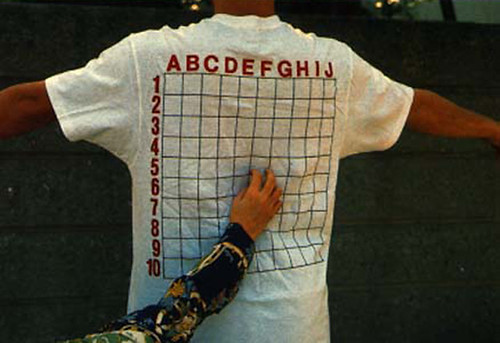
Does Your Spouse/Partner Also
Lack Back Scratching Skills?

My mother has begun a ritual that is simultaneously heartwarming and challenging. She has organized all the papers that she collected over the years.

Recently, she presented me with a scrapbook which included my school report cards, drawings from grade school, a variety of essays, doctor’s growth reports and pictures that thankfully will never make it onto Facebook.

The kids and Michelle thoroughly enjoyed the chance to explore my past. Thankfully my grades were pretty darn good, thus providing enough inspiration (and no embarrassment).

Rediscovering Uncomfortable Memories
Every few months, my mom comes across another couple of gems from my past, which she places in an envelope and mails to us. It caused my wife and I had to face up to a difficult truth: that early in our marriage, I confessed to my mother that my wife Michelle did not measure up to mom’s standards.

Proof came as one of those artifacts, a handwritten card I wrote in September 1989:

Dear Mom, 

This is a short “mother appreciation” card. Michelle and I had our first real fight of our relationship last week. I didn’t understand its true significance until I spoke to [my sister] Lori this morning. It seems we have the same problem with our “significant others.” 

I gotta get one of these

Seems that no one can scratch backs as well as you can. Michelle puts all her fingers tightly together in such a way that so little an area is covered and its done too hard. Both [my sister’s then husband] and Michelle don’t know that when they are told “up”, they only are supposed to go up a little bit. Both of them go up much too much. 

Mom, I was wondering where you learned to scratch backs so well. Perhaps there is a college correspondence course or you could just give her some advice on how to do it right. This fight lasted 30 seconds (with tears). The next one might hit a minute. 

We’ve talked out the scratching problem for now; but you know how these unresolved things keep popping up. 

Thanx Mom. 

Love, Paul

Thankfully, our marriage has endured the disappointment and dissatisfaction of Michelle’s shortcomings in this critical marital skill. We got over the hump when I dicovered that the inner facing corners on doorframes adequately scratch any itch. [By the way, in recent years, Michelle has gotten much, much better at backscratching.]

Preserving Family Memories
But my mom’s scrapbooks and occasional mailing of additional artifacts from my past got me thinking.

Many parents collect pictures, letters, drawing, school papers and more from their kids’ past. Often those historical artifacts are rediscovered in the attic once the parent has passed on.

Perhaps we all might follow my mother’s example. Turn the artifacts into a scrapbook that the grandkids can appreciate while they are still young. Save up a number of additional gems to dole out every few months. The joy and memories are delicious.

And after all, we Jews are the people of yizkor and zicharon (memory). By remembering where we have come from, we have a sense of where we are, and can catch a glimpse of what is ahead in our future.

So as the kids and grandkids get older, consider how you will preserve and then share the memories.

For me, I just want to say, “Thanks Mom!”

Why I Gained Weight at Camp Newman (a camp food confession)

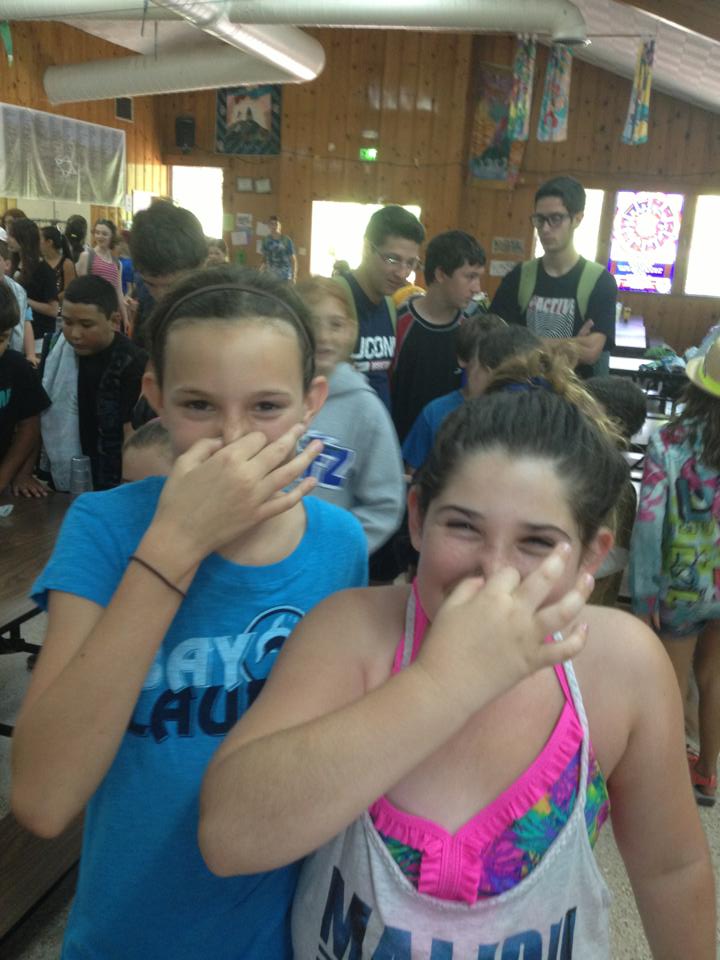
Salad Bar Smiles

I wish I could say my days at URJ Camp Newman were consumed with bouts of hunger.

I wish I could say that at Camp Newman
there was nothing to eat,
that the food sucked,
that the camp could not accommodate my picky palate,
or that I refused to eat the usual carb-heavy muck that passes for institutional food service.

I wish I could say all that because then I might have lost the extra weight I was supposed to lose to camp.

But None of that Happened
Because the food at Camp Newman is so delicious, nutritious, green, balanced, and plentiful, that I ate too much. And I gained weight.

I tried to be a “good boy.” On the days they served chicken nuggets or grilled cheese, I hit the salad bar instead. I stayed away from the pasta bar that is available at all lunches and dinners. I didn’t make peanut butter and jelly sandwiches as many campers do when seeking extra protein.

So Why did I Gain Weight at Camp?

Salad Bar Heaven

Perhaps I piled my plate too high at the salad bar on those days that I decided to forego the main course. Which I did often, because the plentiful salad bar is available twice daily, every day.

Between the fresh lettuce,
cucumbers,
tomatoes,
broccoli,
peas,
corn,
chickpeas,
pinto beans,
tuna fish,
beets,
mushrooms,
hard boiled eggs,
carrots,
3 kinds of fruit,
and a bunch of healthy things that I don’t eat –
oh, and at least 3 kinds of salad dressing plus oil and balsamic vinegar –
this place competes with Fresh Choice restaurants for healthfulness and variety.

Maybe I snacked too much on the fresh fruit, available 24/7. Can one eat too many bananas, apples (delicious and fuji), and oranges?

Chef Tammy Kempner: A Wonder-Worker

Tammy also bakes delicious cookies

According to the campers – and my own experience confirms this – the food is just too darn good! Honestly, I’m not sure how our director of catering, Tammy Kempner, does it. Her background is as a chef and a caterer, with a specialty in mid-eastern and kosher food.

She works in a kitchen designed 25 years ago to churn out 200 plates per meal. Today, without kitchen expansion or upgrades, Tammy prepares 6 sittings totaling 2,800 delicious meals a day. Plus snacks twice daily for 1,400.

In addition to the regular meal, Tammy daily provides meals for people with special dietary needs, including
gluten-free,
kosher,
vegetarian,
vegan,
carb-free,
no soy,
peanut allergic,
dairy-free
(and of course, pasta-tarians).

The Kids Say Great Things About the Food
“There are always options,” said Sydney, an 11th grade Avodahnik from Calabasas, “The peanut butter and jelly sandwiches are always great snacks when I want something extra.”

Fresh Fruit Every Morning

“Camp Newman is the best food in the world. Yesterday, I had chicken, fries and a big plate of salad. Oh, and fruit too. It’s as good as Grandma’s cooking. And you should taste Tammy’s homemade cookies!” said 11 year old Danny.

Jake, a 19 year old counselor from Southern California, kvelled, “Coming from college to Camp Newman is kind of a relief. I don’t need to be innovative with my food anymore. Everything is laid out for us. My campers are excited for the food no matter what meal it is.

The Battle of (my belly) Bulge Continues
Soon enough, I’ll be home to hit the treadmill. I’ll dream about Camp Newman, wearing sandals and shorts all the time, and the Camp Newman Chadar Ochel experience. Good food, lovingly prepared, easily accessible. Yum!

Thank you Tammy (and the whole kitchen crew) for keeping me well fed with the tasty variety of meals you serve daily.

So what’s your favorite camp meal?

Where to Get the Best Drugs at Camp Newman (and Other Secrets of Summer Camp)

Worried that your kid will come to camp and discover a hidden underground culture of drugs? Don’t.

Why? Because at Camp Newman, the location of the biggest drug stash is a well known secret. In fact, this being California, first day camper orientation includes an explanation of when and how you can get your fix.

Drug Stash Revealed
I’m speaking, of course, about the Mirpa’ah (our infirmary) and its enormous stash of medical drugs (tylenol, advil, etc.). Camp Newman’s Mirpa’ah is staffed with so many medical personnel, who know how to combine the best camp diagnostic tools (usually a thermometer), the most up to date over the counter medication, and ample amounts of TLC (tender loving care) that they can handle at camp a vast majority of the situations which arise. It is comforting to know that at camp my three kids – and Congregation Or Ami’s 45 – are so well taken care of.

When Does Camp Really Begin?
Speaking of my kids, no sooner do they arrive at camp, then the Mirpa’ah countdown begins. How long will it take until a Kipnes/November kid winds up in the Mirpa’ah? Like a chocoholic drawn to a Milky Way bar, my kids are drawn to the Mirpa’ah. In fact, in some ways, camp is truly set in motion once a Kipnes/November kid spends time in the Mirpa’ah. Until then, camp infirmary is like a car right off the assembly line: all the parts are there, it should work, but you just can’t be sure until you put the key in the ignition and shift into drive. Our kids, it seems, are the keys to the ignition of Camp Newman’s Mirpa’ah.

Every summer, without fail, we get a message that one of our three kids has entered the infirmary. One year, Daniel sliced the top off his toe (now camp is strict about the “no open toes shoes” policy). Another year saw Noah quarantined as part of “Swine ’09,” the swine flu outbreak that required camps to separate out for seven days any kid with a fever. We have had everything from ingrown toenails and blisters to allergies and pneumonia.

How Do You Score a Private Room at Camp?
Camp is all about sharing a bunk with 7-10 other kids of the same age. Friendships are formed that last a lifetime. Sometime, though, a guy just needs a break from all the camaraderie. So how does one score a private room at camp?

My son Daniel discovered the answer when he needed to spend his third through eighth days in the Mirpa’ah. With fever and more, he scored room 3 – the “suite” – where he watched movies on the computer and received sympathy from the staff and campers. We like to joke that he also field-tested the Mirpa’ah processes, ensuring that the always fantastic staff were truly on the best game.

Of course, he enjoyed (endured?) the illness experience at camp much more than he would have at home. At home, we pump him full of medication, feed him and of necessity, go about our business. At camp, he got more TLC than even his doting mother could provide.

Where Do Adults Hold Hands at Camp?
When Daniel spiked 103 degrees for the second and third time, this calm camp parent became a bit more agitated and anxious. Like all parents, I put my trust in the Mirpa’ah staff. I needed some serious handholding, and the infirmary staff were just the people to do it.

Daniel was treated hourly or more by an excellent infirmary staff, headed by two doctors, PhD-toting Nurses, and many other degree-toting medical professionals. They worked around the clock diagnosing, medicating, feeding, and cleaning up. In addition, they took and recorded his temperature hourly, and treated my boy as if he were their only concern. Just as they do by phone with parents of other sick campers, they kept me informed of his progress and our options for treatment.

These incredible medical professional are up early, dealing with everything from overnight illness to bed-wetting little boys to enormous amounts of morning medications. They work late, awaiting the inevitable moment when the camp shuts down for the night so they can sleep. Still, rarely a night goes by without the “on call” nurse being awoken to deal with a camper with some issue.

So Daniel was released from the Mirpa’ah when he was fever-free (and other symptom-free) for 24 hours. He is healthy, happy and fully functional. Of course, the next unfortunate patient moved into his (deeply cleaned) medical “suite.” And the cycle of illness and healing continues.

Who Are these Incredible Volunteer Nurses and Doctors?
All of the medical staff are volunteers, most taking their own vacation time to volunteer at camp. Their compassion and care has no limits. It takes a whole village to care for a kid. At camp, that includes counselors, rashim (unit heads), program and support staff, kitchen crew and maintenance staff. They all deserve our appreciation and thanks for making the summers great for our kids.

But don’t forget to thank the medical staff. The unsung heroes of the summer camp, celebrate most when everything is quiet (though superstition prohibits them for saying aloud that everything seems “quiet”).

And so this summer, for these first two weeks, I thank our medical staff:

  • Roberta Bavin PNP DNP
  • Tanya Buynevich RN
  • Deepika Goyal PhD FNP
  • Diana Sherman PNP
  • Juliana Stewart RN
  • Dr. Greg Hirsch
  • Dr. Lona Larsh
  • Dr. Karon Seal
  • Dr. Joey Robinow
  • And Alisa Robinow, MOM (extraordinaire)

Thank you for caring for my kid. Thank you for holding my hand. Thank you for ensuring that we parents can send our kids off to camp without having to worry about their health and safety.

Postscript: How Does Camp Deal with Sibling Rivalry?
A few days after Daniel was released from the Mirpa’ah, his younger brother Noah hobbled in with a smashed toenail. Swearing it was an accident (and with plenty of witnesses to testify to this), Noah’s injury nonetheless set off a wild discussion about whether he was just hoping to “one up” his older brother. The verdict is still out on that one.

Finally, if you had to get sick at camp

Judaism Accepts Homosexuality and Marriage Equality

The Supreme Court soon will decide the fate of California’s Proposition 8 (which forbid Marriage Equality) and DOMA (which defined marriage as between a man and woman, and allowed states not to recognize the marriages performed in other states).

Soon, the Jewish web will return to discussions about what Judaism really says about homosexuality.

Orthodox and other literalists will try to argue that the Torah clearly forbids the homosexual act. In fact, Conservative Judaism’s legal bodies recently approved of gay marriage.

In fact, much has been written to declare that Judaism accepts homosexuality. 

In a recent article on ReformJudaism.org, Rabbi Jeff Goldwasser reminds us that

The only laws regarding same-sex intercourse in the Hebrew Bible are two verses in the book of Leviticus: “Do not lie down with a male, the lying down with a woman. It is an abhorrence” (Leviticus 18:22), and “A man who lies down with a male, the lying down with a woman, the two of them have done an abhorrence. They shall be put to death, their bloodguilt upon them” (Leviticus 20:13).

The meaning of these laws is far from self-evident.

A careful look at these two verses, however, shows that this is not an open-and-shut case. To start with, both verses use rather tortured syntax to refer to the abhorrent act. “Lying down with a woman” seems to be a phrase that Leviticus is using to specify sexual intercourse, not simply lying down next to another guy. The text needs that explanation for a simple reason — there is no word in Biblical Hebrew that means homosexual. The idea can only be conveyed by comparing it to a man having sex with a woman.

So, how was sexuality between two men understood … understood in the time of the Hebrew Bible?

Throughout the Bible, sexuality between people of the same gender, especially between two men, is understood in one of two ways: 1) A form of violence and domination exerted by one man over another to humiliate him, and 2) A form of sexual excess that is so unbridled that it does not discriminate between male and female. Interestingly, these are both forms of sexuality that, even today, are not practiced primarily by people whom we would call “homosexual.” 

Modern examples of the first category are rapes committed in prisons, on battlefields, and by bullies in schools. Such crimes are committed by men who seem to be more interested in subjugating and humiliating their victims than in sexual gratification.

The second category is the indiscriminate sexuality we associate with modern orgies and a “swinging lifestyle.” The Greek Scriptures, known to Christians as the New Testament, seems particularly interested in this form of abhorrence and it vilifies it in several passages. See, especially, Romans 1:25-32, which refers specifically to men who allow their lust to become so unbridled that they “leave the natural use of women.”

Clearly, this is not a reference to men who have an inborn sexual attraction for other men – people we would describe as homosexuals.

Rabbi Goldwasser concludes:

But rabbinic tradition also contains passages that counter the condemnation of homosexuality. The Talmud states that it is forbidden to humiliate another person and that one may even violate a negative commandment (“Thou shalt not…”) in order to avoid humiliation (B. Berachot 19b). The Talmud also states that a person who is compelled to transgress a law by forces beyond his or her control has not truly sinned. 

In an age when science has given us the understanding that sexual orientations is not a choice — it is an aspect of our nature with which we are born — our thinking about Jewish law and homosexuality must change. We need to re-evaluate our understanding of Torah if it leads us to condemn people when they seek to fulfill — with love and compassion — the sexual desires God has given them. We must recognize that it is the height of humiliation to tell people that they are unworthy of love and intimacy because of the way that God has made them.


Other Wisdom on Marriage Equality from a Jewish and religious perspective:

Speaking out on behalf of Bedouins in the south of Israel

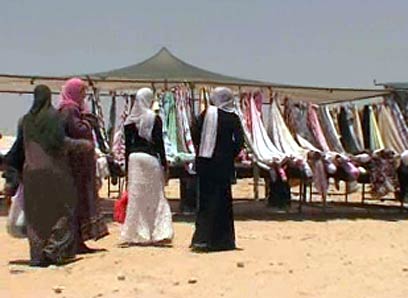
Today I wrote the leadership of the Israeli government on behalf of Bedouins in Southern Israel. Along with so many American Jews, including Rabbi David Saperstein of the Religious Action Center of Reform Judaism, I reminded these leaders that Israel is poised to use the full might of state power against a hapless minority. The Praver/Begin bill that the government has sent to the Knesset will demolish tens of villages, transfer some 40,000 citizens from their homes to townships that are statistically proven to have four times more poverty and unemployment than recognized villages, and dispossess them of most of their lands without fair due process. 

If this issue feels important to you too, you may sign onto the letter.

To:
Benyamin Netanyahu, Prime Minister of the State of Israel
Tzipi Livni, Justice Minister
Yair Lapid, Finance Minister
Meir Cohen, Welfare Minister
Amir Peretz, Environmental Minister

Please use your authority to reverse the Israeli government’s decision to send the Praver/Begin bill to the Knesset, where it is scheduled for a first reading on Monday.

Israel is poised to use the full might of state power against a hapless minority. The Praver/Begin bill that the government has sent to the Knesset will demolish tens of villages, transfer some 40,000 citizens from their homes to townships that are statistically proven to have four times more poverty and unemployment than recognized villages, and dispossess them of most of their lands without fair due process. You will create a new “Bedouin Pale of Settlement” similar to the Jewish Pale of Settlement in the late 19th century.

You have a coalition agreement to support legislation to resolve the issue of the Negev Bedouin, but you are not bound to this particular bill. And, no coalition agreement can override your obligation to carry out the Torah’s command, “When a non-Jew resides with you in your land, you shall not wrong him or her. The non-Jew shall be to you as one of your citizens. You shall love him/her as yourself, for you were strangers in the land of Egypt. ” (Leviticus 19:33-34)

Seen as strangers, the Bedouin are victims of prejudice and stereotypes. They are seen as criminals and illegal squatters who will take over the Negev. Yet, if all of their land claims were to be proven and honored, they are only asking for 5.4% of the Negev. The Bedouin are not inherently criminal or violent. However, uprooted from their lands and their culture, crime abounds in the artificially created townships. “The sword comes into the world because of justice delayed and justice denied.” (Pirke Avot)

The Praver/Begin bill stipulates complicated formulas, where the best that a Bedouin landowner can hope for is to hold on to 50% of their land. This is using state power to dispossess and uproot. Are these the prophetic values of “Freedom, Justice and Peace” espoused in Israel’s Declaration of Independence? Is this “Full and equal social and political rights for all, regardless of religion, race or gender?”

As Israel is faced with tough economic choices and serious socioeconomic problems, it is terribly unwise to use NIS 6- 8 billion to create additional problems. The rates of poverty, unemployment, crime and drugs are much higher in the artificially created townships than in the villages. Cutting off people from their sources of income and destroying their social fabric and way of life will only increase these problems, and the funds needed to deal with them. At the same time, the increasing tension created will discourage investment, and make matters worse for both the Jewish and Bedouin residents of the Negev.

The time has come for an equitable resolution of Bedouin rights in the Negev. Any worthy resolution must preserve the following principles:
A. It will be arrived at only with real involvement from the Bedouin community institutions.
B. Full recognition for the 35 “Unrecognized villages, even if that means altering the national zoning plan.
C. Acceptance of the ownership claims made in the 1970’s.
D. Diversity of settlement types, not just towns or large villages.
E. Integration of the community in planning and finding solutions.
F. Developing the Negev equally – for all its residents. 

The first step is that the government withdraw its support for the Praver/Begin Bill, and that there be no first reading this Monday. 

Sincerely, Rabbi Paul Kipnes

If this issue feels important to you too, you may sign onto the letter.

We All Need Help Sometimes. Or Ami Makes It Easy – and Personal

It can be so darn frustrating! Our Jewish community has so many resources at its fingertips to help people in need, and yet we still struggle to connect up those who need with those who can help.

That’s why I was so charged up at a gathering of the West Valley Caring Community coalition of three synagogues (Congregation Or Ami, Shomrei Torah Synagogue and Temple Aliyah), three Jewish community helping organizations (Jewish Family Service, Bet Tzedek Legal Services, and JVS – Jewish Vocational Service), and the Jewish Federation.

We met over a simple yet profound idea: that synagogues are gateway institutions tied to their communities with access to significant constituencies while the Jewish service organizations are pros at helping but need access to the constituencies that they are designed to help. Thus was born a poignant partnership called “Caring Community,” designed to place a Jewish Family Service social worker in these synagogues 4 days a week (rotating daily between the three).

Having had significant success with our synagogue/JFS social worker Elenna King, we tackled Phase 2: expanding the Caring Community partnership to include Bet Tzedek and JVS. How thrilling to be able to open the synagogues up as places where the community can come for help!

Whether you are a synagogue member or not, we are here for you.

Here’s how it works. 
Are you in need (see below for an overview of ways the community can help)? If so, then you may:

  • Contact our social worker Elenna King directly and confidentially (818-854-9760 or eking@jfsla.org)
  • Contact a participating rabbis directly and confidentially for a referral (through orami.org, shomreitorahsynagogue.org, or templealiyah.org)
  • Contact the synagogue offices and ask for contact information for our social worker.

Then you and the social worker can call or meet to explore how the Jewish community can help. She has so many resources at her fingertips, including direct lines into a Bet Tzedek legal counsel and a JVS (Jewish Vocational Service) counselor, both dedicated to work with this Caring Community coalition.

Confidential Support
What you talk about with this social worker is totally confidential. In fact, unless you sign a consent form, the social worker will not even share with the rabbi or synagogue that you in fact talked or met. Because we care more about connecting you up. Moreover, if you are uncomfortable meeting in your own synagogue, you may set up your meeting at one of the other synagogues.

So getting down to brass tacks (tachlis, the details). Here are a few of the ways that the Caring Community program can help.


The Jewish Family Service Social Worker can help with:

  • Aging Parents (first steps, finding good home help, searching board and care facilities)
  • Appealing Disability Claims
  • Children with Special Needs
  • Divorce and Family Issues
  • Domestic Violence Resources
  • Drugs and Alcohol Addiction Resources
  • Eviction
  • Family members with Mental Illness
  • Grief Counseling
  • Home Foreclosure
  • Legal Referrals
  • Navigating support systems for
  • Financial Issues
    Emergency Cash Grants
  • Other Counseling and Counseling Resources
  • Parent Support Referrals (classes, groups, resources)
  • Unemployment


The Bet Tzedek Legal Services Caring Community Project Attorney can help with:

  • Bankruptcy
  • Conservatorship
  • Consumer issues
  • Elder Abuse
  • Elder Law
  • Employment rights
  • Estate Planning – Wills
  • Guardianships
  • Government Benefits
  • Holocaust Reparations
  • Landlord-Tenant
  • Referrals for: Immigration and Family Law issues


JVS Caring Community Counselor can help with:

  • Career Assessments
  • Interview Skills
  • Job Changes
  • Job Searches
  • LinkedIn Advice
  • Online Job Application Processes
  • Out of Work
  • Professional Networking
  • Resume Writing
  • Salary Negotiation
  • Under-employment

Start by contacting our Social Worker Elenna King.
Remember: We all need help sometimes. Now Caring Community makes it easy – and personal.

So take a chance. Make a call (or send an email). Getting help should be that simple!

By the way, the Caring Community is funded by a grant from the Jewish Community Foundation of Los Angeles and the Jewish Federation of Greater Los Angeles. Good works take the support of a whole community.

10+ Things I Really Hate about URJ Camp Newman

Now in my third day as faculty member at the URJ Camp Newman in Santa Rosa, CA (and in my 18th year on faculty), I have been here long enough to clearly articulate all the things I HATE about this place. And there are many…

  • Waiting in line for 3-5 minutes for a meal that someone else shops from, prepares and cleans up from.
  • Sore feet from walking the miles of gorgeous trails in the bright sun under the clear blue sky
  • Being tired from staying up late with other faculty – rabbinic, education, art, medical – talking, laughing, problem solving, and sharing best practices.
  • Having to come up with a new story each day for services because the kids love the stories.
  • Needing to talk 24/7 about spirituality and God with staff and campers who want to think about, wrestle with and figure out the what, when, where and how of God. It’s not like that’s why I wanted to become a rabbi. (Oh right, it was!)
  • Putting on sunscreen to protect me from the sun, which shines constantly all day so we can enjoy outdoor activities (I’m kind of uptight about all that slimy, messy, white stuff).
  • Needing to remember the Jewish value of the day, because the staff integrates it into every moment of camp (Really? As if Judaism matters!?!)
  • Getting “hug bombed” (unexpectedly engulfed in the hugs) of my temple kids and other campers, even if I’m feeling cranky.
  • Realizing that while I grow older, the campers in the eidah (unit) and the counselors all are the same age year after year.
  • Having to dig through the huge bowl of freshly cut pineapple, cantaloupe  honeydew melon, watermelon, and grapes to find a fresh strawberry – I think those sneaky campers pick them out.
  • Not being able to enjoy the limitless tater tots at breakfast or breadsticks on pasta night because my stupid nutritionist said my metabolism can’t take it anymore
  • Being dragged into a circle of hugging singing people on Shabbat during the amazingly melodious shira (song session).
  • Dealing with happy, loving people all the time.

A lot of people kvell about (praise) their camp experiences. But that’s so easy to do; it doesn’t count.

But finding enough things to kvetch about, now that takes real talent!

Read my other Camp Newman blog posts.

The Latch on the Bathroom Stall Door

The Latch on the Bathroom Stall Door

What do we notice about those and that which we love? Go to the Union for Reform Judaism’s Camp Newman in Santa Rosa, CA and you will assuredly notice lots.

Camp built three new, gorgeous, well-designed cabins for 16 kids up top and 16 below, as the first stage in a multiyear master plan to usher camp into its future. Camp laid new grass upon the upper field, making it more enjoyable to use for play, especially for the pre-Shabbat ritual of Staff vs. CIT ultimate frisbee game. In the art room, the art specialist even created a museum of tie-dyed t-shirts, making it easier for campers to decide which design to make. All these exciting additions to camp. So noteworthy!

Of course, what was the first thing a certain camper mentioned to me after a few hours back in camp? That camp changed the latch inside the bigger stall in the boys’ bathroom in the Chadar Ochel (dining room) at Camp Newman. It seems that this door used to lock with a hook and eye screw; now it uses a fancy latch. You may be thinking, “Who cares about some lock on a bathroom door?!” Details matter. The little things connect us to the past and usher us through the present into the future.

Ask any camper, staff member or adult what makes camp so wonderful, and each will rattle off a list of favorite elements of camp:

  • Endless bread sticks on pasta day
  • Fresh fruit
  • Enduring friendships
  • Sunset on Shabbat
  • Enchanted Forest – a hike through beautiful wooded area
  • Goats at the Kibbutz OKY
  • “Repurposing” the Manure at the Kibbutz
  • Havdala under the stars
  • Its It – ice cream cookies on Shabbat afternoon
  • When the campers shout out “I love being Jewish!”

And then there are the bathrooms (again). I saw one young boy, at camp for the first time, rush out of the boys bathroom in the dining hall exclaiming, “You won’t believe this. You can basically pee right on the wall.” (He was referring to full length, wall to floor urinals. (Trust me, they are uniquely cool!)

Yes, everything at camp has its fans. Like the people who know all the special spots in Disneyland, or the foreshadowing in their favorite tv show, campers come to love (and elevate) the details, making camp the uniquely special place it is.

What’s your (or your child’s) favorite part of camp?