Tag: Israel

Come to the Jewish Blog Carnival

A very nice edition of Haveil Havalim, the Jewish Blog Carnival, is now up over at Ima on and off the Bima. Check it out!

Founded by Soccer Dad, Haveil Havalim is a carnival of Jewish blogs — a weekly collection of Jewish & Israeli blog highlights, tidbits and points of interest collected from blogs all around the world. It’s hosted by different bloggers each week and coordinated by Jack. The term ‘Haveil Havalim,’ which means “Vanity of Vanities,” is from Qoheleth, (Ecclesiastes) which was written by King Solomon. King Solomon built the Holy Temple in Jerusalem and later on got all bogged down in materialism and other ‘excesses’ and realized that it was nothing but ‘hevel,’ or in English, ‘vanity.’

Post categories include:

  • Israel on our minds and our blogs…
  • Jewish Life and Culture…
  • And Everything Else… (Jewish and blogged)

Check it out here.

Living with Rockets: Live from Sederot

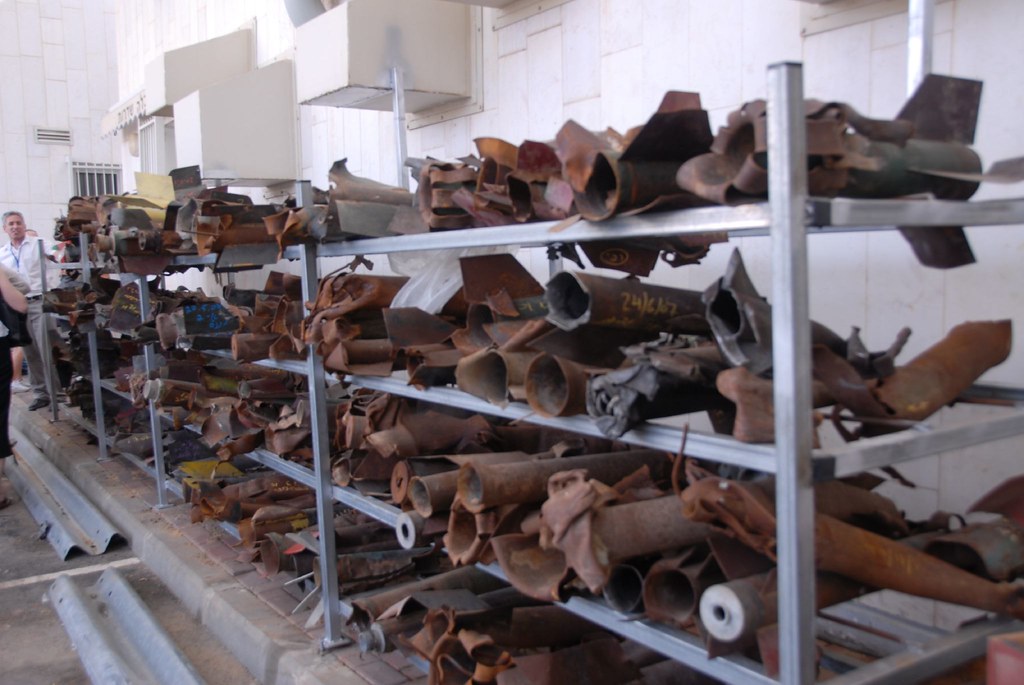
What is it like to live with the knowledge that any moment missiles might rain down on you? To understand this is to understand the situation in Southern Israel that led to Israel’s operation against Hamas.

David Farer in Living with Rockets describes what it is like to live in Sederot with the daily barrage of rockets from Gaza. Notice the heightening of senses, of awareness of subtle changes in the rockets’ sounds, of the normalcy that invades what should be “normal.” Notice how acts of heroism go unnoticed because “its just what we do.” He writes:

On Tuesday morning, as I was getting ready to leave my home, a woman’s voice said “Tzeva Adom! Tzeva Adom! Tzeva Adom!” over Sderot’s public speaker system. I had already heard this alarm a few times that morning, and several hundred times since I moved to Sderot. It meant that a rocket fired by Hamas in Gaza would explode somewhere in or near Sderot in about fifteen seconds. I went about my business, turning off my computer and packing my books, as I awaited the explosion. When the inevitable happened, I heard that unmistakable cracking sound at the tiny fraction of an instant, the KA of the KABOOM! It indicated that Hamas had been lucky this time and hit somebody’s home, instead of their rockets landing in a field whose mud muffled the blast. One learns to pick up these subtle differences in kinds of explosion if one lives in Sderot. Less subtle was that my building shuddered, and my windows danced in their frames; I felt the slight shove of the shockwave going through my body. I knew that this Kassam rocket had landed within a few blocks of my home.

The missile, as you will read, hits the building across the alley. Reporter’s life becomes part of the story.

Prosper Peretz owns the Peretz Shefa Market on this street, Mivtza Sinai (the street hit by the missile).

His shop stood immediately opposite the home that was hit, and he surveyed the scene from the sidewalk in front of his foodstore. I often shopped in his little store, which his parents had founded. He lived above the shop with his wife and children, all of whom help run the family business. I asked Peretz if he had been present when the rocket exploded. A calm and soft-spoken man, who spent much of his life in army uniform, he nodded his head. I asked about damage on his side of the street. He pointed to blown-out windows above his shop. Peretz was polite, but evidently not in a communicative mood today. I walked inside to greet Peretz’s daughter and to buy a chocolate bar. I asked her about her experience of the bombing. She told me she had been upstairs when the rocket hit her neighbor’s home across the street, but that she ran downstairs just in time to see her father taking care of “the one who was wounded.” My eyebrows went up. “What’s that?”, I asked. She told me she ran downstairs and saw her father bandaging a bleeding man who was lying on the sidewalk outside their shop. Prosper Peretz, a man with the calm, humble demeanor of the professional soldier, had told me none of that. I went out to ask him what he did. He smiled slightly and told me that one of the sons of the family whose house had been hit had been walking down the street, either to or from home, when the alarm went off. Hearing the recording, he tried to run into the Peretz Shefa Market, but he did not run fast enough. The man had received two shrapnel wounds, one of which made a gash on his cheek. The second piece of metal opened the artery on the left side of the young man’s neck. Blood being pumped up to his brain was squirting out in bursts, each burst in accordance with the heart beat that sent the blood in the direction of his brain. The young man would clearly have bled to death soon had Peretz not taken action. His daughter walked downstairs to the sidewalk to see her father saving a life. She went into their shop to call an ambulance. This ambulance had left just a minute or two before I arrived, carrying the man whose life Prosper Peretz had saved. “I see”, I said. Peretz told me he was able to do that because of the good training he had received in the army. “And by the way, why are you wearing a mere undershirt on a cold and rainy day?” I asked him “I used my shirt on the guy’s neck.” I pointed to what I now understood to be bloodstains on Peretz’s undershirt, and he just nodded his head – “It happens here.” I stood there trying to think of a way to express my admiration for someone who had just saved a life, but who had no wish to display that fact, when the alarm sounded.

How does one live a life when this is the reality? To face that question is to face the reasons behind Israel’s operation against Hamas. Make sure to click over to the blog, Living with Rockets, to read more about the situation under which Southern Israel did and does live.

Wars Sicken Me, Even Wars that I Support, Says National Reform Jewish Leader

Rabbi Eric Yoffie, president of the Union for Reform Judaism, articulately explains how most American Jews support the current Israeli response to Hamas’ seven year barrage of missiles:

Wars sicken me, even wars that I support. I support Israel’s offensive in Gaza, but watching it on TV — the images of bombed-out buildings, crying women and, inevitably, the bodies of innocent bystanders — is a painful experience. I suspect that most American Jews feel the same discomfort that I feel. They support the military offensive too, but they are well aware of the risks that it entails, and they expect Israel to be both politically wise and morally sensitive in how it fights. It is especially important to us that Israel do everything humanly possible to avoid the death of innocents and to prevent a humanitarian crisis in Gaza. There is much evidence that Israel has worked hard to limit the carnage, and the credibility of Israel’s leaders in providing assurances on these points is an important factor in assuring the continued support of American Jews — and, indeed, of all Americans — for the Gaza campaign.

Further, Rabbi Yoffie puts this conflict into the larger issues facing our world:

American Jews have a commonsense approach to these matters. We are aware that American forces have gone halfway around the globe to engage in a war in Afghanistan against terrorists who once carried out an attack on American soil. We know that civilians have frequently died in that war because terrorists make a point of operating in civilian areas. We know too that this war has the support of our liberal president-elect. So why, we ask, should Israel’s center-left government, after long periods of restraint and desperate efforts to renew the cease-fire, be expected to refrain from fighting terrorists that are regularly attacking from right across the border? And we are certain that if rockets were being launched from Canada into our own homes in Michigan or Maine, we would demand immediate action, and our government would quickly oblige. American Jews see Israel’s Gaza offensive as a tragic necessity, unwelcome but inevitable, carried out by a reluctant Israeli government doing what it must to end rocket attacks against its citizenry. In short, American Jews are, as usual, sensible and centrist, and supporting Israel in her hour of need. Read on.

Why the Ceasefire is a Non-Starter

Martin Peretz writes:

A cease-fire can sometimes be had between civilized governments. But why isn’t anyone pressing the United States and its allies in Afghanistan into a cease-fire with the Taliban? A stupid question. Because the enemy is the Taliban, and the Taliban could as easily convert to Christianity as agree to an armistice with its opponents. Maybe they’d agree to what the Arabs call a hudna, a pause, a lull, but only on tactical grounds.The fact is that Hamas is a Taliban state, as one Israeli diplomat put it. This is almost an epiphany, a clarifying truth. Hamas operates against its Palestinian enemies like the Taliban does against its Afghani enemies. Imagine a Hamas squad enters a kindergarten in a kibbutz. Neither the Taliban nor Hamas strive for earthly aims. Armed with instruments of death, they each fight for a heavenly design. But on earth. Yes, what a heaven that would be. Death is their own blessed comrade. Go ahead, establish a cease-fire with one of them. America before Israel.The Taliban is not an analogy to Hamas. It is identical, equivalent. A cease-fire with Hamas is a delusion. Engage with whom?

The Pain and Dilemma of an Israeli Father and Citizen

I’ve been following A Soldier’s Mother to read and live with the jumble of emotions that come from sending one’s child (or watching one’s child) go off toward war. Now, Donniel Hartman offers a father’s perspective. In this moving and very personal essay, entitled The Pain and Dilemma of an Israeli Father and Citizen, Donniel Hartman talks about pride and fear create a painful dilemma for an Israeli father on the eve of a possible ground war in Gaza. He writes:

I am a father. As parents of children in combat units in the Israeli army, we live at a particularly difficult time. It’s not that the dangers facing our children now are greater than in the past. Unfortunately, war and fighting for our survival has been a permanent feature of Israeli life….

…We no longer raise our children to be soldiers. We raise them to be citizens of a beautiful and vibrant country that will enable them to achieve their individual dreams, and whose collective strength and greatness is constructed from the tapestry and sum total of these dreams…

…When war knocks at our door, and our children are placed in harm’s way, we feel proud at the bravery and loyalty of our children, but deeply disturbed and fearful at the same time. We are fearful that our children’s primary contributions to the country – their ideas, dreams and energy – are in danger of not being fulfilled.

Read on

Four Dovish Groups speak out on Gaza

As always, there is a spectrum of opinions on the current situation in Israel. Four left leaning, but pro-Israel groups offered their perspective on the Gaza situation:

JTA reports that:

Four dovish pro-Israel groups criticized Israel’s airstrikes in Gaza and called for U.S. efforts to end the violence.

J Street, Americans for Peace Now, Brit Tzedek v’Shalom and Israel Policy Forum all defended Israel’s right to strike Hamas installations in Gaza, but said that such actions would be counterproductive and damage Israel’s security in the long run. They all also called for intervention by the United States and the international community to restore a cease-fire between Israel and Hamas.

“While this morning’s airstrikes by Israeli Defense Forces in Gaza can be understood and even justified in the wake of recent rocket attacks, we believe that real friends of Israel recognize that escalating the conflict will prove counterproductive, igniting further anger in the region and damaging long-term prospects for peace and stability,” said Jeremy Ben-Ami, executive director of J Street, in a statement.

We can already anticipate that this incursion will be yet another failed attempt to resolve this fundamentally political conflict by military means,” said Diane Balser, executive director of Brit Tzedek, in a statement. “It is high time to break with this cycle; only through serious and sustained international diplomacy can the problems with Hamas and Gaza be resolved.

“Any real resolution to this crisis will require Israel and Hamas to engage, directly or indirectly, to achieve a cease-fire and to further engage in a post-cease-fire political process,” stated Debra DeLee, president and CEO of APN. “The cycle of violence, which is now threatening to spiral out of control, runs counter to Israel’s long-term security, jeopardizes whatever progress has been made in talks between Israel and the Palestinian Authority to reach an Israeli-Palestinian agreement, threatens American interests and exacerbates tensions throughout the Middle East,” said IPF executive director Nick Bunzl.

The reactions of the four groups contrasted sharply with the statements released by the Jewish community’s two major umbrella groups, the Conference of Presidents of Major American Jewish Organizations and the Jewish Council for Public Affairs. Both groups said Israel had little choice in the face of constant attacks on its citizens and did not call for any U.S. intervention.

“It is unfortunate that Israel has had to resort to airstrikes and is now grappling with a possible ground operation in the very area that it has tried hard to disengage from since 2005,” said JCPA executive director Steve Gutow. “Israel has taken great lengths to avoid this sort of escalation, but was left with no other way to ensure that its civilians would not have to live in fear of rocket fire.”

“We support the United States administration’s position that places the blame for Israel’s attack on Hamas and holds Hamas responsible for breaking the cease-fire and for the renewal of violence,” said conference chair Harold Tanner and conference executive chair Malcolm Hoenlein in a statement.

The Morning Routine

Since the Gaza Operation began, here’s what I do every morning.

  • Up before 6AM.
  • Turn on computer
  • Review Ha’aretz newspaper for news from Israel. Then Jerusalem Post, Ynet and others.
  • Hit the blogs, starting with Jack’s Gaza Round Up Part Three, following links all over the blogsphere. A Soldier’s Mother, reminds me of the importance to call my niece in the IDF (army)
  • Review my Rabbi Listserves for updates from Israel.
  • Then onto NYtimes, Wall Street Journal, CNN and Fox (gotta love how on every issue they see the world through different eyes).
  • Blog updates and links…

Then back around again and again. Until my wife or kids pull me away.

Some say I’m a news junkie.
Others believe it is just that I am an Oheiv Yisrael, a lover of Israel.
My wife and kids think I have become a blog addict. I once wrote an article about being a recovering Crackberry addict (the gist of it is here). Have I substituted one addiction for another? Or perhaps its just because I’m on vacation and I’m concerned about what is happening in Israel…

Of course, I’m loving blogging. Blogging daily was one of my top 4 things to do on my vacation.

Here’s why blogging is fun, from Eddie’s Rainbow of Thoughts.

Tel Aviv-area Reform Rabbi Reflects on Israel’s Gaza Operation Cast Lead

My colleague, Rabbi Michael Boyden, whose Hod Hasharon synagogue – Kehilat Yonatan – is 15 miles north-east of Tel Aviv, posted these reflections on a Rabbinic Listserve. I share his words with permission:

From: Michael Boyden
Subject: Operation Cast Lead

As Israel enters her second day of Operation Cast Lead against the Hamas in the Gaza Strip, a few points of information and words of comment may be of interest to those having to deal with the hostile reactions of our detractors.

  • Israel never wanted this war. Even Mahmoud Abbas, head of the Palestinian Authority and no friend of Israel, said that Operation Cast Lead would never have started if Hamas had been prepared to extend the ceasefire.
  • I wonder how many people know that, on the day prior to the commencement of the Operation, we admitted a Palestinian from the Gaza Strip for medical treatment in our country. He had been severely wounded by a stray Hamas rocket fired on Israel.
  • A homicide bomber exploded himself today in Mosul, Iraq. In doing so, he killed and wounded Sunni Muslims, who were holding a demonstration against Israel’s operation in the Gaza Strip. The people we are dealing with are driven by a fanaticism that shows no respect for any of the human values we profess. Who else would callously and sadistically hold Gilead Shalit prisoner for over 900 days without granting access to the Red Cross or providing his family with any opportunity to communicate with him? (Incidentally, the same is not true for Palestinians being held in Israeli jails.)
  • Egypt’s opposition to Operation Cast Lead has been fairly muted. After all, it is Hamas and similar Muslim fundamentalist groups that threaten the stability of President Mubarak’s secular government.
  • For those who criticize Israel’s action, I have just one question: Where as your voice during the months and years that thousands of Kassam rockets and mortar shells rained down on S’derot and our kibbutzim and towns close o the Gaza Strip?
  • To those who argue that Israel’s action is “disproportionate”, I would ask this: How else do you stop an Iranian backed terrorist force operating out of civilian areas, who do not respect the Geneva Convention and who deny Israel’s right to exist as a sovereign Jewish state?
  • When people criticize Israel for closing the border crossings into the Gaza Strip, they have a short memory. Israel withdrew her forces from the Gaza Strip and evacuated Jewish civilian settlements in the area at great personal and economic cost. Instead of moving in peacefully, Hamas used the areas that we had evacuated to launch rocket attacks on undefended civilian targets in Israel. The closing of border crossings was used in a vain attempt to persuade the Palestinians that it was not in their interests to continuing firing rockets against Israel. Prior to such attacks, the crossing was always open. Even this very day, in the middle of the current operation, Israel allowed three aircraft from Qatar bearing humanitarian aid o land at El Arish airport in the Gaza Strip.
  • You will notice that the pictures you are seeing of the Palestinian dead and wounded to date have all been of men. No women or children. If there had been women and children, the Palestinians would have been quick to use such material for propaganda purposes. Although innocent people will inevitably e killed, the identity of those killed and wounded testifies to the skill f the Israeli Air Force in pinpointing its attacks and limiting them to Hamas targets and infrastructure.

How are things in Israel? As ever, life carries on as normal. Jerusalem today was full of families celebrating Chanukah and enjoying the Winter sun.

The inhabitants of S’derot finally can breathe a sigh of relief in knowing that the IDF is attacking those who have made their lives miserable over the last few years. No one mentions the children who grow up in fear, those who have returned to wetting their beds and the tens of thousands of innocent human beings who have been living their lives knowing that they had just 15 seconds to get to a bomb shelter once hearing the Red Alert air raid warning. No one likes war, but with an implacable enemy like the Hamas, the current situation could not be allowed to continue.

On a lighter note: What is Operation “Cast Iron”? The term, “Oferet Yetzuka,” is taken from a children’s Chanukah song describing the latkes mother made!

Pray for the peace of Jerusalem!

Chag Urim sameyach, chodesh tov v’shavuah tov,

Rabbi Micky Boyden
Kehilat Yonatan
Hod Hasharon Israel
www.kehilat-yonatan.org

Caterpillar/Bomb Shelter: A Picture of Life in S’derot

During our last Or Ami trip to Israel, falling missiles prevented us from visiting S’derot in Southern Israel. Instead, we had a learning session with the father of a S’derot Media educator. He showed us a DVD of what was happening in S’derot. Then, I found the DVD horrible but manipulative. Yet, as Israel is responding to the Gaza missile barrage, I find myself thinking back to these descriptions of the terrible situation living near Gaza.

This video, posted by Yisrael: Struggling with God, offers some perspective. It is a bit long, but watch it until he explains about the concrete caterpillar/bomb shelter.

The Rebbetzin’s Husband Blogs Thoughtfully

The Rebbetzin’s Husband (I love his blog subtitle: Perhaps some rabbis marry women and make them rebbetzins but my rebbetzin married me and made me a rabbi. True, true!) offers two informative posts:

The first, Kassams, Air Strikes, Gaza Invasion…, written before Israel responded to the Hamas missile attacks, wrestles with the age-old reality that little works effectively to stop these missiles, but one can’t NOT do anything…

Diplomacy is meaningless. You’re talking to people whose declared goal is to eliminate you. Your goals run directly counter to theirs. So how can you gain their support for your vision? To borrow from Ury, how to Get to Yes?

Threatening bluster is just that, bluster. It accomplishes nothing, the equivalent of a frustrated cry at a television screen or computer monitor.

Sanctions do nothing, because the people running the show in Gaza are happy to let the people suffer. They enjoy it, knowing it brings headlines and international sympathy.

And so we are left with military force, with airstrikes and a ground assault and a lot of burned out buildings and dead bodies and UN resolutions.

The second explores why Gaza residents are living in “refugee camps” when they have control of their own land. In “What is a Refugee Camp,” he writes:

Some Arab families have indeed lived in “refugee camps” for sixty years – not because they have to, but because of one or more of the following factors:
a) The local government will not allow them to take citizenship;
b) They are too busy rocketing Israel to build homes on the land they have;
c) The UN has promised them loads of cash in exchange for agreeing to stay in those camps;
d) They like being able to tell the world they are waiting to return to “their land” in the Ottoman Empire.

Reading the above, I realize that some of it sounds harsh – but it’s also the truth.

An Israeli Soldier’s Mother Speaks

How do Israeli moms view the prospect of their children taking up arms to bring quiet to their country’s south? No bombastically.

A Soldier’s Mother, in What I Want… and What I’ll Do, writes:

What I want…is to go collect my little boy and bring him home. I want to lock him in a room and tell Israel that no, you can’t have him. I’ve changed my mind. No, I’m sorry. He’s not allowed to play with guns and big things that go boom. No, I’m his mother. I gave birth to him and no, you simply can’t take him.

What I want…is to call him and make sure he is where I put him, where he told me he was yesterday. Not in the north, where Hizbollah is promising to burn the ground and open a second front and not in the south, where dozens of rockets and mortars have been fired at Israel, where a man was killed and dozens were wounded.

That’s what I want…

And what I’ll do, is sit here at my desk and keep editing this document for my client. I’ll update the copyright statements and change the installation information to reflect the new platforms the product now supports. I’ll answer the phone and I’ll talk to my accountant.

And what I’ll do, is tell my heart to settle. I’ll tell my eyes to take a moment and look at the next beautiful wave of clouds rolling in over Jerusalem. I’ll sign the papers I need to sign; type the words I need to type. I’ll tell my younger daughter to clean her room and my younger son that he has to study for his test NOW. I’ll tell my middle son he can borrow the car like we agreed, but he has to drive carefully. I won’t talk to my daughter because she’s old enough to see the cracks in my smile and know that outside, it’s all a front.

What I’ll do is answer the phone if Elie calls and I’ll talk to him calmly. I’ll listen if he tells me he’s staying where he is. I’ll listen if he tells me they are moving him up north. I’ll listen if he tells me they are moving him down south near Gaza. I’ll listen, I’ll tell him to be careful, and call me when he can. I won’t for a single moment, tell him that I’m scared, that I have no real experience with this war thing and that I don’t really want him to have any experience with it either. Read on

Incidentally, with a niece in Israel somewhere on a base preparing for some action, I share many of her concerns…

A Soldier’s Mother blog explains its blogging purpose:

From the time our children are born, we accept that our identity has changed. We were so many things, and continue to be. But in the moments after we give birth, and in the years that follow, we become something so much more. I have been a mother for more than 20 years, seeing my children through their baby years, their school years, into their teenage years. And now, as I see my oldest son enter the army of Israel, I become a soldier’s mother.

Quotable Quotes: On Israel and Gaza

Some informative quotes from the morning newspapers, magazines and blogs:

Israeli Defense Minister Ehud Barak: Hamas controls Gaza and is responsible for everything happening there and for all attacks carried out from within the Strip. The goals of this operation are to stop Hamas from attacking our citizens and soldiers,” said Barak.”I would like to remind the world that Israel withdrew from the entire Gaza Strip more than three years ago. We gave a chance for a new reality, and all we’ve seen is Hamas firing rockets and missiles on our citizens and carrying out attacks against Israel,” he noted.(Jerusalem Post, 11/29/08)

Israeli Correspondent Shmuel Rosner: The 2008 Gaza war is the war of the possible And yes, eliminating Hamas’s rule in Gaza is still a (justifiably) desirable final outcome for both Israel, the U.S., and, for that matter, the Fatah-ruled Palestinian Authority. But this will be a long-term goal–“long term” in the sense that no one yet knows when and if ever it will be achieved. What is relatively clear is that Israel doesn’t aim to achieve it now. The 2008 Gaza war is the war of the possible. When Hamas is ready to strike a deal that will end both the operation and “improve the security reality of” Israel’s “southern residents,” the war will be over. (Rosner’s Domain blog, Jerusalem Post, 11/29/08)

Georgetown University (School of Foreign Service) Professor and Jerusalem’s Shalem Center distinguished fellow Michael Oren, in A Crisis and an Opportunity: Nevertheless, the current round of fighting provides Israel with an opportunity to end its painful chronicle of indecision on Gaza and to embark on a lucid and realizable policy. Can Israel co-exist with a Hamas-dominated Gaza? What are the alternatives (the reintroduction of Egyptian forces, for example) to a renewed Israeli occupation of the area? To what degree will the international community accept a zero-tolerance approach to rocket attacks against Israel, and, more crucially, will the incoming Obama administration publicly endorse that stance? These and other questions might be answered in the coming days if Israel, withstanding the media backlash, dares to ask them. (New Republic, 12/28/08)

Snapshot of Israel during the Gaza Conflict

As the fourth day of the conflict in Gaza continues, Israel’s Ashkelon hospital moves its essential departments underground. (I remember seeing the Haifa hospital’s underground facility, created before the Lebanon II War, which saved so many lives during that conflict.)

Fearing missile strikes from the Gaza Strip, Ashkelon’s Barzilai Hospital on Saturday moved its most essential departments into an underground bomb shelter. The hospital in this city of 120,000 people about 17 kilometers (11 miles) north of the Gaza border has sent half its patients home to get them out of harm’s way….

In Barzilai’s underground children’s ward, sick Gazans lay alongside sick Israelis as a clown hopped around trying to coax smiles from them all. Lobel said that his facility had close ties with Gaza’s Shifa hospital, and accepted many of its patients who need treatment the Gazan hospital cannot provide. He said it wasn’t uncommon to have a colleague in Gaza call him for assistance even as rockets rained down on Ashkelon.

“It might seem completely absurd,” Lobel said. “But we have the privilege to be doctors. Our medical ethics do not distinguish between patients. We treat whoever needs to be treated.”

A Gaza woman, whose two-month-old granddaughter was being treated for an unidentified ailment, wept when asked how she was coping. She said she was fortunate her granddaughter was getting the best medical treatment but was worried about her daughter and other grandchildren in Gaza City. She said some of their next-door neighbors had been killed by the Israeli airstrikes that have killed more than 280 people. “I am very sad and hurt,” she said, in Arabic. “We want peace, not war.” She refused to identify herself or have her picture taken, for fear of retribution if her presence in Israel was discovered in Gaza.

A few doors down in the maternity ward, 23-year-old Israeli Keren Shaltiel was resting after giving birth to her second child. She said hearing sirens and exploding rockets outside while in labor was bizarre. A resident of the frequently-hit nearby town of Sderot, she said she was used to such sounds but didn’t expect them to accompany her delivery. “Today is a very happy day for me personally,” she said from her underground hospital room. “But today I am also very worried about my town and my country.”

Israeli Blogs with “Man on the Ground” Insights about Gaza

My blogger friend Ima on (and off) the Bima lists informative Israeli blogs which are writing about what’s happening in Gaza and Israel.

And Jack is rounding up the Gaza posts right here. Jameel is live-blogging, but he’s resting right now.

And of course, I’m following #gaza (although there’s a lot of misinformation and inappropriate statements there….) and cnn.com and jpost.com and ynetnews.com with great concern.

#8 – Candle of Concern

Chanukah nears its end as we light this final candle. Although Jewish families around the world have increased the light each evening, we face a world still contains significant darkness. Though our homes shine with brightness:

  • Skies over Southern Israel are streaked with dark exhaust trails of the hundreds of Hamas missiles sent to stir up fear in the hearts of Israelis young and old
  • The streets of Gaza are littered with the debris from an operation that need not have happened had Hamas walked paths of peace instead of cynical terrorism
  • Huts in Darfur, Sudan and in refugee camps in Chad exist in the shadow of our century’s first genocide
  • Gay and lesbian couples in California live with deep sadness that their love (and marriages) are still not recognized
  • Years of greed that consumed our country still casts a long shadow over our nation’s economy, and over the lives of so many who are suffering its effects
  • Homeless still live on our streets, food pantry lines are growing longer, kids are still being pulled Menorahfrom their homes to escape abuse and neglect…

May the light of the Chanukah candles inflame our passions so we deepen our efforts to shine our light into the long nights ahead.

Israel: Time for Concern
Responding to the Operation in Gaza

After a phone conversation with my 19 year old niece Yonina, who sits on a base in Israel awaiting word that her unit is moving forward into the trouble conflict, I invite you to pray with me: for the peace of Israel, for safety for Israeli soldiers, for those harmed in Israel and in Gaza, and for a speedy end to this conflict.

Rabbi Eric Yoffie, president of the Union for Reform Judaism, shared this Response to the Gaza Violence:

For the past three weeks, Israel has lived under an increasing barrage of rocket fire from the Hamas-controlled Gaza Strip. More than 80 missiles landed on a single day. Israel’s first responsibility, like that of any nation, is to protect her citizens. The military action that Israel launched Saturday morning was clearly intended to do just that.

Israel’s action is as tragic as it is necessary and predictable. While we mourn the loss of life, no democratic nation in the world would permit a hostile force on its border to target its civilian centers with constant missile attacks. Israel has demonstrated extraordinary restraint as nearly 8000 rockets have been launched at Israel’s cities in the last 8 years. When Israel withdrew every civilian and soldier from Gaza in 2005, the attacks did not stop for a single day.

We believe that military action must always be the last resort. But more and more Israeli cities are now in range of Hamas’ rocket-firing army of terror, and we know that the traumatized children of Sderot and neighboring towns can no longer be expected to live in constant fear. Read on

Looking for updated news media about what’s happening in Israel and Gaza? Click here for Israeli and Jewish news.

Looking for insights into the Gaza situation? Read Rabbi Kipnes’ blog about Gaza.
May the light of Chanukah provide insight and enlightenment to all those who have a hand in this conflict.

Don’t forget to leave a comment on the blog.

Chag Chanukah Samayach – Happy Sixth Night of Chanukah.