Category: blog archive

Thank You’s, Baseball with the Boys, and Dirty Sexy Money: How the Rabbi Spent the Day After Yom Kippur

Every wonder what the rabbi does right after Yom Kippur?

Following weeks of preparation – writing sermons, preparing kavannot (meditations to introduce prayers), meeting with potential new members and organizing Torah readers, Shofar sounders and more – what does the rabbi do with his first “down time” in a month?

Thank You’s: Putting on the High Holy Days is the result of the collective efforts of hundreds of volunteers. Led in our congregation by Debi Young (officially, High Holy Day Transformation Chair, and Or Ami president Susan Gould, the crew of volunteers are the real angels of these Yamim Nora’im (Awesome Days). If Rabbi and Cantor are the face of the services, these volunteers are the body! So I spent the first hours of the morning compiling a list of everyone – chorale, musicians, paper-putter-outers, ushers, prayer readers, donated SOVA food bag schleppers, “will call “ticket hander-outers, and … Each deserves to be recognized; each deserves a letter in the weeks that follow. (Even better: at Or Ami, once we publicize this whole list, I get to sit back and watch the thank you emails go flying around from members to the volunteers.) At Or Ami, saying thank you, for gifts big and small, is central to our vision. Because at Or Ami, people matter!

Baseball with the Boys: Being part of the rabbi’s family means that in the month prior to the High Holy Days, you have to share your daddy with hundreds of other people – potential members, new lay leaders who want to move forward on projects, and High Holy Day organizers – as well as the all consuming “sermon writing” process. Then, while others squirm while sitting next to mom and/or dad, you watch your daddy from afar as he stands on the bimah and leads. You might be proud of him. It is cool he tells good stories. But it doesn’t stand up to the opportunity to spend time with him while he’s focused.

So on the day after Yom Kippur, I give my kids well deserved attention. The boys wanted Daddy time, playing baseball. So off to the park we went where I spent three hours hitting the ball to my star first and second basemen. One of the boys said how great it was that we could play baseball together. Truth be told, it didn’t matter what we did. It was great just that we could be together!

Dirty Sexy Money: It was a night off but we still found ourselves schepping nachas (sharing pride and joy) about Or Ami in Hollywoodland. My wife and I went out Sunday evening to attend a premier showing of the ABC TV show, Dirty Sexy Money. Or Ami congregant Matt Gross executive produced this highly engaging drama about the Darlings, a wealthy quirky family. “The absurdly wealthy Darlings of New York have asked humanitarian lawyer Nick George to take over his father’s job as their personal lawyer, but the money that will allow him the freedom to be an altruistic do-gooder is only part of the picture. That same money pulls him into the dubious doings of the Darling clan. Power, privilege and family money are a volatile cocktail.” We loved the show! I think its a winner! I’ll be in front of my TV on Wednesday night, pulling for Nick’s humanitarian values to win out over the materialism and privileged attitude of the Darlings.

I thought it would be just a relaxing, adult evening out. We had fun meeting the stars, watching the red carpet walk, sitting in Paramount Studios’ theater watching the pilot, sampling the food from the delicious buffet spread. While Matt was shmoozing the adoring crowd of stars, crew and Hollywood type guests, his wife Hedi and her sister Michelle Feinstein (membership co-chairs) were recruiting film editors and others for Or Ami. Between bites of those tantalizing mini-chocolate souffles, we were kvelling about the High Holy Day services, Or Ami’s warm community and inviting people to our upcoming campfire Sukkot service. (Truth be told: I was eating the souffles; Hedi was kvelling). My favorite picture (even more than those of Donald Sutherland, Jill Clayburgh, Billy Baldwin and others) was the one of the two clergy – Glenn Fitzgerald (who plays the Reverend Brian Darling) and me. I hope I am a nicer guy than he!

What does the rabbi do after Yom Kippur? Give thanks. Spend time with the kids. Reconnect with my wife. And, watch a show whose name alone probably set me up next Yom Kippur for a few more Al Chet’s (prayer asking forgiveness for sins).

Why Fast? Thoughts from the Yom Kippur Yenta

Why Fast? I am reminded of a true story, about a Rabbi driving to services on Yom Kippur. There he was, driving down the highway, reviewing the sermon in his head, while apparently, pushing the gas pedal to the mat, when lights flashing and sirens blaring, a motorcycle cop pulled him over.

Smile on his face, hands on the wheel, the Rabbi turned to the uniformed officer by his side. Said the cop, “I’ve been following you for a block and a half. Did you realize you were speeding?” “Not really”, replied the Rabbi honestly. “Well, I clocked you at 55 in a 30 mile per hour zone”, “he said. “What’s your rush?”

What’s my rush? wondered the Rabbi. Do I tell him that I’m a Rabbi about to lead services on Yom Kippur, the most sacred of Jewish days? Do I admit being so caught up reviewing the sermon I was to preach within the hour that I failed to notice how fast I was driving? Do I face up to my sins by admitting that I regularly speed on this stretch of roadway or do I ask for a mere warning? Figuring Yom Kippur was not the day to shade the truth, the Rabbi responded, “sorry, sir”.

The officer wrote out the speeding ticket and handed it over, saying “sorry about this, sir, but you really should slow down.” And then, just before he left, the cop turned and in a voice dripping with irony, whispered, “oh, and Rabbi, next time, try to stay out of the fast lane”.

Stay out of the fast lane, he says, to a Rabbi who has not eaten since the day before. Slow down, he says, to a person who like so many in this room, spends much of his day rushing around from one place to the next. We cannot slow down! We rush from home to office, to school or on errands, from meeting to meeting and from activity to activity, shlepping ourselves, our kids, or our parents to the next important event, rarely stopping to fully enjoy the moment because we are desperately trying to remember the next place we have to rush off to.

Slow down, he says. But there is not enough time, we reply, as we think back over our day. “Hurry up, we are going to be late”, we yelled at the kids this morning as we rushed them off to school. “Hurry up, or we will miss the deadline,” we heard this afternoon from our boss or our co-workers. “Hurry up and make a decision,” we called out to our friends, even though the best decisions are often made when we take them slowly. “Hurry up, hurry up! We will miss the next opportunity!” So we hurry even though we realize that in rushing onward, we failed to savor this opportunity. And so it continues, until the officer dressed in blue, our angel from on high, cautions us to slow down. Like the angel in the story of the binding of Isaac who commands Abraham to slow down and consider what he is about to do before he plunges that knife into the heart of his much loved son Isaac, our motorcycle angel warns us to slow down, to get out of the fast lane, before we end up killing ourselves.

During the High Holidays, the most sacred days of our year, we are warned to bring about radical change in our normal behavior, to stop blindly rushing onward, to start looking inward, and yes, to get out of the fast lane, so that we can focus on the task at hand: self-judgment and asking forgiveness.

[That’s the Story, Now Read on for the Reasons to Fast]

Abraham Failed God’s Test! But God Loved Him Anyway

Each Rosh Hashanah, we read the horrid tale of the Akedah (Genesis 22), the almost sacrifice of Isaac by Abraham. Commentators throughout the ages characterize this story as an example of the heights of faith. Abraham loved God so much he was willing to give up the child he waited so long to bear.

But in as much as this might have been a test of Abraham, I read the story as a clear indication that Abraham failed the test.

Consider this: Did God really command Abraham to sacrifice his son as a burnt offering? Read closely. According to one commentary, Midrash Tanhuma, it all hinges on one word – olah. In the Torah, God said to Abraham v’haaleihu sham l’olah, bring up Isaac as an olah. The Hebrew word olah, comes from the root Ayin-Lamed-Hey, meaning, “to rise up.” Must olah here mean, “sacrifice,” as in the smoke of the sacrifice rises up? Or might it be connected rather to a more familiar word aliyah, also from the Hebrew root Ayin-Lamed-Hey, meaning “spiritual uplift?” In this reading, God only said, “raise up your son with an appreciation of your devotion to Me.” Perhaps Abraham was so dazzled to be speaking to God that he became confused. What if he misunderstood God’s intended purpose?

Rashi, the greatest Biblical commentator of all time, also hangs his interpretation on the same word. He explains (on Genesis 22:2), perhaps God was saying, “When I said to you ‘Take your son’… I did not say to you, sh’chateihu, ‘slaughter him,’ but only ha’aleihu, ‘bring him up.’ Now that you have brought him up, introduce him to Me, and then take him back down.” Instead of wanting Abraham to sacrifice Isaac, God really only wanted him to spend some spiritual “quality time” with his son. Had Abraham only paid close attention, he might have spared himself, Isaac, and Sarah a significant amount of stress and pain.

But in a strange twist, the angel of God who stopped Abraham from killing his son responds with love, not rebuke. God praised Abraham. Why would God praise him if Abraham misunderstood the command? Perhaps God, through the angel, reaffirms to Abraham how much God loves him, but also signals that Abraham and his followers should no longer employ cruel or intimidating means to ¬¬show their love for God.

This need not, however, be understood as condoning Abraham’s actions. Rather, the angel’s words remind me of that parent who walked into his freshly painted house. Dad is greeted at the door by his young son who, with a big smile on his face, says, “Daddy, come see how much I love you.” The boy brings his father into the next room and proceeds to proudly show him a picture drawn in magic marker on the living room wall. It was a red heart, inside of which were the words, “Daddy, I love you.” How does a parent respond to such a display of love, especially after spending thousands of dollars to paint the house just right? Most of us would yell, and yell loudly. But if we stopped first to think about it, we might say, with tears in our eyes, “I love you too, my son. Try to use paper next time. And you may not write on the walls. But, I love you too!” Similarly, through the words of the angel, God, the patient One, who cherishes Abraham, teaches love and forgiveness as an example for future generations.

Now consider this… Prior to the Akedah, each encounter between God and Abraham occurs in direct one-on-one conversations. But from this point on, God never again speaks to Abraham directly. All further communication is passed through an angel. Why? Because Abraham simultaneously passed and failed the test. He showed his love of God, yes, but he employed violent means to pursue that love. The use of an intermediary – the angel – proclaims a message for future generations: Abraham really didn’t listen to God’s teachings of compassion, did he? [For footnotes and citations on this reading, see What Does God Want from Us?]

Interested in the implications of this reading of the story? Check out:

Insuring Uninsured Children

With the High Holy Days coming, I am doubly concerned about doing the right thing, about taking care of those unable to care for themselves. That’s why I signed onto a clergy letter to our President Bush about insuring uninsured children.

Dear Mr. President:

As faith communities spanning the major American religious traditions, we are dismayed and deeply disappointed that you have threatened to veto legislation designed to improve the health our nation’s children. With children headed back to school and SCHIP set to expire on September 30, people in congregations across the country are asking why the President would go out of his way to block an effort to cover uninsured children.

As a person of faith, you know that we are judged by how we care for the least among us. Our shared faith traditions teach us that children are a precious gift from God. As adults we have a sacred obligation to protect our nation’s young people. That is why an overwhelming number of Americans support strengthening existing federal child health programs to reach all uninsured children. It is also why our states, led by Republican and Democratic Governors alike, are moving aggressively to cover uninsured children. Read more.

Goodbye Rabbinic Judaism, Hello Judaism’s Third Phase: “Freedom Judaism”

Rosner’s Domain, a blog on Haaretz newspaper, invited Gil Mann to be Rosner’s Guest for the week. Mann is author of 2 books: Sex, God, Christmas & Jews, Intimate Emails About Faith and Life Challenges, a finalist of the Koret International Jewish Book Award, and How to Get More Out of Being Jewish Even if: A. You are not sure you believe in God, B. You think going to synagogue is a waste of time, C. You think keeping kosher is stupid, D. You hated Hebrew School or E. All of the above!

Mann talks about something called “Freedom Judaism“, the third phase of Judaism after Temple Judaism and Rabbinic/Halachic Judaism. Fascinating. Read on:

When the temple was destroyed 2000 years ago, Judaism was forced to reinvent itself. Over time, our leaders brilliantly came up with a way to perpetuate Judaism that was not centered on the temple. They invented Rabbinic Judaism or what some call Halachic Judaism.

Today, perhaps as many as 90% of the Jews on the planet no longer lead a life governed by Halacha. (Orthodox Jews and a small number of others make up the remaining roughly 10%). Yet Jews and Judaism still exist. If we do not live in era of the Temple or Rabbinic Judaism, what is this era? I believe we are reinventing ourselves as radically as when the temple was destroyed.

I call this third new era Freedom Judaism. It began when Jews were first emancipated in Europe. In the last 100 years or so, Freedom Judaism has become a radical new reality for Jews because of 7 phenomenon. Read more.

Anticipating the New Reform Movement Prayer Book

The New York Times reported on Mishkan Tefilah, the new Reform Movement prayerbook due out later this fall. In the article In New Prayer Book, Signs of Broad Change (September 3, 2007) we learn that “The nation’s largest Jewish movement is preparing to adopt a new prayer book intended to offer something for everyone, including people who do not believe in God.”

While that may be a bit of overstatement, this new prayerbook does seem to have been constructed to provide a meaningful experience for all who come to the synagogue during services. Having used an early draft version for more than a year and a half, Congregation Or Ami is greatly anticipating the arrival of the new prayerbook.

Wisdom from the Middle Movement: Conservative Judaism at a Crossroads


In anticipation of the upcoming inauguration of Arnold Eisen as Chancellor at Jewish Theological Seminary, the Conservative Movement’s central institution, the Jewish Forward invited Conservative leaders to consider, “Is Conservative Judaism suffering from malaise? If so, what is the nature of the problem? And how should Conservative Jews steer their ship into the future?” Two responses caught my interest.

David Wolpe, LA’s star conservative rabbi, wrote lyrically and poignantly (as usual):

Covenantal Judaism. That is our philosophy and should be our name. Renaming heralds our rejuvenation. We believe in an ongoing dialogue with God. Not everything significant has already been said, nor is the modern world uniquely wise. Our task goes beyond mere clarification of the old or reflexive reverence for the new. As with a friendship, we cherish the past but are not limited to its formulations or assumptions. Venerating the teachings of Maimonides does not negate that tomorrow, with the tools of modern study, a new Rambam may arise. The Judaism of relationship. Covenantal Judaism. Such is our creed, our dogma, our gift.

Now that’s a Judaism that grabs me! Sounds like Reform Judaism at its best.

Jay Michaelson, director of Nehirim: GLBT Jewish Culture and Spirituality and a professor at Boston University Law School, wrote eloquently about the challenges that all streams of Judaism must face:

First, we live in an age of terror and unprecedented change, and the religions that are responding effectively to those conditions are the ones which get us in our kishkes — in the non-rational, spiritual, primal, mythic and even mystical aspects of ourselves.

Second, American Jews today are pragmatists: They want what works. Meditation works; serious, lively text study works (for educated elites, anyway); drum circles work; spirituality works. Rattle-your-jewelry Judaism, old clichés about antisemitism and Israel, and the sober, boring conventionality of much of Conservative Judaism just doesn’t work. Nor do dead theologies and dogmas which no one believes anymore.

Finally, the Conservative movement spent so much energy worrying about whether gays could be good Jews that they forgot to ask why anyone would want to be. Now it needs to ask, “What do we provide that nothing else does?” The answer isn’t community, ethics or culture; Jews can get those elsewhere. But the spark of divinity, the charge of holiness, the power of myth — these are treasures that we can’t get anywhere else. We just have to dare to embrace them.

I hope they, and we Reform Jews, listen to this wisdom.

A Prayer for our Children, Returning to School

As Shabbat approaches, may we take to offer the following prayer and intention for all of those in our community who may have children, grand-children or loved ones who are on the verge of a new school year. In the next few days, or perhaps this Shabbat evening, please take a moment to recite it with your children, grand-children or loving friends.

A PRAYER FOR OUR CHILDREN, RETURNING TO SCHOOL
In this time, as our children return to school
And those who for the first time, are exploring a classroom,
We pray to You our God and God of our ancestors – patient and compassionate
Grant them a safe beginning and throughout the year
With good health
Choosing life at every moment.
May you provide for our children’s needs and for our families —
Allowing encouragement, kindness and inspiration.

May our children’s teachers be responsible and confident and may they be well-supported.
May this year be a year of transformation – to recognize what is possible.
May we love our children as they are
And may we be gentle with them as they develop their skills.

May the days of our children endure as the heavens above the earth
Everlastingly and in peace – may they know not bullies in their midst.

May we create the world that we envision for our families and let us appreciate this moment as it is,
As it quickly flies away.
Let us not be afraid of new beginnings
And may appreciation and purpose resound in every assignment.

May school corridors be safe and may new friends emerge
May our children be happy, refreshed and loved.

Baruch atah Adonai, Elohaynu Melech haOlam
Shech’yanu, v’kiymanu, v’higianu, lazman hazeh.

Praised are You, our God, Guide of the Universe
for giving us life, for sustaining us and enable us to reach this time.

Composed by Hazzan Neil Blumofe, Austin, Texas, 24 August 2007, Congregation Agudas Achim, 7330 Hart Lane/PO Box 28400, Austin, Texas

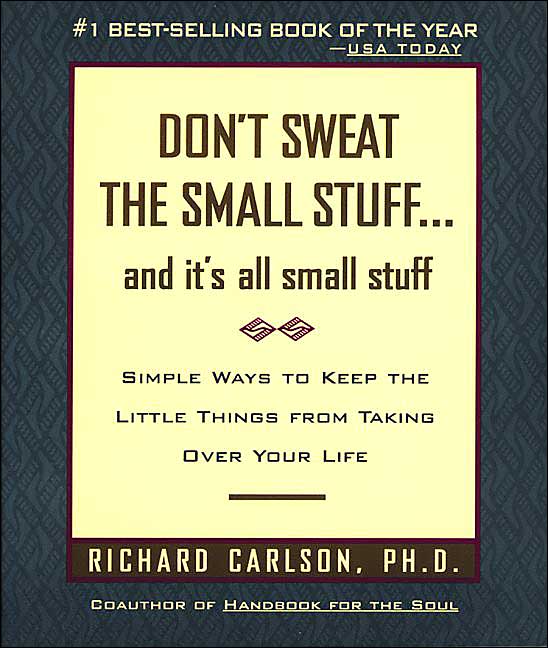
Make High Holy Days Meaningful: Don’t Sweat the Small Stuff


Let’s face it. The High Holy Days can be stressful. For those with school-age children, Rosh Hashanah and Yom Kippur coincide with the beginning of the school year. The lighter workload of the summer is replaced by the need to buckle down at our jobs. Traffic increases. Sports teams organize. Religious School begins. We are back in the rat race.

Amidst the Back to School Nights and the resumption of volunteer responsibilities come the High Holy Days. While promising spiritual uplift, they are often shrouded by a demanding “to do” list:

• Make the brisket.
• Buy new Temple shoes for the kids.
• Find an outfit to “keep up with the Steins.”

• Negotiate the family gathering.
• Send the High Holy Day cards.
• Does honey have an expiration date?

Then there is shul time:

• Long services.
• Lengthy sermons.
• Kids fidgeting and bored.

• Dread the fast.
• Confront the guilt.
• Acknowledge how much we missed the mark.

Our prayerbooks ask “who shall live and who shall die in the coming year?” Many of us are more concerned with how to make it through this hectic Holy Day season! Where is the payoff for the energy we exert and the exhaustion we endure?

Oprah and others chant “don’t sweat the small stuff.” Our kid’s baseball coach tells him “keep your eye on the ball.” We can find meaning in the midst of the madness. How? Try out this alternative “to do” list for a spiritually meaningful season:

• Think about your year, the ups and downs. Celebrate the ways you have grown.
• Consider your shortcomings. Figure out how you might bridge the distance between who you are and who you would like to be.
• As our yoga instructor teaches, get rid of the chatter in your head and focus on breathing. Inhale deeply.
• Create space for prayer. Let tradition wind its way into your soul.
• Embrace the new beginning and the possibilities of the New Year.
• Choose age-appropriate prayer experiences for your children. Find a service or more just for yourself.
• Simplify your menu; it will still be delicious.
• Wear comfortable shoes.
• Use Chinette.

Shana Tova U’metuka. May this be a sweet New Year. Incidentally, honey lasts for three years. Serve it with apples, and it will still taste sweet!

Written by Rabbi Paul Kipnes and Michelle November. Rabbi Paul Kipnes is the spiritual leader of Congregation Or Ami, Calabasas, CA. Michelle November has worked professionally in the Jewish community for over 20 years. Together they have three kids and have survived fifteen High Holy Day seasons together as a family.

Fresh Perspective on Reform Judaism’s Gifts

Robert M. Heller, Chair of the Board of Trustees, Union for Reform Judaism, gets it right! He extols the refreshing perspective of Reform Judaism in its approach to Jewish life and living. Heller writes on the Jpost.com blog:

…That is not today’s world. Old barriers have fallen. When it comes to religion, we can be anything we want, choose any religious identity that fits, or choose to have no religious identity and practice no religion. Choosing to be Jewish today involves an affirmative act, not passive acceptance. The cliché is right: all of us who identify ourselves as Jews, at least all of us willing to live outside ghetto walls, are Jews by choice. …

Why are people in North America and Israel choosing Reform Judaism? …I believe people are choosing Reform Judaism because of attraction, not repulsion or revulsion over the perceived hypocrisy and corruption that flow almost inevitably when religious monopolies are created. They — we — are choosing Reform Judaism because it stands for something and enables us to engage in Jewish prayer, study and action that has meaning and relevance for us in today’s world, not because it is not Orthodox Judaism.

He lists 6 important tenets of Reform Judaism:

  • Proper role of halachah (Jewish law)
  • Egalitarian tenets
  • Inclusionary Approach
  • Pluralistic Outlook
  • Heading the Prophetic Voice
  • Dynamic Lay/Professional Partnerships

Read more.

Orthodox Paradox: A Reflections on Boundaries, Danger and Possibilities

I just read an interesting article in the New York Times Magazine by Noah Feldman, Harvard Law School professor, called, Orthodox Paradox (Published: July 22, 2007). Summed up, it describes “The 12 years I spent at a yeshiva day school made me who I am. Now the school doesn’t acknowledge who I’ve become. A reflection on religion, identity and belonging.”

I see it as a fascinating reflection on the boundaries set by “traditional” religious groups, the dangers inherent in these, and the possibilities of merging serious religious living with modernity. Check it out.

Remembering My Camp Experience

The Jewish Journal emailed a bit ago, looking for anecdotes about camp pranks. As a former camp director, head counselor and camper, I have many (mostly) fond memories of some rather creative camp pranks. One of my favorites was highlighted in the Jewish Journal this week:

“Camp is a place of freedom, where everything is measured against fun. Is it fun? Are we having a good time? Pranks are a part of that,” said Rabbi Paul Kipnes of Congregation Or Ami in Woodland Hills, who directed Camp Hess Kramer in Malibu, and still goes up to the Reform movement’s camp in Santa Rosa to teach every summer.

Kipnes’ favorite prank happened when he was the head counselor at Kutz Camp in the Catskills in the late 1980s. Kipnes came back from a day off to find his personal belongings carefully placed on his bunk floor, surrounded by wall-to-wall Dixie cups full of what he soon found out was toilet water.

As head counselor, he got back at the perpetrators — all of them now prominent rabbis in the Reform movement — by scheduling them for double night-watch duty followed by early morning breakfast set-up.

Thankfully, camps now control the pranks (or so say my children) such that they are tame and fun. Isn’t that what camp is all about?

Talk about a Mind Game: Counter-cultural Values at Camp Newman

There is something about the URJ Camp Newman that brings out the best about people. It might be the fact that is founded upon a belief that each child is created b’tzelem Elohim, in the image of God (Genesis), and that therefore, no matter what they do or say, they are valuable and good and worthy of love. From the moment a child (or a staff or faculty member, for that matter) walks into camp, he/she is bombarded with that message: that he/she is lovable and loved. Talk about a mind game!

We live in a world where people make names for themselves or make their riches by climbing all over other people or by demeaning others. Our schools are littered with youngsters harmed by the “Mean Girls” and “Queen Bee and Wannabees.” Our elections reward those who resort to negative advertising. The message in our world is clear: “I’m better than you. I’m good so you are not.” This reality makes you wonder, just what is going on at our camp?

At Camp Newman, we teach that even though I am created b’tzelem Elohim, so are you. (We even sing a song by Dan Nichols about this value.) That means I need to treat you with respect, kindness and compassion. No matter what. It is so counter-cultural! And it permeates every aspect of camp life.

  • Campers arriving on the first day are bombarded by joyous singing of a song: “Heveynu Shalom Aleichem – we bring peace to you!” It brings smiles to the faces of even the most anxious kids and parents.
  • Counselors are taught to lead their Tochnit (Judaica learning program) activities in such a way that every child’s comments are valued.
  • On Yom Sports (Sports Day, elsewhere known as Color War) we play a plethora of activities including sports, drama, and art so that every child – even the non-athletic – have an opportunity to be successful. At the end of the day of inter-team competition, few focus on who really won. The message permeates the camp: everyone is a winner because we all had fun!
  • Hashkevah (bedtime activities) – trust walks, nighttime gaga, pass the yarn – are geared toward creating community. Get to know everyone because everyone matters!
  • Of course, try climbing the 50 foot tower. The amazing Tower staff are trained to help each person challenge him/herself. Making it to the top is less important than pushing yourself or learning about yourself. (Trust me, I succeeded in climbing higher than ever before – still shy of the top – and they made me feel great about myself!

Walk through any high school and you will see the cliquish division of the lunchroom: football jocks here, computer geeks there, drama kids over there… Walk through camp Newman and you will see kids shedding labels, collecting friends, intermingling in amazing ways.

At my home Congregation Or Ami (Calabasas, CA), we strive to promulgate similar values by wearing name tags at services, reaching out through our Henaynu (We are Here) caring community, and welcoming guests by name at services. Word on the street is that we do it well. And here’s the secret to why: as a former camp director, I keep camp as a model. In fact, I return to Camp Newman every summer for just that purpose: to renew my understanding of the Jewish value of b’tzelem Elohim. Now that I’ve left Camp Newman, I cannot wait to return. Because camp makes me feel so good about myself and everybody else!

Camp Newman for Rabbi Paul is Winding Down!

Camp is winding down. I am so sad. It has been a great, uplifting time:

  • 2 weeks of walking around in shorts and sandals, celebrating Shabbat for 25 hours, shmoozing Jewish breakfast through bedtime.
  • Relaxed. Refreshed.
  • Hanging with my posse of Or Ami kids (and other LA area friend’s kids).
  • Climbing the 50′ tower – okay, I didn’t make it to the top but I got farther than in year’s past.
  • Exploring Kol HaOlam Kulo (the whole Jewish world), our eidah (unit) theme.
  • Rocking to music of Jewish rocker Dan Nichols (dancing, of course, in the back of the Beit Tefilah (prayer amphitheater) so I don’t embarrass my kids).
  • Reconnecting with the same camp friends (rabbis, educators, cantors, spouses/partners) with whom we have been attending camp for the last 15 years.
  • Eating three meals a day prepared by someone else and cleaned up by someone else (we do have to bus our own plates, however).
  • Watching my kids have the times of their lives, schepping nachas (sharing the joy) with them, without having to be responsible for them for two weeks.
  • Watching, amazed, at how wonderfully these college and grad school aged counselors and administrators help kids and teens through the daily ups and downs of life.
  • Creating a Facebook page with its moderated “Or Ami Graduate Connection” group so we can keep in touch with our Or Ami graduates (it is amazing when our B’nai Mitzvah students keep in touch once they go off to college).
  • Shooting archery while receiving shooting tips from a patient specialist half my age.
  • Going wine tasting with friends (designated driver chosen and responsible) and figuring out that Beaucanon and Cuvaison wineries are our favorites this trip.
  • Eating Its It ice cream sandwiches on Shabbat for snack.
  • Teaching college students Jewish texts about abortion and choice and then having a great discussion about it with them (the camp schedules special time for the college students to enjoy continuing Jewish education).
  • Bonding with my wife Michelle.
  • Realizing that I have enough underwear to go to camp for 2 weeks, changing them at least once a day, yet not having to do laundry (I’ve grown up… my Mom tells the story of the year, as a young child, that I came home from camp with packages unopened)
  • Having a camp party with my Or Ami kids.
  • Hiring great staff for our Mishpacha and Temple Teen Night programs.

The list goes on and on. It has been a great run! Shabbat begins this afternoon, and when it ends, we are off for a few days of vacation as we meander our way home. Its sunset at Camp Newman for Rabbi Paul and Michelle. We’ll miss Camp Newman!!!

Excelling at the Unexpected: Camp Newman Staff Are Ready When “Stuff Happens”

Our children have been attending URJ Camp Newman Jewish summer camp in Santa Rosa, CA since they were born. First as faculty kids and more recently as camper in their own right.

At the end of this week, as I depart from camp for a few days of vacation, we will leave our older two children in the capable hands of their counselors and Camp Directors. Pondering this new reality – that the kids will be at camp without us – has led me to consider anew why I chose to send my children to Camp Newman. I realized that I used similar criteria when choosing a summer camp for my children as I do when hiring staff for the synagogue.

Hiring Synagogue Staff
Over the years, I have developed four criteria which have led me to hire some really incredible Jewish professionals to work at Congregation Or Ami in Calabasas, CA. I try to evaluate a candidate based on whether they demonstrate a:

  • commitment to the vision/mission of the synagogue
  • compassion (Who wants to work with or for someone who isn’t compassionate in his/her relationships, work or play?)
  • creativity (I am always looking for people to advance the mission of our synagogue through means I have not yet thought about considered)

The fourth criteria is not as easily discerned. Sometimes I can tease it out from their responses to questions or in discussions with the candidate’s references. Sometimes I need to go with my gut. Usually, I find out pretty quickly if the person is up to the task. The fourth criteria is whether the candidate has:

  • the ability to handle difficult or unexpected situations when they arise

“Stuff happens.” Stuff always happens. You can try to plan and plan for every eventuality. But no amount of planning can ensure that the people on the ground are capable to carry out the plan when the “stuff hits the fan.” You only know that when the “stuff happens” and you can watch how people respond.

Choosing A Summer Camp
Similarly, if I am going to leave my three precious kinder (children) for a number of weeks at a summer camp, I want to ensure that the camp staff members:

  • Believe in the mission of Reform Movement Jewish summer camping
  • Treat my children with compassion and caring, even when they become tired, cranky or worse
  • Creatively deliver experiences to my children which will stretch them Jewishly, athletically, artistically, socially and emotionally.

I also want to be sure that the staff – from the veteran senior administrators through the greenest counselor – have:

  • The ability to handle the difficult or unexpected situations when they arise.

You see, camp is like a play. You write the script and rehearse, rehearse and plan. But once the curtain goes up (and the summer starts), you can only hope that the people you put in place have the ability to handle the stuff that happens.

Camp Newman Staff Excel at the Unexpected!
Having been a camp director for four summers in Malibu, I know that all camps face unanticipated eventualities. Here at Camp Newman, watching from up close during this past week and a half, I find myself continually more and more impressed with the ability of these staff members – especially the senior staff – to handle every eventuality. Counselors puts in long hours and longer days under the hot sun and in warm cabins. They nurture six to eight wonderful and kvetchy campers, moving them through activities. With the guidance of their incredible group of rashim (unit heads) – I am fortunate to work closely with two talented young rashim Amanda and Yoni – these counselors repeatedly rise to the occasion. Up close, I have watched them care for two homesick campers, both of whom are now thoroughly enjoying themselves. I have witnessed the compassion they displayed when one teen sprained her ankle and another younger one got stung by a bee.

Over the years I have seen this senior staff team deal with a multitude of significant issues: broken bones, mechanical or plumbing problems, challenging staffing issues, children with serious emotional challenges, and more. In each case, the senior staff – Camp Director Ruben Arquilevich and Senior Associate Camp Director Sam Roberts standing out among them – handle each “mini-crisis” with confidence and a calm demeanors.

Though Nothing Happened, I was Exceedingly Impressed
I remember some time ago watching Sam Roberts take charge of a potentially difficult situation. There he was: Under Ruben’s watchful eye, dispassionately evaluating the situation. Gathering his senior staff to invite their advice and then detailing a plan. Meeting with the faculty to inform us of the situation and prepare us for possible outcomes. He was clear, open, non-defensive, assured. He listened to our questions and updated his plan when new perspectives or information came to light. That summer I left the camp feeling comfortable and confident that camp was safe and that the camper’s safety was paramount. Of course, the beauty of the situationwas that nothing happened. The problem dissipated. But Sam, Ruben and their staff members were prepared just in case.

That’s Why I Send my Children to the URJ Camp Newman
Because this committed, compassionate, creative staff possesses the ability to handle the difficult or unexpected situations when they arise. Because “just in case,” they are prepared and professional. And because I know that my own kids are cared for as well as if I were in charge of them myself.