Category: blog archive

Mahawaht?: A Female Orthodox Rabbi

Having been nurtured on a diet of equal rights and feminism, I find the challenges of orthodoxy and fundamentalism (not always the same, but often related) to be most difficult when focused on the role and rights of women. So even while I applaud this piece of news, I still remain frustrated that our Jewish orthodox lack full enlightenment…

The Jewish Forward describes the stunning change at a glacial pace, regarding Orthodox Jewish women’s roles:

After years of serious study and service to her community, the Hebrew Institute of Riverdale, Hurwitz was given the brand-new title of Maharat — an acronym signifying one who is a public leader, halachic decider, spiritual guide and Torah scholar. In the words of her mentor, Rabbi Avi Weiss, she is “a full member of the clergy, with the distinct voice of a woman.” Were she a man, she’d be a rabbi. Were she a Reform, Reconstructionist or Conservative Jew, she’d be a rabbi. But Hurwitz really wanted to stay in Orthodoxy’s fold, a decision both comfortable and challenging.

It is a partial step in the right direction:

Hurwitz’s not-quite-a-rabbi role omits two important tasks that only men are allowed to perform — leading a public service and serving as a witness. The rationale is that these aren’t necessarily rabbinic roles, since non-rabbis (who are men) may perform them. But anyone who has been to an Orthodox service on a Saturday morning knows where the action is. And it’s not in the proverbial balcony. This refusal to grant full rights to women bothers those outside the Orthodox world, and also within it. Writer Blu Greenberg, who has advocated for years that her fellow Orthodox women be allowed to become rabbis, spoke eloquently at the conferral ceremony about the grand achievement of the day, and the work left undone. “I would be less than candid were I not to acknowledge that even this joyous day has its moments of qualification, that I and many others… had hoped that the new credential this day would have been ‘rabbi’, as Sara has shown herself to be qualified both in her learning and her leadership,” Greenberg said.

Or as New York’s Jewish Week puts it: Mahawhat?: A Rabbi by Any Other Name

Haveil Havalim #212: How Many Days til We Can Eat Bread?

There’s a whole community of Jewish bloggers out there, who regularly comment on… well,… everything.

Founded by Soccer Dad, Haveil Havalim is a carnival of Jewish blogs — a weekly collection of Jewish & Israeli blog highlights, tidbits and points of interest collected from blogs all around the world. It’s hosted by different bloggers each week and coordinated by Jack. The term ‘Haveil Havalim,’ which means “Vanity of Vanities,” is from Kohelet, (Ecclesiastes) which was written by King Solomon. King Solomon built the Holy Temple in Jerusalem and later on got all bogged down in materialism and other ‘excesses’ and realized that it was nothing but ‘hevel,’ or in English, ‘vanity.’

So check out this week’s Haveil Havalim over at Shtetl Fabulous, and find out what’s new in the Jewish blogsphere.

Top 50 Rabbis List: Not as Statistically Accurate or Methodologically Sound as mine!

A year ago, when Newsweek’s Top 50 Rabbis list came out, I commented upon how statistically inaccurate and methodologically unsound it was. Having taken two sessions of statistics during a grad school course more than 15 years ago, I am better suited to critique. Moreover, I have already done the research.

So here’s my response to the Top 50 Rabbi’s List.

Read it and weep, you self-serving amateur pollsters, you.

By the way, #1 Rabbi, David Saperstein, was a mentor of mine and was and is amazing!

Seder Redux: Deal or No Deal, Where’s Your Egypt? Game, What Doesn’t Belong on the Seder Table, Progressive Seder


We had a fantastic Seder this year. Engaging, inspiring, relevant.

After collecting all the resources, reviewing the Haggadah and planning the Seder activity/discussion inserts, I am always amazed at what actually does and doesn’t happen at the Seder. Since the Seder is an organic gathering – part keva/fixed traditional text; part kavannah/inspiration – the plans for the evening give way to inspired discussion, activities used while others are shelved, and more. Read on for this year’s favorites, including:

  1. Deal or No Deal: Passover Edition
  2. Where’s Your Egypt? Game
  3. What Doesn’t Belong on the Seder Table, and
  4. Progressive Seder: Moving Around during the Seder

Deal or No Deal: Passover Edition
My youngest son created a game, based on the successful TV show. In 18 numbered envelopes (briefcases) taped to a board, he placed post-it notes with dollar values. Each dollar amount was accompanied by a mathematical problem. The bolded number defined the actual number in play. So it might say “$4,000,000 – 4o x 100,000”. The seder participant who chose that briefcase (envelope) had to explain the connection of the bolded number to Passover. In this case, 40 might represent either the number of years wandering in the wilderness, the number of days Moses was up top Mt. Sinai, or one third of Moses’ lifetime (120/3). Some numbers were easier; some more difficult. Almost everyone at the seder got to pick a briefcase.

The numbers included:

  • $10,000,000 = 1 x 10,000,000 = One God
  • $4,000,000 = 4 x 1,000,000 = 4 children, 4 cups of wine, 4 questions
  • $2,000,000 = 2 x 1,000,000 = 2 times we dip, 2 times we wash our hands
  • $603,550 = 603,550 x 1 = number of Israelite males of fighting age who left each, according to the census (which, if you include the same number of females plus children, elderly and the infirmed, yields 2 million people leaving Egypt)
  • $400,000 = 40 x 10,000 = 40 years Moses in Pharaoh’s court, years Moses in Wilderness, years wandering in Wilderness, days Moses on Mt. Sinai
  • $400,000 = 400,000 = 400,000 people murdered during the continuing Darfuran genocide
  • $120,000 = 120 x 1000 = 120 years that Moses lived. Extra points for the 3 period of 40 years (according to tradition, he spend 40 years in Pharaoh’s court, 40 years in the desert after killing the taskmaster before the Burning Bush, 40 years wandering after the Exodus before the Israelites entered the promised land)
  • $98,000 = 49 x 2,000 = 49 days of Counting the Omer, 49 days between leaving Egypt and receiving Torah at Mt. Sinai
  • $61,300 = 613 x 100 = 613 mitzvot (commandments) in the Torah
  • $48,000 = 48 x 1000 = 48 or 1948, the year that Israel was reborn
  • $10,000 = 5 x 2,000 = 5 books of Torah
  • $72 = 36 x 2 = 36 Ladmed Vavnikim, 36 righteous people of each generation because of whose acts of justice and kindness the world continues to exist
  • $18 = 18 x 1 = 18 minutes the flour can be in contact with water when making matzah
  • $13 = 13 x 1 = 13 things that Who Knows? (also age of Bar/Bat Mitzvah)
  • $3 = 3 x 1 = 3 pieces of matzah in the matzah holder during the Seder
  • $2 = 2 = 2 zuzim used to buy a goat in Chad Gadya

Where’s Your Egypt? Game
To introduce guest to each other as a way to begin the seder, we played “Where’s Your Egypt. We told everyone that we are taught b’chol dor vador chayav adam lirot et atzmo k’eelu hu yatzah mimitzrayim – that in each and every generation, we each must see ourselves as if we went forth from Egypt. Egypt or Mitzrayim is that narrow, darkened place, from where it is difficult to venture forth, where (initially) you see only pain, problem or hopelessness. Your Egypt could be something personal, something in the world, something in between.

Anyone could answer in any order, but we could not begin until everyone shared their Egypt. They should say their name and answer “Where’s Your Egypt?” Answers included:

  • The pressure of school
  • The economy, no jobs, people getting laid off
  • The genocide in Darfur
  • The anxiety of SAT’s and ACT’s
  • The earthquake that hit Italy
  • The threat from Iran
  • So much homework
  • The rockets that were being shot from Gaza into Israel
  • Friends struggling with cancer
  • The speed with which grandchildren were growing up

What Doesn’t Belong on the Seder Table?
This year, we placed a variety of unholy objects on our seder table: fancy sunglasses, a frisbee, a Guitar Hero guitar, pineapple, watermelon, funny winter hat, extension cord, and more. Before we sang Mah Nishtanah or The Four Questions. I taught that the number and types of questions asked in Mah Nishtanah actually changed over the course of history (the reclining question was added in the Talmud because the rabbis liked the number 4 but, since the destruction of the Temple, it no longer made sense to ask the Mishnah’s question about why we eat certain meats). I explained that the great scholar Maimonides would even remove a table from in front of the children so that they would recognize something unique and different. This would provide the entre into the Maggid, or telling the story.

So we divided everyone into teams (mixing people up with people they did not know). Each team received a piece of paper and pen. They had to find at least 6 things on the seder table that did not usually belong. They then needed to decide what this object taught about Passover or the lessons of Passover. After ten minutes of moving around (including the opportunity to eat some of the foods that we dip – veggies, fruits, artichoke dip, sweet dips, etc.), everyone shared something from their list as well as their explanation. If someone had a different interpretation of the object, we shared that as well.

Some of their explanations included:

  • fancy sunglasses: the sun was overpowering during slavery, the fanciness shows that overindulgence that threatens to overpower our focus on our basic needs
  • pineapple: though can cause pain from its outside but is sweet inside, it reminds us that even though we experience pain, we can move inward to find the sweetness to sustain ourselves
  • frisbee: we sailed out of Egypt once the exodus began
  • extension cord: Passover connects Jews around the world and throughout history, our central story of going from slavery to freedom empowers us to change the world

Progressive Seder: Moving Around During the Seder
We are taught that we recline (or lean left) during the seder because free people would recline on couches when they ate (think “Roman salon”). But even leaning left, a few hours around the Seder table (eating, reading, singing) can seem oppressive. Too uptight. Too formal. So we bring freedom and relaxation to our seder.

Because we live in California, we can take advantage of the beautiful weather to sit outdoors in nature (like the springtime represented by the Karpas). Because we are supposed to be free people, we shouldn’t have to sit in one place around a table for however long it takes to go through the haggadah and eat. So in our home, we felt free to enjoy a progressive seder:

Part One: Chairs in a large circle around two coffee tables. On the coffee tables were seder plates, things to dip and munch on, and other non-traditional items. We enjoyed the beginning of the seder through the Mah Nishtanah outside in nature. The only downside was that a bunch of knats plagued our seder, even dive-bombing our kiddush cups.

Part Two: We brought the food into the kitchen, grabbed our wine cups, and retired to the comfort of the living room. In the living room, chairs and couches surrounding a coffee table with a seder plate, we enjoyed the Magid (story), the symbols explanation (Pesah, Matzah, Maror), read the Jewish World Watch seder inserts, and made our Korech (Hillel Sandwiches).

Part Three: We sat around tables for the Shulchan Aruch, the meal.

Part Four: We returned to the Living Room for the last part of the seder. Relaxed on couches to sing about Elijah, to sing songs, and to enjoy the last two cups of wine.

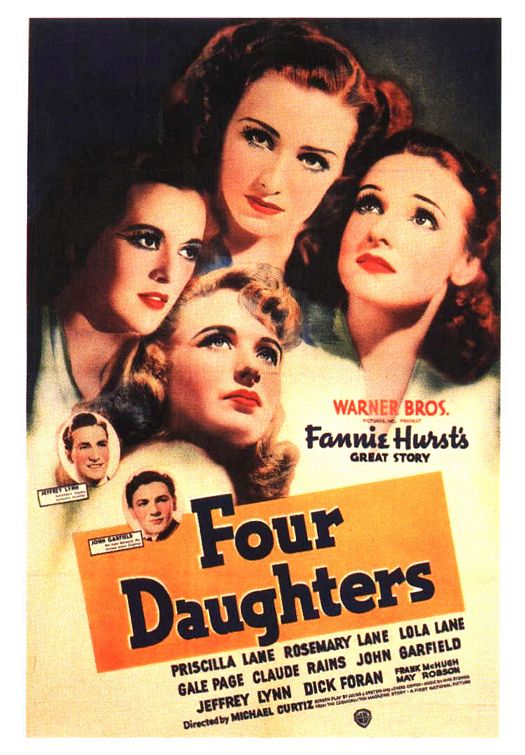
Four Daughters Worth Mentioning at Pesach


Four daughters worth mentioning at Pesach

Professor Rachel Elior,who teaches Jewish philosophy and mysticism at the Hebrew University of Jerusalem, offers in Haaretz a new ritual for Passover: mentioning four daughters. Instead of the traditional – wise, rebellious, simple, and one who does not know how to ask – Professor Elior suggests we talk about four women who are: silenced, forgotten, ignored and excluded.

The Book of the Generations of Adam (Genesis 5) describes the world’s 10 male forebears, from Adam to Noah; but not one word is devoted to their mates, the world’s mothers. The Haggadah, too, speaks of four sons without mentioning the daughters. And these are not the only examples: Jewish memory usually focuses on the history of men, while female experience is doomed to oblivion.

She decides to

celebrate the memory of four 20th-century female authors, who undid the generations during which women were relegated to silence and obscurity and illuminated unknown corners of men and women’s physical and emotional lives…

Her four daughters:

First I might mention Dvora Baron (1887-1956), who wrote wonderful stories and was the first to show that a woman could write literature in Hebrew, although no woman before her had done so, from the end of the biblical period to the early 20th century. When she began to write, she shed light on previously unseen aspects of Jewish family life in the Russian townships and described moments of human torment and grace as they had never been described before.

The second is the mystically oriented poet Yocheved Bat-Miriam (1901-1980), whose enigmatic language captured both the visible and the hidden world and whose poems contained prayers about the eyes of the spirit opening in the depths of the material world. Bat-Miriam wrote the lines that inspired my study of mystical thought regarding the unity of opposites: “And greater than visible is the invisible, and more wonderful than ‘being’ is the secret of infinite nothingness on high, command me, Lord, and I will see / what lies beyond the border of the eye.” Her poetry fell silent after her son, Zuzik, died in the 1948 war, leaving her inconsolable.

The third is Dahlia Ravikovitch (1936-2005), who sang wonderfully from a woman’s perspective of happiness in the depths of pain in the poem “Hemda,” which appeared in the 1959 collection “The Love of an Orange.” She dared to speak of the affront and pain felt by a girl, an outsider, who comes to live on a kibbutz, thereby shattering the idealized, unreal image of kibbutz childhood, in her 1976 book “Death in the Family.”

Ravikovitch wrote penetratingly of women’s unheard-of plight in her chilling poem “Hovering at a Low Altitude,” challenging society for remaining silent about the anguish of raped and murdered women. Her far-reaching, probing, critical gaze and the depth of her compassionate, iconoclastic humanity found expression in her poems about the pain of Arab mothers who lost their children in the first Lebanon war: “This is the history of the child / who was killed in his mother’s belly / in the month of January 1988 / for reasons of national security” (“A Mother is Walking,” from the translation by Rachel Tzvia Back, published in the collection “With an Iron Pen”). In her writing about the fate of war casualties and the victims of human society, she expressed human empathy beyond all accepted boundaries.

Fourth I will mention Amalia Kahana-Carmon, who brought forth a new voice and a unique viewpoint while at the same time creating an unprecedented language in her 1966 book “Under One Roof.” Thus, for example, in her story “Naima Sasson Writes Poems,” written from a double perspective, of a child and of a grown up, she created a new language and paved the way for gender-focused criticism long ahead of its time.

The “four sisters” I have commemorated here were artists who sought freedom and knowledge and refused to accept the place tradition accorded them. All four broke through male-decreed conceptions of knowledge, truth, equality and justice as these relate to women’s place in society, and they did so while making audible the silenced female voice that had been excluded from written memory.

Traffic to the blog has been way up this week, due mostly to the plethora of Passover resources up on the blog. I would be interested in hearing from readers about which Passover posts were most interesting and which, if any, of the resources you used (or plan to use) in your seder. Toss me a comment.

For visual learners, the picture on the left is a visual of the Haggadah text, courtesy of Tamar Fox, by way of Ima on (and off) the Bima

Rav and Shmuel at the Gym: How Should We Begin the Passover Seder?

Haim Watzman, in South Jerusalem blog, connects the dots from the past to the present, using the lessons of Passover past to goad us toward justice in the present:

Rav and Shmuel at the Gym: How Should We Begin the Passover Seder?

Between sets of arm curls, Nahum walks over to me and says, “You’re familiar with the disagreement between Rav and Shmuel about the way the Seder should begin?”

Nahum doesn’t look like the kind who works on his biceps—he’s a slender guy in his mid-thirties who wears a black kipah and glasses. He resembles a teacher at a religious high school here in Jerusalem, which in fact he is.

But Nahum, like me, is a regular at the small weight room at the Jerusalem Pool on Emek Refa’im Street. We get a diverse crowd—men and women, jocks and schoolteachers, retired people and teenagers, Jews and Arabs, religious and non-religious; there’s even a macho ultra-Orthodox guy who lets out whoops when he lifts—but I’ll save him for another story.

The conversation, like the crowd, can come from all directions. Nahum is referring to the two leading Babylonian rabbis of the third century CE, whose disputes form part of the first layer of the Gemara, the Talmudic discussions of the laws laid down in the earlier Mishna. The Torah commands the Jews to retell the story of the Exodus from Egypt at a discussion-meal conducted by families on the first night of Pesach (Passover). Rav and Shmuel disagreed on how to begin telling the story, and their disagreement is recorded in the Haggadah, the book forms the framework of the Seder night.

The Mishna rules that the story should begin by telling of the dishonorable events and end with the honorable ones. The two sages differed on which dishonorable event begins the story of the liberation from slavery and the formation of the Israelite nation.

I’m doing leg stretches, so I hace to crane my neck to look at Nahum.

“Rav says we should begin with ‘Our forefathers were idolaters,’” he reminds me, “and Shmuel says we should begin with ‘We were slaves in Egypt.’”

“Yes, I remember,” I say, wiping my face with my towel. “So, like usual, we do both.”

“But Shmuel actually won,” Nahum points out, beginning another set of curls. “We say both, but we say Shmuel’s first. Now, what do you think they were arguing about?”

I’m grabbing on to the bottom of one of the elliptical machines with my legs spread apart as far as I can, trying to force my tight leg muscles into some semblance of flexibility.

“I guess Rav is saying that slavery didn’t begin with physical slavery in Egypt,” I suggest. “There was also the intellectual slavery of worshiping false gods, generations before Pharaoh enslaved us.”

“Think of it this way,” Nahum says. “If God saved us because we were slaves in Egypt, that means he saw us suffering, had pity on us, and freed us. That’s a God who hears the cries of the oppressed and comes to their aid. Whoever is oppressed can count on God’s help. That’s why the black slaves in the U.S. sang spirituals about Moses and Pharaoh.”

“Okay,” I grunt.

“But if the story of our freedom begins with the fact that we were idol worshipers, then it means that God didn’t save us because we were oppressed. And he didn’t save us because we were any better than anyone else. Everyone worshiped idols back then. God chose us simply because he chose us, and he took us out of Egypt for his own purposes, not because we were oppressed. He saved us, but he wouldn’t save other slaves.”

By this time, we’ve stopped our respective lifting and stretching.

“That’s jives with something else I think of every year when I’m preparing for the Seder,” I tell Nahum. “Every year I’m struck by the fact that the passage ‘our fathers were idolaters’ is followed by one in which we, following the sages, deliberately misread a passage from the Torah. I mean the one that begins Arami oved Avi. In the Haggadah, we read it as a reference to Laban, the father of Leah and Rachel who cheats Jacob by forcing him to work for him for twenty years in order to receive Rachel as his wife. But the verse obviously doesn’t refer to Laban the Aramean. The grammar and the syntax are such that it must mean ‘my father was a wandering Aramean.’ In other words, it refers to Abraham, who was in Aram when God first spoke to him. Abraham was originally an idolater. That’s what the verse tells us to remember.”

“How does that fit in?” Nahum asks.

“It tells us that Abraham wasn’t chosen by God because he was intrinsically better than the other people of his time. He proved himself to God by his actions, not because he was born better or born with some special gift from God. It’s a message a lot of religious Jews today seem to forget. Why do we deliberately misread the passage?”

“Maybe the Jews needed to hear about Laban oppressing Jacob more than they needed to hear about Abraham beginning life as an idolater,” Nahum suggests. “After all, in Babylonia they were a minority and often oppressed. The same for generations and generations afterwards.”

“Maybe that’s why Shmuel’s opinion got accepted,” I say. “His message resonated better with reality.”

“We were slaves in Egypt and we were like slaves in the Exile,” Nahum agrees.

“But maybe that’s the wrong way to begin today,” I muse. “Today, here in Israel, we’re not oppressed. In fact, harping on our past oppression can blind us to the fact that we’re a majority here and that we haven’t proven ourselves to be much better than other majority peoples in other places. We’ve done our own share of oppressing.”

“Well, if you want to get political about it…” Nahum says warily.

“Today we need to be told that we’re not intrinsically any better than any other people. We need to be reminded that God measures us by our actions, not our origins. And maybe that’s why both opinions got preserved in the Haggadah. Shmuel’s version is for the Exile, and Rav’s for the Jewish polity. Don’t forget that you, too, were idolaters—no different from Laban, no different from Pharaoh.”

“Okay, I see it,” Nahum says.

“I think I’ll use that at my Seder,” I tell Nahum. “If you don’t mind me plagiarizing you. And if I can get a word in edgewise.”

Nahum goes to do some bench presses. I head for the shower. I’ve done my daily workout.

Jewish Spiritual Stimulus Package

These are difficult times. As our financial markets continue to nosedive, we are forced to find new resources of strength to pull ourselves up out of the abyss. In a world of individuals, we might expect to do this alone. Circle the wagons and protect your own. Survival of the fittest.

But Judaism teaches a different way. We hold each other up like we hold up Torah.

Two teachings, actually. First Talmud teaches Kol yisrael areivim zeh bazeh – all Jews are responsible for one another, reminding us that we will never be alone. Because we are responsible for helping each other. Since communal ties are stronger than individual pain, we are commanded to hold each other up through the most stressful of times. Then we learn from Torah, tzedek tzedek tirdof – justice, justice you shall pursue. The doubling of the word tzedek (justice) reminds us that pursuing justice is paramount. We seek social justice when times are good AND we seek social justice when times are bad. A difficult economy provides no excuse to shirk our responsibilities. We care because we care. Both for for those we know and for those we do not.

Thus Congregation Or Ami has been enacting our own Jewish Spiritual Stimulus Package, a comprehensive plan to reach out to congregants. Supported by our Board of Directors, this Stimulus Package includes no pork. Rather our Stimulus Package addresses three goals: (1) to provide real resources for job acquisition, financial relief and mental/physical health; (2) to offer low/no cost activities for individuals and families to break the isolation brought on by crisis; and (3) to utilize all forms of communication (high tech internet and low tech one-on-one conversations) to reach out, check in and take care of our congregant community.

For a community that values B’tzelem Elohim (we are created in God’s image), that we are each valued, and in Petucha (openness), where we courageously talk about the difficult truths in life, this Jewish Spiritual Stimulus Package answers the call of Henaynu, that we are there for each other through both joyous and difficult times. May we weather the storm together. Remember, I am always here to listen and help.

In response to this article, I received an email:

I wanted to thank you for your inspiring article this month. I always find your words meaningful and empowering but this month really touched a chord.

We also so appreciated getting a call from a congregation member asking how we were doing. It meant a great deal.

As you are so aware, this is hard times for everyone. It is wonderful to know that there is a caring community there to help and to listen.

I wish you and your family a wonderful Pesach and Shabbat Shalom.

I forwarded this email, anonymously, to Or Ami’s Board and Staff with the following message:

She is specifically referring to my article in the bulletin. But understand this…

After 16 years in the rabbinate, I have learned that the rabbi often comes to personify the community/institution. While this congregant is thanking ME for MY article, she is also thanking this congregation, its leadership and staff for all of our efforts to reach out to people during these hard times.

She is thanking:

  • The people who made calls for/with Kim Gubner to check on people
  • The people who have hosted hikes, and adult gatherings, job search assistance, and no cost childcare and…
  • The people who have caringly dealt with those who cannot pay their commitments
  • The people who warmly welcome others coming into services, to programs, on the phone
  • The people who take the occasional abuse from others because the stress is so great, it must spill over somewhere
  • The people who wrote articles, blurbs, announcements which communicate our caring and outreach.
  • The people who … are you!

Thank you for all you are doing to make sure our Jewish Spiritual Stimulus package is successful in touching people’s lives during these difficult times.

You all – staff, board, clergy, interns – and everyone in between. You are amazing, and I am proud to be part of this community.

To which Or Ami’s Board and Staff members responded with the following comments:

  • I feel such a sense of pride for Or Ami as we all do and it shows in all that we are and what we do!
  • Everyone is so very supportive and caring for each other. We have such a wonderful home at Or Ami.
  • It is truly an HONOR to be part of this amazing community! Let’s keep this feeling forever, no matter how large Or Ami grows!
  • Thanks for great leadership, to the Or Ami Team, all of you are great which is the reason we joined, got involved and have stayed. We don’t just say we are a warm loving community we show it in our actions day to day. A nicer group of people you could not find anywhere. My life has been enriched through our membership at Or Ami and most importantly building friendships and relationships with so many of you.

How enriching that a Jewish Spiritual Stimulus Package has touched many: those who are receiving its assistance, those who are watching from the sidelines, and those who are responsible for delivering the assistance!

Why is There a Football and a Corkscrew on the Seder Table?

(Daily News, 4/3/07): The dinner table at Rabbi Paul Kipnes’ house was topped Monday night with more than the ceremonial food associated with commemorating the Exodus from Egypt. The arrangement of bitter herbs, parsley and matzo also included a football, history book and corkscrew. The purpose of Passover, which began at sundown Monday, is to remind Jews of their deliverance from Pharaoh and to educate Jewish children about the seminal story of their people. So Kipnes, leader of Congregation Or Ami in Calabasas, regularly uses props to spark discussion on Passover.

The football, his guests usually say, refers to the angel of the Lord passing over the Jewish homes and sparing their first-born sons. The history book often incites debate about whether the Exodus is the literal history of the Jewish people or a mythical story. And the corkscrew, well, some say it represents the work required to release the joy of life; others the treatment Pharaoh gave the Jews. “It’s the story of the Jews throughout history,” Kipnes said. “My kids are pretty comfortable and well off, and they need to learn from our history and our traditions that their responsibility is not to sit back and enjoy it but to bring others to the table, into freedom.”

[Hint: At various points throughout the seder, I invited different teams to share two of their most creative explanations. During the meal, I collected all the sheets, tallied the answers, and gave out additional prizes to… everyone. If you do not write on Passover, do this same activity verbally throughout the seder.]

Wandering the Wilderness in the Sunshine of Sedona

Reflections as We Prepare for Pesach
Pesach 5766 / April 2006

I was taught that our Israelite ancestors wandered for forty years in the wilderness as punishment for remaining tied to slavery. When offered the opportunity at Kadesh-Barnea to enter into the Promised Land, they lost faith in God and followed the fearful advice of the ten spies. Thus, that generation had to die off so a new generation could arise that knew not the mindset of slavery. Lessons learned. I never really contemplated what else years in the wilderness might teach, until a pre-Passover trek to the Arizona desert aroused my senses.

It all began when my wife proposed a fabulous idea: Let’s use the few days prior to Passover to take a family trip to Sedona. So, after finagling seats at a friend’s first night Seder table (we will host our second night), we took off for on our wilderness trek.

The Irony of Driving out to the Desert
We chose to drive. Did you know that five hours out of Los Angeles, much of the stretch on the 10 Freeway appears to be nothing but dry soil, scraggly desert plants, and a whole bunch of dust? It became a challenge to keep the brain from bursting with boredom and the kids from descending into the oppressive crankiness of an interminably long trip. I retreated into my rabbi-brain as we passed time by reviewing the menu for our Seder meal.

Just outside of Phoenix, I began to realize the irony of this pre-Passover trip. Here we were getting a jump on the holiday spirit, by driving from the jungles of Tarzana out to the desert, even as our Jewish brothers and sisters world-wide prepared for that ritual journey from Egypt into the Wilderness. What the ancient Israelites did with trepidation – leaving the known, venturing out toward the vague promises of a land flowing with milk and honey – my family did with carefree anticipation. After all, Sedona, reportedly an oasis of beauty, art and spiritual vortexes, offered clear promises of rest, relaxation, and rejuvenation. Of course, the rabbi in me wondered, what other lessons for Passover might be gleaned from this irony?

Leaving Egypt: Much More than Charlton Heston Showed Us
I love Pesach. Yitziat mitrayim, the Exodus from Egypt, is engrained in my soul. We relive it every year, in keeping with the rabbinic injunction – b’chol dor vador chayav adam lirot et atzmo ke-ilu hu yatza mimitrayim, in every generation, a person must see him/herself as if he/she left Egypt. Unlike many of my generation whose vision of the Exodus trek only references those depicted in Cecile B. DeMille’s Ten Commandments and Steven Speilberg’s Prince of Egypt, my exodus memories are steeped in much more. I have twice glimpsed Egypt, having traveled physically through Egypt’s poverty-stricken streets, cruised down the Nile, and climbed up the sides of the Pyramids reportedly built by our ancestors. I once even experienced yitziat mitzrayim, the going out from Egypt, by way of an arduous sweaty bus journey back to Israel, just days before the first night of Passover. Moreover, after a semester study of possible Exodus routes, my class wandered the wadis and walkways of Sinai on an organized trip. Through each experience, the transition from Egypt to the Wilderness was paradoxically a journey from slavery to freedom and (temporarily at least) from bad to worse.

Wilderness Wanderings: Ain’t No Palm Desert Vacation!
I have vague memories of the Sinai desert as being hot, dry and only barely hospitable to humans, unless you were either a Bedouin, a Palm Springs native, or trucking in with you sufficient supplies of water, food and directions to the nearest Desert Hilton. The Biblical exodus must have been challenging to endure. No wonder our people complained profusely about the lack of meat and water. The boredom was bitter as they journeyed from here to there (“How much longer, Daddy? Oh, thirty-five or so years…now be quiet and watch your DVD – dromedary viewing device”).

One even can imagine how the Golden Calf incident was possible. What would you do, a few weeks out of Egypt, when the legendary leader Moses disappeared for forty days to commune with God only knows what atop that nearby mountain? Chances are you too might begin to look for reassurance that the trip was really worth it. How easily might we all idly slip back into the comfort of idol-worship! Back in Biblical times, idols were to the ancients what Christmas trees and Easter eggs are to today’s Gentiles – the public symbol of a deeper religious system, easily enticing us non-believers into a ritual-filled romance with their “holiday season.” So some of them constructed the Golden Calf, turning away from the Holy One, and leading to behaviors that ultimately set them wandering for forty years.

Yet, if the Exodus and its wilderness trek were so terrible, why do we bother reliving it each year? Why not focus solely on the uplifting moments – receiving Torah, arriving finally at the Promised Land, tasting for the first time the milk and honey that flowed unimpeded?

Wilderness Without Massages: How Different Must Their Desert Trek Have Been!
This year’s trip to the Arizona desert reminded me that we moderns cannot begin to comprehend what our Biblical ancestors had to endure in their trek through the desert. In Sedona, the food was plentiful. We dined at the Red Planet restaurant, tasting fried cactus and sharing the scenery with UFO’s and an array of aliens. As Torah teaches ger hayiti b’eretz mitzrayim, I too was a stranger – an alien – in the land of Egypt. Of course, my journey was far from hazardous. Our Pink Jeep Trek driver expertly navigated the dips and drops along Broken Arrow trail, returning us on time to our hotel. (It made me wonder: if Driver Dave had been leading the Exodus, with big tips looking promising, might the Israelites have made it more quickly into the Promised Land?) Of course, in Sedona the amenities were many. It was amazing what an hour and a half hot rock massage can do to rejuvenate the soul after an arduous day spent lounging at the pool or scouring nearby art galleries.

Still, watching the sun set beautifully over the mesas surrounding Sedona invited visions of divinity that we so often miss. Who but the Creator on High could so artfully blend the bright red rock with the green of desert brush to affect such a vision of holiness? Even the best of Tinseltown’s lighting crews cannot approximate that majesty of Sedona at twilight, when each new moment brings out different shades and colors from the Creator’s palate of hues. Golel or mipnay choshech, v’choshech mipnay or – rolling light away from darkness and darkness away from light. As the Ma’ariv Aravim prayer reminds us nightly, it is God who shines the light just right, so that the panorama of our lives shifts exquisitely, highlighting new possibilities here, backlighting the curve of a beautiful butte there. Simply put, this family retreat reopened my eyes to the beauty surrounding us. Perhaps herein can be found the lessons of our Sedona Exodus.

Open Your Eyes to the Majestic Colors, the Ethereal Lights
In Egypt, where our ancestors were forced to make their home for four hundred plus years, we were in exile. Though rooted in the intensity of Egypt, the stunning capital of the ancient Near East, the Israelites couldn’t see the light. In Egypt, like in our much of our lives today, they failed to recognize the bright colors of their existence. Lost amidst the very real sufferings of slavery, a discerning vision of holiness was nowhere to be found. As the Baal Shem Tov taught, m’lo chol haaretz k’vodo, the whole earth is filled with God’s glory. Only we humans take our little hands and cover our eyes. It took the bright lights and bold colors of the exodus and the wilderness trek to shake our ancestors from their sensory complacency. The radiant orange and yellow of the burning bush. The deep red of blood in the Nile, the smothering black of the darkness, and a spectrum of froggie greens. The luminescence of that pillar of fire that guided us by day. These opened their eyes to the wonders surrounding them and to the holiness within. Only then could they prepare themselves for the promising future as God’s chosen.

And so ends this pre-Pesach get-away. I imagine that preparing this year’s seder will be different. Awed as we were by the majestic color and the ethereal light of the world around us, will we be more open to the holiness within? Eyes opened to wonder, will we be more fully prepared to raise a cup of wine, or four, in recognition of the beauty of creation and of the Creator’s role in bringing us to it? I hope so.

This year, take a moment at your seder to reflect upon the blessings the Creator bestowed upon you: the freedom to move in and around God’s world. Chag Pesach Samayach – May this Passover be wonderful!

Passover: Ancient Rituals, Contemporary Perspectives

Dressing in Drag, Getting Stoned, Pillow Talk, Feeling the Beat! Passover Like You’ve Never Considered Before!

Pesach, the story of our people’s ancient flight from slavery to freedom, reminds us that ours is the way of freedom. The Haggadah, more than a backward-looking book, calls upon each and every one of us, in each and every generation, lirot et atzmo k’eelu hu yatza meemitzrayim, to see him/herself as if he/she went out of Egypt.

Judaism compels us to translate into reality the sacred ideal of the humanity of each individual and the Divine spark within us. Judaism not only condemns all racial bigotry; it affirms the belief in the sanctity of humans created in the image of God. Judaism thus places a moral responsibility upon its adherents to affirm the equality of all human beings as children of the One Universal God.

The Jewish community has been the quintessential victim of religious persecution, and of all people, we understand the duress of persecution and will devote ourselves to any measures designed to lessen its impact. It is our duty and obligation to prevent any future persecution. The most repeated commandment in the Torah, appearing 36 times, is that we must not discriminate against the stranger in our midst, for we were strangers in the land of Egypt.

Our evening around the table calls us to reenact on that very night – through symbolic foods, dramatic readings, and intense discussion – the quest for justice and freedom. Throughout history, Jews have creatively reengaged our traditional story, creating new rituals, to teach ever new messages.

Dressing in Drag 1: In 1853, Yisrael ben Yosef Benjamin described a ceremony in Asia before the recitation of the Haggadah in which a young person dressed up in kley golah (from Ezekiel 12:3 meaning “gear for exile”) and appeared before the participants with a walking staff in hand and a satchel over the shoulder. An adult asked, “From where do you come, O pilgrim?” “From the land of Egypt,” answered the lad. “Did you go out to freedom from the bondage of Egypt?” “Yes indeed,” replied the lad, “and now I am a free man.” “And where are you going?” “I am going to Jerusalem,” he responded. Then with great joy the participants begin to tell the story of the Exodus… When possible, invite new immigrants to your home so that they can tell their stories.

Civil War Bricks: During the American Civil War (1860-1865), a group of Jewish Union soldiers made a Seder for themselves in the wilderness of West Virginia. They had none of the ingredients for traditional haroset available, so they put a real brick in its place on the Seder plate! Families having remodeling work done on their houses might save a chunk of plaster or brick to place on the Seder table. What better way to highlight the difference between our freedom to choose to build and the oppression of living a life of forced labor.

Getting Stoned: Shemuel ben Hallal relates that his Moroccan uncle, who is a rabbi in Brooklyn, is accustomed to grating rocks into the haroset. Indeed, he adds so much rock that the haroset tastes terrible! While we do not suggest anyone adopt this custom, it is a creative attempt to illustrate the slavery of the Israelites in Egypt in a very “concrete” fashion!

Dressing in Drag 2: Back in the 1530’s, when participants opened the door for shefokh, (Elijah’s cup), someone in costume enters the room quickly, as if he is Elijah himself coming to announce the coming of the Messiah. R. Yosef Yuzpah Hahn (1570-1637) says “how good is the custom that they do something in memory of the Messiah.” How surprising that my family was not the first to think of this!

Communal Drinking: Rabbi Naftali of Ropshitz (1760-1827) initiated a beautiful custom. Following Birkat Ha’Mazon (the blessing after the meal), each participant poured some wine from their kiddush cup into Elijah’s Cup. In this way, he taught that each person has the responsibility to create conditions in the world that would encourage the messiah to come and finish the perfecting of the world. As you pour wine from your cup into Elijah’s, share with those at your Seder what you have decided to do this year to grow closer to God and to bring more justice into the world.

Buying Dessert: Others suggest that in ransoming or redeeming the afikoman, instead of just “paying off” the children, each participant at the Seder should also “purchase” his or her share to eat. Money seems inappropriate for such a purchase. So make a pledge of action, vowing to carry out ma’asim tovim (good deeds), as well as acts of tzedakah (charitable giving) and gemilut hesed (lovingkindness). For example, one might pledge to bring food to a homeless shelter or begin to visit the sick at a local hospital. Or, one might begin our search for the Messiah by engaging in Jewish learning or participating in personal and communal prayer. Think of what you will offer for the afikoman this year as it is passed around the table.

Pillow Talk: Noam Zion of Israel teaches that the idea of reclining on Pesach presupposes a social world in which, as in the Greco-Roman nobility, meals were often taken while the guests reclined on their left arms on couches, leaving their right hand free to dip and taste. At each couch was a small table with individual portions, like today’s Seder plate. However, since the European Middle Ages, it is no longer the way of nobility to recline. In fact, eating while reclining on pillows is the way of the sick. Still, Rabbi Y. M. Epstein teaches that everyone should be provided with a pillow precisely because it is an outmoded and outlandish custom. For the point of the Seder is to introduce changes into the meal, so the children will be roused to ask “Why is this night different from all other nights?” By the same token it would be ideal for everyone to have his or her own Seder plate.

Lesbians at the Seder Table: In the early 1980’s, Jewish scholar Susannah Heschel (daughter of the famous Rabbi Abraham Joshua Heschel who marched with Dr. Martin Luther King), was introduced to an early feminist Haggadah that suggested adding a crust of bread on the Seder plate, as a sign of solidarity with Jewish lesbians (which was intended to convey the idea that there is as much room for a lesbian in Judaism as there is for a crust of bread on the seder plate). Heschel felt that to put bread on the Seder plate would be to accept that Jewish lesbians and gay men violate Judaism like hametz [leavened food] violates Passover. So at her next Seder, she chose an orange as a symbol of inclusion of gays and lesbians and others who are marginalized within the Jewish community. She offered the orange as a symbol of the fruitfulness for all Jews when lesbians and gay men are contributing and active members of Jewish life. In addition, each orange segment had a few seeds that had to be spit out – a gesture of spitting out, repudiating the homophobia of many Jews. While lecturing, Heschel often mentioned her custom as one of many feminist rituals that have been developed in the last 20 years. She writes, “Somehow, though, the typical patriarchal maneuver occurred. My idea of an orange and my intention of affirming lesbians and gay men was transformed. Now the story circulates that thirty years ago a man said to me that a woman belongs on the bimah [podium of a synagogue] as an orange on the Seder plate. A woman’s words are attributed to a man, and the affirmation of lesbians and gay men is erased. Isn’t that precisely what’s happened over the centuries to women’s ideas?” Today, let us place an orange on the Seder plate to reaffirm the openness of our Jewish community to lesbians and gay men and to others who have been marginalized.

Vegetarians Feel the Beat: Ever since the Talmudic scholar, Rabbi Huna, stated that “beets and rice” may be used for the two cooked foods on the Seder plate (Pesachim 114b), many vegetarians have substituted a red beet for the shankbone. In fact, while some wonder if Pesach and vegetarianism are compatible (after all, what is a Seder without gefilte fish, chicken soup, chopped liver, chicken and other meats) there is a common misconception that halacha (Jewish law) mandates that Jews eat meat to rejoice on Pesach and other Jewish festivals. According to the Talmud (Pesachim 109a), since the destruction of the Temple, Jews need not eat meat to celebrate festivals.

Surfing Seder: In the internet age, some families asked all the adults attending the Seder to search the web to bring with them one example of oppression, discrimination or social injustice in our world today. They also asked them to bring a few suggestions regarding how they can combat the problem they discussed. During the Seder, they intersperse presentations about modern day problems with the Haggadah’s story about the slavery of the Jews. Before the Seder ends, each person is asked to commit to some action to help alleviate one of these social problems.

Checking Out: Some families have a checkbook ready on the Seder table. Following the traditional recitation of the ten plagues, and a discussion of the modern plagues that are destroying our world, the children and adults choose one or two organizations which help alleviate these problems. They immediately write out a check before the urge to change the world diminishes. During the days that follow, they make plans to write letters to government officials to urge them to act to stop these injustices.

Dressing in Drag 3: The Jews of Morocco had the following custom: After reading the Haggadah, all of the adults put a stick with a bundle on their shoulders and they leave the house in haste, running and shouting: “In this way did our ancestors leave Egypt, with ‘their kneading bowls wrapped in their cloaks upon their shoulders’” (Exodus 12:34).

May these ancient customs and contemporary perspectives entice you to dig deeply into the Passover story to reclaim its essential purpose: to goad us all into action to rid the world of prejudice, oppression, and injustice.

Can We Eat Beans, Rice, Corn and Peas on Passover?

Jewish Tradition on Chametz and Kitniyot

By Rabbi Eric Berk (with Rabbi Paul Kipnes)
Passover 2007 * Nisan 5767

When was the last time you remembered something? Did you remember something that you had forgotten, or was it something you just hadn’t thought about in a while? How did you remember? Was it by seeing, thinking, smelling, tasting? What was the memory: hazy, blurry, sharp, clear? It isn’t just scientists and biologists who know that memory is often a complex and complicated process. Our ancient tradition and rabbis knew this as well, and put all their efforts into Passover. Therefore, something as seemingly simple as food becomes a trigger for memory, or a reminder of the past: our own past as well as our people’s distant past as slaves under Pharaoh.

Perhaps, what first comes to mind when thinking of Passover’s foods is Matzah. What is it, beyond “square,” or “round”? Boxes of Matzah – that plain, flat, and, well, plain unleavened bread – can most often been seen blocking the path of your shopping cart as your buy gefilte fish and other, tastier Pesach delicacies. Most literally, Matzah is unleavened bread. Symbolically, it is most often seen as a symbol of freedom, that first food eaten by a newly freed people. At the same time, Matzah is also the “bread of affliction,” the bread of poverty. So simultaneously Matzah serves as a warning, or reminder, as well: our Jewish tradition does not equate freedom with wealth.

What is Chametz and Why Can’t We Eat It?
Of course, we cannot have Matzah, unleavened bread, without it’s opposite: leaven, or chametz. You might find it surprising that the Torah is more stringent about chametz than any other forbidden food! Chametz refers to products made from wheat, barley, rye, oats, and spelt. According to the Talmud (B. Pesachim 35a), these are the only grains from which Matzah can be made, and therefore, strictly speaking, the only ones which are subject to the Torah’s prohibition of eating chametz, or leaven, on Passover.

If that helps describe chametz literally, how might be describe chametz symbolically? Have you ever watched dough rise in the oven, or have you ever just seen bread? Dough rises, and what results is “puffed-up,” bigger than before. Full of air – or perhaps full of itself. That is exactly what chametz has come to symbolize. Philo, a Greek-Jewish philosopher, described chametz as “pride,” because leavened bread is “puffed-up.” Removing chametz on Passover from our homes, our lives, our families, is a struggle between who we really are now and who we can be once we strip away all the trappings of self-importance.

If chametz is so negative, why do we eat it all year? While it is oftentimes very difficult to be a Jew, the Jewish Tradition does not demand of us that which is impossible. Of course, Jewish Tradition doesn’t prohibit the eating of Matzah after Passover either!

What are Kitniyot and What are the Rules about Eating Kitniyot?
Just as chametz grows and grows (in the oven), so too did the category of chametz expand. For Ashkenazim (Jews of Eastern European descent), the tradition on Passover has been to not eat foods considered “Kitniyot,” which includes many legumes, as well as beans, peas, rice, millet, corn, and seeds. There have been many reasons Ashkenazic communities refrained from eating Kitniyot. For example, there was a concern that because Kitniyot can be ground to make flour and then baked, one could mistakenly assume that their neighbor was eating chametz. Furthermore, there was concern that chametz grain might get mixed up with the kitniyot, if they were stored in close proximity. This kitniyot prohibition was not accepted by most Sephardim (Jews of Spanish or Arab descent) – but that is not to say Sephardic observance of Passover has been any less meaningful than that of their Ashkenazic neighbors. Why is it, then, that many Jews who might not have done so in the past, now eat kitniyot during Passover?

In the recent past, two groups of rabbis have met and, independent of one another, ruled that both Ashkenazim and Sephardim should be permitted to eat rice, corn, and kitniyot during Pesach. Who were these groups, and how did they determine such a ruling? The two groups were the Responsa Committee of the Reform Movement, and the Responsa Committee of the Israeli Conservative Movement. Each Responsum (or rabbinic decision) is available on the internet ( Reform and Israeli Conservative).

Why do Two Groups of Rabbis Now Permit Eating Kitniyot on Passover?
Briefly, these rabbinical committees determined that the prohibition of eating of rice, beans and kitniyot is in direct contradiction to the opinion of all the sages of the Mishnah and Talmud (except one), and also contradicts the theory as well as the practice of more than fifty post-Talmudic Sages. Opposition to the ban on eating kitniyot began around the time of it’s inception in 13th century France, with one Rabbi calling the practice “a mistaken custom,” and the second rabbi calling it “a foolish custom”. With regard to Halachah (Jewish law), the central question is this: whether it is permissible to do away with a mistaken or foolish custom. Many rabbinical authorities (including the Rambam, or Moses Maimonides) have ruled that it is permitted (and perhaps even obligatory!) to do away with this type of “foolish custom”. Furthermore, there are many good reasons to do away with this “foolish custom.” A foolish custom

  1. Detracts from the joy of the holiday by limiting the number of permitted foods.
  2. Causes exorbitant price rises, which result in “major financial loss,” and, as is well known, “The Torah takes pity on the people of Israel’s money”.
  3. Emphasizes the insignificant (legumes) and ignores the significant (the avoidance of chametz).
  4. Can cause people to ridicule Jewish ritual in general and the prohibition against eating chametz in particular. One might think that if this custom prohibiting eating kitniyot has no purpose yet is observed, then perhaps there is no reason to observe other mitzvot.
  5. Can even cause divisions between World Jewry’s ethnic groups.

May I Still Refrain from Eating Kitniyot if I Want To Do So?
On the other hand, there is only one reason to observe this custom: the desire to preserve an old custom. While this desire can be very strong, our rabbinic decisors agreed that this desire does not override all that was mentioned above. However, there will be Ashkenazim who will want to stick to the “custom of their ancestors,” and who will be drawn to that tradition, even though they know that it is permitted to eat kitniyot on Pesach. Remember, this too is permissible, especially in light of Reform Judaism’s openness to all aspects of Jewish tradition.

Rabbi David Golinkin concluded the Israeli Conservative Movement’s Responsum by stating that with a willingness to eat kitniyot on Pesach (Passover), “This will make their lives easier and will add joy and pleasure to their observance of Pesach.” It can become very easy to think that observing Pesach represents an unbearable burden: so much preparation, the need to give up chametz and instead eat Matzah – the list surely goes on. We must remember that Matzah is not only the “bread of affliction,” but the symbol of freedom as well!
Increasing the Joy and Pleasure during Passover
Rabbi Golinkin ends his legal decision with an understanding and insightful directive. He notes that adding joy and pleasure to our observance of Pesach was probably not on our Passover shopping lists – and if it was, did it even make the top 10? Now we have an opportunity to prepare for Pesach with an additional item on our “to do” lists: adding joy and pleasure to our observance of Pesach.

May this be a meaningful Pesach for you and your loved ones!

How Baseball Players Catch Fly Balls

Random Thoughts- Do They Have Meaning?: How Baseball Players Catch Fly Balls

Ever wonder why baseball players tend to take a step forward on a fly ball even if the ball will undoubtedly (from our vantage point) go behind them?

It turns out that

something called Optical Acceleration Cancellation (OAC), used the acceleration of the ball through the vision field as a guide for player movement.

As a fielder watches the ball rise, he moves either forward or backwards so that the ball moves at a constant speed through his field of vision. If he moves too far forward, the ball will rise faster and may eventually fly over his head. If he takes too many steps back, the ball will appear to rise slower and will drop in front of him.

By managing the ball’s position with his movement, a fielder will end up at the right spot at the right time.