Category: blog archive

If Cee-Lo Green Were Jewish, He Would Sing…

Michelle and I were treated to seats at the Grammys this year, courtesy of some dear congregants in the business. We had fun dressing up, and hearing a wide range of music from Bob Dylan to Ladies Gaga and Antebellum. Barbra (Streisand) and Mick (Jagger) sang as did Justin (Bieber) and Jaden (Smith).

We rocked out to Cee-Lo Green‘s Forget You, sung by Cee-Lo and Gwyneth (Paltrow).

The tune is all the more enjoyable, when re-jew-venated (or jewified) as Bar’chu (I’m A Jew) by Jew Man Group.

Welcoming Chaverim, for Developmentally Disabled Adults

Torah teaches, “Do not place a stumbling block before the blind.” The RiPiK, a twentieth century commentator, suggested that beyond refraining from placing blocks, we should actively remove stumbling blocks. To what might this be compared?

A story…

Even as the Director of Chaverim, a local program for developmentally disabled adults asked the question, his discomfort was evident: “How do you feel about opening your congregation to a local group for developmentally disabled adults?”

“Why wouldn’t we?” I asked.

“We’ve been to other synagogues that have opened their doors, only to feel slowly push us out, after their members became uncomfortable with the presence of our members,” he responded.

The conversation continued. “What’s the worst that might happen?” I asked.

“We have one member who can sing loudly, and sometimes off-key.” He paused, “And you might have someone read slowly, completing a communal reading after others have already finished.”

“Sounds like some of our current members.”

“However, they will usually be accompanied by the Chaverim program director or program rabbi, either of whom will help direct our members if necessary. Would you like to come by one of our events to check out the Chaverim members?”

“Why? Give me a heads up when you think there might be an issue. Make sure that in the early months you attend services only when I am leading them. That way I can witness and deal with any issues that might arise.”

So We Welcomed Chaverim
“Yes, we would love to welcome you,” I said. “Let me speak to our Board in two weeks, when I know they will openly embrace the idea and your members. We will extend to any of your members full membership at our synagogue. Two High Holy Day tickets per Chaverim member – one for the member, one for his/her driver or guest. We will make you, as Director of Chaverim, a complimentary synagogue member, so that we can give you access to our synagogue afterhours for use during your scheduled programs and classes. We ask only that your members fill out a synagogue membership form so we can get them into our system.”

“They should pay membership dues,” he said. “So that they have a sense of commitment. How much should they need to pay?”

“We won’t care. Whatever you think is appropriate. No more than $50; no less than $10. We only ask that they pay it in one lump sum, to ease the work on our bookkeeper. To make it easier, you collect the forms and information, and pass them onto my assistant, who will oversee the processing of the forms.”
“Are you sure you don’t want to meet them first?” he inquired.

“Listen, we pride ourselves on being a congregation that is open and welcoming. And we have families with developmentally disabled children and relatives. So no, I don’t need to approve them. They are Jews. Let them come home.”

Not a Mitzvah (good deed), but a Mitzvah (religious obligation)
It saddens me when I hear kvelling about how this synagogue or that is especially accessible to people with disabilities. This is no mitzvah (colloquially, a good deed); it is a mitzvah (literally, a religious obligation). It is the responsibility of every Jewish community to make Jewish life and celebration accessible to every Jew and Jewish family. We strive to remove stumbling blocks from before all Jews – including those with disabilities.

As expected, the Board discussion lasted less than five minutes. The motion to welcome Chaverim was a “no-brainer.” Our CFO and his wife volunteered to be the liaisons with the program; our Program Director was tasked with smoothing the process from the staff side. We created a new membership category called ‘Chaverim,’ though we were aware that it would be a few months before anyone would officially sign up.

The next week, we designated a few Friday nights as Shabbatot when they would officially come worship with us. As I had been informed, only a few Chaverim regulars showed up at the first services to check us out and to make sure we were welcoming. Based on guidance from the Chaverim Director, early in the service when we welcome others, I just said, “We welcome our members who are connected to Chaverim, a program for developmentally disabled adults, ages 18-88.” We did not ask them to identify themselves at that time; we let them just be Jews at services.

A Service Honoring Exceptional People
We are now close to a year into our relationship. I am told that Chaverim members have attended services regularly and appreciate NOT being singled out. They hang out at the oneg like everyone else; last week I enjoyed watching our president chatting up a few Chaverim members, just like she does ever other non-regular who shows up at services. A few read prayers in our annual Service Honoring Exceptional People (our annual “Special Needs” service); others sang along and just felt like they belonged.

All because of one 20-minute phone call, one email from the Rabbi, five minutes in a board meeting, and a few calls by the Program Director. All in the span of a month.

That, and because we took seriously the Torah teaching, “Do not put a stumbling block before the blind.” It should be that easy. Please tell us your story.

The Tasty Fruits of Israeli Innovation

Did you know that:

  • Amazon’s Kindle was made in Israel?!
  • A World Autism Center is being build in Israel?!
  • Israel’s have discovered how to float solar panels on water?!
  • A bracelet made in Israel can tell caretakers when an epileptic seizure is happening?!
  • The Mideast’s first synchrotron is being built in Israel with researchers from across the Mideast?!

I recently rediscovered a fabulous website about Israel: Israel21c.org.  It is well worth a look or two or three.

Israel, to the extent that it is understood by Americans at all, is generally seen as a place of war; a place that is characterized by virtually nothing but the conflict between the Israelis and the Palestinians. So often we focus on the conflict in the Mideast.

Yet, Israel is regularly is having a major impact on our world in very positive ways.  Israel and Israelis are having an impact on individual lives through their efforts in health, technology, culture, democracy and clean tech.

Israel21c, a non-profit educational foundation with a mission to focus media and public attention on the 21st century Israel that exists beyond the conflict, identifies, researches and reports on how Israelis create, innovate, improve and add value to the world.

Studies substantiate that when Americans learn about the ways in which Israel adds value to their lives, their affinity and respect for Israel increases. We improve Israel’s image around the world by allowing people to understand the reality; Israel is seen through the lenses of its humanness, its diversity and all that it contributes through medical advances, technological innovation, art, culture and acts of human kindness.

Check out these innovations that Israel21C is bringing to light:

  • Amazon’s Kindle: A Made-in-Israel story: They made Java “cool” again by using it to develop a device for reading the Kindle, and once again a major tech invention emanates from Israel.
  • World autism center in Jerusalem: At the first global research and education center for autism, to be built in Jerusalem, the plan is to integrate all the systems that work.
  • Solar energy that floats on water: Award winning Israeli company Solaris Synergy has designed solar energy grids that can float on water, reducing energy production costs, and preventing water loss.
  • Swift help for epilepsy: The new electronic EpiLert bracelet under development in Israel will signal caregivers when the wearer begins to suffer a dangerous seizure.
  • Open SESAME – building the MidEast’s first synchrotron: Politics aside, researchers from across the Middle East are working together in the name of science on a futuristic project that will enable scientists to study everything from proteins to archaeological…

What's Up With Egypt?

Transfixed for weeks over events in Egypt (and other parts of the Mideast), I have begun to see the real power of  Twitter. I added to my Hootsuite account the hashtag #Jan25. (A hashtag – # followed words – is a user defined marker added to a tweet that connects disparate tweets into an ongoing conversation on the same topic.).

#Jan25 provides a constantly updating conversation about events in Tahrir Square and elsewhere. It combines first person experiences – why I chose to come to Tahrir – with journalist accounts of why they are witnessing – to retweets of support from people around the world.

Thru #Jan25 I have followed:

  • CNN’s Ben Wedeman @bencnn
  • NYTimes’ Nicholas Kristof @NickKristoff
  • And other journalists from all over the world.

Far be it from me to pontificate on what should be happening in Egypt, who I want to lead the country or what the future will bring.

Rather, I know this:

  • I believe that people should be free to speak their minds and express their concerns. They have a right to life, liberty and the pursuit if happiness and holiness.
  • I hope Egypt will not become another outpost of extremist Islam. I do believe that people can be Muslim and practice Islam and NOT be extremist.
  • I expect that a new Egypt can retain a peace treaty with Israel and work together toward a safe, secure Mideast peace.

Thomas Friedman had a great article on Monday in which he described his experiences and what he is witnessing in Tahrir Square. He notes that they are talking about jobs, freedom, hope and an end to the police state. They were not talking about Muslim Brotherhood, or Israel or the Palestinians. That was good.

So sign up for Twitter, open up your account and start following events around the world. It is eye opening, engaging and world transforming.

Prayer for Egypt, Its Leaders, Its Citizens, Its Supporters

Under the category of Things I Wish I Wrote, here is a Prayer for Egypt written by Alden Solovy. Alden is a talented liturgist, writes fabulous new prayers almost daily and posts them at www.tobendlight.com.  Adlen is also an award winning essayist and journalist, having written for daily, weekly and monthly newspapers, as well as magazines, e-newsletters and blogs. His short fiction has been published in the Jewish and secular press.  Alden has taught prayer writing classes to adults and teens and occasionally reads his works in performance settings.

For Egypt

G-d of All,
Protector and Redeemer,
Watch over the people of Egypt

As their nation faces struggle and strife

On the journey toward hope and promise.

Grant safety to its citizens and residents,
Visitors and guests,

During moments of unrest.


Grant wisdom and courage to its leaders,
Insight to its advisors,

And understanding to its friends.


Lead them on a path toward justice.

Direct them on the road to freedom.

Guide them on the way to prosperity.
Make them a shining light of peace.

Source and Shelter,

Grant safety and security to all nations,

So that truth and harmony resound
From the four corners of the earth.

Blessed are You, G-d of All,

Forging nations and peoples

In the crucible of change

Throughout history.


May this time of challenge for Egypt
Become a blessing for its inhabitants and for the world.

© 2011 Alden Solovy and www.tobendlight.com. All rights reserved.

Superbowl Thought

What is it about sports that provides a common language for people – especially men – that helps them transcend their differences or their lack of familiarity?

Put two men who do not know each other in a room and in no time they can bonding, swapping stories and calling armchair quarterback plays.

No answers; just a question.

Or Ami Wins URJ Techie Awards

They like us… they really like us!


Okay, though it isn’t the Academy Awards, we celebrate that Congregation Or Ami won 3 (of 5 available) Union for Reform Judaism Techie Awards in the first year they were awarded.  Out of 900 Reform Movement congregations in North America, Or Ami was chosen for having the:

We take special pride in these Techie Awards for they recognize our purposeful process of using new technology to spread the ancient words of Torah. Once upon a time, books, newspapers and even two stone tablets, were new technology.  Today, we use blogs, Facebook, Twitter and more to promulgate our Jewish tradition and values.

So as we celebrate these honors, we recognize and thank a long list of people involved in the creation or continuation of Or Ami’s ventures into technology (I apologize at the outset for those who I neglected to mention):
  • David and Marla Greenman, who birthed our first website
  • Educator Josh Barkin (currently at Temple Isaiah, Los Angeles), who as an intern set up our first blog, and later was my tweeting role model
  • Steve Besser, who created our first Illuminating News eNewsletter template
  • Rabbi Phyllis Sommer, who blogs as Ima on (and off) the Bima, by whose example I became a better blogger
  • Educator Michal Rozenberg-Yalovsky, who as Program Director, served as webmaster for over four years
  • Marsha Rothpan, who as Program Director, took over Illuminating News and who serves as webmaster
  • Susan Gould, Steve Keleman, Darryl Lieberstein, Vadim Pariser, and Alice and Donald Goldsobel, who revised our website
  • Educator Rachel Margolis, currently of Raleigh, NC, who taught me the Constant Contact eNewsletter program
  • Rabbi Dan Medwin, who as an intern introduced us to Visual T’filah, pushed me into Apple products, and taught me about Twitter
  • Susan Gould and Kim Gubner, who attended a Social Networking Seminar with me and pushed our Facebook page – designed in part by teen Jessa Cameron – to the next level
  • Michael Kaplan, whose photographs and videos guided Or Ami into Pbase and later MobileMe galleries
  • Jewish Non-Profit professional David Harris, whose graduate thesis provided insights into the use of Facebook in non-profits and who is one of our Twitter role model and friends
  • Vadim Pariser, who set up Constant Contact, set up our first webcasts, transferred our email quickly to Gmail Applications, and does all things technological
  • Jacob Braunstein, who first webcast our High Holy Day services
  • Cantor Doug Cotler, who encouraged the expansion into technology and guided our Visual T’filah work
  • Susie Stark, Joy Haines, Barbara Gordon and Lori Cole, who make our technology work – from Chaverware Membership Data Base system to Hineynu Tracker to our webcalendar
What’s your favorite technology at Congregation Or Ami?

Praying MY Way: The Antidote to Power Davening

Dropping my son off at his New Community Jewish High School, I felt the sudden urge to attend morning services. Initially thinking it was Thursday, I looked forward to hearing Torah chanted. Upon entering Shomrei Torah Synagogue’s chapel, I was saddened to realize it was Friday, not a Torah reading day. But then, surprise, surprise, I remembered it was Rosh Chodesh (celebrating the new Hebrew month) and Torah would be read. STS offers a sweet intimate minyan where most don’t know that I’m a rabbi, and aside from checking to see if I am there for Kaddish, they let me daven (pray) in peace.

I usually try to daven undercover when I go to other shuls, so that I can focus on communing with the Holy One instead of shmoozing with someone keen on asking a rabbi a question. Of course I didn’t have and couldn’t find a tallit – hanging on the rack right outside the door I later learned – so I stuck out like a sore thumb.

Still, daven I did. But my way:

Sometimes I chant real slowly or even chant through the translation. I still find that power davening thru shacharit interferes with my ability to really pray. Can G!d hear me when I mumble?

I also stretch this way and that, trying to wake up my tired bones and my yoga-deprived muscles. Does G!d care if I bend and stretch instead of stand up straight and shuckle?

Sometimes I even ignore the siddur (prayerbook), close my eyes and just pour out my thoughts, silently, to the Eternal Listener. Will G!d recognize my thanks and praise if they do not use the prescribed Hebrew pasukim (verses)?

I think so and that’s why I go. Trying to mix the traditional keva (fixed prayer) with the heartfelt kavvanah (spontaneous thanks/praise), I find my way to the One who is always here.

How do you find meaning during the prayer service? If traditional, where do you mix it up? If progressive, where do you find strength in the ancient ways?

So Debbie Friedman Died… Perhaps God was Too Busy Arranging the Outcome of the BCS Football Championship Game

At the end of the Auburn-Oregon BCS college football championship game, many winning Auburn players – including the coach and the quarterback – thanked God for being with them so that they could win the game. In fact, following the win, the Auburn team huddled together in a prayer circle.

At the moment, tens of thousands of people around the world were facing the sad painful reality that in spite of all the Mi Shebeirach healing prayers sung according to nusach Debbie Friedman (e.g. to her tune), Debbie died nonetheless.

Two groups praying; two different results. What gives, God?

It makes me kind of wonder:

Was God just too busy managing the results of college football championship that God didn’t have the time or inclination to respond to the tens of thousands of healing prayer requests for Debbie?

OR

Is the Mi Shebeirach prayer just an ineffectual prayer or perhaps too nuanced (and God instead prefers the black & white, win or lose prayers of the football players)?

OR

Are we getting this God and prayer thing wrong?

A few years back, when the Red Sox were playing in the World Series, I wrote a post entitled: “Can I pray that my Red Sox will win?”  I wondered: Is there a one to one relationship between our prayers and the results? Or said differently, how does it work? Is it “We pray and God responds”? Then why didn’t God respond to the Mi Shebeirach healing prayers for the very woman – Debbie Friedman – who brought the Mi Shebeirach back into vogue?

Here’s how I answer that questions:

Perhaps God does respond, but differently than we hoped. 

The Mi Shebeirach is about healing, not necessarily curing. In my reading of Jewish tradition, I have not found any guarantee that God offers a cure. To cure is to remove the illness, the depression, or the disease from our bodies and minds. But the One Who Heals always offers us, and our loved ones, the promise of refu’ah, of healing. Healing is about finding a way to face whatever is ahead. It is about shalom, that sense of wholeness, amidst the brokenness of our lives. Healing is about chometz lev, the courage to go on and face the new day.  And its about shalom – wholeness and peace.  

So healing sometimes means that death comes and through it, a return of peace and tranquility, a return to the arms of the Holy One.

Which means that we, who are left behind, must face life without Debbie, even as we remain open to our still loving, ever caring God.

18 Lessons from 18 Years as a Rabbi

@font-face {
font-family: “Cambria”;
}p.MsoNormal, li.MsoNormal, div.MsoNormal { margin: 0in 0in 0.0001pt; font-size: 12pt; font-family: “Times New Roman”; }p.MsoListParagraph, li.MsoListParagraph, div.MsoListParagraph { margin: 0in 0in 0.0001pt 0.5in; font-size: 12pt; font-family: “Times New Roman”; }p.MsoListParagraphCxSpFirst, li.MsoListParagraphCxSpFirst, div.MsoListParagraphCxSpFirst { margin: 0in 0in 0.0001pt 0.5in; font-size: 12pt; font-family: “Times New Roman”; }p.MsoListParagraphCxSpMiddle, li.MsoListParagraphCxSpMiddle, div.MsoListParagraphCxSpMiddle { margin: 0in 0in 0.0001pt 0.5in; font-size: 12pt; font-family: “Times New Roman”; }p.MsoListParagraphCxSpLast, li.MsoListParagraphCxSpLast, div.MsoListParagraphCxSpLast { margin: 0in 0in 0.0001pt 0.5in; font-size: 12pt; font-family: “Times New Roman”; }div.Section1 { page: Section1; }

As I celebrate my 18th year since I was ordained Rabbi, I take stock of lessons learned along the way:

  1. Jewish spirituality without social justice can become narcissism.
  2. Social justice without Jewish spirituality might feel good but might not compel future activism.
  3. The role of the rabbi is to passionately comfort the afflicted and afflict the comfortable.   
  4. The role of the rabbi is to quietly point in a direction and then get out of the way. 
  5. A healthy, organic Jewish community is not afraid to experiment.
  6. A healthy, organic Jewish community is not afraid of failure, because failure is inevitable when experimenting and innovating.
  7. People who really feel warmly welcomed when they walk through the doors of the synagogue will be more likely to come back to celebrate and learn.
  8. People who answer the telephones are more important than the person standing up on the bimah; a community feels warm and welcoming when the receptionist and bookkeeper exude that warmth.
  9. Dysfunction comes easily; warm, respectful partnerships between clergy and lay leaders require patience, vulnerability, and openness. 
  10. Judaism has many things to say about every thing; no issue it was or is too controversial, personal, or political to escape the moral lens of Torah and Jewish tradition.
  11. How a rabbi teaches is as important as what a rabbi teaches. Difficult lessons and controversial teachings are more easily heard when alternative perspectives are respected. 
  12. God exists. God loves. God cares.
  13. The lights can be on, but if we close our eyes, we think it is dark. 
  14. Jewish music has the power to touch hearts and souls more deeply than any sermon.
  15. Torah teachings and Jewish music, when combined artfully, have the potential to transform lives and touch eternity.
  16. Fear not social media or technology; like the printing press, telephone, and two stone tablets from the mountaintop, they are merely tools for spreading Torah teachings. 
  17. Israel is at once ancient and modern, historic and mythic, spiritual and bricks-and-mortar. Walking its streets and alleys transforms the soul.
  18. A community that takes care of its rabbi and his family ensures that the rabbi has deep sources of strength and love to care for the community.

Remembering Debbie Friedman: A Tribute

I read it on Twitter, that Debbie Friedman had died. The Jewish world lost one of the leading lights in Jewish music. I am heartbroken. Debbie Friedman opened up my heart and soul to holiness and the Holy One. And now she is gone.

To understand the depth of the grief sweeping across the Jewish community, one might recall the profound sense of loss that permeated our world upon the news of the death of John Lennon. When Lennon died, the world lost one of the greats – a singer, composer, poet, visionary, and serene commentator on the excesses of his world. Similarly, Debbie’s death removes from our midst one of gedolei hador (the great of the generation).

Debbie Friedman has touched more lives and brought more people into Judaism through her music than – I would argue – any rabbi who has ever opened his or her mouth. She has connected people to their Jewish spirituality more than any composer around the world. Debbie was not just a singer/songleader; she was poet and liturgist. She was an inspiring artist, who was uniquely able to translate the ancient words of our Jewish tradition into engaging musical pieces which spoke anew to a generation alienated from the inherited formal melodies of their parents.

Debbie taught us Lechi Lach, a song based upon the Divine call to Abram to leave his birthplace and home to venture forth to an unknown land. In this one simple piece, she accomplished multiple goals. She taught a primary Torah narrative about God’s eternal promise to people who had forgotten our ancestor’s heroic journey. She recast the story as the egalitarian tale that the Zohar mystically hints at – as a call to both Abram and to his wife Sarai. Then she reminded us that this story was our story; that God’s pledge to Abram and Sarai continues for us today. As such, Debbie Friedman renewed the Divine promise: that we all would be, could be, and are a blessing!

Debbie Friedman got her start in Jewish summer camps, especially at Camp Swig in Saratoga, CA, and in the NFTY youth movement. There Debbie married the hopefulness of the 1960’s and 1970’s with the abiding values of Torah and tradition. She helped us “Sing unto God a New Song,” while reminding us, like the prophets before her, that “Not by might, not by power, but by spirit alone, shall we all live in peace.”

Given the radical nature of everything connected to the ‘60’s and ‘70’s, Debbie’s transformation from a youth songleader into a – the? – central Jewish musical figure of our time was not easy. But it was complete. Debbie went from being shunned by many cantors as the epitome of everything that was wrong with the then-current state of new Jewish music, to being embraced by synagogues around the world and invited to join the Cantorial faculty at Hebrew Union College-Jewish Institute of Religion in New York and Los Angeles.

Debbie’s true beauty is that she gave voice to so many people because her music and melodies were accessible and extremely peaceful. This led her to become the champion of the nascent Jewish healing movement. Her Mi Shebeirach healing prayer-song combined Hebrew and English to inspire for those struggling with illness. Rituals of naming those seeking healing grew up around her prayer-song, allowing people to bring their anxiety and worry back into the synagogue.

Yet the quiet power of her musical genius can be found in how she engaged every Jew in the pews (and beyond) to sing out for holiness. Suddenly, she flattened the liturgical hierarchy, enabling each one of us to give voice to our aching hearts. In her concerts she repeatedly instructed her audience remain quiet and receive blessings of healing, yet those gathered often sang aloud nonetheless. All because Debbie had already placed the ability to pray for healing back in our mouths, and we refused to sit back to allow another – even the composer herself – to speak for us.

Or as Debbie wrote on her website: “We are not just the recipients of blessings, but the messengers of blessings as well. Remember, out of what emerges from life’s painful challenges will come our healing. And ultimately, our greatest healing will come when we use our suffering to heal another’s pain – to release another from their confinement.”

I twice led retreats in Malibu, CA with Debbie for Jews recovering from alcoholism and addictions. Few Jewish leaders seemed to intrinsically understand the unique challenges faced by people trying to recover from the constant pull of an addiction. But Debbie walked confidently into the retreat, and with openness and vulnerability, listened to stories of struggle and failure. Then, with hope and quiet strength, she began to speak and teach and sing. She lifted each participant up, out of the morass that consumed them. Her music painted a picture of courage and peace. How easily we were lulled into a place of healing and serenity with seemingly little effort on our part!

There are plenty of people who do not even know that the melodies that they love and cherish were written by Debbie Friedman. But they know how wonderfully spiritual her melodies make them feel. And that explains why her music is widespread and her legacy will be abiding.

Now Debbie Friedman has died. We join our light and our prayers together, wishing strength and love for her family. May her memory be for a blessing.

Blessings of Healing for Debbie Friedman

At Congregation Or Ami, we devoted our Shabbat services’ d’var refu’ah (words about healing) to asking for blessings of healing for Debbie Friedman.  View the d’var refu’ah.  

Debbie Friedman – nationally known Jewish composer, singer, and inspiration of the Jewish healing movement – composed and sings so many of the songs that enlivened Jewish worship worldwide: Thou Shalt Love the Lord Thy God, Lechi Lach, Mi Shebeirach, and a beautiful arrangement of Ahavat Olam.  

Debbie is now in need of prayers of healing for herself.  The singer, who at her concerts asked us to accept blessings of healing before singing along with her, lies in a hospital bed in Orange County.  Her condition is grave. The latest news (from Friday):

Debbie remains in the hospital, sedated and breathing with the aid of a respirator. Debbie’s sister Sheryl reports that the doctors’ measures have not yet succeeded in opening up her lungs. They are rotating her bed in different ways in the hope that that may shake loose some of the material blocking her breathing.

We join with Jewish communities all around the world, praying for healing for Debbie, her family and her community. 

View Or Ami’s healing prayers

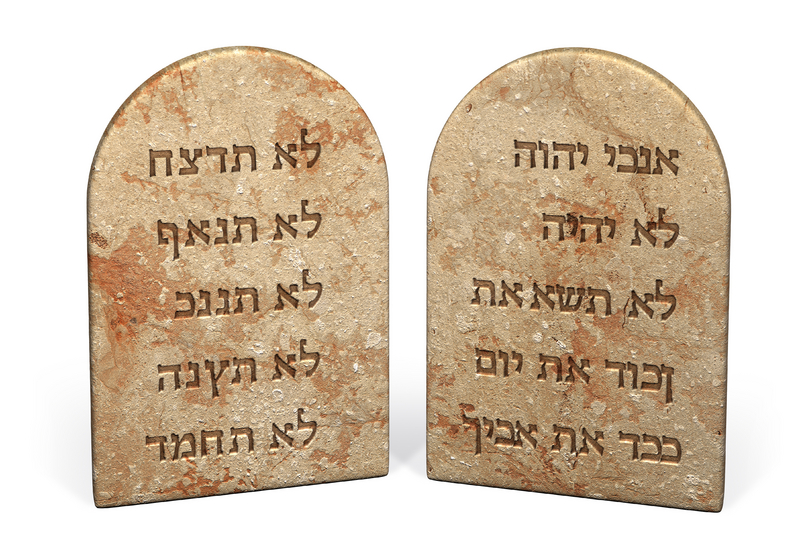
10 Commandments 2.0 – Is it Time for an Upgrade?

Moment Magazine offers an interfaith exploration of the 10 Commandments, which answers the questions: For millennia, these ancient laws have been central to our way of life. Are they still relevant? Or is it time for an upgrade?

NEARLY 3,500 YEARS AGO, Exodus tells us, God inscribed the Ten Commandments onto two stone tablets for the Israelites. Although Jewish tradition counts 613 commandments in the Torah, the Ten have taken on a life of their own, inspiring millions of Jews, Christians and Muslims over the centuries and evolving into a symbol of morality that has influenced Western thinking. Over the past 50 years, they’ve become a contentious subject in the United States, emerging at the heart of the culture wars between conservatives and liberals who disagree over their role in American law and ethics. Moment speaks with a range of American scholars about the Ten Commandments’ contemporary relevance and meaning, and discovers—surprise, surprise—that
their opinions differ dramatically. Read on.

12 Refreshing Moments from a Palm Springs Rabbi Conference


Four days spent with 212 reform rabbis at our annual regional rabbinic conference PARR in Palm Springs. Refreshing! Why?

1. Sharing joys of being a rabbi.
2. Supporting each other through the challenged.
3. Considering what a value-based progressive Jewish hermeneutic for Torah might look like.
4. Discover a new Shabbat service ritual for celebrating joyous moments (to be done just before or after the Mi Shebeirach for the ill).
5. Visiting the Palm Springs art museum and exploring the dotted line between illusion and reality.
6. Discussing marriage between Jews and non-Jews, and imagining how what guidelines and requirements might make us more comfortable with the prospect of officiating.
7. Taking new technology out for a spin, and dreaming about how Facebook, Skype and other media might help deepen Jewish community.
8. Hearing from the Consul of Israel.
9. Learning with Michael Marmur, Provost and scholar from HUC-JIR in Jerusalem, about how we might create communal commitment in individual-focus world.
10. Thinking big with our Rabbinic Intern/Educator (and Or Ami’s future rabbi) Julia Weisz about Or Ami’s future.
11. Eating delicious desserts, including two ice cream bars (I partook only once).
12. Consulting with other congregations about our successes with Mishpacha and hearing about leading edge educational endeavors.

A big thank you to our congregation and our staff for making it possible for me to be away to rethink and refresh.

What Does a Jew Pray on the Secular New Year?

A Jew, living in America, with eyes on two calendars – one Jewish, one secular – marks nonetheless the turning of the secular New Year.  With hope for continued freedom and the blessing of a better tomorrow, we might take a moment during our day to say:

Eternal God, we give thanks
For the gifts of life, wonder beyond words;
For the awareness of soul, our light within;
For the world around us, so filled with beauty;
For the richness of the earth, which day by day sustains us;
For all these and more we offer thanks.
Baruch Atah Adonai, hatov shimcha ul’cha na-eh l’hodot.
Blessed are You, Eternal, Your Name is goodness,
and to You we offer thanksgiving.
(by Rabbi Judith Z. Abrams)

Or we might recite:

For the good in us, which calls us to a better life,
  We give thanks.
For the strength to improve the world with our hearts and our hand,
  We offer praise.
For the desire in us which leads us to work for peace,
  We are grateful.
For life and nature, harmony and beauty, for the hope of tomorrow,
  All praise to the Source of Being.
(Adapted from Chaim Stern and Abraham Rothberg, Gates of Prayer, 1975 p. 271)

Happy New Year All!