Serving on the Revenue Enhancement Committee of the Central Conference of American Rabbis provides me with an opportunity to shnorr the schnorrers. While at our CCAR Rabbinical Convention in New Orleans, I did a little brainstorming and came up with some brilliant fundraising ideas. Sadly, I’m sure they all will be suppressed:
Category: blog archive
Snarky Post #43: Top 10 Kvetches at the CCAR Convention
- No buttons inside the elevators. This hi-tech system requires us to push in the number on a keypad outside the elevator banks; it then tells you which elevator to take. Main kvetch: what if I don’t want to take Car B? This is so deterministic.
- Being forced to choose between looking at the speaker vs. looking at the screen. More problematic when the speaker is not good to look at and his/her words are boring.
- Having to choose between listening to what the speaker is saying vs. reading the tweets about what the speaker is saying.
- Some of the pretzels were moist/wet and I don’t like chocolate on my nuts.
- Our colleagues don’t seem to know the difference between kvelling and kvetching. Kvelling is when one finds something to say that is nice or will help make the program better. Kvetching is what the rest of you do.
- The room is too warm.
- Green is a foolish color for the siddur (translation: prayerbook); it makes me want to recycle it. Especially since with Visual T’filah, we don’t need them anymore.
- Rick Jacobs being chosen as URJ president-nominee evidences the ascendency of a previously sidelined, but tireless and powerful shadow interest-group within our movement: men with full heads of hair. We all thought (hoped) that Steve Fox was an anomaly.
- All those numbered PowerPoint lists. Very discriminatory against those of us who can count on our own.
- The room was too cold.
- Because there are so many rabbis in this city now, many of whom know each other, means that we can’t hang out on Bourbon Street and do what we really want.
- 7:00 am breakfasts. Talk about East Coast-centric programming!
- Sheraton mints are chalky and bland. Ayelet mints were way better and they put out other candy.
- The water dispenser on the 5th floor, near the elevators, was out of water.
- There are so many younger colleagues here that it forces me to acknowledge being one of the middle aged rabbis. As it says in the Talmud, “That sucks!”. I liked the olden days when i was young enough to be making fun of the AKs.
- The room is too warm.
- The CCAR program committee chairs don’t seem to care about the fact that the room was too hot/cold/humid/warm.
April Fools… If Only
I presume that back in the 1930’s and ’40’s many people – Europeans, Americans, Jews particularly – thought that the whispers about concentration camps were someone’s ideas of a bad April Fools joke. After all, who could imagine that while they were sitting comfortably in their homes, people “out there” somewhere were planning and facilitating the genocide of a whole people. One person’s humorless joke is another people’s death sentence.
Talmud teaches us – Al tifrosh min hatzibur – don’t separate yourself from the community (Pirkei Avot 2:4). What does that mean? For Purim’s Queen Esther, it meant realizing her responsibility when Mordechai warned her that she could not escape the evil that had befallen the kingdom. For us, it means realizing, when we try listening for the punchline and thus allow people to perpetrate large scale, systematic acts of violence, especially during a time of global economic malaise, the evil can quickly spread… and perhaps in our direction. If we separate ourselves from the world community, we give permission to others to expand their violence “to a loved one nearer to you.”
That’s why I believe every Jew and Jewish family (including every Or Ami member) should rearrange their plans and show up on Sunday morning, April 10th, for Jewish World Watch’s “Walk to End Genocide”. A few hours of time to combat evil will not only fulfill Torah’s edict Lo taamod al dam rei-acha – don’t stand idly by while your neighbor bleeds (Lev. 19:16), but it will declare unambiguously to the world that evil, rape, violence, and genocide have no place in our world.
(If I can be so bold…) neither kids’ baseball games, nor homework projects, nor previous commitments should keep us from walking.
- Think genocide in Darfur.
- Think organized mass rapes in Congo (by the hundreds of thousands).
- Remember Hotel Rwanda, Cambodia’s Pol Pot and Nazi Germany’s “labor – concentration – camps”.
If you absolutely cannot make the time, sponsor a walker. Or you can sponsor me here.
Let’s awake next year without the need to Walk to End Genocide. On that new day, the whispers of renewed genocide could really be just a bad dream (not a really bad joke).
Top 9 New Orleans CCAR Convention Experiences
Not in order of importance… (cross posted on CCAR Convention Blog)
1. Six separate planned experiences of meeting with and conversing 1-to-1 (or in small groups) over important topics: visioning for the reform movement, creating new path for youth engagement, rabbis as techies, interfaith study of difficult texts with non-Jewish clergy, exploring real community and sharing what we would change about our URJ/CCAR/HUC.
2. I met, spoke with and learned from more colleagues than at any previous convention: younger colleagues (esp about deepening tech in the congregation), veteran colleagues (esp about how to keep it fresh as I begin my second 18 years), Twitter buddies (with whom I have tweeted for a year but never met), others (best practices and reaching out to interfaith couples and families).
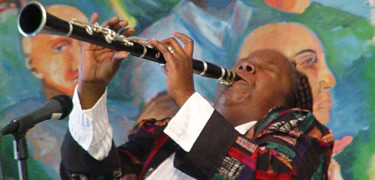
3. Jazz. So many varieties, so many settings. I found myself, a serious person often, just sitting and smiling. National Parks Service has an amazing New Orleans Jazz National Historical Park with excellent ranger led/sung presentations about development of jazz. Snug Harbor offered intimate wonderful show, as did Preservation Hall. Maison Bourbon and others kept me toe tapping, late nite staying out, and amazed at rich jazz traditions.
4. Time with my wife to learn together, talk, walk, worship hand in hand, revel in friendships and our friendship.
5. The level of tech in the convention was impressive. Light years over last year. Bravo to CCAR technology production manager Dan Medwin and the whole CCAR staff for this leap. Showed some best practices in praxis. Plus the tweeting (#CCAR11) of the sessions allowed me to virtually attend those I could not physically get to. And catch the coolness (an usefulness) of the CCAR NOLA app!
6. Rabbis Michael White, Laura Novak Winer, Eric Yoffie and NFTY advisor Kiki Kamenetz inspired me – really moved me – to rethink youth engagement holistically. Can’t wait to talk to youth advisor, rabbinic intern/educator an lay leaders about the inspiration.
7. I felt reached out to, heard, befriended. Of course, being older and more secure may have spurred me to be more open.
8. Continued to revel, by comparison, about my Congregation Or Ami (Calabasas, CA), a healthy, musical, non-dysfunctional, forward thinking, tech-enlightened, partner-filled community, led by talented, non-egocentric leaders. I am so blessed to be part of them.
9. Great music at convention: Jewish Panorama Jazz Band, Shades (New Orleans Interracial Gospel Choir), others. Showed how the arts can bring Jewish experience to new heights.
10. Worship that inspired me, allowing me moments of transcendence and immanence, to converse with the Source of All.
11. A program committee which wove Torah learning, community engagement, and practical rabbinics with small group interactions, fabulous speakers (Peter Beinart and Ammi Hirsch, Peter Block), music and few talking heads. I tip my kippah to you.
Bravo also to the whole CCAR national staff for listening, supporting, and challenging us all.
More to write and process and think about and meditate upon and ask more about… But that’s for later.
New Orleans: 10 Things I’m Looking Forward to Doing
The rabbis of our Reform Movement gather in New Orleans for an annual convention to study, to reflect, and to explore the intersection between Jewish tradition and our daily lives. Being in New Orleans, home to the most devastating hurricane in recent American history, presents an added challenge: how does Jewish tradition respond to the continued dislocation and poverty of many thousands of New Orleans residents? What responsibility do we have for the care and rejuvenation of this city and it’s population? I look forward to grappling with these, and many other, significant issues.
In addition, I would list these as my top ten things I am looking forward to doing in New Orleans:
- Reconnecting with Colleagues and making new friends
- Listening to great jazz, blues and gospel music
- Further exploring Jewish involvement in community organizing
- Discovering what has been done to rebuild New Orleans and grapple with our American responsibility for it
- Reviewing how our community responds to interfaith families and couples
- Learning some thought-provoking Torah
- Walking the alleys and byways of New Orleans
- Raising some much needed new funds for the CCAR
- Deepening some of my rabbinic skills
- Contemplating the Holy One
- Learning about the growth of progressive Judaism in Israel
Or 11 top things…
I’m excited to be there.
Wisdom from Bat Mitzvah Student Lauren: Making God Feel Real
More than anything, I love the individual time I spend with our pre-B’nai Mitzvah students, getting to know them, studying together their Torah portion, and exploring their ideas about God, Torah and Judaism. Without fail, they each surprise me (often teaching me), as they open my eyes to an enlightening perspective on the parasha (Torah portion) or a new way of relating to the Holy One. This week, Lauren Perlmutter articulated an almost universal truth about how some of us relate to God. While her Bat Mitzvah service is still weeks away, her wisdom needed to be shared now.
I asked Lauren what she believes about God. She wrote:
If someone were to ask me what I believed about God, I would say I honestly am not sure. When I am at my Jewish summer camp, Camp Newman, in closing circle, praying before we eat a meal, or doing Havdallah with all my friends, I do believe someone or something is there. It makes God feel real. At home, however, in daily life, I do not always think about God and the religious aspects of Judaism. If I were to take a step back from daily life, maybe I would feel the feeling that I have had with God in the past.
Simple wisdom!
When we are immersed in a clear spiritual experience – Jewish summer camp, the High Holy Day services, a Bar/Bat Mitzvah service, a funeral, a hike in a National Park – God’s presence is almost tangible. Yet as we leave that moment, the experience often recedes as our distance increases.
Here’s where young Lauren’s simple wisdom is most erudite: Were we to take a step back – from the hustle and bustle of our daily lives – putting ourselves purposely, mindfully in a place/ritual/experience/moment that holds spiritual potential, we might feel the feeling that we once had with holiness or the Holy One… with God.
Spirituality – holiness – like wireless internet – is all around us. If we run around so much, if we fail to turn on our AirPorts (wireless internet receivers), we will miss the awesome, amazement that surrounds us.
This Shabbat, take a step back:
- Hike through the mountains
- Walk on the seashore
- Come to Shabbat family services (Bay Laurel Elementary School at 7:30 pm)
- Light candles, make kiddush, bless challah
- Ask your loved ones when they have ever felt close to God
- Read through the prayerbook
- Do yoga
- Meditate
- Talk to God
You might be amazed at the feeling you begin to feel again!
Israel first to set up field hospital in Japan
Or Ami congregant Robert Grossman passed along this news of Israel’s continued humanitarian aid worldwide:
The JERUSALEM POST reports (3/21/2011) that surgery has been established at Minamisanriko, a fishing city devastated by quake; Israel is also providing aid for the homeless.
The field hospital Israel is establishing in Japan is the first to be set up by any nation offering outside assistance, Israel’s Ambassador to Japan Nissim Ben Shitrit said Monday, and the Japanese are extremely appreciative.
Ben Shitrit said the hospital was being established at Minamisanriko, a fishing city 290 miles north of Tokyo, that was utterly overwhelmed by the quake and tsunami and where some 10,000 people are dead or missing. A five-strong Israeli team “is setting up the surgery right now,” the ambassador said. “They are evaluating the needs today, so that a larger team can be dispatched.”
He confirmed Israel was also providing tons of aid assistance – including mattresses, blankets, coats, gloves and chemical toilets — for some of the half-a-million people who are homeless, many of whom are now living in public facilities.
“I don’t know how or why it is that our field hospital is the first,” the ambassador said. “Maybe we moved faster. Maybe it’s because of our experience.”
He said the medical crisis would take a long time to resolve, but that he believed the Japanese government would bring the situation under control in the coming weeks. Appreciation for Israel’s help, he said, was clear in the reporting in the Japanese media and in the grateful response of people in the field.
Asked whether Israel had provided any assistance in grappling with the difficulties affecting Japanese nuclear facilities, Ben Shitrit said no. “That’s an issue for the Japanese and the Americans only,” he said.
Viral Purim: The Story Gone Modern
She Almost Killed the Rabbi This Morning
Early this morning, I lay with arms and legs splayed out across the floor and thought to myself, “I think I’m gonna die. Right here; right now.”
Holy yoga, rabbi. What were you doing?
Just that, Holy Yoga with the Rabbi, Congregation Or Ami’s monthly morning yoga, led by master instructor and congregant Julie Buckley. My teachers in the Institute for Jewish Spirituality encouraged us to deepen our yoga practice by bringing yoga into the synagogue. So we did.
Recently I have let my yoga practice slip – “be forgiving,” I tell myself – but the return to yoga this week was refreshing and wonderfully exhausting. Yet under Julie’s guidance, I realigned my body, and stretched my back, legs and hips. It was challenging for me (though the group was filled with yoga novices to yoga mavens) but rewarding.
Why is a synagogue hosting a yoga group and why is the rabbi allocating time to participate?
With the exception of that momentary death wish (“kill me now so I can be finished”), the hour and a half is centering and mindful. During yoga, I feel at one with my breath, the nefesh chaya, breathed into me by the Holy One. I feel whole, filled with shalom, shleimut. Is this not what is meant when we sing the Shema? Adonai Echad, we sing, God is one… God is the oneness, the Unity that connects us all.
For those of you who do yoga, is it spiritual for you? How is the experience Jewish?
A Jewish Response to the Rabbis Defending former Israeli President Moshe Katsav
On December 30, 2010, a three-judge panel unanimously found former Israeli President Moshe Katsav guilty of “rape, sexual harassment, committing an indecent act while using force, harassing a witness and obstruction of justice.”
Indeed, Mr. Katsav’s many offenses directly hurt not only the citizens he assaulted and demeaned, but, as a leading representative of the state, his actions harmed the government and people of Israel, whose principles, trust, and international image he egregiously violated. Against this shocking and depressing reality, however, the Israeli courts and the media restored a measure of dignity and hope by doggedly pursuing justice and fearlessly speaking truth to power.
Instead of being appalled by Mr. Katsav’s actions and expressing sympathy for his victims, a group of his political supporters comprised of dozens of community rabbis, heads of yeshivot, and other religious educators rushed to his defense following his conviction.
Today, I signed onto this letter by an international group of Rabbis and Jewish religious leaders which opposes the ridiculous and religiously indefensible letter by a small group of Israeli rabbis to support Mr. Katsav. I – and we – affirm our Jewish commitment and support for women’s rights in Israel and around the world. I thank Rabbis for Human Rights – North America for organizing this response.
Raping Our Faith, Assaulting Our Society: A Jewish Response to the Rabbis Defending Katsav
As rabbis and other Jewish leaders, we agree with Israeli Prime Minister Benjamin Netanyahu who said that the conviction of former President Moshe Katsav for rape and other crimes was a “sad day for Israel,” but one which showed that in Israel “all are equal before the law, and that every woman has exclusive rights to her body.”
As rabbis and religious leaders ourselves, we are horrified that dozens of Israeli community rabbis, heads of yeshivot, and other Jewish educators came to the defense of Mr. Katsav following his conviction. In a public letter to the former president, these leading Israeli rabbis slammed the “poisonous media,” urged Mr. Katsav to “be strong and continue to insist on the truth uncompromisingly” and closed their letter by saying “Respectfully yours and with deep appreciation as before.”
We find this rabbinical defense of a violent criminal to be shocking. It is shameful that these religious leaders staked their position in the name of Zionism and Judaism. To speak in this manner, as rabbis, is a hillul haShem, leading to a public denigration of Torah and Jewish tradition. Underlying their letter is a total disregard for the Israeli system of justice, a dismissal of a serious investigation, a willful rejection of a fair and careful trial process.
It may be that the rabbis who rallied to Mr. Katsav’s support have high regard for some of his positive accomplishments. But he has no claim to honor, certainly not to rabbinic praise. “Who is honored?” our tradition teaches, “The one who honors other human beings.” (Pirke Avot 4:1)
We stand united in our support for women’s rights in Israel and around the world. As we learn from the Torah, both male and female were created in the divine image, b’tzelem elohim (Genesis 1:27). It is this shared human expression of the divine image that is both the foundation of equality of all gender expressions and of the Jewish understanding of human rights.
13 Ways a Rabbi Can Help Jews Recovering from Addictions and their Loved Ones too!
Today I will co-lead a class at HUC-JIR in their Pastoral Counseling Course on addictions and how Rabbis and congregations can be helpful to Jewish addicts, alcoholics and co-dependents. For eighteen years, I have been blessed to work with Jews with addictions. I have learned so much from people in recovery about spirituality, perseverance, healing and hope, about God and teshuva (repentance).
Through self-study of addictions and recovery literature, running retreats for Jews recovering from addictions, study sessions around holy days, mentoring rabbinic interns on how to support Jews in recovery, and from a week of addictions counseling and spiritual care training at Minnesota’s Hazelden Addictions Treatment Center, these 13 guidelines/suggestions for Rabbis became apparent:
- Be Comfortable with 12 Steps: 12 Steps and Judaism are fully compatible. The 12-Steps parallel Rambam’s Laws of Repentance and Rabbenu Yonah of Gerona’s Gates of Repentance. One can work the 12 steps as a believing Jew!
- Show parallels between 12 Steps Spirituality and Judaism: Jewish D’veikut (clinging to God): Jews CAN turn themselves over to a Higher Power. Some Rabbis question the “Jewishness” of the 12-Steps because of the latter’s call that addicts “turn themselves over to the Higher Power” (e.g., to become a servant to God’s Will). To some, this seems to clash with Reform Judaism’s historical opposition to blind faith. Yet it is not so! To quote Lawrence Kushner’s Perush on Likkutei Yehudah’s citing of the Sefas Emes, Yehudah Aryeh Leib of Ger:
- To be a servant is more than being servile; it is carrying out the will of an ‘Other.’ It is being the agent, the instrument through which what is supposed to happen, happens. A good servant is always aware of the importance of his [her] act, and this gives heightened meaning to his [her] life… Everything we do, and everything we do it with, and everywhere we do it is filled with the Presence of God. We are free to choose whether or not we will be aware of it, whether we will be servants. That is Jewish spirituality.
- Help remove the Busha (Shame): Each morning a Jew rises to say, Elohai, neshama sheh-natata bi, t’hora hee! – My God, the soul that you have given me, it is pure! Judaism, when applied correctly, helps lift the shame connected with being in recovery. We remind ourselves that though as addicts/codependents we may do, or may have done, terrible things with our bodies and minds, our essence (our neshama, soul) remains pure. This is true, because how else could we rise each morning after a day filled with terrible acts and still say “Elohai, neshama she-natata bi, t’hora hi!”?
- Be Amazed at the Spiritual Power of 12 Steps: People who are in recovery are amazing in their spirituality. They know that they have to turn it over to a Higher Power to recover. God is not a metaphor; the Higher Power is reality in their life. They know that their Higher Power is saving them from certain death! Wow! Soak in their belief and spirituality. Learn from it how to speak to others.
- Don’t Try to Fix the Addict: If he is in recovery, chances are he got there without your (or the Jewish community’s) help. If she is an addict, you cannot make her recover. Rather, listen, and be non-judgmental. The 12 Steps teach the three C’s: You didn’t Cause it. You cannot Control it. You cannot Cure it. The addict has to do the work. You can be there to be open, listen and accepting.
- Welcome them into (or back into) the Jewish community: Many addicts and their families live with shame (see #3 above). Provide them with Jewish resources, including prayers, and Twersky or Olitzky books (Jewish Lights Publishing). Invite them to study with you.
- Buy the Big Book of Alcoholics Anonymous: Display it prominently over your shoulder. Read it to see how real people find spirituality and God’s help.
- Refer to Addiction Recovery and Codependency Help: During Mi Shebeirach d’var refu’ah (words prior to Healing prayer), mention the category of people struggling with addiction and codependency (by category, unless they give specific permission to say their answers) among those for whom you ask for healing.
- Open your Synagogue to 12 Step Meetings: Publicize widely, attend if it is an open meeting.
- Remember that people in Recovery often “fall off the wagon” multiple times: Be aware of this. Be open to this reality. Don’t be angry when they do; don’t be too hopeful when they are in recovery. Be non-judgmental.
- Know that Addicts lie.
- Write a sermon and bulletin article about addiction and recovery every few years.
- Read and become familiar with www.JACSweb.org, the website of Jewish Alcoholics, Chemically Dependent Persons and Significant Others.
Top 10 Reasons Why the Rabbi Should Work Carpool Duty
18 plus years in the rabbinate – seven of them since I formally ran any kind of religious school – and I find myself reassigned to carpool duty.
- Parents love the juxtaposition of the synagogue’s most senior staff member doing one of the most mundane of jobs.
- Carpool duty allows rabbis to have a conversation with at least dozen congregants while waiting for school to dismiss.
- It brings smiles to faces when the rabbi is able to warmly welcome our students as they arrive each day.
- After sitting in an office all day, it is refreshing to get out to breath the fresh air.
- Pre-pick up carpool line offers a great opportunity to schedule needed meetings, iPhone to Blackberry.
- Helping ensure the safety of each student is the first priority of every synagogue staff member, including the rabbi.
- People are sometimes more willing to share important concerns while sitting in the privacy of their own cars than they would sitting in the rabbi’s office AND/OR the carpool line conversation offers the immediacy to share an important piece of information, alleviating the need to call and/or set up an appointment.
- The staff love seeing the rabbi pitching in, especially with carpool duty.
- When parents see that the rabbi “needs to do” carpool duty, they are more apt to volunteer to help out.
- In this very difficult economy, its always good to have a second set of skills that I can fall back on, just in case…
3 Documents about Creating Jewish Community
For the Rhea Hirsch School of Jewish Education of HUC-JIR (LA and NY):
- Congregation Or Ami’s Vision and Values
- Creating Community through Technology
- Welcoming New Members and Guests
- Jewish Spiritual Seekers Blog
- Illuminating News eNewsletter
- Spirituality Along the Journey, Rabbi Kipnes’ eLearning
- Twitter.com/CongOrAmi
- Twitter.com/RabbiKip
Who Says You Can Never Go Home? OR Back to Bay Laurel

Or Ami veteran member Bill Harris writes:
When my wife Karen and I were new to California, we did the “shul shopping” thing and I had pretty much given up when she convinced me to go to one more. When we drove up to an elementary school in Calabasas, I turned to her and gave her my “what the…” look, to which she said, “Come on, you’ve heard the Cantor and liked his music. Give it a try.” I said, not so quietly, to myself, “In an elementary school utility room?”
When I came through the door and was greeted so warmly and welcomed by people I’d never met before; it felt good. When the congregants learned we were looking for a new spiritual home, they shared their love of Or Ami with us. They noted that our first Shabbat there was their new Rabbi’s first there, too.
And then the music started. At 7:30 PM precisely! And I did recognize it, and I did enjoy it, and our search ended.
Tonight, since temporarily moving out of our sanctuary while it is remodeled, we have the chance to roll back the clock in a way, and all join together for Shabbat services at Bay Laurel Elementary School! As we wander about during the remodeling, we have an opportunity to gather together like we did 12 years ago — remember Carly (then a young child) wandering around and sitting with any one of us she chose, climbing up on the chair next to you or into your lap while Cantor Doug sang?
We have the opportunity to share that special sense of being at home with family for Shabbat, even though it was an elementary school utility room with fold up chairs and the Torah on a card table. Come join us, bring your friends, bring our “newer” congregants with you, and share that wonderful feeling we had as we celebrated Shabbat together in our once-a-week home, strangers and friends and families all together as one.
Oh, by the way, there will be a really interesting guest speaker at the Adult Study service as well: Rabbi Denise L. Eger of Congregation Kol Ami (West Hollywood) will discuss “Civil Rights in Our Time: Marriage Equality and Why It is a Jewish Issue.”
I hope to see you tomorrow night at Bay Laurel, 6:30 PM for a wine and cheese reception, and services at 7:30 PM. Feel free to share this with anyone you think would want to join us (or those who may have missed those “pioneering days” at Bay Laurel).
Best regards,
Bill
Seeking Justice, Mercy and Humility: A Jewish Response to Marriage Equality
The prophet Micah (ch. 6) asks a question which many of us, in the quiet of our own thoughts, do (or should) ask ourselves: Man (or our society) has told you what is good, but (by contrast) what does God require of you? Micah, speaking as a mouthpiece of the Holy One, answers thus: Only to do justice, love mercy, and walk humbly with your God.
Whenever we approach a difficult situation or issue in our lives, our prophet urges us to consider: What does it mean to “do justice?” How can we “love mercy?” Where does “humility” come into play in our lives? This should be the central values discussion of our time.
Speaking Out on Jewish Values
However, as Rabbi David Saperstein, director of our Religious Action Center of Reform Judaism in Washington DC, has declare so eloquently, the Christian Right has successfully hijacked the values discussion (and the social policy decisions that result) by presenting a one-sided view of the significant social issues of our time.
Nothing has been more successful for the Christian Right than their demonization of the issue of gay marriage. Many states have passed ballot initiatives to ban gay marriage by large margins, truly energized by a voting bloc who supports keeping marriage as a purely heterosexual institution. Is this “doing justly?” We have heard loudly and clearly from the Christian right on this issue. Shouldn’t we hear also from our own Reform Jewish tradition about its perspective on this issue? So, what does Reform Judaism think about such things?
Jewish Views on Human Sexuality
In its far-reaching report on Human Sexuality, the Ad Hoc Committee on Human Sexuality of the Central Conference of American Rabbis (CCAR – Reform Rabbis organization) identified nine values as being significant to Jewish values on sexuality: B’tzelem Elohim (living in the image of God), Emet (truth), B’ri-ut (health), Mishpat (justice), Mishpacha (family), Tziniyut (modesty), Brit (covenantal relationship), Simcha (joy), Ahava (love) and Kedusha (holiness). In defining these values, the committee drew from traditional sources, evolving social norms and modern Jewish commentaries.
Central to the definition of kedusha (holiness) was the notion that In a Reform Jewish context, a relationship may attain a measure of kedusha when both partners voluntarily set themselves apart exclusively for each other, thereby finding unique emotional, sexual and spiritual intimacy. Ultimately, after reviewing Jewish sources and attitudes, the Ad Hoc Committee on Human Sexuality was led to conclude that kiddusha (holiness) may be present in committed, same gender relationships between two Jews, and that these relationships can serve as the foundation of stable Jewish families, thus adding strength to the Jewish community.
Of course it makes sense that our Reform Jewish institutions would understand the evolving nature of human relations in this way. As Rabbi David Freelund (of my parents’ synagogue in Hyannis, MA) explained years ago in an article on the Reform Jewish perspective on marriage equality, “Reform Judaism has long been on the cutting edge of social issues and civil rights in America. Women’s rights, racial equality and religious freedom have long been dear to us.” Rabbi Freelund continued:
The Religious Action Center for Reform Judaism lobbies on Capitol Hill on issues of importance to the movement. One of the arenas in which social activism of Reform Judaism has been prominent is in the area of gay rights, the idea that sexual orientation should be of no consequence for choices in profession, religion, personal or family status. But why?
Current credible medical and psychological authorities or bodies do not agree that homosexuality is somehow “abnormal” behavior. In fact, our best medical and social scientists can tell us that there is a normal spectrum of human sexual behavior, including both hetero- and homosexuality. This spectrum has been with us throughout recorded history and always will be.
What about Biblical Texts that Seem to Call Homosexuality an Abomination?
Clearly, the thrust of our rabbinic tradition has been to read these texts as condemning all homosexuality. However, these texts, as read in recent scholarly works and rabbinic teshuvot (opinions), may be understood to be specifically condemning only adulterous homosexuality (married people having sexual relations outside of their marriages) or homosexual rape (the concern of the story of Lot and Sodom).
Understood in the light of these studies, the deeper lesson of Torah takes precedence. Judaism and Torah teach that we are all are created b’tzelem Elohim, in the image of God (Genesis 1:27). Being created in God’s image means that each person is valued, worthy, and sacred. Such love – between mature consenting individuals – is similarly holy. Gay or straight, bisexual or transgender – the people, their gender identities, and the ways they make love – are blessed. The Torah teaches that; our tradition affirms it. Those who read it any other way may be quoting the Bible as others have read it, but are misreading the Bible for their own outdated and non-moral perspectives and purposes.
Where Does the Reform Jewish Movement Stand?
In that light, Reform Judaism embraced full inclusion of gays and lesbians in our congregations in 1977. The CCAR even adopted a resolution that year calling for legislation decriminalizing homosexual acts between consenting adults, and calling for an end to discrimination against gays and lesbians. The United States Supreme Court acted on this issue, casting aside any legislation restricting the bedroom behavior of consenting adults. The CCAR was well ahead of the curve.
In 1990, the CCAR endorsed a position urging that “all rabbis, regardless of sexual orientation, be accorded the opportunity to fulfill the sacred vocation that they have chosen.” The committee endorsed the view that “all Jews are religiously equal regardless of their sexual orientation.” The admissions policies of the Hebrew Union College-Jewish Institute of Religion were changed to state that the “sexual orientation of an applicant [be considered] only within the context of a candidate’s overall suitability for the rabbinate,” and that all rabbinic graduates of the HUC-JIR would be admitted into the CCAR.
Our Reform Jewish institutions have embraced full equality and are committed to it. Our religious ideals will be challenged in the years to come. In 2000, the CCAR resolved that each of its members was free to act to his or her own conscience in performing same-sex weddings, and that liturgy and rituals should be developed to make these ceremonies meaningful and immersed in the holiness marriage. This and much more has been done.
Reform Judaism stands today in support of [the many different kinds of families] in our congregations, and in support of spousal relationships that create Jewish homes and bring holiness into the world. We are committed to a policy of inclusion and freedom for our rabbis to marry those couples they see are Jewishly-committed, regardless of gender or orientation. It is time for our states and our country to recognize marriage equality as an enshrined corollary of our American freedoms.
Do Justice, Loving Mercy and Walking Humbly with our God
We, the people who recall the words of our sacred Scriptures – You shall not oppress a stranger, for you know the feelings of a stranger, having yourselves been strangers in the land of Egypt. (Exodus 23:9) – seek to do justice. We, people of faith who try to love mercy, defend vigorously the dignity of every human being, consistent with the principle that each of us is created in the Divine image. While we respect those who may be single, we uphold the values of marriage and family. Marriage, imbued with the values of exclusivity, permanence, intimate companionship, and love, provides fulfillment for each partner and adds to the common good of the community. Thus, in an attempt to walk humbly with our God, we affirm that every human being has an absolute right to such fulfillment, and that the loving, committed relationships of same-sex couples have the same potential for kedusha (holiness) as those of heterosexual couples.
I look forward to the ability to marry our gay or lesbian congregants to their beloveds, in ceremonies recognized by the state and our country. May that day come speedily.
As always, I invite you to join me in a discussion on these significant Jewish issues. Email me at Rabbipaul [at] orami.org or call me to set a time for us to get together and talk.