Category: blog archive

Why Do the Good Die Young? Resources for Thinking about Death

Today our community gathers to bury Dean Hilborne, a young 53-year-old man, who leaves a wife and 2 teenage children. We will struggle to find meaning in his death; we will grapple with how to talk about this loss with our children and our loved ones. Here are a few resources to help:

Reflections on Tragic Deaths: Why Do the Good Die Young? A Conversation with God

What a pair of months February and March were last year; so much tragedy. A 13-year-old was killed crossing the street. A vibrant teenager – a student at our local New Community Jewish High School – was lost in a car accident. A 21-year-old rabbi’s son was struck down by a car while at college. A 42-year-old mother – our congregant – died in a snowboarding accident. A 49-year-old “pied piper” of a man – another congregant – dropped dead from a heart attack. Thousands of people came to the funerals.

I noticed that God attended each funeral, but amidst the many tear-filled eulogies, there wasn’t time for God to speak. So God sat quietly at the side – listening, crying. God left quietly after each funeral ended, and almost no one realized that God had been there. I did take notice. Wondering what God might have said had God been invited to deliver a eulogy, I dashed out after the Holy One. Still reeling from these funerals, I wondered if God could make sense of these senseless deaths. I asked if God had time to talk, and God was willing. We strolled through the cemetery, talking quietly.

***

Man: So God, what did you think of the funerals? (Read more)

To Fast or Not to Fast… Think about This

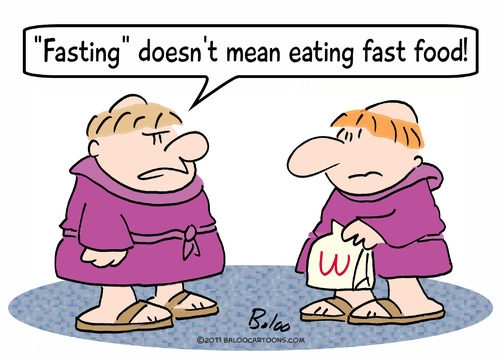
Yom Kippur, unique among the Jewish holy days, lacks its own culinary customs. Aside from the break-the-fast, which though historically was done without fanfare but now might even be catered affairs, Yom Kippur is the only major holy day not tied to food. Jews fast for the 25 hours.  At least most Jews do.

Should you fast?  Why bother? What is the meaning of the fast?

It is about Getting into the Fast Lane 
for a More Meaningful Holy Day

Michelle and I have noticed that in preparing for visits by my parents, we talk little with my folks about the places they would go or the things they would do. However discussions about food consume inordinate amount of time and attention. What will we eat? Where will we eat? This we talk about. Should we go out to dinner or will Dad cook up one of his gourmet dishes? Before one sumptuous multi-course meal ends, we are caught up discussing what we would eat next. Michelle and I just laugh because this food fetish is played out in similar ways at her family gatherings. Ah, the ties that bind.

Still, as humorous as these discussions are, they border on discomfort. Why are we all so obsessed with food? And why does this obsession seem so Jewish? Just to raise that question is to invite a din of jokes: “What else do Jews do but eat?” We are obsessed as people with food: whether by the minutea of keeping Kosher, or by our passion for the unkosher delights of Chinese food.

Rabbi Arthur Waskow, author of Dawn to Earth Judaism, suggests that this focus on food is very Jewish. Nearly every Jewish holiday involves the consumption of food. On Passover, we gather and pray around a dinner table, eating foods to symbolize our exodus to freedom. Shabbat begins with a family sit down dinner and does not conclude until a seudah shleesheet, a third meal before sundown. Hanukkah has its latkes and sufganiot (donuts), Purim has its hamantaschen, and Shavuot has its dairy (or in our tradition, sumptuous cheesecake). We eat to usher the New Year and Rosh HaShana. We eat to end Yom Kippur. In fact, many Jews define themselves in relation to the food they eat. “I keep Kosher”, “I eat treif”. “I’m a bagels and lox Jew.”

Rabbi Arthur Waskow notes that Jews can trace back to our Biblical beginnings. Many cultures have a tale of the first rebellion, the first painful crossover into making a painful history. In some, like the Greek mythic tales, it is an act of murder. Or sex. Or stealing fire. Or creating knowledge. But of all possibilities, what did Jewish culture choose as the symbol for beginning history? Eating. Did the fruit-eating episode from the Garden of Eden myth focus our anxiety about the world on food? Or did the reality of our everyday lives give shape to the myth? We may never know. What we can conform, however, is that behind the jokes we tell today there is a delicious reality of long ago: that food was simultaneously so important and so problematic to the ancient Israelites that they gave it a central place in their culture and that they gave it publicly, clearly, consciously rather than covered and uncovered by jokes. They created what Rabbi Waskow calls “a sacred history of food”.

Given all this focus on food in Judaism, doesn’t it strike you as ironic that on one of the holiest days of the year, Yom Kippur, we Jews are told to reign in on this natural impulse to eat? Doesn’t it seem preposterous that the people who brought compote to the new world should be expected to fast? Rabbi Harold Kushner, author Why Bad Things Happen to Good People series of books, jokes that if the message of the free market economy is that there is no free lunch. the message of Yom Kippur is that there is no lunch.

Why do we fast on Yom Kippur? I suspect that many of us, those who will observe the day-long fast on Yom Kippur and those who will excuse themselves from it, misunderstand the reasons. We don’t fast to make up for all the self-indulgence we permit ourselves during the rest of the year. If that were the reason, we would have to fast for much more than one day to do that. And we don’t fast so that God will see our discomfort and feel pity for us and grant our prayers. This was the mistaken understanding of the people who confronted the prophet Isaiah in the Yom Kippur Haftarah portion, who said “What’s the matter with God? We’ve fasted all day, we’ve bowed our heads like a tree in a storm, we’ve made ourselves miserable. Why hasn’t God answered our prayers?” When you think of all the people who are really suffering in the world, who are starving and dying, how could it ever have occurred to us that God should have to make something up to us because we’ve skipped lunch? No, the purpose of our fasting is not to send a message to God, but to deliver a message to ourselves.

Rabbi Harold Kushner suggests that fasting exercises our soul. Let me explain. The relevant passage in the Torah says v’initem et nafshoteichem, which in the 16th century King James Bible translation was rendered “you shall afflict your souls.” That is, we fast to make ourselves suffer because that’s what we deserve. That may have been the theological outlook of 16th century England, but I’m not sure that was what the Torah had in mind. Modern scholars take the words v’initem et nafshoteichem to mean “you shall restrain your instincts, you shall practice self-control.”

We are asked to fast on Yom Kippur not to afflict ourselves but to glory in the fact that we are human. We can do what no other living creature on the face of God’s earth can do; we can say No to instinct. We can be hungry, but we choose not to eat. We can be angry, but we do not strike out. We can be sexually attracted but we restrain ourselves. No other species can do that.

When you think about it, how much of the suffering in today’s world is caused by people who cannot say “No” to instinct? The man or woman who eats too much or drinks too much or takes drugs, and hates him or herself for it. The person who is hurt or angry, and just wants to go out and hurt somebody to get even. The basically honest person who has access to other people’s money and cannot resist taking some of it for him or herself. And when these people try to excuse themselves by saying “what do you want from me; I’m only human,” Judaism’s answer is “to be human means precisely to be able to say No to temptation, to instinctual drives.” Human nature is different from Nature. In the world of Nature, if you’re hungry, you eat. If you’re sexually aroused, you mate. If you’re stronger, you take what you want. But in the world of human nature, you control your instincts, they don’t control you. That is why the Jewish religion is so supportive of 12-step programs. People in need turn to God for help controlling their natural instincts.

You might think of it this way: there may come a time in your life when your future happiness will depend on being able to say No to something very tempting. It may be a shady business deal; it may be an illicit sexual involvement. Whatever it is, you will know that it is wrong but it will be very tempting. If all your life, you have had no experience saying No to temptation, if all you life you have been told that if you want something, you can have it, what are the odds you will get it right now when so much is riding it? But if your experience as a Jew has been a whole series of moral calisthenics, exercises in overriding instinct, what does that do to your chances of getting it right? So we jump into the fast lane, we fast on Yom Kippur, to teach ourselves that we can do it, that it is not that hard to say No to instinct and to learn that “I am human” is not a confession of weakness but an affirmation of real strength.

A second reason to fast involves death and rejoicing. A paradox, no? People ask me how I am able to officiate at funerals regularly without becoming depressed. I answer that I am terribly saddened by the loss of life, even in cases when I did not know the deceased. In fact, I often shed tears when the circumstances of death hit close to home. Yet I have found that the responsibility of ushering others though the valley of the shadow of death yields an unintended, joyous benefit. It constantly reminds me about how precious life and love ones are. After every funeral I try to clear the air with those whom I am in conflict and I make a point to say “I love you” to my family and friends. So paradoxically funerals help me rejoice at the richness of my life. V’eizeh hu asher? Who is a rich person? asks our tradition? HaSamay-ach b’chelko “The one who is happy with his or her portion.”

Fasting on Yom Kippur, teaches my friend Rabbi Ramie Arian, forces us to confront the reality of our death and to rejoice in God’s forgiveness. Yom Kippur is the day on which we ask ourselves, as it were, “if I were to have died today, how would I measure up? How would I be judged?” Fasting is one of several rituals that help us get into the mindset to face this question, by imaginatively pre-enacting our own deaths. Other Yom Kippur customs — refraining from wearing leather, refraining from shaving or washing and wearing kittel — echo mourning customs. Through fasting, we face our own deaths in order to appreciate our lives and ultimately to make changes necessary so that our lives will become more worthwhile.

The late Rabbi Pinchas Peli, a Jerusalem-based Torah Scholar, observes that while eating, tasting delicious foods, touches us on a personal experimental level, it must not remain a trip of “self purification.” This final reason for fasting is one of the oldest. In the Haftarah portion we read on Yom Kippur, The people ask, “Why should we fast if the Eternal God never notices? Why should we go without food if God pays no attention?”

The prophet Isaiah reminds us that the purpose of the fast is to call on us to fulfill our obligations to society and that the way to get closer to God is by caring for people. “In the Haftarah, God says to them: “The truth is that at the same time you fast, you pursue your own interest, and oppress your workers. Your fasting makes you violent and you quarrel and fight. Do you think this kind of fasting will make me listen to your prayers? When you fast, you make yourselves suffer, you bow your heads low like a blade of grass and spread out sackcloth and ashes to lie on. Is that what you call fasting? Do you think I will be pleased with that?”

The kind of fasting I want is this, God says: Remove the chains of oppression and the yoke of injustice, and let the oppressed go free. Share your food with the hungry and open your homes to the homeless and the poor. Give clothes to those who have nothing to wear and do not turn away from the needs of your own kin.” Fasting is important explains the prophet. But fasting must be accompanied by changes individual and societal behavior for it to have any meaning.

It is Yom Kippur. We gather together for a day of self reflection and renewal. We will search our souls and examine our deeds to assess how we have measured up to all that we could be. Our tradition teaches that this is hard work. Our tradition demands that we make changes. Our tradition offers rituals, including fasting to help us jump start this spiritual quest. On Yom Kippur Jews pray and on Yom Kippur Jews fast. Why not try it? Or try it again? Make Yom Kippur meaningful this year slow down and try to enjoy life in the fast lane.

G’mar Chatima Tova – May you be sealed for a blessing in the Book of Life.

Video: Kindergarteners Show Us How to Begin Teshuva

Saying “I’m Sorry” is not always easy. It can be uncomfortable or downright embarrassing.  Still, we learn from the Talmud that on Yom Kippur, for the ways we have harmed others, the holy day does not atone until we make peace with that other person.

Kindergarten students from Congregation Or Ami’s Mishpacha Family Alternative program, led by Mishpacha Coordinators (HUC students) Sarah Lauing and Lisa Berney, made this video to begin the work of teshuva (repenting our mistakes).  Teshuva never looked cuter!

Hearing from the Coaches: Most Anxiety-Provoking Moments of the whole High Holy Days

Sometimes the most anxiety-provoking moment of the High Holy Days arrives well ahead of when I actually deliver my sermon. The anxiety bursts forth between the time I send a draft of the sermon off to my respected reviewers and the moment when I receive their suggestions/edits/critique.

A recent article shed light on the value of professional coaches. Top surgeon Atul Gawande wrote Coaching a Surgeon: What Makes Top Performers Better? in this week’s The New Yorker magazine.  He explore the question: Top athletes and singers have coaches. Should you? 

I have long been a believer that all professionals, even rabbi – especially rabbis, can benefit from personal coaching. In fact, by the time I arrive on the bimah and begin speaking, I have already subjected myself to the critiques of at least a half dozen people. In fact, their opinions make the difference between an adequate sermon and one which has the potential to inspire and motivate. In a good year, I will have practiced delivering my sermon before a few different colleagues or friends to ensure it is “listen-able”.

In a sense, these reviewers are my sermon-writing coaches. Their help, like the yoga instructor that pushes me, often causes me much discomfort. (But out of comfort, they say, comes wisdom.)  My coaches help me say what I need to say in a way that makes sense and can be heard. They help me cut away the fat (some of which I had originally thought were gems); they push me away from frontal “preaching” toward engaging “storytelling” or “teaching.”

They remind me to envision 5-7 different listeners and to consider ahead of time how they might hear the sermon. Humbling as that exercise often is, it regularly forces me to widen my comments to minimize the number of people who are left behind. I long ago became a firm believer that good writing and good preaching emerges from the collaboration and coaching by thoughtful people.

I make a special point of thanking these people in the first endnote on my final publishable copy of the sermon. For my recent sermon, A Letter to My Sons: On Being a Man, I thanked them thusly:

This sermon owes a debt of gratitude to a series of people whose input, comments and edits enhanced this sermon. Rabbi Ronald Stern (of Stephen S. Wise Temple, Los Angeles, CA), Dr. David Rubin (Sherman Oaks, CA), and Rabbi Julia Weisz (of Congregation Or Ami, Calabasas, CA) each offered important insights. Rabbi Dan Moskovitz (of Temple Judea, Tarzana, CA) has long been teaching Jewish men how to be “good men”; he opened his treasure trove of resources via www.Dropbox.com. By far the greatest assistance comes from my wife Michelle November (Associate Director of Admissions, New Community Jewish High School, West Hills, CA), who as usual helped me translate good ideas into comprehensible sermons. This sermon also draws upon knowledge gained as a “social sermon.” On Facebook and Twitter, I asked a series of questions, including, “What should I tell my kids about being a man?” and “What should I tell my kids about sex?” More than two dozen responses from congregants, friends and colleagues influenced this sermon.

Yes, this sermon received intense going over by:

  • One colleague who currently teaches Homiletics (sermon writing/preaching) in the Rabbinical School of HUC-JIR;
  • Another colleague is one of the emerging experts on my chosen topic (the American Jewish male);
  • A third colleague is a newly ordained colleague at our synagogue; I believe that through coaching each other, we develop a learning relationship that makes each of us a better rabbi;
  • A psychologist doctor who has long been providing me with insights for sermons and on how to handle pastoral issues when they arise;
  • My wife Michelle who is a master editor, a merciless surgeon of unnecessary or toxic words, and a compassionate yet unforgiving truth-teller.

Over the years I have received coaching help from a Roundtable group of rabbis and social workers, a Spiritual Director, an executive coach, a Hebrew teacher, various yoga instructors, and a series of chevruta partners.

How about you? Where do you receive personal or professional coaching?

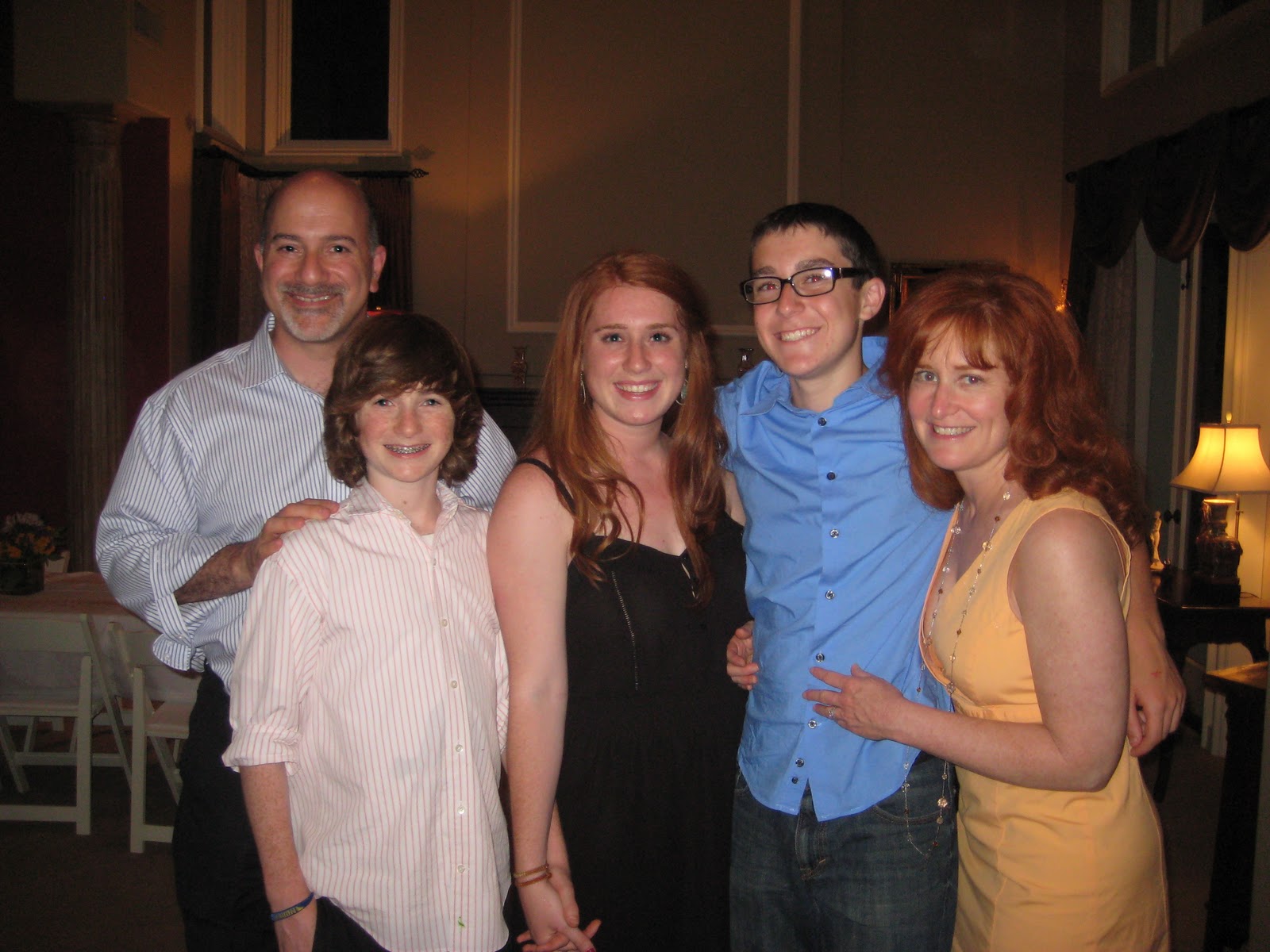
On Being a Man: A Letter to My Sons

Download a PDF of the sermon, complete with references, text sources and thank you’s.

And the call went out from God to Abraham: “Take your son, your only son, the one you love, Isaac, take him on a journey, out into the wilderness. It is time for some male bonding. Where you are going is now not important; the conversations you will have are crucial. V’ha’aleihu sham l’olah (Genesis 22:2). Bring him up there as a burnt offering.”

STOP! We need some clarification on just what God meant.

The Hebrew root Ayin-Lamed-Hey means to go up. Thus the word is usually read as olah meaning burnt offering, as in the smoke of the sacrifice goes up to God. But since there are no vowels in the Torah, you could translate that last word – Ayin-Lamed-Hey – not as olah meaning burnt offering, but as aliyah meaning spiritual uplift. Thus God might have meant, “Bring Isaac up for an aliyah, to the top of the mountain for spiritual inspiration. Teach your son about Me, the Holy One. Share with Isaac the unique responsibilities about being the patriarch of a large family. Guide him on how to balance the work and his marriage; how to make time for his children. Listen to his dreams; help alleviate his fears. Teach Isaac about love. Abraham,” God said, “Prepare your son Isaac to become a man.”

From all I have read and studied about this Torah portion, I believe with all my heart and mind that Abraham misunderstood God’s call. Abraham tried to sacrifice his son to pursue his own passions. Like so many parents, Abraham abdicated his responsibility to mentor his son into manhood. And as the Torah tells it, Isaac consequently became a weakened man, unable to manage his relationships, ill equipped to lead his people. And his father Abraham died without having Isaac by his side. Neither of them ever recovered from that missed opportunity.

We need not be like Abraham. We can and should take advantage of every opportunity to mentor young men on what it means to be a man, just as we need to mentor young women into adulthood. We seem to do a far better job mentoring young women these days.

Ralph Waldo Emerson once said, “The true test of civilization is not the census, nor the size of cities, nor the crops … but the kind of man the country turns out.” I believe we are at a crossroads in America, as so many boys grow up without a father, and so many fathers abdicate their responsibility to mentor their sons into manhood.

Twenty or thirty years ago, rabbis were giving sermons about expanding the opportunities for women in Jewish ritual and in synagogue leadership. We were speaking about breaking through the glass ceilings that kept women from full participation in Jewish life and the business world. Today, we find ourselves in a different place, needing to address men and their involvement in Jewish life and their children’s lives. In fact, our national Reform Jewish movement, the Union for Reform Judaism, and the Greater Los Angeles Jewish Federation, share that concern, and are devoting substantial money and significant staff time to address the question: “What does it mean to be a Jewish man?” In fact, the Jewish Federation is sponsoring a Father-Son Retreat, It’s a Guy Thing, on December 2-4, 2011.

We all – those who have sons and those without – have a stake in the kind of men our communities raise up, because like women, they will grow up to teach in our universities, govern in our legislatures, and pull the triggers in our armies. Those of us who raise boys into men need to remember that there are things important and unique about the male mind and body that deserve to be cultivated. For those of us who mentor men – whether at work or at home, in the classroom, on ball teams or in art studios – we should consider wisely the kind of men we want to produce. Those who love men might remind those men and ourselves about the unique qualities that make a man “a good man.” Whether we are hiking with the boys or relaxing with a younger colleague, whether coaching on the ball field or helping with the homework, let us transform each encounter with a young man into a teachable moment. Or, if you are a rabbi, you might seek out a uniquely private moment for that deeply personal talk with your sons. Be like me and catch them when they least expect it, like during the middle of the sermon on Rosh Hashana morning.

***

Here’s my letter to my boys. Perhaps you will find meaning in it for your own mentoring conversations with your sons or grandsons, your nephews or sons-in-law, or with others for whom you feel a responsibility to help guide.

***

Dear Daniel and Noah,

I have been watching you closely, realizing how quickly you are growing up. I cannot believe how fast the time has flown by since you last were my little boys, kids who I could toss around the pool or wrestle with without worrying that someone (me) might get hurt. Then Daniel began to drive. Then Noah began to shave. Sooner than I will be ready, you will be on your own – living, learning, working, and loving.

I remember the day that Mom and I named each of you. You were so little, so cute, so vulnerable. We chose names which connected you to our family and our Jewish tradition. We picked names that reflected compassion, confidence, and strength. We aimed to teach each of you to be a mensch, a kindhearted, caring man. Yet ultimately we knew that you alone would determine the name by which you are known in the world.

Being a man is about character. Men, real men, know that manhood is not about size; it’s about quality. The quality of your character ultimately means more than the size of your portfolio. We Americans admire character – like the people who blow the whistle, and the FBI agent who pointed out deficiencies in the agency before 9/11. We admire people who risk life and liberty for a cause, like Dr. Martin Luther King Jr., and Oskar Schindler, and the 9/11 firefighters. But character is also born in a thousand bit parts that never get written up. What you choose to do when the clerk gives you the incorrect change. Whether you give up your seat on the bus for an older person. How calmly you react to someone who is being rude. The best index to a person’s character is (a) how you treat people who can’t do you any good, and (b) how you treat people who can’t fight back.

Judaism teaches that we all were born with a yetzer hatov, an inclination to do good. Insulate your soul for good by following that conscience. Because being a male may be a matter of birth, and being a man is a matter of age, but being a gentleman – a mensch, a good person – is a matter of choice. Strive always to be a gentleman.

Anthropologists suggest that because men cannot birth children, men strive instead to create things and conquer things – in business, in court, or with smart bombs and battleships. That drive in both men and woman is called the yetzer hara, the inclination toward chaos and egotism. The yetzer hara can easily overwhelm our yetzer hatov, the inclination to do good. Especially when we add testosterone into the mix.

How many times do we read about sport players who have temper tantrums on the court or who use steroids? Who can count the number of celebrities who break marriage vows with a string of affairs? In a culture that counsels us to be the best, the most powerful, wealthy, and hyper-sexed, we must empower our yetzer hatov, the inclination toward good, to set us straight. My sons, be honest, be thoughtful, and be monogamous. Treat women and other men as equals and never discriminate against people of a different background, religion, race, or orientation than your own.

Noah and Daniel, one day I hope you will bless Mom and me with many grandchildren. Kids are wonderful and frustrating, inspiring and exhausting. From the moment they are conceived, children become your blessing. Both parents, whether married or not, have the lifelong responsibility of helping to raise them. So be an involved dad or granddad. There will be no deadbeat dads in our family. And if you don’t have children, be involved in the mentoring of others. We all have responsibility for the next generation.

Your children will carry on your influence long after you are gone. Fathers can model for their kids how to be mensches. So be a positive Jewish role model for your children. Let them see you at your best – with your friends, with your family, in the Jewish community and within your career. Help them with homework, play with them in the park, and listen non-judgmentally to their problems. As a parent, you will – necessarily – develop new skills. I got to learn how to hit 250 baseballs in a row and how to throw a Frisbee forehand, because these activities make you happy, and give us time together. Do the same for your own kids.

Being a man is also about working. Many men get a lot of their self-esteem from their work. So seek out a career that you find meaningful. Jewish tradition takes seriously our behavior in our work. According to one tradition, when we die and arrive at the gates of heaven, the very first question we will be asked is Nasata v’natata b’emunah? Did you deal honestly in your business? This question is not just about buying and selling. It’s about integrity. Did you act with honesty in your business relationships? Did you treat your co-workers and subordinates with respect? The question presupposes that we all harbor within the ability to cheat, lie and steal and that our business ethics will be tested every day. So resist the temptation to take advantage of people. Be someone in whom others can put their trust. Own up to your mistakes.

Remember that time in Palm Springs when we drove around for an hour looking for a restaurant? While men tend not to want to ask for directions, nevertheless seek help when you are confused, lost or in pain. And delve deeply beneath your anger to find the sadness hidden beneath. That will help you heal more quickly.

Remember that money is just a tool, not an end in itself. Money opens up opportunities but working around the clock will not quell the longings of your heart. Don’t fall into a lifestyle that makes you a slave to your work. Do spend time with your loved ones – including your siblings and especially your parents. Devote ample time to raise up your community and set aside plenty of money to give as tzedakah.

You two known that my friendships have nourished me throughout my life. A fifteenth century Talmudic scholar, Menorat ha-Maor, counseled: “…Invite [your friend] to your joyous occasions; … never give away his secrets; help him when he is in trouble; … overlook his shortcomings and forgive him promptly; criticize him when he has done wrong; do not deceive him; … and attend to his [family] if he dies.” On the TV show Scrubs, JD and Turk had a name for such cherished friendships. They call it guy love. What’s guy love? Do you remember that time five years ago when the water pipe burst, flooding our entire house? My friend Ron took the initiative to drive over to help us deal with the flood. My college roommate Jerome in New York City sent a check to ease the repair expenses. I never cashed Jerome’s check, but both of their acts of compassion remind me that “guy love” involves stepping up and helping out.

Being a man involves a relationship with your Jewish community. Next time you are in services, notice all the men and women who sit down, close their lips, and patiently wait for the service to end. Perhaps they don’t know the prayers, or don’t see their value, or don’t understand how to reconcile religion with science. If this is you, don’t just sit back. Speak up. Ask your rabbi to help you discover its meaning. Spirituality and religiosity are a lifelong journey that can nourish your soul when your heart is burdened, broken, or uplifted. And being a Jew means taking the risk that significant meaning may be hidden within our ancient rituals and modern teaching.

Now, about sex. Although television and movies suggest otherwise, in reality, sex is about so much more than the mechanics of where you put what. (We already had that talk.) Sex can be great, but it should be within a mature, loving relationship. Sex is also about intimacy and love, commitment and responsibility. Trust me, making love is so much better. (I think I just scarred my kids for life…) Regarding sex, try being counter-cultural and focus first on finding love.

I may not know everything about love, but I do know this: that the love I share with your mother is the most fulfilling, complex, nuanced and wonderful thing I have ever experienced in my life. Love is not always easy, but it has always been worth it. I hope you are so blessed. Because mature love will bring you strength, contentment, and wholeness. Yes, there will be heartbreak – we all experience it along the way. Know that time will help heal most wounds; and that therapy, exercise and prayer can assist the process.

What’s mature love? In our youth, we often fall for people who live up to a certain definition of outward beauty. But over time, as we try to get over the inevitable hurdles of life, we see that over the long term the partnerships that remain strong are characterized by trust, a mutuality of values, and the recognition that marriage takes much effort and time. So enter into love relationships with your eyes wide open. First get to know and love yourself. Then consider seriously the person’s character and values, concern for others, family, friends, education, and short and long-term goals. Don’t let your craving for acceptance lead you to simply choose the first option available.

Know that whomever you bring home – female or male, Jew or not – we will open our hearts to your choice of partner. In today’s world, the odds are just barely in your favor that any marriage you have will work out. (Of course, if it doesn’t, know that some of the most blessed relationships are second marriages.) I sincerely hope your marriage works out, and if so, that will be in part because you put as much effort into your marriage as you do to your work or your sports. How? Date your beloved well after you are married. Get dressed up; go out. Romance each other. That will be a lifetime gift you give to your partner and yourself, and, because it will help your relationship remain healthy, it will be a gift to your children also.

Daniel and Noah, I am your #1 fan. I am here to guide you, to support you, to nurture you, and to celebrate you. I am grateful for you each and everyday! I love and cherish you both dearly.

***

Friends, these are words I have shared with my boys as they move through their teens: ideas about values and responsibility, relationships and Jewish involvement. Abraham missed his chance to counsel his son on top of that mountain. Don’t make the same mistake. So today, reflect upon what it means to be a man and a woman. Then share your wisdom with your own kids or with the young men and women you mentor, and with the women and men you love or with whom you interact.

Why? Because our children need it.

Why? Because our world needs it.

Why? And because it is the High Holy Days, and we have the opportunity to change the directions of our lives and our world. L’shana Tova Tikatayvu.
Shehecheyanu: Celebrating Newness and blessings

My all time favorite prayer is Shehecheyanu, the Jewish prayer for first time events. We say it whenever something new happens. Given the Jewish penchant for finding blessings in each moment of life, this prayer is also recited the first time something happens in a given year. Like holidays. I have sweet memories of singing it with my kids when teeth fell out, when we jumped in the pool for the first time each summer, and when we began school years.

Here Congregation Or Ami’s Chorale sings the Shehecheyanu as we begin Rosh Hashana evening services.  As you listen to the beautiful tune, consider what you count as your most important Shehecheyanu moments of this past year. 

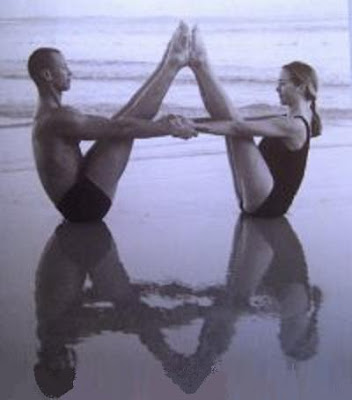
Holy Yoga with the Rabbi: Reflections from Yoga Instructor/Congregant Julie Buckley

In my early courtship with yoga, I understood the word “yoga” to mean “union”. I was breathing and moving my mind, body, and spirit into union. How delightful to discover the far reaches of possibility within myself. There were poses which enabled me to feel strong, to feel flexible, to balance.

Becoming a yoga instructor offered me knowledge of yoga principles and philosophy which ask for an alignment of intention and action. Funny… I hear that at temple, too. As my yoga practice deepened and the notion of embodiment called to me with some insistence, my time on the mat shifted from me to me as the embodiment of what?? As I inhale (HaShem’s exhale), I wonder about the quality of my exhale. This curiosity about what I am made of was long ago sparked by my Jewish upbringing.

Judaism, as expressed at my synagogue, Congregation Or Ami, is interested in questions of how we move through this world– what ground we’re on, what we stand for. My rabbi, Paul Kipnes, is a passionate advocate of social action. Teaching yoga at Or Ami has generated a beautiful tapestry with yoga and Judaism engaged in a dialogue of teachings and practice, so that we learn to live and breathe our teachings. How do we begin to repair our world if we have not lived and breathed our wholeness, our brokenness, and our journey back to wholeness– over and over again? And how do we, as we age and endure strain, continue to cultivate strength, flexibility, and balance? How do we have a presence which will allow us to be part of tikkun olam… helping to heal our world.

The fact that my rabbi is on his mat, down dogging with his congregation, speaks volumes. Being welcoming and connecting with humanity are not just slogans in my synagogue. The energy that is exchanged during our practice is uplifting, calming, fortifying. It is perfect that our rabbi participates…

Our yoga community at Congregation Or Ami meets monthly in front of the ark, under the eternal flame, sharing the nourishment of yoga. We are finding that our Jewishness comes to life by “breathing it” and our yoga is that much more holy in our sanctuary. Just as our full lives expand God, inviting Judaism into yoga and vice versa creates a greater sense of integrity, of fullness. No longer are we or the aspects of our lives necessarily secular or religious, sacred or profane; rather, we are whole… Jewish yogis who embody the light of HaShem.

The Protests (in Israel): Plenty of Blame to Go Around

Rabbi Eric Yoffie, president of the Union for Reform Judaism, reflects upon the massive protests in Israel by people calling for social justice.  Focused on housing and more, these citizens of Israel are met not with bullets and firepower (like in many of the surrounding nations), but by conversation and hope. (See also the statement by the Israel Movement for Progressive Judaism and the Council of Progressive Rabbis in Israel regarding the Current Social Protest in Israel). Rabbi Yoffie’s article appeared on the JPost blog, Reform Voices:

We have said it a thousand times: Israel is the only true democracy in the Middle East. But citizens of democracies are often passive and apathetic. It is thrilling, therefore, to see so many young Israelis energized, engaged, and protesting for justice. These young people are bringing Israel’s democracy to life. 

The grievances must be very real because a passive citizenry is not easily aroused. Who is to blame for these grievances? Well, there is plenty of blame to go around. 

The political parties on the right have stressed the virtues of competition and the free market, but they have not delivered. Israel’s free market has not been free. A handful of “tycoons” have dominated the economy, and political paybacks to favored constituencies have hugely distorted the economic process. For example, invoking the sacred cow of “security,” the right has showered money on the settlements, but in fact, settlers have enjoyed government largesse to a degree that security concerns cannot possibly justify. 

Yet the left is hardly better. Those supposedly committed to social issues have allowed themselves to be distracted and co-opted by governments with no real social agenda. It is fine to believe in peace and the rights of others – and I do – but if you are not seriously devoted to the social welfare of your own people, you lack the credibility to accomplish anything. In the last quarter century, who are the major Israeli politicians who have been consistent advocates and true champions of justice and equality in Israeli society? Can you name five? Three? One?  

And where are the Chief Rabbinate and the Orthodox parties that profess to speak in the name of the Jewish tradition? Religious voices should be at the center of this maelstrom, but instead they are silent. Torah, after all, has much to say about the nitty-gritty matters of economic fairness in the everyday lives of Jews and their neighbors. And the rabbi’s role, according to the great Talmudist R. Hayyim of Brisk, is “to redress the grievances of those who are abandoned and alone, to protect the dignity of the poor, and to save the oppressed from the hands of the oppressor.” The problem is that Israel’s religious establishment obsesses about its own institutions and the minutiae of conversion laws but pays little attention to everyone else.  

(A word of praise for Ariel Atias of Shas, Minister of Housing, who said that what distresses him most about the protests, is that “they have forgotten the weakest strata of Israeli society, those whose problem isn’t finishing the month but beginning it.” Shas, it should be said, began as a movement of social protest, but – Atias notwithstanding – long ago lost its way.)  

And by the way, where is the American Jewish community – myself included – which talks of its commitment to Israel while saying little or nothing about the great social issues that will shape its future no less than security concerns? 

But there is no reason for despair. A new generation of Israelis is looking squarely at these problems and affirming the need for mutual responsibility, fairness, and social justice in the Jewish state. And what they do is a blessing for us all.

Pointing the Way Forward

From my Grandpa Eddie, I learned the importance of enjoying life with your family.  Instead of hoarding his money and leaving us a bigger inheritance, he and Grandma Esther decided that they would rather see their grandkids having fun and bonding.  They sent us all to Jewish summer camps and spent regular time with us.

My Dad and Mom do the same, taking the family – especially when the kids were younger – on big family trips such that today all the cousins have strong connections one to the other.

My parents have also passed onto us (and continue to do so) the important of mishpacha (family), tikkun olam (social activism), kehilla (being part of a community), ahavat yisrael (love of Israel), and more.

This Shabbat we read from the first parasha (portion) in the book of Devarim (or Deuteronomy), the final of the 5 Books of Moses.  Taken together, the words of Devarim represents Moses’ final teaching to the children of Israel, before he goes off to die and they continue on under Joshua’s leadership and enter the Promised Land.  Sometimes we see Devarim as one long sermon – filled with stories and retellings of the past, hopes and warnings, songs and poems.  It is as if Moses, aware that he is about to die, wants to point the way forward to ensure that his peeps survive long into the future.

Some years ago I wrote an ethical will to my children, articulating those values and ideals that I wanted them to know I held dear.  My parents continually share their wisdom in subtle and not-so-subtle ways.This wisdom, imparted in big ways and small, form a Torat Horim (the teachings of my parents) that continue to influence me today – in big ways and small.  What is the wisdom that your parents or grandparents bequeathed to you? 

For the Women of Congo and Sudan

I adapted this prayer for Jewish World Watch, the is a hands-on leader in the fight against genocide and mass atrocities, engaging individuals and communities to take local actions that produce powerful global results. JWW is about to embark on a fact finding mission to the Congo, and will share this prayer with the survivors of the mass rapes and violence. The prayer will also appear in Jewish World Watch’s High Holy Day publication.

Lest we somehow forget, Sudan and the Congo are home to some of the worst genocidal mass murders and mass rapes of the 21st century.

The prayer is adapted, with permission, by me, from two prayers by author/liturgist Alden Solovy –
For the People of Norway and For 9-11 Survivors. These prayers are © 2011 Alden Solovy and www.tobendlight.com. All rights reserved.

G-d of the survivors, mourners and witnesses, 

Grant strength to those still held by physical, emotional and spiritual distress from the continuing violence in Congo and Sudan. Release them from visions of rape and death, from guilt or shame, from fear or anger. Bind their wounds with Your steadfast love.

Grant them shelter and solace,
Comfort and consolation. 

     Grant them endurance to survive,
     Faith to mourn,
     Courage to heal
     Devotion to each other. 

Bless those who have healed.
Bless those who suffer. 

     Bless those who forgive.
     Bless those who cannot forgive. 

Bless those who speak.
Bless those who stay silent. 

Baruch Atah, Tzur Yisrael, Oseh tikvah v’nechamah
Blessed are You, Rock of Israel, Source of hope and comfort.

I’m Overjoyed, Overwhelmed, and at Peace

These days I am feeling overjoyed, overwhelmed and at peace with all that is happening at Congregation Or Ami.

Overjoyed: I love to watch the reactions as people stop by our newly remodeled synagogue. With wide eyes and big smiles, each exclaims in amazement how beautiful our synagogue home looks. [Stop by sometime to see it with your own eyes. And celebrate with us the synagogue rededication on Friday, August 26 at 7:30 pm.]

Overwhelmed: I love to meander around our remodeled home, imagining our new youth lounge filled with teens connecting to each other and Judaism. I relish sitting quietly in the sanctuary, pondering it’s holiness and life’s meaningfulness. I enjoy imagining the many different activities for adults, families, and individuals we now can enjoy simultaneously. In the quiet that still pervades the building, I imagine the cacophony of voices as people eat, pray and love Jewish living.

At Peace: I love visiting our new rabbi Julia Weisz in her office as she and an endless group of congregant adults and teens dream and reimagine our learning programs. A whirlwind of activity, this newly minted rabbi has already transformed the way we will look at learning in our community. The future is very bright indeed.

Join me as we prepare to formally welcome Rabbi Julia into Or Ami.

  1. Save the date – Friday, October 14 – when we will consecrate Julia Weisz as our rabbi, during a family friendly campfire service, and/or 
  2. Participate in giving her a gift, honoring Rabbi Julia’s ordination and welcoming her to the temple. We are gifting her what she wants/needs: a new computer to help organize her creativity. You may donate by contacting Barbara Gordon in our office at 818.880.4880. Or you may donate at www.orami.org/donate.]

Kvell with us about our new home.
Kvell with us about our new rabbi.

But mostly kvell with us because the new year 5772 promises to be one of tradition and innovation, of blessing and goodness.

Birthright Program for Young Adults with Special Needs

On July 10, 2011, Congregant Or Ami member Matthew Simon, who has Fragile X Syndrome, joined 28 other young adults with special needs and staff on a 10 day Birthright trip to Israel. They toured the country, learned about Judaism, rode donkeys and camels, slept in a Bedouin tent, and prayed at the Wall in Jerusalem. The trip was organized by Mayanot. It was dream come true for these young adults and their families as they did what so many other Jewish young adults do, with full access to this Jewish experience.

Watch the YouTube video below as Matthew and other young adults with special needs reflect upon their Birthright trip.

Congregation Or Ami has long committed to equal accessibility for all Jews and Jewish families,  regardless of any special needs they might have. Recently, we developed a relationship with Chaverim, a program of Jewish Family Service of Los Angeles, for developmentally disabled adults age 18 to 88. Let the doors of the synagoge be open to everyone who approaches.

A Time for Celebration: New Yorkers Gain Marriage Equality

In New York, they are celebrating.  For marriage equality have finally been extended in the great state of New York to all its citizens, heterosexual and homosexual.  We schepp nachas (share the joy) too, because a step forward in one state is a step forward for our country.

Here in California, we should be celebrating too. Not from a distance of 3000+ miles, but right here in our own backyards… and in the temples, and the churches, the mosques and the ashrams.  We should be celebrating the marriage of all created b’tzelem Elohim (in God’s image), as they are able to sanctify their love in the holy (and secular) covenant of marriage.

Alas, we still await that moment in California.  It will come.  The polls and the demographics show that eventually marriage equality will be a given.

Until that time, we hope and pray. We sanctify in religious ceremonies the binding of two souls – two men, two women, a man and a woman – with holy words and holy rituals.

And we wait, until such ceremonies will be recognized by our state, and by our nation, as a marriage.

Ken yehi ratzon,  may it be God’s will.

Impotence and It’s Cure

Impotence.

It is a terrifying word to most men, as it leads them to face fears of a loss of their potency. For most, it connotes an end to sexual strength, the power of the male of our species. And it affects many, for many different medical and/or psychological reasons. Thankfully, there are some powerful medical treatments that apparently work well.

But the word “impotent” can also describe other horrifying feelings of powerlessness beyond the sexual. One can be politically impotent, without the ability to make things happen in the public sphere. One can be impotent in one’s career, unable to bring one’s work to a climactic finish. In each case and others, this helplessness strikes fear in the heart of men because what is a man anyway – we sometimes think – if not someone who can “make things happen”?

When Illness Strikes
There is also an all-consuming sense of impotence that men (and women) sometimes feel when facing a loved one with a terrible, potentially incurable disease. We sit there, holding a hand, sharing a story – perhaps calling from a distance away – trying to somehow make it better for him, but realizing yet again our own limitations. We want to do something, and yet, we feel incredibly powerless, helpless. Impotent.

My uncle Skip is dying; and of course his wife, my auntie Rozzy, is suffering too. And here I sit, 3000 miles away, unable to do anything to really make it better. For either of them. I am saddened, and feel powerless. Helpless. Impotent.

Our Precious Presence
Pastoral counselors teach that visiting – or calling, sending a note or the like – offers the most important gift we have to give. Its our “precious presence.”
In fact, responding psychologically to disease, Judaism teaches that “bikur cholim”, visiting the sick, removes 1/60 of the disease. Like those little blue pills, our visits or calls provide uplift, combat hopelessness, and make the future seem all that much more doable.

And so, instead of sitting here feeling helpless… I call, try to tell her stories, try to listen, and do my 1/60 of the holy work.

Enough?
It doesn’t always feel like enough.

May it be enough.

It will have to be enough.