Category: blog archive

Rabbi, Can We Talk about God? Pelted with Questions from Teen Campers

Ever have one of those moments when your child reaches out to you and all you really want to do is collapse from exhaustion? It happens at home and it happens at camp. So what do you do?

I am up here at URJ Camp Newman, the Reform movement camp in Santa Rosa, CA, leading our delegation of 42 people from Congregation Or Ami (Calabasas, CA) for Jewish summer fun. After a full fantastic day of spiritual hikes, meditation teaching, service planning and camper counseling, I was hot, tired and worn out.

Rabbi, Want to Talk about God?
Yet, no sooner did I sit down for a little quiet time when I heard someone call out, “We’re having a conversation here about God. Rabbi, do you want to join us?”

Looking up, I saw three of our young people from Congregation Or Ami (Calabasas, CA) sitting at a picnic table smiling at me.

I had just finished an intense conversation with a staff member about the slow death of her grandmother as she described being there as the last breath left her body, followed by a phone call with a dear friend who is now facing a similar situation with her mother. I was looking forward to putting my feet up. But I responded from my heart and not from my weary bones, saying “How can I turn down such a wonderful invitation like that!?”

So three of us – my wife Michelle, a faculty artist and I – joined Lisa, Matthew and Ethan for the best experience of my day.

Pelting Us with Questions
They asked so many questions, which I answered initially with “Well, what do you all think?” Only after they answered would I share my thoughts.

How many of the teens at temple do you think are really atheists? (Most, I suggested were agnostics, unsure about God, but you can be a great Jew even if you don’t believe in God.) 

How do we pray if all the prayers seem to offer only one view of what God is? (Read the prayers as poetry and then mine them as metaphors. Or supplement the traditional prayers with kavannot (spiritual interpretations) of your own. Or let’s write some prayers which speak to a spectrum of beliefs. The rabbis of old did it; you can too!) 

Do you believe in God with the white beard and the throne on high? (Once I imagined God that way, until I learned that there are so many different Jewish God ideas – I blogged about 18 Jewish God concepts – which are more in keeping with what I feel is closer to my truth. Let’s find some time later and I’ll teach you about them.)

What’s your favorite God concept? (The internet as a metaphor for God. Not a being, but an existence, a presence. The One without end is here, there and everywhere, accessible if only you open a browser – your heart or soul – and allow yourself to connect in.).

Time Flies When You’re Talking God
We lost track of time as the campers asked questions, offered answers to each other, and thought deeply about the reality of The Holy One. When their counselors came around to collect these campers, we all expressed sadness that this moment had to end. And yet, we smiled at each other, knowing that we had taken our relationships and our spiritual journeying to the next level.

“Let’s do this again!” suggested one of the campers. “Wouldn’t miss it for anything,” I responded.

Why do I Come to Camp Newman each Summer? 
Because in the midst of the long days, chance encounters quickly become deep conversations, allowing this rabbi the opportunity to elevate and nurture meaningful Jewish spirituality. I cannot wait for the next conversation.

Shavuot: Celebrating the Gift We Keep Receiving

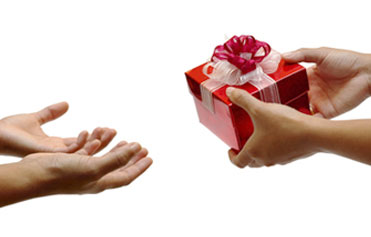
We parents love to shower our children with gifts.

The appearance of a wrapped presents can stop even the most rambunctious children in their tracks. After a quick intake of breath, eyes go wide and squeals of excitement quickly follow. Some children then engage in frenzied activity, tearing off the wrapping paper, while others slowly and methodically remove every piece of tape, savoring the splendor of anticipation. When the contents beneath the wrapping paper are revealed, delight and happiness soon follow.

And then come the thanks. Nothing quite compares to the hug of a kid who just received an unexpected gift. All of it – a kiss, words of thanks, that smile from ear to ear – can melt even the most hard hearted of us.

Gifts Represent of Underlying Emotions of Love 
The giving of a gift testifies to the love we feel for someone. A present can convey materially that which we sometimes have difficulty expressing verbally. That I value you. That I love you. That making you happy makes me happy.

In most American Jewish homes, presents are shared on Chanukah, a practice that evolved from the tradition of giving gelt (coins) and from this holiday’s proximity to Christmas. In Jewish homes in Israel and elsewhere, presents are given on Rosh Hashana to celebrate the New Year, and on Pesach to celebrate our people’s return to freedom.

Shavuot as a Festival of Gift Giving and Receiving
Perhaps the most traditional, yet under-celebrated, opportunity for gift giving occurs on Shavuot. Originally an agricultural festival marking the conclusion of the grain harvest, Shavuot is also known as Chag ha-Katsir (Festival of Reaping in Exodus 23:16) and was celebrated in Biblical times by bringing the bikkurim (first fruits) to the Temple in Jerusalem. These gifts to God were brought from among the Seven Species for which the Land of Israel is praised: wheat, barley, grapes, figs, pomegranates, olives, and dates (Deut. 8:8).

Over time, Shavuot morphed through rabbinic creativity into a festival celebrating the ultimate gift from God. Wrapped up in the multi-sensory story of our people’s experience at Mt Sinai (Exodus 18:18ff) – ground-shaking, light-flashing, thunder-booming, Shavuot relives Matan Torah (the gift of Torah), the moment that God gave Torah to the Jewish people.

We teach that Holy One loves our people so much that God gave us the most precious gift – next to our children, of course – and that is the Torah.

Anticipating Shavuot, parents can connect children spiritually to our Jewish people through the joy of receiving a gift.

Celebrate Gift Giving
Read the story of the giving of Torah in Exodus 18:1-19:15. Flash the lights in the bedroom to simulate lighting, bang on walls or pots and pans to recall the thunder. Shake your body all over for earth shaking fun.

Tell Your Children (of all ages) This:

You are the recipient of one of the greatest gifts ever. It is our Torah. Written in a scroll, our Torah represents a collection of stories, teachings, morals, values, rules of how to live, ideas about God and so much more. It is a gift from God, a sign that you are lovable and loved. Torah is your inheritance, that which you receive from me (and if appropriate, from your other parent), from your grandparents and others before us. You are part of shalshelet hakabbalah (the unbroken chain of receiving Torah), passed down midor lador (from generation to generation).  

Torah is a gift to be preciously cared for and repeatedly unwrapped. Torah is filled with stories and ideas that are gifts to the whole world.

Torah is yours. So don’t wait to long. Claim you place among our people.


Then find a way to help your child receive the gift of Torah.

  • Give your child a nice gift that reflects Torah and/or Judaism. Tell him or her that since today we celebrate the other wonderful gift today, the gift of Torah, today you want him or her to enjoy this Torah related gift.
  • Discover a new book and read it together. Torah, and the study of it, made the Jewish people Am Hasefer (people of the book). Dedicate yourselves to reading the wonderful books from PJ Library or seek out other Jewish books to enhance Jewish connections.
  • Watch the Torah portion cartoons on G-dcast.com, which take complex ideas and make them accessible to all ages. Commit to watching them regularly.
  • Eat cheesecake. Once Torah was given, it became clear that our ancestors had no kosher meat. So the people ate dairy for a few days. Traditionally Jews ate blintzes. But, in our family, we prefer cheesecake, in as many flavored as possible, symbolizing the 70 difference languages in which Torah was given.
  • Make a dairy dinner together creating as many dishes as you can. Consider the many ways grilled cheese and macaroni and cheese can be prepared.
  • Go visit a temple and ask if you and your family can hold the Torah. A gift given not just to the rabbis and teachers, Torah is an inheritance for us all. So go claim your birthright (you may need to schedule an appointment first).

A Mathematician’s Dream Blessing

Two, 4, 6, 8 … What comes next? 
Once you recognize this as a sequence of even numbers, counted by twos, then you know that the numbers 10 and 12 come next.

Two, 3, 5, 7, 11 … What comes next?
This sequence of prime numbers (numbers divisible only by themselves and 1) continues with 13 and 17.

There is elegance in number sequences. Patterns discovered reveal a logical underpinning to the world in which we live. As a former physics major (who spent two-thirds of my college years deeply ensconced in the intricacies of the laws of our universe), I am energized by the patterns that define our world.

British philosopher-mathematician Bertrand Russell (1872-1970) expressed it this way:

“Mathematics, rightly viewed, possesses not only truth, but supreme beauty — a beauty cold and austere … yet sublimely pure, and capable of a stern perfection such as only the greatest art can show.”

Even Torah contains mathematics that illumine the beauty of the existence in which we live. While the numbers within Torah may not unlock hidden biblical codes that prophesy the future, they do reveal the elegance that is God’s Creation.

So when a discerning bar mitzvah student pointed out that his Torah portion, Naso, contained two amazing numerical sequences, I was fascinated.

Parashat Naso contains Birkat Kohanim, the Priestly Benediction, a blessing first recited by the Israelite priests on God’s instruction as they blessed the people. It has maintained a central place in Jewish prayer, being recited in the ancient Jerusalem Temples, during Shabbat morning services, in Jewish homes on Friday night and at almost every Jewish life-cycle ceremony.

Birkat Kohanim is a simple yet complex three-line prayer:

Yivarechecha Adonai v’yishm’recha.

Ya’er Adonai panav elecha veechuneka.

Yeesa Adonai panav elecha v’yasem l’cha shalom.


May Adonai bless you and watch over you. May God’s countenance shine upon you and be gracious unto you. May God’s countenance be lifted up to you, and grant you peace.

Three lines of Hebrew, 15 words and 60 letters in total. Look closely and beautiful patterns emerge.

Count the Hebrew words in each line: 3, 5 … What comes next?

The number 7, completing two patterns — odd numbers counted by twos, and the next prime number. Both answers capture sophisticated arithmetic construction.

Different rabbis tried to assign meaning to this pattern. The Spanish rabbi Bachya taught that this pattern reminds us of the foundation for all blessings: the three patriarchs, the five books of the Torah and the seven heavens of mystical meaning. To him, our ancestry, our sacred book and our spiritual universe are all aligned in each moment of blessing.

Count the letters in each line: 15, 20… What comes next?

The number 25, the next when counting by fives. What a wonderful progression in our modern decimal system — 15, 20, 25. Or, if you add the number of letters together, you get 60, recognized by Italian biblical scholar Moshe David Cassuto (1883-1951) as the basis of the ancient Babylonian sexagesimal (base 60) system.

And it gets better.

Next week, at the inauguration of the mishkan (the movable wilderness sanctuary), each tribal head brings identical sets of sacrifices. The greatest offerings, in quantity and, apparently, in prominence, were the korbanot shelamim (peace offerings). Each leader brings 15 animals: five each of rams, goats and sheep. Together, 12 tribes brought 60 of each animal.

The Midrash (Bamidbar Rabba 14:18) connects these offerings with Birkat Kohanim. Birkat Kohanim — containing 60 letters — concludes with the hope for peace (shalom), while the peace offerings (shelamim) contains 60 gifts to the Divine. Montreal scholar Shai Peretz notes:

“Given the strong correspondence between the two adjacent Torah sections, the question is of the chicken and the egg. Which element impacts on the other? Do our offerings to God yield blessings, or do God’s blessings lead us to make offerings to God?”

These fascinating questions hint at a deeper reality. As my bar mitzvah student Quinn Chambers suggested,

“It is interesting to find these patterns in the Torah, since Torah is filled with so many laws and religious ideas. Perhaps these mathematical patterns show that the Torah is not just a bunch of pretty ideas, but rather that it is also connected to the laws like mathematics and logic that govern life.” 

Once you recognize these patterns in the text, it becomes more difficult to consider math/science and religion to be completely separate arenas of existence.

May the mathematical beauty of Birkat Kohanim open your eyes to the religious elegance in our world.

So Everyone Has a Home They Can Afford

A Teaching by Rabbi Julia Weisz 
Rabbi Weisz is my partner-rabbi at Congregation Or Ami, Calabasas, CA.

Several Saturdays a year, thirty at-risk youth from Panorama City step out of vans onto the beautifully kept green grass parks of Calabasas. Or Ami teenagers greet them, whistles around their necks, and act as their coaches for the day. Leading them in water balloon toss, football, capture the flag, basketball, kickball, arts and crafts and other sports activities. These Sports Clinics are for New Directions for Youth, an after-school program that helps keep children and teens off the street, out of drugs and alcohol and away from gangs. They are an amazing opportunity for Or Ami teens, families and rabbis to interact with individuals who live in a very different reality from their own.

A few weeks ago, at our last clinic, the NDY staff gathered around, munching on bagels generously provided by Or Ami families. I went over to welcome them and asked how they were all doing. Two staff members, in particular, expressed feelings of frustration and sadness. These two staff members are responsible for picking up the New Directions children and driving the vans to the Sports Clinics.

They explained that just that morning, the staff picked up two children from a homeless shelter. The month before they were picked up from an apartment. They explained that this was a trend the staff had been noticing for some time. Most of the parents of these children work full time jobs. Some even pick up extra work in the evenings and on weekends leaving young children alone with no care or supervision. The parents shared with the staff that they could not afford to pay rent AND provide food for their children. So, they had to choose. They chose food over shelter, left their apartment and moved into a homeless shelter.

Having to choose food over shelter.
We live in a world and in a state where many working families cannot have both food AND shelter. This is appalling.

It is stories like the ones from the NDY staff that open our eyes to the affordable housing crisis in California. Currently, 22% of households in California are paying more than 50% of pre tax income for housing. Even worse, 39% of working households in Los Angeles spend more than half their income on housing. Spending more than half their income on housing is absurd, but this is the reality.

I love getting my nails done. While chatting with my manicurist I hear many of her personal stories. She works in Calabasas but lives in Little Tokyo in a small two bedroom apartment with six relatives, all to make rent more affordable. She shares a bedroom with her husband and two teenage daughters. She commutes so far away because she cannot afford to live close to work. This is her reality.

A few weeks ago I had a conversation with a friend’s mother. She is in her 60s and shared with me how stressed she is each month when the bill comes from her mother’s senior living apartment building. She cannot believe how expensive it is for her mother to live there and is considering moving her in with a roommate. Her mother is 93 years old. A 93 year old with a stranger for a roommate? This is her reality.

The housing crisis is not just a Panorama City issue but a California one.
The reality, not a lot of California state money is going to affordable homes. The reality, so many Californians CANNOT pay their rent or mortgage.

Historically, Jews are all too familiar with the need for shelter. Our ancestors, our matriarchs and patriarchs -Abraham and Sarah, Isaac and Rebekah, Jacob, Rachel and Leah – all lived in tents, shelters susceptible to heavy rains, strong winds, desert heat and freezing cold. For years, the Israelite people wandered in the desert without a permanent dwelling place wondering when and where they would find a home. And Jews wandered again without a permanent home when first emigrating from Europe to America.

As Reform Jews, we value the importance of Tikkun Olam, repairing the world. We hear the call of the 8th century prophet Isaiah, who charged the Israelite people to bring those without a home into the house.

We can help bring those without a home into a house.

Here is how we can help.
Reform California is comprised of Reform rabbis and lay leaders around the state who are working in partnerships across race, class and faith to help repair our broken state. Right now we are working on bringing more affordable housing to California.

There are a few proposals asking that the state allocate money for the building of these homes that will be presented on Capitol Hill the end of June. The proposals focus on investing significant Cap and Trade funds in the building of affordable homes in California. All housing built using Cap and Trade Funds must lead to the reduction of Green House Gas Emissions. There is an opportunity here to both build affordable homes in California AND reduce greenhouse gases to protect our environment. The Legislature will be voting and we have the chance to raise our voices in support of building more affordable homes in California for those in need.

LEARN MORE: By reading this information sheet.

EMAIL YOUR STATE LEGISLATORS: I invite you to contact your California State Senator and Assembly Member, if you would like to support the proposal to allocate a significant amount of money to building affordable homes. You can send an email to your Senator and Assembly member by clicking here.

ATTEND THE LOBBY DAY: If fighting for affordable housing is an important issues for you to tackle, or you are interested in seeing what it is like to get a bunch of Rabbis and lay leaders from California synagogues together around social justice issues, join me in Sacramento on June 2. We will fly there in the morning, lobby at Capitol Hill, hear and share stories around the housing crisis, we will make sure our voices are heard before flying back in the later afternoon. We can work together to help bring shelter to those in need. Email Rabbi Julia Weisz for more information.

Shelter Us Beneath Thy Wings
The Hashkiveinu prayer is said each night before going to sleep. In it, we ask God to spread over us a shelter of peace. It is hard to envision someone feeling that peace when they are fighting every day for shelter.

May we someday live in a world where homes are affordable, where children can sleep in their own beds, not in homeless shelters. We can work together to help build shelter for those in need.

Only then, will we know peace.

Ken Yehi Ratzon, May this be God’s will. Amen.

A Formula for Engaging Jewish Teenagers

Working with teenagers is simply heartwarming. We experienced this yet again at our recent Havdala Under the Stars, Congregation Or Ami’s year-end gathering of our Triple T (Tracks for Temple Teens) youth program.

Picture this: a large group of teens – 7th to 12th grades – sitting around a campfire, singing songs, playing games, and grouping and regrouping in ever changing configurations of young people. Bucking trends in Jewish life – where so many teens drop out soon after B’nai Mitzvah – these teens showed up smiling. (Thanks to the URJ’s Campaign for Youth Engagement, we rethought our entire youth program.)

Rabbi Julie Weisz, the energetic visionary behind Congregation Or Ami’s Campaign for Youth Engagement, invited the teens to reflect upon what made their Triple T time so meaningful. The responses were heartwarming:

Making new friends
Being a madrich (counselor) at the 4th-6th grade retreat
Creating a movie short with my JEWTube track
Working with the younger atudents as a MIT (Madricha in training)
Leading sports days for the at risk kids in Future Coaches
Creating social action projects with VolunTEENS
Being part of LoMPTY
Going to regional NFTY SoCal events
Bonding with everyone here

It seems that our faculty and rabbis have hit upon what we believe is a formula for continued youth engagement:

Relationship building.
Leadership development.
Multiple pathways (we call them “tracks”) to participation.
Confirmation as the culmination for all tracks (including youth group)
Choices.

And lots of listening, loving and patience.

Youth work is incredibly exciting, deeply rewarding, intensely frustrating, and ultimately so incredibly important. Just as teens are coming into themselves, we youth professionals get to love them, accept them unconditionally, and present Judaism to them as a healthy pathway to finding oneself. There are moments, so many moments, when the neural connections are fired up just right, and through their time in temple, they find the acceptance and love that they deeply crave.

Of course along the way they go through all the same struggles as everywhere else. And so they experience social anxiety, face cliquishness, lose elections, and feel slighted. Because it is all real life. Being a teen is frustrating and often painful. Being a teen’s parent is a lesson in powerlessness and oftentimes frustration as we sit on the sidelines unable to fix it all.

That’s why youth professionals often make a real difference. When we do it right – listen, love, eschew simple problem solving in favor of long-term growth and compassionate struggle – the synagogue becomes a safe place for young people to learn and grow.

As our teen songleader led us to close the evening with a sweet havdala ceremony, the teens enjoyed a group hug, evidencing with their physical closeness the reality that permeates their hearts. This diverse group of kids are finding a path forward – past B’nai Mitzvah and into young adulthood. The path is not always straight. The temple cannot shield them (or their parents) from heartache, but there is no question that the combined efforts of caring, engaging faculty and available, committed rabbis can provide a safe loving space for our teens.

Lo alecha ham’lacha ligmor – the work with teens is a continuous, never-ending process. But when approached with an open mind and an open heart, it is even the exhaustion is exhilarating.

Engaging Seders: Give Each Guest a Seder Responsibility

Passover invites us to place ourselves within the story of the Exodus from Egypt. In the Haggadah we read: Bechol or vador chayav adam lirote et atzmo k’eelu hunyatzah mimitzrayim – in each and every generation a person must see him/herself as if he/she went forth from Egypt. The Seder calls us to journey personally to the promised land, from hopelessness to hopefulness, from pain to healing, from oppression to freedom.

As such, the Seder itself needs to involve every person, a feat easily accomplished with one quick email sent to your guests. Imagine asking guests to prepare to share something specific during the Seder. Your email sent even the day before the seder could delineate his/her role, giving each one time to think about a meaningful presentation.

Here’s Our Pre-Seder Email
Our pre-Seder email looks something like this. Like we did, you should substitute your guests’ names for descriptions that fit. Use our suggestions and/or make up your own. In parentheses after each assignment, we suggest times in the seder to make the presentation. To remember the story, check out pages 7-9 of my friend’s online Haggadah.

Dear family and friends:

Lest our seder become boring, we are asking each of you to come prepared to participate actively in our Seder. We will be using a Haggadah but the really meaningful experience will come from what each of us bring from our own lives to the Seder.


So here are your seder participation assignments. Plan for a 3-5 minute presentation. Feel free to email or call me if you have questions or have something different you would rather share. But please, take time to prepare. And know this: no prepared sharing, no food for you. Enjoy preparing:

Infant: You are baby Moses in the basket on the Nile. Have your parent(s) create a costume for you, with a basket to “float” in. Your older sibling(s) – or your parent(s) – can help reenact the Nile moment. [Maggid – telling story of the Exodus]

Video Gamer: You are an accomplished video game player. Your challenge is to connect the games you play with the Passover Seder. Choose one of your favorite online games; print out a few screen shots. Prepare to explain the game, how it works, and two ways that this game illuminates lessons relevant to the story of Passover and the exodus. [Before Yachatz – Creating the Afikomin]

Musically Inclined Child/Adult: You are a lover of music and especially musical theater. Choose one or two modern songs or Broadway show tunes that shed light on the journey to freedom in any of its forms – physical freedom, emotional freedom, spiritual or economic freedom. Be creative. Come with copies of the lyrics or a recording of the song. Be ready to play or sing these songs and to share how they harmonize with the teachings of Passover. [Before Dayeinu]

Dramatically Inclined Child/Adult: Before we sit down to the Seder, please gather all the children and prepare a short dramatic play about the exodus story. I am attaching a brief review of the story. Use costumes from our costume box or clothes from mom and dad’s closet. [Maggid – Telling the Story]

Musician: You can provide musical accompaniment during the Seder where possible and comfortable. Music and words for Dayeinu and other prayer and songs can be found on the internet. Any modern songs you can play that talk about freedom would also be appropriate for our Seder. [Throughout the Seder]

Middle School Student: What have you learned in your history class about ancient Israelite or Egyptian culture? How can lessons from history in general help us love better lives today? You be the teacher and teach us. [Before Maggid – Telling the Story]

Person Who Visited History Museums: You recently history visited museums depicting _________ {fill in the blank}. What did you learn there that sheds light on the important lessons past and future of the Seder/Passover story. (Perhaps guests can report about a visit to a Holocaust museum, museums recounting the civil rights movement, locations of Japanese internment, important places in the LGBT rights movement or other similar locations.) [Before Ten Plagues]

Older Teen or College Student: You are learning about communities struggling with their own enslavement, their own Egypts. Teach us about one such community in the world today. Where is their Egypt, that dark, narrow place which torments them? Who is their Pharaoh, the one most responsible for their oppression? How can we be the Moses and Miriam to help lead them to freedom or how can we help nurture their own leaders? [Before Matzah]

Parent of Young Child: As a new parent, you have an opportunity to use the Seder to mold your child’s spiritual life. What are one or two spiritual lessons you hope will enhance his spirituality in the coming years of Seders together. [After Urchatz – Symbolic Washing]

New Parent: As a new parent, this is your first Passover with your child. What are kind of world do you promise to strive to create so she won’t have to wander so much in life? [After Rachatzah – Symbolic Washing]

Person who Visited Israel: Tell us: In what ways is Israel the Promised Land still today? During your visit, when did you feel like you were spiritually enlivened? Though our people reside in the Holy Land, in what ways are we still wandering in the wilderness? [Before Nirtzach – Next Year in Jerusalem]

Older Adult: Over the years you have celebrated many a Passover, each time focusing on the unique issues of the moment in life. Share with us one example of a Passover gone by which was particularly meaningful in the way it captured the lessons and values of the festival. [After Urchatz – Symbolic Washing]

Older Adult: Over your years you have seen pharaohs rise and fall, enslaving physically and/or spiritually peoples or individuals. Similarly, you have seen people make it to the promised land of freedom. Share with us one example of a journey to freedom – personal or national – that you witnessed in your lifetime. [Before Maror – Bitter Herbs]

Photographer: The Haggadah speaks of four children, representing four ways of connecting to Judaism. Print four pictures – your own or those of others – that capture an interpretation of four ways of engaging Judaism. You may use pictures of people, animals, places. Explain how these teach about Jewish living. [Before Four Children]

Businessman: The karpas or greens are dipped in salt water. The karpas – and the egg – represent the promise of spring and of new life and new hope. From your work in the world of business, share with us how a new spring is dawning for the world through these efforts. [Before Karpas]

Lawyer: As someone who deals with the laws of our nation/community, you know how laws can enslave and laws can free. Describe one way that the law is still used to oppress one subgroup in our country. Explain what is happening to change this law. [Before Ten Plagues]

Medical Professional: You work in healthcare. Access to adequate healthcare and the lack thereof is a plague for our generation. In what ways have you seen access to healthcare become more of a plague and what are hopeful signs that the plague is lifting? [After Ten Plagues]

Grandparent: You have a grandchild and are anticipating celebrating Jewish life with her. What are central Jewish ideas and values that you hope to pass onto her as she grows. How is a Passover Seder an opportunity to do so? [Before Yachatz – Breaking the Matzah]

Thank you all ahead of time for preparing. We will weave your presentation throughout the Seder. Your efforts will make our Seder that much more engaging.


See you all at the Seder.

Why Rabbis Need Rabbinical Conventions

I’m just back from the Central Conference of American Rabbis convention, a gathering of 600 Reform Rabbis from all over the United States, Canada, Israel, Europe, South America and elsewhere. Four fabulous days of inspiring worship, thought-provoking speakers, pastoral skill-building sessions, and insightful study of our Jewish texts.

I return home with Evernote(books) filled with ideas and insights for the many roles I live as an American Reform Jewish congregational rabbi. In fact, each day was so packed with large plenary gatherings and small group meetings that my mind was working in overdrive from 7:00 am through midnight.

One of the most poignant events occurred at a location twenty-minutes away from the Convention Hotel. That night, eleven people gathered at a local restaurant in a private room for dinner.

The dinner took place during intentionally set time for “dinner with friends and colleagues.” Along with other sessions and the plenaries, this dinner allowed us to address one of the most significant reasons we rabbis need to attend rabbinical conventions: to find solace and strength in the company of colleagues.

Over dinner, we laughed, joked, kvetched, kvelled, commiserated and counseled each other. We reflected upon the distinctive role and responsibility of being a rabbi in our contemporary Jewish community.

As we played musical chairs – switching places between courses – we shared triumphs and tribulations. This one sought advice on how to deal with a particularly thorny pastoral problem, while that one teased out new approaches for a difficult issue of organizational governance. These two compared notes on the challenges of youth engagement as those two shared strategies for keeping our own young ones from becoming too encumbered by the challenges of living in the Jewish public eye.

These four discussed new ways to think about the congregational rabbinate, while those four debated the perspective on Israel in Avi Shavit’s book, My Promised Land. From the personal to the professional, the macro to the micro, we wove memories of our past through the realities of the present and into the hopes for the future.

I left dinner sated: full of delicious food, helpful advice, meaningful insights and a clear sense that the shared challenges we face are surmountable because we have others to guide and support us.

Why do rabbis need rabbinical conventions?
While being a rabbi is an especially rewarding profession, it can be challenging, exhausting and emotionally depleting. Only in gatherings of rabbinic colleagues can we let our metaphoric hair down – of course, I have none left because I shaved my hair to raise money and awareness to fight pediatric cancer (but that’s another blogpost). In this safe space among people who know and understand can we find sessions and support to rejuvenate ourselves and lift each other up spiritually.

So four days away is both a short time and a lifetime, because in those brief moments away from the 24/7 responsibilities of leading a sacred community of our holy people we regain perspective and gain new perspectives to dive back in and lead and partner anew.

So to my dinner companions – my friends – I say thank you for rejuvenating me.

To our CCAR leadership and the Convention Program Committee, I say Todah Rabbah (thank you so much) for creating moments to find new meaning.

And to my synagogue – Congregation Or Ami (Calabasas, CA) – I offer my profound appreciation for making it possible to leave and come back. I and we will benefit greatly from this experience.

I’m Going BALD … for Kids with Cancer

I have so much hair… It may not look like much, what with my crown peaking through. But I’m really okay with my unadorned cranium.

Because, compared with kids with cancer, I’m really one hairy dude.

So when I was asked to put my few follicles on the line to raise awareness and funds to combat childhood cancer, I jumped at the chance to test my supposed lack of vanity.

On Tuesday, April 1st – one week from today – in the midst of a Rabbinical convention, I will be shaving my head, along with 36+ other rabbis. 36 Rabbis Shave for the Brave.

I agreed to do this shave for Superman Sam, a sweet and funny 7 year old who contracted refractory acute myeloid leukemia. The son of a pair of rabbi friends, Sam got a bone marrow transplant, was doing really well. My friends, dearly connected to Sam’s parents, organized this event to … just be able to do something more.

And then, something horrible happened. The leukemia came back. And over their blog, Sam’s parents shared the story of how they had to tell their son, a sweet wonderful 8 year old, that he was going to die. Sam died on December 14, 2013 at 12:33 am. His mother wrote “”He died peacefully and calmly and quietly at 12:33 a.m.,” she wrote on her blog. “He was not in fear or in pain. And for that I am eternally grateful.”

We missed the deadline to find a cure for Sam and his family. And we are missing the deadline for too many other kids too.

More children are lost to cancer in the U.S. than any other disease—in fact, more than many other childhood diseases combined.

Before they turn 20, about 1 in 300 boys and 1 in 333 girls will have cancer.

Worldwide, a child is diagnosed every 3 minutes. In the 1950s, almost all kids diagnosed with cancer died. Because of research, today about 85% of kids with the most common type of cancer will live. But for many other types, progress has been limited, and for some kids there is still little hope for a cure. You can learn more at St. Baldrick’s, a non-profit that organizes shaves to raise money for research.

So I’m joining together with 36+ other rabbis to shave our heads in hopes of raising money and raising awareness. My goal is to raise $5,000 before I go under the razor. We only have 7 days to do it.

Will you donate to my Shave for the Brave?
In Superman Sam’s memory?
In honor of all those kids struggling with cancer?
In memory of those who we failed to help?

I’m tired of burying people, kids before their time. let’s do something about it.

Please make a meaningful donation.
I’ll make sure Sam’s parents know the good that you are doing. And I’ll send you a before and after picture too.

Donate here.  Donate NOW.

Changing the Conversation about Religion, Sexuality, Abortion and Justice

It’s time to talk about religion and abortion.
It’s time to talk about religion and sexuality.
It’s time to talk about religion and justice.

I PLEDGE TO CHANGE THE CONVERSATION

For too long, the extreme religious right has dominated public conversation about religion and sexuality in this country. As a result, an unprecedented number of bills are being proposed–and far too many are passing–that attempt to write one narrow-minded, dangerous religious view of abortion and sexuality into law.

The Religious Coalition for Reproductive Choice believes that it’s time to tell the truth: most people of faith, like the majority of Americans overall, support access to contraception, sexuality education, and reproductive healthcare including abortion. We hold this view because access to education and services accomplishes two vital goals that are deeply grounded in both religious and democratic values:

  • Empowering individuals, couples, families and communities to have a healthy and fulfilling relationship–indeed, a sacred relationship–with sex, sexuality and reproduction.
  • Respecting the right and moral agency of each person to make personal reproductive health decisions according to their own beliefs and values.

As people of faith, and as Americans, we are called to seek for justice for all. Restrictions on access to sexuality education and reproductive healthcare are unjust because they disproportionately affect those already struggling – most often low income communities and people of color. Silence is no longer an option and it’s time for a change. Whether or not you identify as a person of faith, we need your help to change the conversation about religion, abortion, sexuality, and justice. Join us!

Today I pledged: 

YES! I believe that It’s Time to change the conversation about religion, abortion, sexuality and justice. Therefore, I pledge:

  1. To speak up and take action when religion is being used as a tool of judgment and shame rather than a positive force for compassion, health and healing.
  2. To help change the perception of religion by sharing the truth whenever I can: The majority of people of faith – in keeping with their religious values, not in spite of them—support access to contraception, sexuality education, and reproductive healthcare including abortion.
  3. To model a different kind of conversation, creating space for a more honest, thoughtful and mutually respectful dialogue on matters related to religion, abortion, sexuality, and justice.
Join me in taking the pledge. Its time for an open, honest, non-judgmental, conversation about religion and sexuality, abortion and justice.  Take the pledge here

Be a Sanctuary (as God Intended)

[Cross posted at the Jewish Journal]

Where is God, and what does the Holy One want from us? These timeless questions animate so many of us spiritual seekers.

Of course, there are better places to look for an answer than in this week’s Torah portion, Tzav (Leviticus 6:1-8:36), unless you consider barbecuing as divine service. If you read Tzav literally, you come away with a clear sense that the Holy One has a soft spot for a good steak and some grain (perhaps baked into a delicious loaf of bread) to dip in some warm olive oil.

I’m all for a good steak now and then, but few believe that God was ever a red-meat eater … or a vegetarian or vegan. Torah, perhaps updating the sacrificial practices of the Israelites’ biblical contemporaries, organized a hierarchy of sacrificial offerings to quench what was once understood as the religio-gastronomical desires of the Highest Power.

Yet, when later rabbinic commentators studied the sacrifices, they quickly rejected the notion that God actually wanted meat, fowl or grains. They argued that God instead sought out the intention with which the Israelites brought their offerings. For our rabbinic teachers, the sacrifices were merely the means through which the Israelites transformed themselves into servants of God.

It seems, though, that the Holy One might not really want the kavanah (intentions) with which we bring the offerings, either. No, the Holy One, Source of all holiness, just wants us to discover the holiness within.

We hear it in the words of that folk spiritual that inspires thousands in synagogues and summer camps. Combining “Sanctuary” (written by John Thompson and Randy Scruggs) with “Pitchu Li” (Psalm 118:19, arranged by Rabbi Shefa Gold), “Sanctuary/Pitchu Li” lays it all out for us:

Lord, prepare me, to be a sanctuary,

Pure and holy, tried and true. 
With thanksgiving, I’ll be a living sanctuary for you. Pitchu li sha’arei tzedek avo vam odeh Ya.

At Congregation Or Ami in Calabasas, CA and at Union for Reform Judaism’s Camp Newman in Santa Rosa, CA, we are learning to redirect our hearts. We are slowly learning to unlearn certain lessons from our past — that God wants a side of beef or is focused primarily on how we prepare our own side of beef — to discover that God wants us to open ourselves to the holiness within.

Too often, we look for holiness, and the Holy One, in places outside ourselves. A few Torah portions ago, when Moses climbed the mountain and seemingly disappeared for 39 or 40 days, the Israelites felt bereft and alone. Without someone to remind them that God is HaMakom (literally, “The Place,” meaning God is everywhere and everyplace), they felt abandoned. So they built for themselves an egel hazahav (a golden calf) to worship and embrace. Unable to recognize that the spiritual reservoir was found within, they created a false sense of security outside themselves.

When the smoke cleared, when the frenzy finally subsided, those who remained true to the spiritual journey heard a new call. It was couched in the form of a command to build a sanctuary where the Israelites could turn to be assured that God was always with them. The mishkan(the Tabernacle, a movable sanctuary in space), then, was really a compromise, the result of a failure of the wilderness generation to find what they needed within.

Today’s soul searchers — especially the Jewish ones — find spiritual strength in the one place that the wilderness-wandering Israelites failed to search. Today’s spiritual seekers learn anew that holiness and wholeness are no farther away than the depth of our own beings. Using theological language, the Holy One resides within us already.

Thus the prayer song “Sanctuary/Pitchi Li” redirects us from God outside and beyond, but rather to the Immanent Essence within. It reminds us that with regard to the Ein Sof (the mystical Presence that has no end), even our very bodies contain, and channel, the spiritual energy. We, who are created b’tzelem Elohim (in the image of God), encompass within ourselves the holiness that exists everywhere. So wherever we go, we take our mishkan with us.

We need not focus on an external sanctuary because we are — or at least we can become — the sanctuary itself. It is our rediscovering of the holiness within, not bringing animal sacrifices to altars outside, that piques the interest of the Holy One.
Then we will discover some answers: That immanence, not altars and animal sacrifices, may just be the essence of the Holy One.

Don’t Lose Sleep… Stand Up and Walk!

We all lose sleep worrying about things.
For me, it’s about
The health of my parents and inlaws
My kids’ latest challenges
The illness facing a beloved member of our community

Fundamentally though I – like so many other American Jews – rest pretty easily because we know that as Americans, as Jews, and as human beings we are protected by the strength and democracy that is the United States. Most of us don’t have to worry about being battered because of our religions. Being slammed because of our nationality. Being violated because of our gender.

Yet I have memories, vivid memories, of a different experience, born of stories told and shared about the horrors inflicted upon my European Jewish ancestors who, in the midst of World War II, were singled out for violence and murder. Just because they were Jews. And every time I read about the Holocaust or view a video or artifact from that time, I tremble with the burning question: why?

Why were humans so brutal and hate filled?
Why did newspapers, including the New York Times, so willing to bury truths abou the situation in the unread middle of the paper?
Why were American so silent in the face of Jewish suffering?

And I choke down the other, equally horrifying question:
Could it happen again?
To us?
To anyone?

Apparently hate is alive and well worldwide. 
According to Jewish World Watch, the Jewish community’s hands-on leader in the fight against genocide and mass atrocities, in addition to the continuing deteriorating situations in the Sudan and in the Congo, 19 other countries worldwide are experiencing conflicts at high risk of escalating into genocide.

It is too easy to ignore what is happening. It is too easy to allow the baseless hatred to infiltrate across borders and through countries, murdering innocents for fun and political gain. Holocaust survivor and moral voice Elie Wiesel said that “the opposite of love is not hate, it’s indifference.” 

Na’ama Haviv, Assistant Director of Jewish World Watch, teaches that the opposite of hate is not love, but compassion. And boy, does the Or Ami community ever live with compassion! Thank you for all you do!

Would you make this vow with me?

Whenever I can, I will raise up my voice, and inconvenience myself, to endure that I can go to sleep worried about the first list and not survival of myself and my people.

Walk the Walk with Me
Join me on the Los Angeles Walk to End Genocide, sponsored by Jewish World Watch, on Sunday, April 27, 2014 at Pan Pacific Park in Los Angeles from 9:00 am to 1:00 pm. Team Congregation Or Ami is putting together a huge delegation to again help lead the walk. Sign up today to walk, or if you cannot attend, sign up to to support our team.

Because the Shoah was atrocious.
Because genocide still rears it’s ugly head in far off places like Sudan and the Congo.
Because never again needs to be more than a slogan. It needs to be a way of living. And
Because the opposite of love is not hate. It’s indifference.

Get Naked

Cross posted on the Jewish Journal

You step out of the shower, towel off and stand before the mirror. It’s just you and your reflection … the naked truth. Your eye appraises without mercy. Under the bright lights, no imperfection can be concealed; no blemish disguised. Or …

It’s the morning after. Lights once dimmed now illuminate the room. In the light, there are no secrets. You bare yourself before your lover. Masks removed, the “physical you” awaits your lover’s judgment.

In these moments, we tremble. This is as vulnerable as it gets. Standing naked before the unforgiving eye, we worry about the verdict we know is coming. Anxiously we wonder: Am I enough or am I too much? Will he/she/I accept the unclothed me, or will I be rejected? Do I have a future with him/her/myself, or will I face the future hiding who I really am?

Clothing dresses us up but hides the naked truth beneath

In this week’s parasha, Tetzaveh, Aaron, the Israelite Kohen Gadol (high priest), gets a stylish new set of clothing. Using only the best materials and colors available to the wilderness-dwelling Israelite community, the new priestly clothes ensure that Aaron appears strikingly handsome and powerful as he stands before the gathered Israelites. Having recently escaped from the drab drudgery of Egyptian servitude, the Israelite seamstresses now create a set of garments that arouse yirah and kavod (awe and respect). From this point forward, Israelite religion and its religious leadership present an image eliciting pride, pageantry and a sense of perfection.

Compared to the intricate design of Aaron’s Kohen costume, the regular Israelites are relatively naked. Sure, they have their own frocks, and some might even wear ones with some color and style, but in stark contrast to the Kohen Gadol, most Israelites are plain. Where Aaron dresses up for the Most High, the Israelites stand exposed before the Most Intimate One.

This is as it should be, because while clothing dresses us up, it only covers up the reality beneath.

Why detail Aaron’s divine duds?

Perhaps the detailed specifications and intricate design in Torah about Aaron’s clothing are designed with an ironic aspiration. Perhaps Torah wants to expose regular people — you and me — to reality: that even the fanciest clothing and impeccably matched accessories fail to dress up the most important part of ourselves.
Every day, as we stand naked, exposed, we are forced to face reality. We need to figure out how to love our bodies, our souls and ourselves.

After the morning after

Some of us start the day worrying about which outfit to wear. Our time is better spent wondering how we will be received when we strip off our outer garments and stand before others. Without the clothing to conceal our faults and blemishes, we await our lover’s response and our own self-assessment. Am I enough or too much? Am I worthy? How must I change? Is there a future or …

We would do well to consider: Am I anxious about the verdict? Not happy with what I see? Plastic surgery cannot help here. Rather than cutting the skin, we need to reshape our soul. Instead of altering our physical shape, we do well to adjust aspects of our behavior and repair our relationships.

After the showers and the mornings after — in fact, at each moment of every day — we face a judging yet forgiving eye. We stand before the Holy One, who sees all and knows all.

It is time to clothe ourselves in holy living.

Rabbi Amy Scheinerman of Baltimore, taught me recently the words of Malbim (Meir Leibush ben Yehiel Michel Wisser, 1809-1879). Malbim reflects upon the detailed instructions given for building the Mishkan (the Tabernacle in the wilderness) and uses them to guide us toward the inner work we each need to do.

Sensing Torah’s desire to paint the Mishkan as more than a repository for sacrifices, Malbim understands Parshat Terumah to teach us to build a Mishkan within: “Each one of us needs to build a Tabernacle for God in the recesses of our hearts, by preparing oneself to become a Sanctuary for God and a place for the dwelling of God’s glory.”

So Get Naked and Discover

Clothes cover up the blemishes but holy living removes the anxiety of the nakedness we all bear. So even as you keep your clothes on, take a good look at your naked inner self. It is time to bare your soul and discover (recover?) the holiness and beauty within.

What Does It Mean to be a Jew?

What does it mean to be a Jew? A curious verse in this week’s Torah portion Terumah provides insight.

We read that the Israelites were to place cherubim before the sanctuary, a moveable tabernacle built by a wandering people in the wilderness. “The cherubim will stretch forth their wings on high…and their faces will look to one another” (Ex. 25:20).

What are the Cherubim
No one is exactly sure. In a Midrashic source, the folk etymology is given according to which the singular form keruv means ke-ravya, “like a young child,” hence the depiction in art and literature of the cherubim as baby angels (quoting My Jewish Learning).

These winged angels appear throughout the Torah. In Genesis, God sets the cherubim at the entrance of the Garden of Eden after the expulsion of Adam and Eve, to guard the way to the Tree of Life (Genesis 3:24). Two cherubim overlaid with gold with outstretched wings were placed facing one another on the cover of the Ark in the Tabernacle (Exodus 25:18-20) and figures of cherubim were embroidered on the veil and the curtains of the Tabernacle (Exodus 26:1, 31). Later in Tanakh (the Hebrew Bible), the two gilded cherubim in King Solomon’s Temple were not attached to the Ark, as in the Tabernacle, but were placed as figures each 10 cubits high in front of the Ark (I Kings 6:27-8).

The Secret to Being Jewish is…
These child-like angelic figures, guarding the holiest spaces in ancient Judaism, position themselves in ways that speak volumes about the posture and perspective of being a Jew.

The secret to being Jewish, it may be, resides in the answer to the question: why are the cherubim facing each other, stretching their wings upward?

Rabbi Nina Mizrahi, in a drash called Birthing Holiness, points us in the right direction. She quotes Sadeh Margalit on this verse:

“A Jew must have two qualities- ‘Stretching forth their wings on high’ – S/he should always strive to move upward, to higher and higher levels, while at the same time ‘their faces will look to one another’ -S/he must notice her/his fellow’s distress and always be willing to help him/her. These two qualities are linked to one another” (cited in Torah Gems by Aharon Greenberg).

To be a Jew one must reach out and reach up.

Reach out to those in need, looking at their faces, seeing their pain, lifting them up.

And reach up, raising ourselves up to more spirituality, to higher forms of enlightened thinking, and to advancing the ideas that make our lives and our world holier.

This Shabbat, be a Jew: seek spiritual uplift, create communal healing.

What do YOU believe it means to be a Jew?

The Disability Inclusion Hero Awards

Cross posted on Jews & Special Needs blog 
of the Jewish Journal

As the new calendar year begins, we are entertained by those Year in Review lists and Person of the Year awards, both inside and outside of the Jewish communities. Time magazine aptly chose the Pope Francis as its Person of the Year for his calling for a church of healing. T’ruah,The Rabbinic Call for Human Rights, honors its T’ruah Rabbinic Human Rights Hero Award including (deservingly) LA’s Rabbi Dara Frimmer (Temple Isaiah). Perhaps most uniquely, Jewrotica, the self-declared “hub for Jewish sexual expression,” listed the Sexiest Rabbis of 2013, in three categories: The Smarts, Getting Some (social) Action, and Bad Ass/Sex Appeal. (Blogger’s Confession: To ensure complete objectivity for this blogpost, I disallowed any consideration of myself for the Jewrotica lists.)

We can argue whether these lists or others (like Newsweek’s cynical Top Rabbi’s lists) are unnecessary and inappropriate. Ranking rabbis inserts the very same vapid values of power, prestige and self-importance that the rabbinic profession and religious pursuits strive to ameliorate.
Still, this time of year led me to wonder whether the Jewish community might create lists to shine light into important contributions to the inclusion world. Inclusion Awards might honor those who strive to include people with disabilities into our community. Too many Jewish institutions and organizations have dragged their feet either because of ignorance, tightfistedness or self-focus. Too many people with special needs and their families languish on the outskirts of the Jewish community, unable to break in because the randomness of life’s lottery that gave them or their child certain challenges that many others do not have to face. Jewish communities that embrace them deserve recognition and investment.
We could create as the highest honor, a special category of award, perhaps called The Inclusion Hero, which would be awarded to parents and grandparents who refocus their lives to embrace the challenge of a child with special needs. (Simultaneously, we might create an Exceptionally-Abled Person Honor to be awarded to Jews with special needs, who embrace their challenges and work extra hard to accomplish what others can do almost automatically. More on that in another Jews and Special Needs post.)
Parent and grandparents balance worry and wonder, frustration and far-sightedness, inspiration and incredible inner strength – all in the pursuit of giving their loved one the best chance possible. They may have argued with family members who did not believe that this “kid can do it.” They probably have battled repeatedly with school systems required by law to assist children with special needs but which in practice often stonewall, playing cynical games with children’s lives. They have sacrificed rejuvenating social time with spouses or partners, their other children and longtime friends because the needs of this one child cannot be ignored or postponed. Yet, when life dealt them a set of cards different than what they were expecting, they took it in stride – perhaps after some anguish and tears – and played the best way they knew how. Yes, they are the “rock stars” of our world!
On second thought, perhaps this is not really a good idea. Because the very process of choosing which individual or family deserves The Inclusion Hero honor creates a hierarchy of giving and sacrifice that demeans the loving work that every such parent or grandparent does.
Instead, let’s repurpose existing awards. All parents of people with special needs deserve to be named Person of the Year because they transform the lives of their loved ones. They all deserve to be T’ruah’s Human Rights Hero for ensuring the human rights of their special needs child are not trampled. And because caring for loved ones makes people really sexy – good looks may fade, but kindness endures – they each should be applauded by Jewrotica for their smarts, social activism, and Bad Ass/Sex Appeal.
Next time you read a Top 10 list honoring special people, think instead about the people who care for their children of any age with special needs. Then call or email them, praising them as your Inclusion Heroes. They undoubtedly deserve it and most assuredly will appreciate the recognition.

Supporting Jewish Values by Opposing Anti-Choice Legislation

RAC_2011logoI just wrote my Congressman to urge his opposition to anti-choice legislation. On the recommendation of the Religious Action Center for Reform Judaism, I stepped up and let my voice be heard. I hope you will also.

The No Taxpayer Funding for Abortion Act (H.R. 7) is a dangerous and highly restrictive bill that severely threatens the right to choice affirmed by the Supreme Court in Roe v. Wade. This legislation would prevent women seeking needed reproductive health care from using their own, private money to pay for abortion services. H.R. 7 would also deny women the right to deduct abortion services in their health care tax credit, infringing not only on federally-administered health care plans, but also on privately-run and paid-for plans. This legislation, if passed, would likely lead many private health insurance plans to eliminate abortion coverage altogether, thus dramatically reducing women’s access to safe and affordable abortion services.

H.R. 7 further enshrines the “Hyde Amendment” into law, barring any federal government money from being spent on abortions needed by women who rely on Medicaid, Medicare or the Indian Health Service except for in the cases of rape, incest or endangerment to the life of the mother. Despite the health care disparities the Affordable Care Act seeks to correct, this bill would certainly reinforce an unfortunate reality that a woman’s ability to fully access her reproductive rights is dependent on where she falls on the income ladder.

Jewish Values

Our tradition teaches that all life is sacred. Although an unborn fetus is precious and to be protected, Judaism views the life and well-being of the mother as paramount, placing a higher value on existing life than on potential life.

We learn from Mishnah Ohalot 7:6 that a woman is forbidden from sacrificing her own life for that of the fetus, and if her life is threatened, the text permits her no other option but abortion. In addition, if the mental health, sanity, or self-esteem of the woman (i.e. in the case of rape or incest) is at risk due to the pregnancy itself, the Mishnah permits the woman to terminate the pregnancy. It is due to the fundamental Jewish belief in the sanctity of life that abortion is viewed as both a moral and correct decision under some circumstances.

Take Action

Urge your representatives to vote against this extreme legislation, which would deprive women of the ability to make their own choices about their reproductive health.

We cannot stand silent while the House of Representatives considers a bill that violates the U.S. Constitution, decades of U.S. Supreme Court precedent, and many of our core Jewish values.

To reach your Members of Congress, call the Capitol Switchboard at 202-224-3121.
Or take action by email.

Let me know when you take action.