Tag: Spirituality

God’s Name is a Four-Letter Word

What is God’s Name?

According to Torah, God is a four-letter word. These four Hebrew letters – Yud-Hey-Vav-Hey – represent, according to Jewish tradition, the proper name of God. Just as my father is an accountant whose name is Ken, so too God is a God, whose name is … Yud-Hey-Vav-Hey or in Hebrew, יהוה .

We have lost the correction pronunciation of this name. Originally, because our ancestors worried about taking God’s name in vain, they decreed that this name would be recited only on Yom Kippur, when the Kohen Gadol, or High Priest, entered the inner sanctum of the Temple in Jerusalem. Passed down from Kohen Gadol to Kohen Gadol, generation after generation, the correct pronunciation was lost when the priesthood collapsed with the destruction of the Temple in 70 CE.

Adonai is a Euphemism
Today we pronounce Yud-Hey-Vav-Hey – יהוה – as “Adonai,” but this is a euphemism. “Adonai” means “Lord,” and to the ancient Israelites, God was the regal being who benevolently lorded over us, as the landed Lords of the British Empire lorded over their subjects. One religious group combined the vowels of Adonai with the letters YHVH to invent Yehovah or Jehovah; while scholars and other groups merely sounded out the letters, creating Yahweh. Each of these miss the essence.

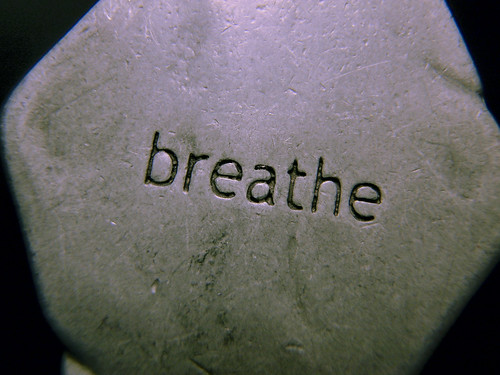
Rabbi Lawrence Kushner, the Reform movement’s scholar-mystic, writes, “…in truth [these four letters] are unutterable. Not because of the holiness they evoke, but because they are all vowels and you cannot pronounce all the vowels at once without risking respiratory injury. The word is the sound of breathing. The holiness name in the world, the Name of the Creator, is the sound of your own breathing.”

Rabbi Kushner continues, “that these letters are unpronounceable is no accident.”

Is – Was – Will Be
Think about the letters. The last three – Hey-Vav-Hey – הוה – combine to form the word “hoveh,” which means present tense. Hebrew as a language lacks the word “is.” Whereas in English we say “He is wise,” in Hebrew, we say “Hu chacham,” two words without a third, because Hebrew as a language lacks the word “is.” So part of these four letters refers to “is” or the present.

Now in Hebrew the vowel “Vav” can be interchangeable with the vowel “yud.” Thus Hey-Vav-Hey may be read Hey-Yud-Hey –  היה – to form the word “haya.” “Haya” is the past tense, meaning “was.”

You know where this is going. In Hebrew, when you place the letter “yud” before a verb, the tense changes from past to future. “Haya” becomes “yihiye” – יהיה, “was” becomes “will be.”

So Who or What is God?
From an unutterable four-letter word – יהוה – comes a multilayered understanding of God. God is that which simultaneously IS, WAS and WILL BE.

“God’s Name,” to quote Kushner, “is the Name of Existence itself.” Or more clearly, God is Existence.

Do you believe in God? Does it matter? We are all part of the river of life that was, is, and will be forever more.

Perhaps the more appropriate question is:


Are you living life consciously, mindfully and in connection with everyone and everything else in existence?

How Reciting Shema Can Save a Kid’s Life

Shema. More than a prayer, it is a bold theological statement. More than a verse from Torah, it is an idea which goes to the heart of what it means to be a Jew. The Shema holds a power that is mystical.

A Story 
…about an incident at the San Diego airport. A police officer approached a woman and the four- or five-year-old girl standing beside her. Said the police officer, “I am sorry to bother you, but a four-and-a-half year old girl has disappeared. The description given by her parents very much fits this girl – blonde, blue eyes, curly hair, wearing a red dress and black shoes. I don’t want to alarm you, but I am going to have to ask you some questions to prove that this little girl is really yours, that she isn’t the girl who is missing.”

What a horrible situation! Every parent’s nightmare. This woman had to prove that her daughter was really her daughter. Privately, the police officer asked the woman’s name, address, hometown and husband’s name. Then he said to the little girl, “What’s your name?” “Mary,” she answered. “What’s your last name?” Silence. “Well, where do you live?” “At home.” “Do you know the name of your city?” “Nope.” “What’s your father’s name?” he asked. “Daddy.” “What does he do?” “He goes to work.”

Not getting anywhere with the little girl, the police officer asked the woman if she had any pictures of the little girl in her wallet, or pictures of her husband that the little girl might recognize. She hadn’t any. He asked to see the plane tickets, but they were flying on standby, and besides, they had different last names.

Shema: One Way to Prove Your Child is Actually Your Child 
So what would you do? How would you prove that your child is actually your child? How would you prove that the little girl or boy with you isn’t really someone else’s child whom you’ve kidnapped? Or worse, that your missing child is actually your child? Frightening, isn’t it?

Eventually, the mother offered the police officer a way to prove that the child was hers. She said, “Rachel, tell the police officer what we say each night before we go to bed.” And little four-and-a-half-year-old Rachel answered, “Shema Yisrael Adonai Elohenu Adonai Echad.” And the mother smiled widely as the police officer confirmed that this is just what the mother predicted that little Rachel would answer.

The Power of Shema to Save
Such is the power of Shema to save. Whether bonding a child to her parent, or a believer to his God, Shema is a powerful prayer. With my own eyes, I have seen the words of Shema calm a dying woman in her final days. I have witnessed Shema give strength to a man frightened about the future. Words, which evoke the calming presence of a hundred generations gone by, connect us in the present to that Force which unifies all existence.

This week and next, I am spending some time studying about and meditating on the Shema.

Question for You to Ponder
What do you think about when you recite or hear the Shema?

5 Meaningful Moments of the High Holy Days

When Congregation Or Ami met at for Rosh Hashana and Yom Kippur services at the Thousand Oaks Civic Arts Plaza, we celebrated five sacred moments:

  1. Moment of Reflection: As we look back on the previous year 
  2. Moment of Counting: As we count the blessings in our lives.
  3. Moment of Celebration: As we celebrate the creation of the world 
  4. Moment of Jubilation: As we reconnect and recommit to the Holy One of Blessing 
  5. Moment of Looking Ahead: As we consider who we could be (should be) in the year to come. 

With prayer and peacefulness, song and story, sermon and silence, we will encountered ourselves, our loved ones, our memories and our God.

Do you feel prepared now to move into the New Year 5773?
For most of us, the work only begins on the High Holy Days. We take each day continue to reflect, count, celebrate, jubilate and look ahead.

So do the work still, as you walk ahead on the path of life.  Take some time in the days to come, and ask yourself:

  • How will I be blessed this year? 
  • Who can help make my life better this year? 
  • How will I helped improve the world this year? 
  • Where might my connection with holiness and the Holy One deepen? 
  • What need I do to improve my life and the lives of those whose lives touch mine?

Keep pushing forward!

Breathing Through God

Did you know that when you breathe you are connecting to God? Or you could be if you were aware of what you were doing. Really.

As part of our experimental Jewish Spiritual Journey Facebook Group, one participant asked me, “Does the word SHEMA have something to do with our breath?” I love the question. Here’s how I answered him:

Shema absolutely has to do with the breathe because it twice invokes the name we call God, the four letter name Yud Hey Vav Hey which we often pronounce as Adonai. Adonai is just a euphemism for Yud Hey Vav Hey, meaning “my Lord”. My Lord was once considered a very high honorific in human society, thus that’s what we used to call God (today we would choose something like “Celestial CEO”).

But this four letter name of God Yud Hey Vav Hey is really unpronounceable, as it consists of four expulsions of breath from the mouth or throat. Yud occurs back where the hanging thing in the back of your throat is. There is no sound unless combined with a vowel. Try making a “y” sound without a vowel attached. Hey, twice appearing is just the expulsion of breath through the open throat. Unless accompanied by a vowel, it just is the unsounding sound of breath release. Finally, Vav stands for the “O” or “OO”, neither of which really make a sound beyond the stop and start of the breath in the mouth.

So when we twice say Yud Hey Vav Hey during the Shema, we are saying that the Breathe that makes no sound IS God, or at least where God resides. God resides in the breathe. God is the breath.

That breath is echad, one, the oneness or unity that unites all life and all creation.

So I ask all of you: Do you connect spirituality and/or breathing with Shema? Do you find yourself more spiritual when you are connected to your breath or breathing?

BTW: Our Jewish Spirituality Journey Facebook group is a closed group (meaning the answers do not appear in the Facebook pages of non-participants). Anyone can join the discussion. Just email Rabbi Paul Kipnes and ask for me to add you to the group. Of course, you have to Facebook Friend me first. Join in. We have already had some great discussions.

Jewish Spiritual Seeker: A Facebook Experiment in Spirituality

A few years back, we started a Jewish Spiritual Seeker website.  About a dozen of us participated regularly, posting and commenting on each other’s posts.  Once a month I would post a question about spirituality and invite congregant-volunteer-bloggers to respond.  Each blogger was also asked to comment on 2-3 posts by others.  We had a great conversation about spirituality.   The blog won an inaugural North American Union for Reform Judaism Techie award since it engaged congregation members in Jewish conversation using a blog as the medium.  (I would share the URL but the site has recently been hacked and until we figure out the fix, I don’t want to give the “medical pills” website any more business.)

Since Facebook is the medium of preference for so many, we thought, why not experiment to see if people would participate in serious spiritual conversations in this online community. Thus the Jewish Spiritual Seeker Facebook community was born.

An Idea: What kind of conversation could we create if we brought together a dozen adults to explore, over the course of a year, their thoughts and experiences on the Jewish spiritual journey? 

The Technology: What if we could harness technology – a Facebook Community – to provide the opportunity for these adults to reflect upon their Jewish spiritual journey? (Meaning: no meetings, just think your thoughts and go online.)

Monthly Questions: What if every month a question was posed – about spirituality or holiness, about how you pray, about questions you have about God, about when you feel most spiritual – which you could consider and then reflect upon by writing on the Facebook community page?

We are preparing to kick off the discussion within two weeks.  We have already a dozen who are interested.  

Do you think of yourself as a spiritual person?  Are you willing to engage others in conversation about what that means to you and them?  Then check out the Jewish Spiritual Seeker Facebook community page, and if you are willing to take a chance, LIKE the page.

Questions? Contact me through the Jewish Spiritual Seeker Facebook page.

And may the conversations to come be inspiring and uplifting.

Barking Dogs and Reflective Rabbis

A story…

Nachman of Bratzlav, the great Rebbe was walking with Rabbi Nathan, his greatest disciple, through town and they passed a fenced yard that was guarded by dogs. These were vicious, half-starved, half-mad beasts that rushed up to the edge of the property to lunge, bark and howl at the two men walking by.  

Rabbi Nathan, the student, did what any of us would have done; he jumped at their barking, picked up his pace and cast those dogs a glance, hoping the fence was well secured.  

But Nachman didn’t jump, he didn’t react like we would. Instead he stayed at the fence, and just said in a patient, calm and sympathetic voice “I know, I know”.  

Later, Nachman explained that those dogs weren’t just dogs. They were souls trapped in the bodies of dogs, souls caught in the gilgul, the cycle of ascent and descent, and as they were not human, never mind Jewish, they could not perform the necessary teshuvah (repentence) to ascend again. Whereas Reb Nathan heard only angry, ferocious beasts ready to devour him, Reb Nachman heard instead the cries of pain of those who could not recover their own spiritual selves. And it would be Reb Nachman’s job to help release them of their pain, to find a way to descend toward them in order to help those dog-trapped souls ascend.  

What are we to make of this story? Most of us don’t know how to talk to dogs, or at least identify when dogs have an existential crisis. (I don’t even have a dog.)  

But more to the point, most of us – like Reb Nathan, the disciple – miss the spiritual element of the moments of our lives, of each individual encounter, as easily as Reb Nathan missed the souls trapped in those vicious dogs. 

Rabbi Yair Robinson, a Delaware Rabbi, makes meaning of this story:

To be sure, we hear cries of pain; in those suffering from AIDS, from poverty, from humiliation and hunger and abuse. God-willing, we may even heed those cries and try to bring some kind of relief. But whether it’s in our own lives or in the lives of others, we often miss the element of holiness, the spirit, the Godliness, of other moments.  Read on.

Again, I just ask:

How do we slow down enough to recognize the reality of each moment of our lives?   

I’m sitting here with my daughter on our daddy-daughter day (she’s studying right now before dinner).  Enough pondering.  Time to focus on my kid.

Shiviti: Sometimes God’s Wisdom is Right Before Us

Sometimes wisdom is right before us.  Sometimes God’s presence is nearby, if only we open our eyes to it.

On a plane ride back from installing our former intern, now rabbi, Brett Krichiver as Senior Rabbi of Indianapolis Hebrew Congregation, I was thinking about an issue that was troubling me. Instead of wasting the time playing games on my iPhone, I took out my iPad to read.  Instead of reading the delicious novel, I picked up the book our other Rabbi Julia Weisz and I assigned to ourselves. Next thing I knew, there before my eyes was a response to the troubling issue.

God’s presence, nearby, directed me to find my own answer.  At least that’s how I see it.

Similarly, the Velveteen Rabbi (a poet, a fellow blogger) explores the desire to find God – and find wisdom – in the most painful of places.  I thank her again for her piercing wisdom.

SHVITI – a poem about finding God, even when it hurts
by the Velveteen Rabbi

I keep God before me always. — Psalm 16:8

Always before me:
in the checkout line
at the pharmacy
where I’m reading mail
on my phone, in the pixels
of my computer screen

in the locked ward
where I never know
who will want
to talk about God
and who will shuffle past
without meeting my eyes

in the stranger
whose barbed words
leave me sick and sad
and in the tallit
I wrap around my shoulders
to hold me together

in my toddler’s cries
at four in the morning
in the painful conversation
I don’t want to begin
in every ache
help me to find You

The Velveteen Rabbi continues:

The title of this poem is the Hebrew word “Shviti,” which means “I have set” (or, more colloquially, “I keep.”) It is the first word of the line from psalms which serves as this poem’s epigraph. Artistically, a shviti is an image (usually of God’s name) designed as a focus for meditation on the presence of the divine. (Here are images of a whole bunch of them.)  

The Baal Shem Tov, founder of Hasidism, teaches that this word is related to the Hebrew word hishtavut, which means “equanimity.” When I keep God always before me, then I have equanimity; nothing can shake me. (I posted about this teaching back in 2007.) This is not an easy teaching to embody.  

It’s easy (for me) to find holiness, and to find God’s presence, in the world’s beauty: the pink smear of sunrise across the horizon, a child’s laughter, the embrace of a friend. It’s a lot harder (for me) to recognize the presence of God in suffering and in discord. But even in what hurts, there is opportunity to open the heart to God. 

 Wishing all of y’all a Shabbat of wholeness and peace.

Shehecheyanu: Celebrating Newness and blessings

My all time favorite prayer is Shehecheyanu, the Jewish prayer for first time events. We say it whenever something new happens. Given the Jewish penchant for finding blessings in each moment of life, this prayer is also recited the first time something happens in a given year. Like holidays. I have sweet memories of singing it with my kids when teeth fell out, when we jumped in the pool for the first time each summer, and when we began school years.

Here Congregation Or Ami’s Chorale sings the Shehecheyanu as we begin Rosh Hashana evening services.  As you listen to the beautiful tune, consider what you count as your most important Shehecheyanu moments of this past year. 

A Quick Meditation at Noon

My new friend, Alden Solovy, who is currently wandering around Israel seeking holiness and direction, wrote another meaningful meditation.  In an existence in which each moment of each day is suffused with holiness, his prayer reminds us that we need only to open ourselves to sense this holiness.

Read this prayer now, then print it out.  Carry it around with you and try to read it once each day for a week.  Notice how this affects your day.  I would love to hear about it!

A Quick Meditation at Noon
© 2011 Alden Solovy and www.tobendlight.com. All rights reserved.

There’s still time to live this day with intention,
To set aside petty thoughts and small tasks,
To see myself with dignity and grace. 

There’s still time to live this day with my hands and my heart,
To walk with strength
To act with courage,
To offer kindness,
To build and to sustain,
To embrace and to bless. 

G-d of forgiveness,
Thank You for the gift of hope
That You’ve planted in every moment,
The gift of renewal that You’ve given to every hour,
So that we may find the way
To redeem our days with holiness.

Amen.

Omer Day 20: Making it Through Transitions

Today is day 20 of the Omer, that’s 2 weeks and 6 days into the journey from Egypt to Sinai, from the moment we left the dark places to the time we received the instruction (Torah) which gave us direction.

I imagine what it was like to be an Israelite during that journey. Clear that I was leaving an unhealthy place, I lacked a clear picture of where I – where we – needed to go. It would have been a period of intense uncertainty; the anxiety threatened to overwhelm.

I imagine what it is like today to be an Israelite (a Jew, a member of a Jewish family, you), trudging slowly forward on an uncertain journey. Is your wilderness trek taking you:

  • Away from a dead end job?
  • An unexpected layoff?
  • On a search for financial security?
  • Out of a home that hurts you?
  • A relationship that drains you?
  • On a quest to renew love and warmth?
  • Toward recovery from addiction?
  • Release from pain?
  • On a hunt for hope and healing?

In times like these, our prayers are many. One of my favorite modern liturgists, Alden Solovy brings together so many of our jumbled emotions and needs in his prayer Transitions:

G-d of sacred moments,
G-d of endings and beginnings,
Hear this prayer for guidance and deliverance
As my life moves in new directions,
Onto new paths,
Into uncertain water. 

Grant me courage as an answer to fear,
As the winds blow,
Strength as an answer to doubt,
As the storms gather,
And wisdom as an answer to uncertainty. 

Grant me grace in the face of obstacles,
As fires rage,
Patience in the face of detours,
As the earth trembles,
And trust in the face of the unknown. 

Grant me joy in my successes,
As the sun warms the land,
Humor in my defeats,
As the cactus opens a flower,
And acceptance throughout my days. 

Grant me faith in Your guidance,
As songs lift my heart,
Gratitude for Your works,
As love lifts my life,
And joy in Your gifts. 

G-d of Old,
Rock and Shelter,
My time is a blink,
My journey a puff of wind,
My life fragile and fleeting. 

Therefore,
G-d of Secrets,
Grant me delight,
Luminous, majestic delight,
In using these blessings
In service to Your Holy Name.

© 2011 Alden Solovy and www.tobendlight.com. All rights reserved.

Question: Where are you in your transition? What do you need to pass from here to there?


Omer Day 11: Stop Doing, and Just Continue “Being”

Today is the 11th day of the Omer, that is 1 week and 4 days.
Today is also the day I write my 613th post on this blog. It feels like a mitzvah! A time to pause and reflect:

Shabbat Shalom.

  • Can you be at one with the universe?
  • Can you stop doing and just continue being?

Shema, a central prayer recited twice daily, concludes Adonai Echad.

Some teach that this means God is one, that God is not two like the ancient Zoroastrians believed. And God is not three, like we Jews understand the Christian Trinity to really express (Father, Son, Holy Ghost equal three for Jews). And God is not many, like the ancient Greeks and the contemporary Wiccans believe.  All this is true for Jews.

I prefer to translate Adonai Echad as God alone, following our Reform Movement siddur (prayer book), Mishkan Tefilah. This teaches multiple significant lessons:

  • There is nothing but God. Ain Sof, as the Kabbalists express, God has no end. Everything is within God. Separation is just a way we comprehend the world. Unreal but effective. So we are part of the Oneness of the Holy One.
  • Everything is connected to everything else. If God alone means everything is God, and I am within God and You are within God, then we are connected within God. It means that I am connected also with those I do not know, those I have never met and those who exist across the world and across our city. Rabbi Lawrence Kushner teaches that the world exists within the invisible lines of connection.
  • If I want to experience holiness, sometimes I should just stop acting on and in the world and just be. When I just focus on being, I might catch a glimpse, a sense, a shadow, of the is-ism of Adonai Echad. I might truly recognize that I am part of that oneness.

It is hard to do when one is running and doing. So try this. It is something I learned at the Institute for Jewish Spirituality.

Sit comfortably, quietly close your eyes, and just breathe. Focus on the breath. When thoughts come into your mind, categorize them as pleasant or unpleasant. If pleasant, push them, in your mind’s eye, to the left. If unpleasant, push them to the right. Then return to focus on the breathing.

You might find, somewhere in there, that you sense the eternality of the breathe, that just in being you exist in a most profound form.

At that moment, you just might have experienced the oneness of holiness, the oneness of the Holy One.

For more mediations on living on the journey, take a look at Seeking Words Where There are None, the Omer blog of Rabbi Ari Margolis, a former Congregation Or Ami summer rabbinic intern. It is well worth the time.


God Speaks at Jersey Mike’s

And then there are moments like this: when the heart opens to the Holy and fills with awe, wonder and love. Like now.

I sit here in the most mundane of places, at a table outside of the local sandwich shop Jersey Mike’s, having just consumed a Caesar Wrap (damn you, slightly rising cholesterol) and a caffeinated diet coke. Yet my heart has opened to the Holy One.

First came awe. I noticed that above the constant stream of highway traffic, there arose a range of hills, greened by the record-breaking rains that assaulted our environs. Patches of yellow wildflowers peaked out among the smattering of trees and outcroppings of rock. Where did this come from, this oasis of serenity amidst the cacophony of cars? A light blue sky rests overhead, enjoying the softest of cloud cover like confectionary sugar sprinkled on French Toast.

Is this a new sign from the One without End, saying that awe-inspiring creations surround us always? Or were the wonder-filled creations just hidden away until my heart opened up, ready to see that which was revealed?

It feels it is love. I text my wife, “Sitting at Jersey Mike’s, eating a wrap, reading and looking at the green hills. Was filled with awe of life and overflowing love for you. Thought I would tell you.” She texts back, “Wow. Thank u. Love u 2. Very much. Anything “new”?  I do not respond because my love for her and my love for life so overwhelm that nothing can distract.

I notice the inspiring journal I was reading, a CCAR Journal symposium on finding our path after ordination. Had the words of Dr. Carol Ochs, on Fostering a Relationship between Rabbi and God, moved me so? Or was it just a key, turning the locket that had enclosed my heart? And does it really matter?

Time clicks away; cars rush by.  But appointments beckon. I begin to rise.

Off in the distance those hills – so lush, colorful, peaceful – wink at me as if to say, “This is our place. An oasis of holiness. It’s always here. Just outside, beyond the freeway, as seen from a table, at Jersey Mike’s.”

Wisdom from Bat Mitzvah Student Lauren: Making God Feel Real

More than anything, I love the individual time I spend with our pre-B’nai Mitzvah students, getting to know them, studying together their Torah portion, and exploring their ideas about God, Torah and Judaism. Without fail, they each surprise me (often teaching me), as they open my eyes to an enlightening perspective on the parasha (Torah portion) or a new way of relating to the Holy One. This week, Lauren Perlmutter articulated an almost universal truth about how some of us relate to God. While her Bat Mitzvah service is still weeks away, her wisdom needed to be shared now.

I asked Lauren what she believes about God. She wrote:

If someone were to ask me what I believed about God, I would say I honestly am not sure. When I am at my Jewish summer camp, Camp Newman, in closing circle, praying before we eat a meal, or doing Havdallah with all my friends, I do believe someone or something is there. It makes God feel real. At home, however, in daily life, I do not always think about God and the religious aspects of Judaism. If I were to take a step back from daily life, maybe I would feel the feeling that I have had with God in the past.

Simple wisdom!

When we are immersed in a clear spiritual experience – Jewish summer camp, the High Holy Day services, a Bar/Bat Mitzvah service, a funeral, a hike in a National Park – God’s presence is almost tangible. Yet as we leave that moment, the experience often recedes as our distance increases.

Here’s where young Lauren’s simple wisdom is most erudite: Were we to take a step back – from the hustle and bustle of our daily lives – putting ourselves purposely, mindfully in a place/ritual/experience/moment that holds spiritual potential, we might feel the feeling that we once had with holiness or the Holy One… with God.

Spirituality – holiness – like wireless internet – is all around us.  If we run around so much, if we fail to turn on our AirPorts (wireless internet receivers), we will miss the awesome, amazement that surrounds us.

This Shabbat, take a step back:

  • Hike through the mountains
  • Walk on the seashore
  • Come to Shabbat family services (Bay Laurel Elementary School at 7:30 pm)
  • Light candles, make kiddush, bless challah
  • Ask your loved ones when they have ever felt close to God
  • Read through the prayerbook
  • Do yoga
  • Meditate
  • Talk to God

You might be amazed at the feeling you begin to feel again!

Prayer for Egypt, Its Leaders, Its Citizens, Its Supporters

Under the category of Things I Wish I Wrote, here is a Prayer for Egypt written by Alden Solovy. Alden is a talented liturgist, writes fabulous new prayers almost daily and posts them at www.tobendlight.com.  Adlen is also an award winning essayist and journalist, having written for daily, weekly and monthly newspapers, as well as magazines, e-newsletters and blogs. His short fiction has been published in the Jewish and secular press.  Alden has taught prayer writing classes to adults and teens and occasionally reads his works in performance settings.

For Egypt

G-d of All,
Protector and Redeemer,
Watch over the people of Egypt

As their nation faces struggle and strife

On the journey toward hope and promise.

Grant safety to its citizens and residents,
Visitors and guests,

During moments of unrest.


Grant wisdom and courage to its leaders,
Insight to its advisors,

And understanding to its friends.


Lead them on a path toward justice.

Direct them on the road to freedom.

Guide them on the way to prosperity.
Make them a shining light of peace.

Source and Shelter,

Grant safety and security to all nations,

So that truth and harmony resound
From the four corners of the earth.

Blessed are You, G-d of All,

Forging nations and peoples

In the crucible of change

Throughout history.


May this time of challenge for Egypt
Become a blessing for its inhabitants and for the world.

© 2011 Alden Solovy and www.tobendlight.com. All rights reserved.

Lies My Brother Told Me

I happen to know a Jew, who is not a fan of the organized religion part of Judaism. He likes the values, most of them.  He appreciates the commitment to family, usually. But the whole religious part – you know, the organized prayer, the specific stories of Torah, various beliefs about God – just turn him off. He can appreciate the Jewish stuff brings meaning to others, but not for himself.  He will use any excuse to stay out of temple, so that his friends give him specific honors so he is forced to attend the family simchas. 

And ritual, he has a special dislike for the “do’s and don’ts” of ritual. Formulaic, ritualistic, primitive, boring. I thought he just didn’t like ritual.  And then, he began to tell me about his Thanksgiving dinner.  And all of a sudden, I realized we had much more in common than I thought.  Turns out that the ritual-disliker was really a ritual-creator, at least in relation to Thanksgiving.

They invite a 25-30 people for dinner, which he, his wife and friends have labored over for a few days. Appetizers galore, main course, fancy wine and beers, delicious desserts. Upon arriving, people nosh and shmooze. Everyone gathers around the tables, sitting and salivating, awaiting the ritual which allows them to dig in.

Each guest speaks about what they are thankful for this year. Although the participants sometimes laugh and at other times shed tears, the ritual is structured and serious.  There’s no eating in this house until everyone – concluding with the host and his wife – has named their blessings, and all give thanks. 

It turns out, that for these Thanksgiving diners, this ritual is meaningful, inspired and for many, their primary connection to the Holy One.  Let us give praise where praise is due, lest we descend into sin by labeling each other as good Jews or bad Jews. There are many paths to the Holy One!

On Sukkot (Judaism’s Thanksgiving), the rabbis connect the four species of the lulav and etrog to four different kinds of Jews: those with Torah learning, those with good deeds, those with both and those with none. Their lesson is that it takes all kinds of Jews to complete the Jewish community.

May Thanksgiving remind us that we Jews are all brothers (and sisters), each approaching tradition, ritual, and belief in unique ways, from different perspectives.