Tag: Reform Judaism

Why Fast? Thoughts from the Yom Kippur Yenta

Why Fast? I am reminded of a true story, about a Rabbi driving to services on Yom Kippur. There he was, driving down the highway, reviewing the sermon in his head, while apparently, pushing the gas pedal to the mat, when lights flashing and sirens blaring, a motorcycle cop pulled him over.

Smile on his face, hands on the wheel, the Rabbi turned to the uniformed officer by his side. Said the cop, “I’ve been following you for a block and a half. Did you realize you were speeding?” “Not really”, replied the Rabbi honestly. “Well, I clocked you at 55 in a 30 mile per hour zone”, “he said. “What’s your rush?”

What’s my rush? wondered the Rabbi. Do I tell him that I’m a Rabbi about to lead services on Yom Kippur, the most sacred of Jewish days? Do I admit being so caught up reviewing the sermon I was to preach within the hour that I failed to notice how fast I was driving? Do I face up to my sins by admitting that I regularly speed on this stretch of roadway or do I ask for a mere warning? Figuring Yom Kippur was not the day to shade the truth, the Rabbi responded, “sorry, sir”.

The officer wrote out the speeding ticket and handed it over, saying “sorry about this, sir, but you really should slow down.” And then, just before he left, the cop turned and in a voice dripping with irony, whispered, “oh, and Rabbi, next time, try to stay out of the fast lane”.

Stay out of the fast lane, he says, to a Rabbi who has not eaten since the day before. Slow down, he says, to a person who like so many in this room, spends much of his day rushing around from one place to the next. We cannot slow down! We rush from home to office, to school or on errands, from meeting to meeting and from activity to activity, shlepping ourselves, our kids, or our parents to the next important event, rarely stopping to fully enjoy the moment because we are desperately trying to remember the next place we have to rush off to.

Slow down, he says. But there is not enough time, we reply, as we think back over our day. “Hurry up, we are going to be late”, we yelled at the kids this morning as we rushed them off to school. “Hurry up, or we will miss the deadline,” we heard this afternoon from our boss or our co-workers. “Hurry up and make a decision,” we called out to our friends, even though the best decisions are often made when we take them slowly. “Hurry up, hurry up! We will miss the next opportunity!” So we hurry even though we realize that in rushing onward, we failed to savor this opportunity. And so it continues, until the officer dressed in blue, our angel from on high, cautions us to slow down. Like the angel in the story of the binding of Isaac who commands Abraham to slow down and consider what he is about to do before he plunges that knife into the heart of his much loved son Isaac, our motorcycle angel warns us to slow down, to get out of the fast lane, before we end up killing ourselves.

During the High Holidays, the most sacred days of our year, we are warned to bring about radical change in our normal behavior, to stop blindly rushing onward, to start looking inward, and yes, to get out of the fast lane, so that we can focus on the task at hand: self-judgment and asking forgiveness.

[That’s the Story, Now Read on for the Reasons to Fast]

Abraham Failed God’s Test! But God Loved Him Anyway

Each Rosh Hashanah, we read the horrid tale of the Akedah (Genesis 22), the almost sacrifice of Isaac by Abraham. Commentators throughout the ages characterize this story as an example of the heights of faith. Abraham loved God so much he was willing to give up the child he waited so long to bear.

But in as much as this might have been a test of Abraham, I read the story as a clear indication that Abraham failed the test.

Consider this: Did God really command Abraham to sacrifice his son as a burnt offering? Read closely. According to one commentary, Midrash Tanhuma, it all hinges on one word – olah. In the Torah, God said to Abraham v’haaleihu sham l’olah, bring up Isaac as an olah. The Hebrew word olah, comes from the root Ayin-Lamed-Hey, meaning, “to rise up.” Must olah here mean, “sacrifice,” as in the smoke of the sacrifice rises up? Or might it be connected rather to a more familiar word aliyah, also from the Hebrew root Ayin-Lamed-Hey, meaning “spiritual uplift?” In this reading, God only said, “raise up your son with an appreciation of your devotion to Me.” Perhaps Abraham was so dazzled to be speaking to God that he became confused. What if he misunderstood God’s intended purpose?

Rashi, the greatest Biblical commentator of all time, also hangs his interpretation on the same word. He explains (on Genesis 22:2), perhaps God was saying, “When I said to you ‘Take your son’… I did not say to you, sh’chateihu, ‘slaughter him,’ but only ha’aleihu, ‘bring him up.’ Now that you have brought him up, introduce him to Me, and then take him back down.” Instead of wanting Abraham to sacrifice Isaac, God really only wanted him to spend some spiritual “quality time” with his son. Had Abraham only paid close attention, he might have spared himself, Isaac, and Sarah a significant amount of stress and pain.

But in a strange twist, the angel of God who stopped Abraham from killing his son responds with love, not rebuke. God praised Abraham. Why would God praise him if Abraham misunderstood the command? Perhaps God, through the angel, reaffirms to Abraham how much God loves him, but also signals that Abraham and his followers should no longer employ cruel or intimidating means to ¬¬show their love for God.

This need not, however, be understood as condoning Abraham’s actions. Rather, the angel’s words remind me of that parent who walked into his freshly painted house. Dad is greeted at the door by his young son who, with a big smile on his face, says, “Daddy, come see how much I love you.” The boy brings his father into the next room and proceeds to proudly show him a picture drawn in magic marker on the living room wall. It was a red heart, inside of which were the words, “Daddy, I love you.” How does a parent respond to such a display of love, especially after spending thousands of dollars to paint the house just right? Most of us would yell, and yell loudly. But if we stopped first to think about it, we might say, with tears in our eyes, “I love you too, my son. Try to use paper next time. And you may not write on the walls. But, I love you too!” Similarly, through the words of the angel, God, the patient One, who cherishes Abraham, teaches love and forgiveness as an example for future generations.

Now consider this… Prior to the Akedah, each encounter between God and Abraham occurs in direct one-on-one conversations. But from this point on, God never again speaks to Abraham directly. All further communication is passed through an angel. Why? Because Abraham simultaneously passed and failed the test. He showed his love of God, yes, but he employed violent means to pursue that love. The use of an intermediary – the angel – proclaims a message for future generations: Abraham really didn’t listen to God’s teachings of compassion, did he? [For footnotes and citations on this reading, see What Does God Want from Us?]

Interested in the implications of this reading of the story? Check out:

Goodbye Rabbinic Judaism, Hello Judaism’s Third Phase: “Freedom Judaism”

Rosner’s Domain, a blog on Haaretz newspaper, invited Gil Mann to be Rosner’s Guest for the week. Mann is author of 2 books: Sex, God, Christmas & Jews, Intimate Emails About Faith and Life Challenges, a finalist of the Koret International Jewish Book Award, and How to Get More Out of Being Jewish Even if: A. You are not sure you believe in God, B. You think going to synagogue is a waste of time, C. You think keeping kosher is stupid, D. You hated Hebrew School or E. All of the above!

Mann talks about something called “Freedom Judaism“, the third phase of Judaism after Temple Judaism and Rabbinic/Halachic Judaism. Fascinating. Read on:

When the temple was destroyed 2000 years ago, Judaism was forced to reinvent itself. Over time, our leaders brilliantly came up with a way to perpetuate Judaism that was not centered on the temple. They invented Rabbinic Judaism or what some call Halachic Judaism.

Today, perhaps as many as 90% of the Jews on the planet no longer lead a life governed by Halacha. (Orthodox Jews and a small number of others make up the remaining roughly 10%). Yet Jews and Judaism still exist. If we do not live in era of the Temple or Rabbinic Judaism, what is this era? I believe we are reinventing ourselves as radically as when the temple was destroyed.

I call this third new era Freedom Judaism. It began when Jews were first emancipated in Europe. In the last 100 years or so, Freedom Judaism has become a radical new reality for Jews because of 7 phenomenon. Read more.

Anticipating the New Reform Movement Prayer Book

The New York Times reported on Mishkan Tefilah, the new Reform Movement prayerbook due out later this fall. In the article In New Prayer Book, Signs of Broad Change (September 3, 2007) we learn that “The nation’s largest Jewish movement is preparing to adopt a new prayer book intended to offer something for everyone, including people who do not believe in God.”

While that may be a bit of overstatement, this new prayerbook does seem to have been constructed to provide a meaningful experience for all who come to the synagogue during services. Having used an early draft version for more than a year and a half, Congregation Or Ami is greatly anticipating the arrival of the new prayerbook.

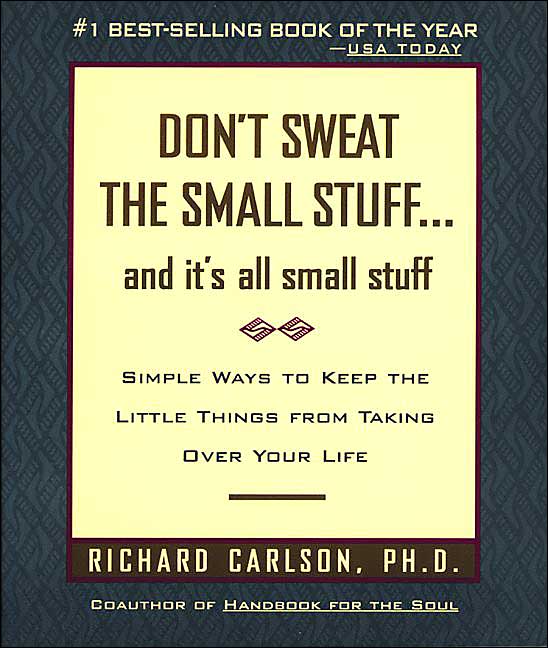
Make High Holy Days Meaningful: Don’t Sweat the Small Stuff


Let’s face it. The High Holy Days can be stressful. For those with school-age children, Rosh Hashanah and Yom Kippur coincide with the beginning of the school year. The lighter workload of the summer is replaced by the need to buckle down at our jobs. Traffic increases. Sports teams organize. Religious School begins. We are back in the rat race.

Amidst the Back to School Nights and the resumption of volunteer responsibilities come the High Holy Days. While promising spiritual uplift, they are often shrouded by a demanding “to do” list:

• Make the brisket.
• Buy new Temple shoes for the kids.
• Find an outfit to “keep up with the Steins.”

• Negotiate the family gathering.
• Send the High Holy Day cards.
• Does honey have an expiration date?

Then there is shul time:

• Long services.
• Lengthy sermons.
• Kids fidgeting and bored.

• Dread the fast.
• Confront the guilt.
• Acknowledge how much we missed the mark.

Our prayerbooks ask “who shall live and who shall die in the coming year?” Many of us are more concerned with how to make it through this hectic Holy Day season! Where is the payoff for the energy we exert and the exhaustion we endure?

Oprah and others chant “don’t sweat the small stuff.” Our kid’s baseball coach tells him “keep your eye on the ball.” We can find meaning in the midst of the madness. How? Try out this alternative “to do” list for a spiritually meaningful season:

• Think about your year, the ups and downs. Celebrate the ways you have grown.
• Consider your shortcomings. Figure out how you might bridge the distance between who you are and who you would like to be.
• As our yoga instructor teaches, get rid of the chatter in your head and focus on breathing. Inhale deeply.
• Create space for prayer. Let tradition wind its way into your soul.
• Embrace the new beginning and the possibilities of the New Year.
• Choose age-appropriate prayer experiences for your children. Find a service or more just for yourself.
• Simplify your menu; it will still be delicious.
• Wear comfortable shoes.
• Use Chinette.

Shana Tova U’metuka. May this be a sweet New Year. Incidentally, honey lasts for three years. Serve it with apples, and it will still taste sweet!

Written by Rabbi Paul Kipnes and Michelle November. Rabbi Paul Kipnes is the spiritual leader of Congregation Or Ami, Calabasas, CA. Michelle November has worked professionally in the Jewish community for over 20 years. Together they have three kids and have survived fifteen High Holy Day seasons together as a family.

Fresh Perspective on Reform Judaism’s Gifts

Robert M. Heller, Chair of the Board of Trustees, Union for Reform Judaism, gets it right! He extols the refreshing perspective of Reform Judaism in its approach to Jewish life and living. Heller writes on the Jpost.com blog:

…That is not today’s world. Old barriers have fallen. When it comes to religion, we can be anything we want, choose any religious identity that fits, or choose to have no religious identity and practice no religion. Choosing to be Jewish today involves an affirmative act, not passive acceptance. The cliché is right: all of us who identify ourselves as Jews, at least all of us willing to live outside ghetto walls, are Jews by choice. …

Why are people in North America and Israel choosing Reform Judaism? …I believe people are choosing Reform Judaism because of attraction, not repulsion or revulsion over the perceived hypocrisy and corruption that flow almost inevitably when religious monopolies are created. They — we — are choosing Reform Judaism because it stands for something and enables us to engage in Jewish prayer, study and action that has meaning and relevance for us in today’s world, not because it is not Orthodox Judaism.

He lists 6 important tenets of Reform Judaism:

  • Proper role of halachah (Jewish law)
  • Egalitarian tenets
  • Inclusionary Approach
  • Pluralistic Outlook
  • Heading the Prophetic Voice
  • Dynamic Lay/Professional Partnerships

Read more.