Category: blog archive

10+ Commandments for a Successful Past Presidency

You spend a year or two leading the temple, being involved in every major (and often minor) decision that is made. You meet weekly with the rabbi, help determine policy at the head of the board, and enjoy greeting congregants at services, programs and on the High Holy Days. And then, your successor is nominated, elected and inaugurated and soon, you end up feeling like chopped liver. Such can be the life of a Temple President.

After enjoying working with two very successful past presidents, and sadly facing the conclusion of another successful president’s terms, I decided it was time to put some thought into what makes for a successful past presidency.

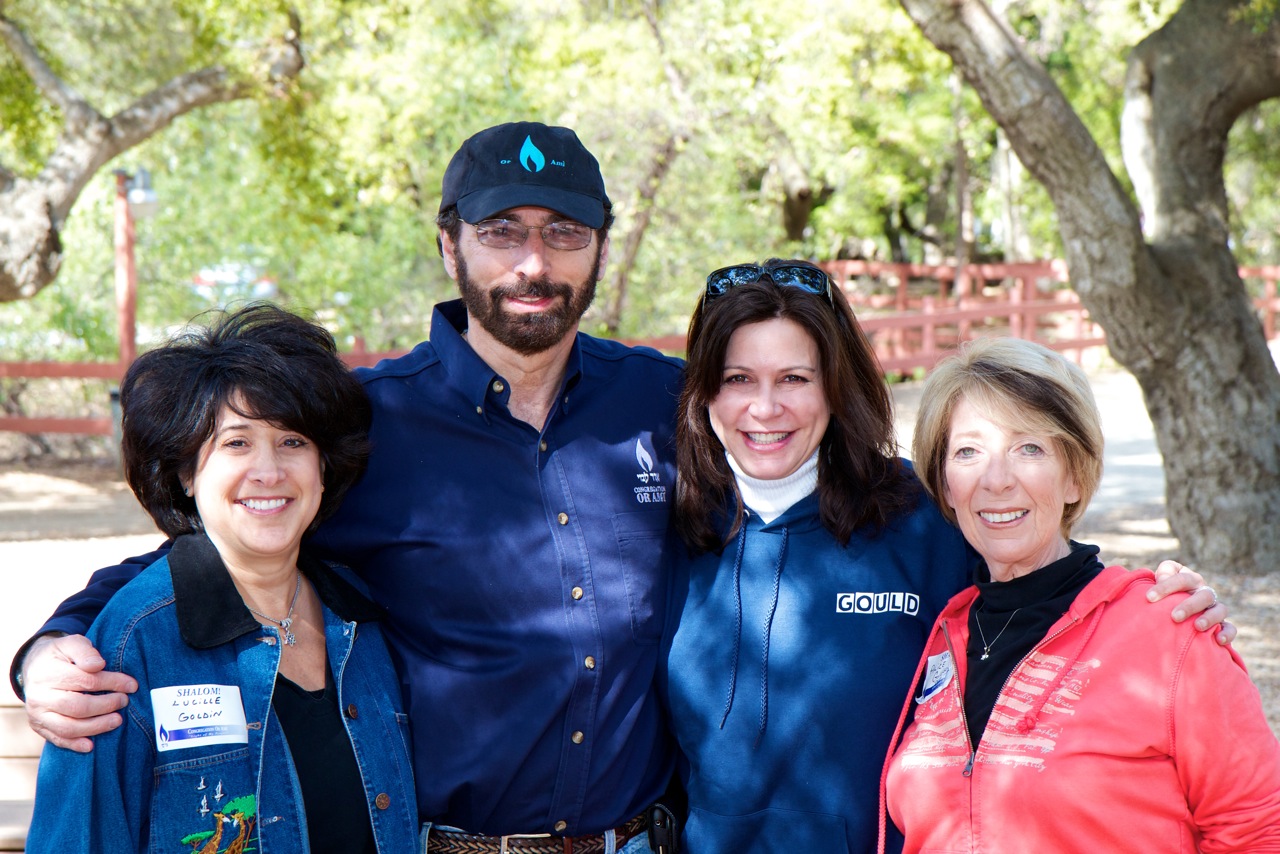
This document, 10+ Commandments for a Successful Past Presidency, represents the collaboration with Congregation Or Ami’s current president Susan Gould, with input from past presidents Michael Kaplan and Alice Goldsobel and president-nominee Lucille Goldin.

Ten Commandments for a Successful Past Presidency

13 Things I Love about Israel

Happy Birthday Israel! I wish I were there celebrating with you. I will eat some humus to celebrate today.

Inspired by Ima on the Bima’s list of 13 things she loves about Israel and in honor of Israel’s 62nd birthday today, I offer my own list of 13 things I love about Israel:

  1. Jerusalem is golden, Nachalot neighborhoods are richly diverse, and the city makes my soul sing.
  2. My two nieces made aliyah and are doing their part to strengthen the Jewish state.
  3. My children love Israel almost as much as I do, and cannot wait to get back again and again.
  4. I have made Aliyat HaNefesh (spiritual ascent – been to Israel) 9 times and still cannot get enough of her.
  5. Her language, Hebrew, flows somewhat fluently from my mouth.
  6. The Galilee is green, gorgeous, spacious and spectacular.
  7. You can walk on stone pathways that our Biblical ancestors actually walked on and up stairs that our ancestors actually climbed. History comes alive.
  8. Ain Avdat a Negev wadi, makes for a fun-filled, rock-climbing, water-discovering hike.
  9. Machane Yehuda on Friday afternoon is a a colorful, boisterous, deliciously smelly, pluralistic intersection of Israelis of all flavors and fruits and vegetables of all kinds. I love standing in the middle of it right then.
  10. Newness abounds: Tel Aviv, once lowest on my list of places to visit, now tops my list as a cultural pilgrimage site.
  11. Kehillat Mevasseret Zion, a Progressive synagogue in Mevasseret Zion, a Jerusalem suburb, is a virbrant beautiful community with an energetic, inspiring Rabbi Maya Leibovitch.
  12. The artists colony in Tzefat, filled with spiritual seekers and creative wonders, offers voice and visual to religious murmurings after a day spent touring the mystical sites.
  13. And the fact that this list can go on and on and on…

What are your 13 favorite things that you love about Israel? Do share!

Touching the Moment of Israel’s Creation

Anat Hoffman, the energetic, inspirational, forward-thinking Executive Director of the IRAC (Israel Religious Action Center) in Jerusalem, reflects upon Yom Ha’atzmaut, Israel’s Independence Day. In The Pluralist, the IRAC’s insightful eNewsletter, Hoffman captures the multi-sensory joy Jews feel at the creation/rebirth and existence of the State of Israel:

I am drawn again and again to A Tale of Love and Darkness, Amos Oz’s memoir of his early life in a young and bewildered Israel, a country which does not even formerly exist as such until a couple hundred pages into the book.

Every Yom Ha’atzmaut, Israel’s independence day, I think back to the passage in which Oz describes crawling into bed at three or four in the morning, still fully dressed, after celebrating the U.N.’s vote to create the state of Israel.

As a child, Oz understands the solemnity of the event, its historical dimensions, from observing the actions of his father, who lies down next to him and does something so out of character: he cries – tears of joy. And, in amazement, Oz takes note of his father’s reaction:

“I reached out sleepily to touch his face, just below his high forehead, and all of a sudden instead of his glasses my fingers met tears. Never in my life, before or after that night, not even when my mother died, did I see my father cry. And in fact I didn’t see him cry that night either: it was too dark. Only my left hand saw.”

Only his left hand saw. We remain in this moment with him – still our hand searches in the dark, tries to reach back in time to touch the moment of Israel’s creation, to grasp even a bit of what it must have been like to live through that time.

Oz does not choose the more reliable senses of sight or sound to translate the emotional incredibleness of one night years ago. He uses touch; and while we might imagine the sensation of hot tears on skin, something remains always out of our reach.

Oz, one of our greatest writers, comes close to but cannot pin down the ineffableness of that moment. Emotionally we get it, but putting it into words is like assembling a puzzle in a dream. But Oz invites us to try – with all our senses.

So I challenge you to do the same. Celebrate the event that made even Amos Oz’s father cry with joy. Tonight, as we move from Yom HaZikaron, Israel’s memorial day, to Yom Ha’atzmaut, let’s celebrate with all our senses.

Ending Genocide Can Be a Walk in the Park


My feet hurt. So do my kids’ feet. I’m guessing that there are about another 1,998 other pair of feet in Los Angeles that are still hurting right now.

That’s what you get when you try to make a statement on a world-wide scale about morality and genocide. I suppose it is also what happens when you spend a morning Walking to End Genocide. Standing up to take a stand sometimes leaves you feeling your morals secure and your feet sore.

It all started this morning in Warner Center Park as about 2000 of us gathered for Jewish World Watch’s annual Walk to End Genocide. It was a diverse group: adults and children, parents, grandparents and grandchildren, teens from NFTY and USY, high schoolers from New Jewish Community High School (among others), a bunch of college students from Hillel. It was also interfaith: Jews, Christians, Muslims and more. We all gathered in the hot sun to make a statement, loudly but firmly: that this world has no place, and we have absolutely no tolerance, for genocide in any of it’s forms or mutations.

Jewish World Watch, one of my favorite Jewish organizations, ensures that we who remember enduring oppression in Biblical Egypt and genocide in Nazi Germany, will raise our collective voices against modern genocides. So we march to tell the world that…

… We will not stand by after 400,000 were brutally murdered in Darfur Sudan and as the two million Sudanese refugees live in fear of a return of that genocidal brutality; and

… We will not stand idly by as hundreds of thousands of women and children are brutally raped, murdered and abused in the Congo as armies abuse the women so they become instruments of oppression and control; and

… We won’t allow the memory of the Holocaust whcih took 6 million of our people and 5 million others to become merely a slogan and our own private pain. No, we will use ou righteous anger over it to ensure that no one anywhere needs to face the scourge of genocide.

That’s why we at Congregation Or Ami ensured that over 170 members turned out to participate in and lead the walk as it’s largest delegation and biggest fundraisers (over $6000 to help end genocide). That’s why our social action chair Laurie Tragen-Boykoff and walk promoting chair Lisa Richman publicized and prodded people to come out and participate. It’s why our congregant Illece Buckley-Weber Participated on the Walk planning committee and orchestrated the silent auction. And why LOMPTY youth advisor Michelle Westmiller had our youth group participate and Mishpacha Coordinator Lauren Luskey brought out her participants enmasse.

It’s why I remain in awe of the staff, founders and board of Encino-based Jewish World Watch, who daily find new ways to stir up the Jewish community all over the country to cry out “Never Again!” and act out to bring genocide to an end.

So my feet hurt. Perhaps I will soak them. Perhaps I will call our congregant and podiatrist extraordinaire Terry Boykoff. Or perhaps I will just soak them in the nachas we are schepping (pride we are feeling) that our little congregation again took a stand – a strong, loud, few hundred person strong stand, against the murderous excesses in our world.

And then I think I will just go to bed early.

The Ick Factor: Rabbi Denise Eger on Tazria/Metzora

This from my colleague Rabbi Denise Eger on Tazria/Metzora (Leviticus 12:1-15:33):

This week’s double Torah portion Tazria/Metzora describes spiritual defilement by means of child birth, physical ailment, and discharges of both semen and blood by men and women. A small section of this week’s portion describes a kind of tzarat or affliction that attacks houses and fabrics. This week we enter an ancient mindset that seemed to revile some of the natural functions of the body along with physical ailments that were poorly understood. It made everything from menstrual blood to semen as something to revile rather than as natural and normal functions of the body. Both blood and semen in these Torah portions with the potential for life are treated in a special category that can cause spiritual impurity.

The opening of the portion describes the conditions of childbirth that bring the mother spiritual impurity or uncleanliness. When a woman gives birth there is a lot of blood. It is part of the process of the body. And so according to this portion she must purify herself following the ordeal of giving birth and coming into contact with blood that holds life. Depending upon whether she has a male child or a female child there is a different ritual for restoring her spiritual purity. For a male child she is unclean for 33 days. For a female child it is double the time for 66 days. According to tradition she has to account for both her own and her daughter’s potential to bear children later on.

In the ancient mind and certainly the Biblical mind blood and semen were the sources of life. When blood or semen was spilled or oozed from the body they understood that the potentiality of life was being leaked. Thus ancient mindset called for a spiritual and holy state of being that needed to be restored in the individual. Balance needed to be restored, the balance of life and life giving forces. And this week’s portions describes ancient methods of restoring that spiritual balance put out of whack by contact with blood, semen and whatever the affliction of tzarat may be. There is an intertwining of the physical disease of tzarat which is some kind of scaly skin affliction and a notion of spiritual impurity. This idea gets further reinforced because the priest acts as diagnostician and also has a role in figuring out when the person is no longer impure but clean. The priest is in part doctor and shaman.

But the tzarat mentioned in this week’s portions is not only in human beings but can also be a condition in houses or fabrics. Scholars believe it is some kind of fungus or mildew that brings impurity to the household. This week’s portions also describe ways of cleansing the house and fabrics of this “ailment”.

Today for us moderns these two chapters of Torah give us much consternation. It is hard to relate to the ancient attitude that holds these very normal conditions as something unholy. But this ancient mindset continues to inform our own attitudes about sicknesses. We continue in our own day and time to sometimes see certain disease as punishment rather than as the random acts of contagion or functions of the body. We are sometimes reviled by skin conditions and turn our heads when someone is afflicted or looks different. We sometimes don’t affirm a person humanity who is ill. We isolate and ostracize those who are sick and the “ick” factor is high! Indeed a ritual of re-entry to the community might be exactly something that would help. The Torah portion has within it ways for all these people with these various afflictions to re-enter the community and to be cleansed. No one stays outside the camp forever.

And perhaps that is the message for today. There are times when our own health issues take precedence and we need to attend to them. We need our doctors and nurses and health care professionals to diagnose and help us on the road to recovery and healing. But healing doesn’t just happen physically. We can understand that there is a spiritual dimension to our physical realities. And this spiritual reality also needs attending to. Whether through prayer like a healing Mishabeyrach or going to the ritual bath to celebrate recovery, these acts help us reintegrate our spiritual and the physical realms. And that is exactly the point of these two portions. We have to recognize how the spiritual can express itself physically and how the physical expresses itself spiritual. And when we do so we can rebalance our lives. Perhaps that is the message of this week’s parasha.

Loving Israel is in the Details

Ah-yup… Loving Israel is in the details. I love this piece by Joel Chasnoff

NEW YORK (JTA) — In honor of Israel’s 62nd birthday, I’ll forgo the expected Op-Ed about Israeli government corruption, the Bibi-Obama drama, or the Israeli Rabbinate’s stranglehold on marriage and divorce.

Instead, I offer this love letter to Israel: “Top 10 tiny details about Israel that make it the most wonderful country on earth.”

10. Egged Bus #394: The midnight ride from Tel Aviv to Eilat. The trip begins in the gray-stucco slums of south Tel Aviv. Two hours later, you’re rolling through the desert beneath a blanket of stars. You crack open the window. The desert smells dry and ancient, like an attic. At dawn, you pull into Eilat as the city comes to life.

9. The way Israelis refuse to cross the street on a red light. Drivers blare their horns the instant the light turns green. Yet pedestrians refuse to cross the street until the sign turns green. I’ve witnessed this phenomenon at 3:00 a.m., the streets bare and not a car in sight.

8. The Jewish soul of even the most secular Israelis. I served in the Israeli Army with kibbutz kids who were so anti-religious that they never even had a bar-mitzvah. But on Friday nights, as the brigade sung the Sabbath Kiddush en masse, I could see my secular comrades mouthing the words.

7. Flush handles on Israeli toilets. Almost all Israeli toilets, both public and in homes, have two flush handles — one for “light” loads, and one for heavy ones. This saves Israel’s most precious natural resource: water. And it’s genius.

6. Drop-dead gorgeous Israeli soldiers. The men are hunky, the women beautiful. Try not to drool as you watch them strut down Ben Yehudah Street in their olive-green uniforms, M-16s slung across their backs. It’s not so much their physical beauty that charms us as what they embody: Jewish power.

5. Shuk Ha-Carmel on Friday afternoons. So many things about Israel drive me mad. The bureaucracy is crippling. Government offices operate when they want, for as long (or short) as they want, usually something like 8 a.m. until noon Mondays, Wednesdays and every other Thursday. Each week, another group goes on strike — schoolteachers, garbage men, postal workers, phone operators, cable guys, bus drivers, doctors, nurses, paramedics, airport baggage guys, and the old men in blue jumpsuits who walk the streets of Tel Aviv stabbing pieces of trash with meter-long spears have all struck in the past year — so the country never runs at full power.

The Knesset, Israel’s 15-party parliament, is trapped in a state of perpetual gridlock. And yet, when I step into the Carmel Market and hear the shopkeepers barking their wares, smell the mixture of frying lamb, goat cheese, and human sweat, and watch the people line up to buy flowers for Shabbat, I remember why I love Israel so much. It’s the excitement of the place, but also the Middle Easterness of it — the barking, the bargaining, the haggling that’s at once friendly and brutal. At pushcarts and stalls, middle-aged men with gold chains and raspy cigarette voices sell mangoes, lemons, whole and quarter chickens, cow lungs, cow tongues, cow testicles, sheep brains, 50-plus varieties of fish, calculators, knockoff Nikes, carnations, sponges, girdles, batteries, and men’s and ladies’ underwear.

Friday afternoons, with only a couple of hours until sundown, the peddlers shout their last-minute pre-Sabbath bargains: “Tangerines, 1 shekel, 1 shekel!” “Pita, hummus, chickpeas– yallah! Shabbat, Shabbat!” Whenever I walk through the souk, I think about all those American diplomats who call Israel the America of the Middle East. If those diplomats really want to understand Israel, they should leave their fancy Jerusalem hotels and take a stroll through the Carmel Market.

4. Chocolate milk in a sack. Half a liter of Kibbutz Yotvateh chocolate milk sealed in a palm-sized plastic bag that you rip open with your teeth and then squeeze, causing the milk to shoot into your mouth in a way that makes you feel like you’re drinking straight from the udder of a chocolate cow. Need I say more?

3. The incredible bond between Israelis. Maybe it’s a remnant of shtetl life in Europe, or perhaps it has something to do with living so close to your enemy. Whatever the reason, Israelis act as if everyone is everyone else’s next-door neighbor. The first time I experienced this unique bond was the week I arrived in Israel to begin my army service. I was driving to Tel Aviv in a rental car when a guy pulled up next to me at a stoplight and beeped his horn. “Hey, achi!” he called. “My girlfriend’s thirsty. You got water?” Beside me, on the passenger seat, was a bottle of water. But it was half empty.

I held up the bottle. “It’s already open,” I said.

“No problem,” he replied, and stuck out his hand.

A week later, I was at my girlfriend, Dorit’s, family’s apartment with her parents. It was dinnertime and we had ordered pizza. Finally, after two hours, the pizza guy showed up on his motor scooter. He was disheveled and sopped with sweat. “I got lost,” he whimpered.

“So come inside! Sit!” said Dorit’s mother, Tzionah. “Coffee or tea?”

“Coffee,” said the pizza guy. “Milk and two sugars.”

While Tzionah made the coffee, Dorit’s father, Menashe, opened the pizza box. “Please take.” He offered a slice. The pizza guy waved him off. “Nu! You’re offending me!” said Menashe. “What’s your name?”

“Oren,” said the delivery guy.

“Oren. I insist. Eat.”

And I’ll be damned if Oren the pizza guy didn’t sit down at the kitchen table and eat the pizza he’d just delivered. As we ate, I thought about all those porno movies where the lonely housewife invites the pizza boy inside and seduces him on the kitchen table. In the Israeli version of the story, the pizza boy doesn’t make love to the housewife. Instead, he sits down with the family and eats pizza.

2. Dropping off a passenger at Ben-Gurion Airport. You pull up to the Departure door, hug your loved ones goodbye, and watch them walk into the terminal. Then you inhale a breath of sweet Israeli air, look up at the cloudless Tel Aviv sky, and think, “They have to leave…but I get to stay in Israel.”

1. ____________________________________________ . I leave this one up to you. What do you love most about Israel? E-mail me joel@joelchasnoff.com and I’ll post your responses on the blog page of my Web site.

(Joel Chasnoff is a stand-up comedian and the author of “The 188th Crybaby Brigade: A Skinny Kid From Chicago Fights Hezbollah,” about his year as a combat soldier in the Israeli army. View photographs from his army service and meet the characters from Joel’s book at www.joelchasnoff.com.)
Building for the Future in Israel

With so much back and forth about what’s happening in and with Israel – often no more than the same old name calling and Israel-right/Israel-wrong mantra, it was fascinating to read this commentary from the Israeli orthodox rabbi, and liberal thinker, Donniel Hartman of Jerusalem’s Shalom Hartman Institute.  It is fascinating to read such a forward thinking, pro-active suggestion. 

Donniel Hartman’s latest commentary, “A Time to Build, a Time to Lead: The Difference Between Engaging and Advocacy,” continues his thorough, creative, and groundbreaking recasting of the way Israel thinks of itself and presents itself on the world stage. In describing the standard ways that Israel and its advocates have been explaining the current controversy over building in East Jerusalem, Donniel notes that:

because we are locked into limited advocacy arguments, we have limited our thoughts and even our policies to merely ensuring that we are doing nothing wrong, and not changing the status quo, rather than asking ourselves whether we are doing something right, and maybe even trying to improve on the status quo.

Donniel suggests engaging Israel rather than advocating for Israel:

When one goes beyond advocacy to engaging Israel, we search not for the relative legitimacy of Israel’s policies, in relation to the past or in relation to other nations in similar situations, or in relation to our neighbors. Rather one engages in a search for how Israel can be a vehicle for leading and expressing the best and most noble of our ideas, ideals, and values. Engaging Israel does not stop at justifying the present. It looks for opportunities for shaping the future of Israel in order to fulfill its identity as a Jewish state.

Donniel also makes a bold proposal: that Israel build thousands of apartments, and even new towns, for the Israelis who may be relocated in the event of a peace deal with the Palestinians, even before a peace deal is negotiated:

Let us begin to build cities and towns in the Negev and Galil, and to expand the settlement blocs in Gush Etzion, Maale Adumim and Ariel, so that almost every settler will be able to relocate no more than 30 minutes from their current homes. Let us build a monument to the peace that has so far eluded us – cities and towns and apartments which will lie empty – waiting to embrace their inhabitants who will pay the price of relocation so that all of us can begin building a new and better future.

Read all of “A Time to Build, a Time to Lead: The Difference Between Engaging and Advocacy” by clicking here. Please note: A Time to Build is the second column on the subject of engaging Israel (read “Engaging Israel: Beyond Advocacy,” the first article).

Walking to End Genocide: My Daughter in Poland, the Rest of Us in Los Angeles

My daughter is in Poland as I write, joining 10,000 other Jewish teens from around the world on the international March of the Living. As its website states, March of the Living is an “educational program that brings Jewish teens from all over the world to Poland on Yom Hashoah, Holocaust Memorial Day, to march from Auschwitz to Birkenau, the largest concentration camp complex built during World War II, and then to Israel to observe Yom HaZikaron, Israel Memorial Day, and Yom Ha’Atzmaut, Israel Independence Day. The goal of the March of the Living is for these young people to learn the lessons of the Holocaust and to lead the Jewish people into the future vowing Never Again.”

Sending our daughter on this trip – to be the first November/Kipnes to view the ruins of the Holocaust – was a gift to the Jewish people and to the world. She will be a witness to the murders, and she will, I hope, become an activist against genocide wherever and whenever it rears its ugly head.

As she marches through Poland and then Israel, I am preparing to march with 2,000 people in Jewish World Watch‘s Walk to End Genocide. In memory of the 11 million who lost their lives in the Holocaust, and the countless other millions who were murdered in genocides before and since, I will be walking on this Sunday. I am proud that my synagogue, Congregation Or Ami of Calabasas, CA, – by virtue of the largest delegation of walkers and highest amount of donations – has led this walk for the past two years.

If you are in the area, come walk with us on the Walk to End Genocide. Register here.

If you cannot walk, consider sponsoring me so we can reach my goal of raising another $1,000 to help end genocide. Click here to donate. Together we can do the work to wipe out hatred-filled, xenophobic genocide.

2 Prime Ministers, Secretary of State, Bunches of Congresspeople, and Alan Dershowitz Came to Talk to my Mother and Me… And 6,998 others

Three heady days and nights at the AIPAC National Policy Conference in Washington DC. Over 7000 people gathered together to work to ensure the safety of Israel and help deepen the relatonship between the United States and Israel. I invited my mother Linda to join me for the week (my wife needed to be home with the kids); we had 19 others in the Congregation Or Ami delegation.

What did we learn?

• From US Secretary of State Hillary Clinton, that the relationship between the US and Israel is rock solid, that the US is deeply concerned about the possibility that Iran will acquire nuclear capability, and that friends can disagree without having to worry about the relationship itself;

• From Israeli Prime Minister Benjamin Netanyahu, that Israel is very, very concerned about a nuclear Iran, that Israel will retain the rift to defend itself no matter what, that the Holocaust is still very much a motivating factor in his political outlook, and that he can be a charismatic speaker without comparison;

• From Kadimah party leader (and former Israeli Foreign Minister) Tzipi Livni, that Israel must be democratic and Jewish, that by Jewish she is pointing to a pluralistic vision of Judaism, that the two state solution is the only solution, and that she would make an incredible Prime Minister of Israel.

• From Tony Blair, former Prime Minister of Great Britian and current leader of the Quartet, that the Quartet and others are helping to make the steady progress in building judicial, political, military and economic institutions in Palestine, that there is much more positive happening behind the scenes that don’t make it into the news, and that in making life better for the Palestinians – it’s in the details – will make life better for Israelis, and that “the two state solution begins not with a state of land but a state of mind.”

• From Knesset Member Shlomo Molla, that he walked out of Ethiopia into Sudan to be flown “on wings of eagles” on his first ever airplane ride to safety in Israel, that this experience of being brought home transformed him, that his work helping other Ethiopian immigrants led him to be invited and elected to serve in the Knesset, and that we who gave tzedakah to fund Operations Moses and Solomon did a mitzvah without compare for him and his people;

• From the IDF Surgeon General Col. Dr. Ariel Bar who was among the first people to bring aid to the victims of Haiti; the Detroit Baptist pastor Reverend Dr. Deedee Coleman who spoke of her love of Israel; and Senators Barbara Boxer, Lindsey Graham, Charles Schumer; Wyoming Congresswoman Cynthia Lummis (with whom we had the pleasure of dining with at the Gala dinner table); from Alan Dershowitz who shined light onto the campaign to delegitimize Israel; from the countless thousands who gathered at the conference, that Israel is loved, respected, and cherished by so many, so many.

Uncomfortable questions still remain:

– How do we bring Israelis and Palestinians together to build bridges toward peace?

– If Israelis speak with vast diversity on the most difficult of topics including war, peace, security and the Palestinians – in their Knesset, in their papers and tv, on the street – why do those who want to offer more than lip service about the rights of Palestinians and to voice concern about how Palestinians are treated, feel stiffled within the American Jewish community?

– Why, with so many in the American Jewish community still concerned about them, isnt there more open conversation about the difficult challenge of settlements, and whenever any speakers begin to talk about these hard issues, there is only tepid applause.

– Why don’t we talk more about the life of the Palestinians, an why, when speakers do talk about the need to improve their lives because it will ultimately improve the lives of the Israelis, is there primarily silence in response?

Still, I learned so much. And we had a sizeable delegation. Under the leadership of Patti Jo Wolfson, Congregation Or Ami brought 21 members and guests to AIPAC, representing 6% of our population (a large 3000-member congregation would need to bring 180 delegates to approach our high level of participation). We even rescheduled our Bar Mitzvah year celebration in part so that delegates (and the rabbi) could attend both.

I’m glad we brought this evenly balanced delegation of democrats and republicans, because our concern for Israel transcends party lines. AIPAC is a much needed, very significant organization, doing the important work of securing Israel’s future. It was a heady three days of learning and thinking. Will you join us next year?

What's a Rabbi Road Trip Look Like?

I’m up in San Francisco for the conference of the Central Conference of American Rabbis. 460 rabbis gathered together for study, thinking,
companionship and professional development. After a day of prayer and discussions about the future of the Jewish community and about intermarriage, I find myself in a Prius on a road trip an hour south of San Francisco.

It seems the conference is coinciding perfectly with our friend’s heart surgery. Talk about the divine coincidence which put us in the right place at the right time.

I could’ve been listening to NPR’s Peter Sagal. I could’ve been sharing a late night drink with colleagues, comparing best practices about synagogues. Instead, I’m practicing what I preach, and doing some long distance bikkur cholim (visiting the sick).

We teach that bikkur cholim is among the top tier of Jewish values. It takes great commitment to remove oneself from routine and other priorities to place the needs of others first. When Moses’ sister Miriam became sick in the wilderness, the entire community ceased it’s travels to wait for her to heal. Granted, she was a major macher (leader) of the community. But the commitment of the people to care for the ill was and is inspiring.

So I’m trekking down to San Jose with my wife and our other friend, arriving well after visiting hours, but hoping to trade on my rabbi title to get past the visiting guards. Just popping in for some face time, to give a hug and a blessing and then to take off. Hope to be back at the hotel by 1:00 am.

That’s what you do for loved ones. That’s what you do to fulfill the mitzvah.

So tonight I am the spiritual support; tomorrow I sleep.

The Streets of San Francisco

I find myself in San Francisco at the Conference of the CCAR, Reform Jewish rabbis. Four day devoted to figuring out how to lead and sometimes push the Jewish world into the future.

Lots of discussion surrounding the changing Jewish world. Rabbi Steve Fox, exec VP of the CCAR, is challenging us to recognize we are in a “neutral zone,” a place between what was and what is, between the comfort of the way we hve done things and the anxiety of figuring out how to do it differently. That we are wandering bamidbar, in the wilderness, and have no idea where and what the Promised Land is. Same Torah, understood/taught/approached differently.

Earlier today, we focused under the guidance of President Rabbi Ellen Weinberg Dreyfus on the fact that the mishkan (moveable Tent of Meeting in the wilderness) was supposed to be a temporary until we got to another place where we would build something else. Yet we become stuck on structures and refuse to let go of old structures and ideas. Fascinating.

As we consider these issues, I am drawn further into the thinking and the work to prepare for an upcoming issue of the Journal of Reform Judaism/CCAR Journal that I am editing with my colleague Rabbi Alan Henkin on New Visions of Jewish Community. I am also pushed to think and rethink how we at Congregation Or Ami do Judaism and do Jewish Community.

My head is spinning. My thumbs are exhausted (because of tweeting – #CCAR10 – and blogging). But I am once again energized by my colleagues and this convention.

Rabbis Gather, This Rabbi Kvells

I’m up in San Francisco for the Central Conference of American Rabbi’s convention. 460 Rabbis plus spouses/partners are together in the famed Fairmont Hotel for study, chevruta (friendship), social justice and prophetic pronouncements.

Many are sharing the struggles of their communities as they make their way through the deep recession. Many talk about the infighting that has marked the challenges.

I just listen, and kvell.

Kvelling about a 13th year Bar Mitzvah celebration we just concluded, filled with an inspirational Friday night Bar Mitzvah service, a fun-filled Bar Mitzvah adult Gala party (few talking heads), and a Sunday morning kids party. I’m kvelling about the montage of 13 years of Or Ami. I’m kvelling about the great article in the Acorn about our sacred work.

We all have struggles. I’m proud to be part of a community that scheps nachas along the way.

Death and Dying: Talking to Kids (repost)

We recently heard about tragic deaths of young people and young parents in our Greater Los Angeles area.

One of the most challenging tasks confronting us all is how to explain death to a child. In the midst of one’s own grief or in the attempt to comfort another, a child’s need to know and understand is often overlooked. Or, adults decide that a child simply won’t comprehend what is happening. Or the tremendous upheaval in the normal routines of the household throws the child into a kind of chaos of unexpected events and uncertainty about his or her future. Yet psychologists tell us that children today, shaped by the constant barrage of death portrayed on television and in the movies, are far more aware of death and its consequences than many adults realize.

The decision about what to tell children will depend largely on the age of the child, her or his sensitivity to the subject, and the child’s relationship to the deceased. As with the “phases” of grief, much of the actual response of a child will depend a great deal on the relationship between the parent and child, and how the parent chooses to discuss the death itself.

In conjunction with the Or Ami Center for Jewish Parenting, we offer these resources to help guide those of you touched by these tragedies. Please forward these to your friends.

Resources for Helping Your Child Cope

Talking to Your Child about Death and Dying, including

* Informing the Child
* Should I Bring a Child to the Funeral?
* Deciphering what is on a Child’s Mind
* Guidance for Talking to Childen of Different Ages
* How to Comfort the Mourner
* What to Say and Not to SayWhen a Child Dies
* Prayers for When a Pet Dies

Caring for the Mourners, including

* Writing Condolence Cards
* Supporting the Mourners

A Prayer for a Cure for Cancer

Facing a Suicide: Talking to Kids about It, including

* Five Initial Thoughts when Dealing with a Child after a Suicide
* Six Warning Signs of Suicide
* Seven Things to Do: When You Suspect Suicidal Feelings

May you find the courage and fortitude to face the realities of life:
that some live and some die
that sometimes things just don’t make sense
that we can chose:
to hold those we love closer
and to count our blessings.

My Favorite Quotable Reform Jewish Movement Greats

There is a raging discussion going on in the Rabbi Listserve about where are, or who are, the great scholars of the Reform Jewish movement, who are quotable and should be regularly quoted. Since I think the whole discussion is a bit inane, and because it is Purim, the holy day when we can make fun of everything and anything, I wrote the following and sent it to all of my colleagues on the listserve:

From: Paul Kipnes
Subject: My Favorite Quotable Reform Movement Greats

I have been thinking a lot about my esteemed colleague Dan Fink’s post about where are all the shining quotable stars of the Reform Movement. I have been reflecting upon the thinkers whose ideas influenced me the most, as I pursued my studies and as I built my rabbinate. I thought of all the great books we were assigned in rabbinic school (that I bought but didn’t read), and the lectures I attended (and slept through). It led me to identify the great quotable Reform Jewish greats.

I’d like to suggest that we are overlooking some of the most thoughtful, quotable, quoted people right here in our midst.

For example, me.

Am I a shining star? If you ask my mom and dad, they will offer their unbiased opinion that I am one of our movement’s shining stars. In fact, whenever any scholar visits their synagogue, my dad goes up to them and tells them that I am his son. They always say they know me and think I am wonderful (most of those people have never heard of me before). And my mom regularly places me on her list of top 25 pulpit rabbis, an unpublished scientific study rivaling Newsweek’s list.

Am I quoted regularly? No less than once or twice a day, one of my kids (usually when I am not home) – when caught doing something that they probably shouldn’t have done – can be heard saying “dad said we could.” “Dad,” incidentally, is what they call me. Comparable to “Rambam” or “Sforno”. And my congregants similarly quote me saying “the rabbi said we could do this or that.”

Is my quotability a recent phenomenon? When I was a kid, and we would get in trouble, my siblings would regularly say that I told them to do it. This shows that my quotability goes back decades. Plus, it shows that people listen to me and remember what I have to say. And that I influence their behavior. And, another sign I am famous, that there is a hagiography surrounding me: I don’t really think I said all the things I have been blamed for over the years.

Finally, if you google me, my name shows up alot. Not in books, but who reads them anyway.

So stop worrying about whether we have enough quotable dead white Jewish rabbi guys. You have your own quotable boring white Jewish rabbi guy right here.

Oh, and, happy Purim.