Category: blog archive

When Music Brings Awe: Singing with the Or Ami Chorale

At its root, Or Ami is a musical community. Between the inspiring music of our Grammy award-winning Cantor Doug Cotler, the uplifting and engaging sound of our Or Ami chorale, and the envelopingly enticing tunes of our Shabbat band Jewbacca, we sing our way through joyous celebrations, moments of sadness and everything in between. This past Friday night provided yet another example of the powerful centrality of music in our congregation. [View Michael Kaplan’s pictures of the Chorale and Installation. View Michael Kaplan’s Chorale Installation Music Video]

We gathered to celebrate Shabbat, worship the Holy One, and install our new Board and Officers. We schlepped nachas (shared joy) as one of our students prepared to become a Bar Mitzvah, shed tears as we welcomed some families back into the embraced of the congregation as they mourned the deaths of loved ones, and said prayers of healing for our loved ones undergoing surgery or struggling with illness. And we did it all within the caress of song and musical prayer. 
The Or Ami Chorale hails from the earliest days of the Congregation. Founded and led by the late Judith Berman, and now conducted by the talented Bettie Ross Blumer, the Chorale is as far removed from the 1950’s Temple Choir as today’s approachable clergy are from the rabbis on high from days of old. Said differently, this Chorale invites us in, makes us want to sing/pray along, and rocks to a melody and beat that might make the early Reformers turn in their graves, but brings us to a place of spiritual wholeness. 
At one moment they are drawing us close into Kabbalat Shabbat with songs that make us dance in our seats.  The next, they are the surreptitious niggun (lai-lai-lai) singing under the creative words of the Maariv Aravim prayer. Before we know it, the Chorale is settling us down with a beautiful rendition of L’dor Vador, marking the unbroken transmission of Jewish truths: that there is a praiseworthy Holy One, that we too can live holy lives. The message is emphasized again as they (we!) sing K’doshim T’hiyu, a flowing melody, written by a congregant-composer, which urges us to strive for holiness by living ethically.

Before, after and in between, we become lost – in the most spiritually satisfying way – in the masterful musical selections, prayer settings and original music of our own Cantor Doug Cotler. Yes, soloists inspired awe in us; the instrumentalists brought us stirring music. Then, the Chorale closes the service first with a rendition of Oseh Shalom so reminiscent of the best of Baptist choirs that some do a double-take to ensure that these are Jews rocking Judaism, then bringing us to our feet, swaying and singing to Cantor Cotler’s Adonai Oz.

Music speaks louder than words, I remember singing with other Jewish youth in the 1970’s and ’80’s. This past Shabbat evening at Or Ami, listening to and singing along with the Or Ami Chorale conducted by Bettiee and with our Cantor Doug Cotler, once again reinforced this universal truth.
Thank you to all who sang. You touched my soul; you lifted us up spiritually.  Thank you. 

Israeli Reform Rabbi Miri Gold now on Par with Male Orthodox Rabbis

We are living in historic times, especially as we look for an expansion of pluralistic Judaism in Israel and the continued rights of Jewish women in Israel.

The Times of Israel reports,

In a historic move for pluralistic Judaism in Israel, Attorney General Yehuda Weinstein has adopted a recommendation that would allow non-Orthodox rabbis to receive state funding, in response to a 2005 petition by American-born Reform Rabbi Miri Gold and the Israel Religious Action Center (IRAC) to the High Court. 

Although the justices have not yet handed down their verdict, which is expected in the next few days, Weinstein’s approval of Gold’s petition marks the first time a non-Orthodox rabbi has been deemed deserving of a government salary by the State of Israel, which heretofore has only recognized Orthodox Judaism. 

Anat Hoffman, the executive director of IRAC, greeted the news with great enthusiasm: “I think we are alive in a historic moment,” she enthused, “The first olah from Detroit [to become a rabbi] … the first non-Orthodox rabbi to be recognized by the state of Israel — Miri Gold — has made history. And it is high time that the state recognized that its citizens have a diversity of religious needs that cannot be met only by Orthodox Judaism.” 

Gold, the rabbi of Kibbutz Gezer, midway between Tel Aviv and Jerusalem, petitioned the Supreme Court seven years ago asking that she receive a state salary for her work as a municipal rabbi. Although Gold’s Orthodox colleagues receive a salary funded by Israeli taxpayers for their duties, the Gezer rabbi was paid privately, meaning her congregants were forced to pay twice for her services. 

Hoffman elaborated: “Every Israeli citizen pays for religious services from his tax money; there is no reason why Reform or Conservative Jews should have to pay privately for something that should be paid from public funds. And Israelis hate to be suckers.”
Local councils provide religious services for their residents using government funds, but non-Orthodox clergy members were not welcome on the municipal committees, nor did they receive a state salary. 

Earlier this week, in another historic victory for the Reform movement, Rabbi Alona Lisitsa took her seat on Mevasseret Zion’s religious council, as ordered by the High Court of Justice. Lisitsa was named to the local council in 2009, but the Religious Affairs Ministry delayed approving her appointment until the court made its decision, according to media reports.

ARZA, the Reform Israel Fund, released this statement:

“Miri’s success is success for all of us. With patience and perseverance, we will build an inclusive democratic Israeli society,” said Rabbi Daniel Allen, Executive Director of ARZA; The Reform Israel Fund. ARZA is the major American Reform Movement funder of the Israel Religious Action Center, an arm of the Israel Reform Movement, that brought the case to court six years ago. “Israel’s Declaration of Independence guaranteed religious freedom, it has to be that this freedom is for all Israeli’s, Jewish as well as Christian and Muslim. This decision brings us closer to the day where this will be the reality in Israel rather than the ideal.” 

The ruling in this case follows other successes by the Israel Religious Action Center including the placement of a Reform Rabbi in Mevasseret on the Religious Council there, the finding that forced gender segregation on public transportation is discrimination and prohibited, and the allocation of pre-fab units to non-Orthodox congregations for synagogue buildings.

May this significant decision portend to the continued nurturing of a native Israeli Progressive Judaism that speaks to Israelis of all backgrounds and includes them in the warmth and light of Progressive Judaism.

Four Funerals and a Memorial Day

This week we are burying four people: a young husband/father/brother, four days later his 80 year old father, a woman with significant challenges, and a woman who struggled with dementia. These brief identifiers do little to describe the vibrant lives and loves that animated the people who died. Each life was full; each loss is painful. Each family will remember warm memories as they walk the long paths of mourning.

Mourning Jewish Soldiers among all American Soldiers
As these individual families prepare to bury their loved ones, we as an American nation observe Memorial Day, a day to remember all those who lost their lives in defense of our country. How do we remember them? Countless individuals have given their lives.

Over email, one may receive a listing of soldiers who died each week. It contains sparse information – a name, rank, hometown. The list is lacking the stories and details that animated the person behind the name. Recently, the National Museum of American Jewish Military History published a list of Jewish soldiers who lost their lives in recent conflicts. Perhaps you will pause for a moment and read each name, ensuring that our Jewish brothers and sisters are recognized – a least in our hearts – for their sacrifice.

A Prayer for Memorial Day
The prayer below, written by Rabbi Matt Friedman and originally published on the RJ.org blog last year, may be read as you start or conclude your day.  You might read it before the big barbecue or your trip to the beach.

Let us ask God to protect, heal and comfort those who serve. And let us, by praying, raise our own awareness, sense of responsibility, and appreciation for those who defend our country.

Eloheinu v’Elohei avoteinu v’imoteinu – Our God and God of our ancestors,
Watch over those who defend our nation.
Shield them from harm and guide them in all their pursuits.
Grant their commanders wisdom and discernment
in their time of preparation and on the battlefield.
Should battle erupt may their victory be swift and complete. 

May the loss of life for any of your creations be avoided.
Grant healing to those who are wounded
and safe redemption to those who fall into enemy hands.
For those who have lost their lives, grant consolation
and
Your presence to those who were close to them. 

We also ask that you stand with our President and all our military leaders.
Guide them in their decision making
so that Your will is implanted within their minds.
May it be Your will that world hostilities come to a rapid end
And that those in service are returned safely to their families. 

We pray that freedom will dawn for the oppressed and
Fervently we hope that the vision of Your prophet will come to be,
“Let nation not lift up sword against nation nor learn war anymore.”
May this vision come to pass speedily and in our day,
Amen.

Learn more about how you can support the men and women in our armed forces by visiting the Religious Action Center for Reform Judaism’s Support Our Troops page.

If I Didn’t Know It was a Mosque, I Would Have Sworn I Just Walked into My Temple

They greeted us at the steps to the social hall, smiling warmly and asking us each to put on a name tag. Handshakes around, introductions made, we were conveyed up the steps. Each family was ushered forward by a host. The kids disappeared quickly. Girls went down to the climbing bars and swings; boys were swept up into a pick up basketball game. We ate delicious food, prepared with special attention to Jewish dietary requirements. We shmoozed (talked to one another), which began the process of building relationships between the two groups – Muslims and Jews. Imam Ahmed Patel and Rabbis Paul Kipnes and Julia Weisz shared values and ideals from the two traditions, Islam and Judaism. Touched by the warmth, the food, and the communal caring, one Or Ami congregant reflected, “If I didn’t know it was a Mosque, I would have sworn I just walked into our synagogue.”

Over 125 Jews and Muslims gathered at the Islamic Center of Conejo Valley (ICCV) as part of an intentional process of developing relationships between our two communities. Congregation Or Ami’s group, led by Kevin Palm and Vice President Marina Mann, brought young and older together for Sunday evening dinner. We share a few reflections from Or Ami members on the experience:

Vice President and co-Convener Marina Mann comments:

Our April 29th gathering was a really momentous and exciting occasion for about 70 people from Congregation Or Ami. We attended an amazing evening at the Islamic Center of the Conejo Valley where we were welcomed with open arms to join them for an evening of food, conversation, and general getting to know one another. They were so gracious and really helped us realize that the similarities between our two religions are really greater than our differences. 

Both Rabbi Paul Kipnes and Rabbi Julia Weisz and their families attended and were invited to address the crowd. The Imam Ahmed Patel did so too, leading us in a prayer before the meal and beautifully explaining the significance of what was said. After the meal and discussion, we were invited to join them to observe one of their evening prayer sessions. Here too, everything was explained to us. 

Soon, we will be reciprocating by having families from the Islamic Center come to Or Ami to “break bread together.” We also plan on organizing some joint social action projects where we can work side by side to help change the world.

Co-convener Kevin Palm reflects:

I am still so impressed that we got over 125 Jews and Muslims together for dinner! The folks at the Islamic Center of Conejo Valley were so gracious and open. My wife Robin and I shared our table with two Muslim moms. Each of us shared what it is like to be either Muslim or Jewish in America. The Muslim women shared the challenges of being Muslim and raising their kids in America, especially post-9/11. They expressed how even certain teachers say things in their kids’ classrooms that are disparaging towards Muslims and Islam. 

Robin and I were able to share that up until the 1960s-1970s, being Jewish in America was a tough slog too. Housing and country clubs excluded Jews, and it was difficult for Jews to get hired by certain companies. Through the Civil Rights Act amongst other things, the views of Jews began to change. While anti-Semitism still exists in America, there is a lot less of it than years ago. We acknowledged through the work we are doing together that we can help spread the word that being Muslim does not mean being a terrorist. 

While not directly expressed, it can be said that our Jewish families and the Muslim families are doing our best to raise good children who can help improve our world, especially if we can work toward all getting along and understanding each other better.

These Muslim hosts did not consider Jews as being a minority in America, which we thought was interesting. We were able to share that we still are very much a minority. This comment led to a dialogue about influence by the media and how Jews have done well in this area, while American Muslims are still learning how to get their message out. 

Finally, I heard an interesting definition of jihad from our friend Azhar. He said jihad means “to struggle,” as in struggling to be a good Muslim while still being human. It sounded similar to what Yisrael means as “one who struggles with the concept of G-d.”

Or Ami President Lucille Shalometh Goldin writes:

We have heard our Rabbis say that we are all God’s children. I really felt the power of those words as I walked into the Islamic Center and was greeted by their members with the same warm welcoming smiles that we at Or Ami show when we greet those who walk through our doors. 

Muslims and Jews sat around tables talking as people.

To the outside world our beliefs may seem very different. Still, the more we spoke about raising our children and what we wanted for them and how we wanted them to treat others, to help less fortunate, and to treat their neighbors, we began to realize that we were more similar than different. We were a room of parents and neighbors, a community with hopes and dreams for our children and families. The warmth and laughter in the room was contagious. Like in our Jewish culture, they welcome guests over a good meal so there was a beautiful spread of delicious food awaiting us. No one left hungry! Following our dinner we went down to the Mosque’s prayer space to observe them in prayer, a very peaceful ritual that is done five times a day. 

We left the Islamic Center, promising to have our hosts back to Or Ami and of course to serve them a meal in our synagogue home and having them experience one of our services. We are all most excited about doing a joint social action project for our community which involves our kids too. This event was one I will not soon forget!

Past President Susan Gould shares:

Our dinner at the Islamic Center of Conejo Valley was so wonderful. It felt like Congregation Or Ami (with headscarves instead of yarmulkes). The hosts could not have been more welcoming, delightful and open. As I was getting around, I had a conversation with Laila at the table next to ours. She and Or Ami member Cyndi Friedman had been talking about intermarriage and how parents would feel if their children married out of the faith. My new friend Diana and the rest of our table discussed tolerance (and intolerance), prejudice, and our goals for raising well adjusted children. 

The Imam and assistants at the Islamic Center were funny – it was reassuring to hear them speaking about everyday things (like food and Costco) the same way we do! We Jews and Muslims have so much more in common than the common misperception that “we are enemies” would lead you to believe. Yes, there are extremists on the Muslim side. But there are also intolerant extremists among Jews as well. Gatherings like this encourage the progressives on both sides of the Abrahamic divide to break bread and break barriers.

We have high hopes for the future as our two communities – the Islamic Center of the Conejo Valley and Congregation Or Ami – spend more time getting to know each other and helping to heal the divide.

Israeli National Baseball Team Competes for 2012 World Baseball Classic

Jews and Baseball: This from Fox Sports:
The Israeli national baseball team is several months away from the most significant tournament in its history: the November qualifier in Jupiter, Fla., at which a bid to the 2013 World Baseball Classic will be at stake. And Israel stands an excellent chance of emerging from a four-team field that includes France, South Africa and Spain.
The biggest reason: Team Israel could include a number of established major leaguers.
Israeli baseball officials are in the midst of perhaps the most intriguing roster selection process of any WBC nation. Israeli citizens who played baseball while growing up in the country certainly will account for a substantial portion of the roster. But other players will be Americans who meet the qualifications for Israel’s Law of Return — that is, having at least one Jewish grandparent or being married to someone with at least one Jewish grandparent.
While the roster is in its formative stages, Team Israel is assured of having recognizable faces in the dugout: Former big leaguers Brad Ausmus, Shawn Green and Gabe Kapler have agreed to serve on the field staff, sources told FOXSports.com, and already are assisting in the recruitment of players.
Ausmus will be named field manager of the team at a Wednesday press conference in Tel Aviv. Green and Kapler have expressed interest in serving as player/coaches. Green last appeared in the majors in 2007, Kapler in 2010. Mark Loretta, the two-time All-Star second baseman, and Andrew Lorraine may also serve on the coaching staff.
Ausmus, 43, was one of baseball’s brightest minds and top defensive catchers during an 18-year career that ended with the Los Angeles Dodgers in 2010. He’s currently a special assistant to San Diego Padres general manager Josh Byrnes, specializing in player development with a focus on catching.
Baseball observers have said for years that Ausmus could make a great major-league manager. But Ausmus said in a telephone interview with FOXSports.com that he doesn’t view his role with Team Israel as a stepping stone to a managerial career — nor does he plan on returning to a big-league dugout in the near future.
Ausmus said he’s involved with Team Israel for two reasons: He believes he will enjoy the chance to compete again without spending too much time away from his family; and he wants to pay tribute to the role his Jewish heritage had in his baseball career.
Ausmus, who is half Jewish, credits his mother, Lin Ausmus, and grandfather, Jack Dronsick, with instilling his passion for the game. Ausmus was born and raised in Connecticut and has vivid memories of his mother taking him to Fenway Park for Red Sox games.
“My mother and grandfather really were the ones who got me into baseball,” Ausmus said last week. “There’s such a rich tradition of baseball in American city centers like New York, Chicago and Los Angeles, where Jewish families have passed on the love of baseball to generation after generation.
“In New York, for example, I don’t think it’s an exaggeration to say there are literally millions of Yankees fans of Jewish upbringing.”
Israeli baseball officials have coordinated with players and player agents in the U.S., as they work to expand the list of those eligible for the team. American players don’t have to become Israeli citizens in order to qualify; they merely have to prove they are eligible to do so. (Team Italy, which included a number of American-born big leaguers in the last WBC, has similar criteria: One must be able to get a passport, rather than have one in hand.)
Ausmus, who did not play in the ’06 or ’09 WBC, said he would have had a difficult time deciding if he had been approached by both Team USA and Team Israel for those tournaments — as may be the case this time for Jewish stars such as Ryan Braun and Ian Kinsler.
“I imagine this is going to be a tough decision for them,” Ausmus said. “If you’re born in the U.S., it would be an honor to play for your country. We’re certainly going to respect what each player decides.”
Ausmus acknowledged the timing of the tournament may be problematic for some players; it will likely require a two-week commitment in November, when many big leaguers are either resting from a postseason run or beginning their offseason workouts. But the possibility of big leaguers participating is sure to generate excitement for the team, both in Israel and the U.S.
On a larger scale, the expanded WBC should offer a gauge of how much the game has grown globally — not only in Israel, but countries like Brazil, the Czech Republic, Germany, Great Britain, New Zealand and Thailand that also are trying to qualify for the first time.
“We’re going to find out a lot about where the sport is globally,” Ausmus said. “Baseball is in its infancy in a lot of these countries, but I think we should see how far it can go.”

Kvells Come From Chaverim, for Developmentally Disabled Adults

About 2 years ago, Congregation Or Ami opened its arms to Chaverim, a program for developmentally disabled adults age 18 to 88. In the months since we easily agreed to become Chaverim’s Valley synagogue, we have enjoyed a harmonious relationship.

Rabbi Deborah Goldmann, the Chaverim program rabbi, wrote this note, reflecting upon our sacred relationship:

Dear Paul,
Thank you for making Chaverim feel so welcome at Or Ami. I was so impressed and awed by how inclusive and welcoming your community is that I can hardly stop talking about it. 

So I realized that I should share my thoughts with you too! 

  • Having the space for our Chaverim Shabbat dinners. Dayeinu! (That would have been enough)
  • Being made to feel welcome by our liaisons. Dayeinu!
  • Being made to feel welcome by the ushers who greeted us with the same excitement that she greeted everyone else at Temple. Dayeinu!
  • Seing one of our Chaverim members constantly changing seats in the sanctuary, asking all kinds of questions, and none of the other Or Ami members batting an eye about it. Dayeinu!
  • Being welcomed into the community along with the other new temple members during services. Dayeinu! 

Any one of those things on their own would have been wonderful, but that your community did so much more is truly inspiring and awesome!  

I love working with Chaverim but much of what we do is on our own. Thank you and thanks to Or Ami, I now know what inclusion looks like.   

Looking forward to many wonderful years together.  Thank you for all you do! 


For Congregation Or Ami, inclusiveness has always been a primary value of our community. Our website speaks directly to how openly we welcome people with disabilities, multiracial and multiethnic individuals and families, interfaith couples and families, LGBT individuals and families and others. It is not such a special thing, because isn’t that what a community is supposed to be like?

To Be a Jew: What It Means

To be a Jew is to be intrinsically aware of what happens in the world, and to remain focused even as the bright shiny objects (eg. the news story of the hour) float past. 
To be a Jew is to remain focused on significant life and life-threatening issues, even when they fail to attract the world’s attention. 
To be a Jew is to be an upstander, one who steps up to say Henayni – here I am – when the world would rather return to its slumber. 
These days the Jew remains vigilant. In addition to very significant (often overwhelming) concerns about the financial state of our country and the world, we Jews still endeavor to keep the attention of the world focused on two overarching threats:
Nuclear Iran: The prospect of a nuclear Iran should send shivers up our spines. As Americans – as much as being Jews – we recognize the threat a nuclear Iran would be in terms of strategic, democratic, economic, and human/women rights issues. So please…

Ending Genocide: The continued use of genocide as a tool of power and control should cause each of us – Jews especially – to stand up and act. We, who lost a third of our people in the Holocaust and whose mantra is “Never Again!”, know that actions speak louder than words. Congregation Or Ami joins hundreds of other individuals, synagogues and organizations for the Walk to End Genocide, this Sunday, May 20th. Let your voice be heard in one of three ways: 
  • Sign up to walk with Team Congregation Or Ami
  • Donate $5-$75 as a virtual walker on the walk. You may sponsor our team by clicking here
  • Do both – walk and donate. 

Our Torah teaches, Lo ta’amod al dam rei-acha – do not stand idly by. By remaining aware and vigilant, by showing up to make our voice heard, we Jews and Jewish families help bring safety and security to our people Israel, to our country America, and to the world.  

What Rabbi’s Do: Mentoring the Next Generation of Jewish Leaders

Graduating Or Ami Interns Sarah Lauing and Lisa Berney

The nachas (joyful pride) was flowing from the Or Ami contingent gathered at Graduation of Hebrew Union College-Jewish Institute of Religion. We were kvelling as we reflected on the way a professor introduced me to one of the machers (important people), saying, “This is the rabbi whose congregation has mentored so so many of our best students.” I smiled. 
This year seven HUC students are graduating after spending between two and five years teaching at our congregation. They schlepp, most of them, from somewhere far away in Los Angeles for the opportunity to learn how our congregation creatively educates our children and families. They trade away a short drive in return for time with our clergy, seeking mentoring borne of experience and inspiring leadership. 
Two HUC-JIR students earned their MA in Jewish education, two their MA in Jewish Nonprofit Management, and three their MA in Hebrew Letters, halfway along the path to Rabbinic ordination. One former intern was ordained the day before. Two other students are schlepping out to Calabasas for pre-marital counseling; though they are being married back east, they sought me out for pre-marital guidance now. 
Congregation Or Ami has a stellar reputation in our larger Jewish community as a uniquely innovative, inspiring, community-centered, Jewishly spiritual. Having heard about our commitment to building warm, welcoming community, so many future Jewish professionals come to us to witness how our congregation can effectuate henaynu caring, special needs outreach, inclusiveness to multiracial and multiethnic Jews, and openness to gay and lesbian Jews and families, and more. Today’s graduation was another example of how much our congregation is influencing the next generation of Jewish leaders. 
Mazel tov to all the graduates. The future of the Jewish community surely looks bright. 

How a Rabbi Celebrates Mother’s Day

My mom, my dad and our kids
A card to my wife. A call to my mother. Plans for an early dinner with my wife’s family. And then…
As I drive to a downtown temple to watch our former intern Ilana Mills be ordained rabbi, my thoughts turn again to the congregation. I remember…
Mother’s Day is bittersweet when illness and brokenness touch the family.
This one just learned she has breast cancer. 
That one prepares to care for her husband as he begins chemotherapy. 
Each of them faced Mothers Day with might have been complex emotions as the joy of being a parent was tempered by the challenges brought forth by the vicissitudes of life. As they seek balance between brokenness and wholeness, each resides within my heart; their pain is our community’s pain. This is what it means to be part of a community; this is what it means to be a rabbi. 
So before the ordination ceremony and after, I call. 
This one visits her husband at the convalescent home. 
That one mourns the recent death of her life partner. 

Lots of messages are left; sometimes we actually speak in real time. I say that I was thinking of her, that I thought that this Mother’s Day might be bittersweet, and that I wanted her to know that we at Congregation Or Ami were holding her in our hearts. In those times our conversation is thick with appreciation. 
Dinner is with my wife’s side of the family; bagels and lox and a delicious spread. Halfway through I change into a suit to head over to a reception for our Mishpacha Coordinators Sarah Lauing and Lisa Berney, as they prepare to graduate with Master’s degrees in Jewish Education from Hebrew Union College-Jewish Institute of Religion’s Rhea Hirsch School of Education. There I present them with words of thanks from our congregation; I make it a point to pull aside their mothers so we can kvell privately about each daughter’s unique gifts and talents.  
More calls on the way; more people to say henaynu (that we are here with them, for them) during these bittersweet times. This one spends Mothers Day still recovering from surgery. 
That one breathes with relief as her child recovers from surgery. 

Rabbi Shy Zeldin once taught on Mother’s Day that a mother is at her root a woman. The Hebrew word for woman is isha – written aleph-shin-hey. The word isha (aleph-shin-hey) combines the word eish (aleph-shin) or fire with Hashem (hey-shin) meaning the Divine Name. Women, and mothers particularly, he said, weave their passion of nurturing into the holiness of everyday life. To this, we add the teaching of the RiPiK, who explains that the last two letters of woman (shin-hey) combine into Sha!, the universal sound meaning “be quiet, listen, in Hebrew, sheket“. A mother is one who quiets herself to hear the yearnings of her children and family.
A Mom is Divine Passion Focused on the Yearnings of Her Family
Today, around the country, families celebrated their unique personification of motherhood, the woman/women who bore (or adopted), nurtured and raised them.
And it becomes the unique responsibility of a rabbi to reach out religiously, to mark the most difficult days with a call. That’s what it means to be part of a community; this is what it means to be a rabbi on Mother’s Day. 

How a Rabbi Survives 54 B’nai Mitzvah Services a Year

“Rabbi,” the mother asked, “You officiate at so many Bar and Bat Mitzvah services each year. How are you still able to make each one feel special and the most important at the moment?” I smiled at the question, which I am asked at least a dozen times a year.

Motioning her to step closer, I whispered my secret: It’s not about surviving 54 services, but about kvelling for each kid. While meeting with each student for 5-7 sessions, I seek out the unique path she is on, and try – with meaningful Jewish assistance – to ease her journey toward positive Jewish identity and maturation. Said more plainly, Having gotten to know each kid, I schepp nachas (fill up with love and pride) as the child grows up and shines forth on the bimah.

They Grow Up Right Before My Eyes
The parents and grandparents think they alone are going to burst with unique joy and pride, when their kinderlach (children) lead services, chant from Torah and teach us through their d’var Torah (speech). Here’s the truth: There is such joy in watching a young person grow up right before my eyes, shining from the bimah as he/she takes these first steps into Jewish adulthood.

It happens every time – with the confident students and the nervous ones, with those whose voices crack and those who could be in musical theater, with darshanim (speakers) whose divrei Torah (speeches) are simply heartfelt and with darshanim whose divrei Torah I file under “things I wish I wrote.”

Recent Bat Mitzvah Speaks Confidently about Taboo Torah Topics
Rachel Harris, a confident, thoughtful young woman, stood up on our bimah before a sanctuary filled with her relatives and friends. She delivered her d’var Torah on topics which most thirteen year olds wouldn’t touch with a ten foot pole. Speaking on Tazria (Lev. 12:1-8 and 13:1-5), Rachel spoke about ritual purity, childbirth and menstruation. She tackles the intersection of Torah and tradition with women’s bodies and their health.

Rachel writes:

My Torah portion discusses the responsibilities women have once they give birth. In the ancient world, at childbirth, women were considered ritually unclean. Therefore she had to be separated from her family and group for a certain period of time until she became ritually pure again. A woman who gave birth to a boy was separated for 40 days, while one who gave birth to a girl was separated for 80 days. 

Rabbi Kipnes and I discussed why women were separated for double the time after the birth of a girl. We concluded that because baby girls would eventually would undergo the same circumstances as their mother, namely menstruating and giving birth, maybe the women had more time to become ritually pure again.

I do not think that the separation of women is right. Childbirth and menstruation should not be looked down upon or consider “dirty” or “unnatural.” All life reproduces. These body actions are something that all living species go through. The Jewish tradition should have consideration for the difficult biological processes that women go through. Women should receive help to go through the process. Instead, we should help them through childbirth and help them cherish this moment of birthing.

My Torah portion relates to my life because someday I will go through the certain natural biological processes that almost every woman goes through. Through these experiences I will gain more responsibility and will wrestle with the new challenges that come my way. The Torah also teaches that we Jews and the much of the world as a whole have come a long way because now giving birth is not seen as disgusting but as a joyous moment. We celebrate when another human being is brought into the world and when someone is becoming a woman.

In our lives today, unlike during the time of the ancient Israelite people, we believe that everyone is equal. People should not be separated for how they look or what is going on with them. Nothing should cause someone to be secluded from the people they care about; not one’s race, sexuality, religious preference, biological processes, or interests. It is important to teach my understanding about this Torah portion because it is necessary to show how we Jews and how we human beings have changed over time. It is also important because I feel that while some may think that this portion could only be thought of in one way, there are many different valid interpretations. 

I feel that my Torah portion connects to me in that it says that I need to be responsible. Now that I am a Bat Mitzvah, I have new responsibilities and obligations in becoming a woman. I have to take care of my own things and look out for my belongings. I have to be responsible for my own actions, what I do, and what I say.

Quite impressive for a 13 year old young woman. Quite courageous for a teen standing before a crowd of her classmates. 

Moments like these – and I find one at every Bar and Bat Mitzvah with every student – fill me with hope for the Jewish future. Mazel tov to Rachel and her mom Jill, and to our entire Congregation Or Ami community.

The Joys of Being a Rabbi: Engaging Teens

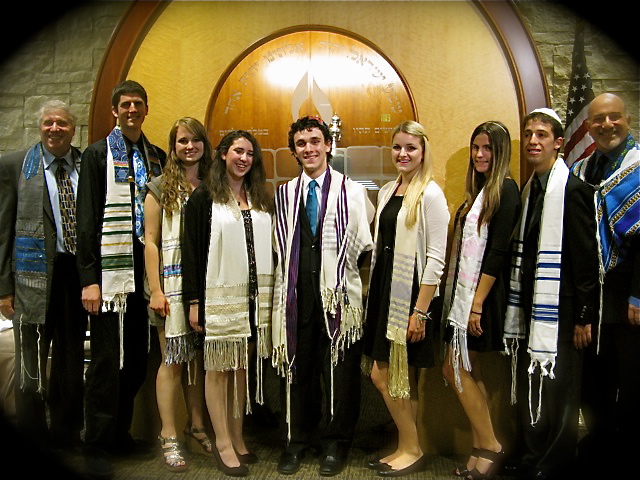
Confirmation is a reaffirmation of all that Congregation Or Ami is about. I wish you could have been there. On Friday night, 7 Or Ami teenagers – Jessa Cameron, Libby Coufal, Nathan Fried, Ben Ginsburg, Dakota Keller, Marissa Meyer, and Peter Young – stood on our bimah to articulate those values and experiences which bind them to our Jewish tradition and community. Listening to them speak, my eyes misted over.

I remember watching each one of them grow up, some since they were infants. We rabbis and cantor have the unique privilege of walking the journey with our teens as they matured into Jewish adulthood. We smile at memories of them singing with joy at Shabbat services, laughing as they learned in religious school, and chanting ancient words from an ancient scroll as they traversed the divide between childhood and adulthood. We watch them assume leadership roles in our LOMPTY temple youth group. We kvelled alongside their parents every step of the way. We remember the challenges of their teenage years, the sadness shared during family illness and loss, the joy of graduations and simchas.

Our national Reform movement, the Union for Reform Judaism, has told us that after years of post-Bar/Bat Mitzvah dropouts, the future of our Jewish people rests on our ability to engage our youth through high school. What makes for such engagement?

  • The creation of relationships between our youth beginning when they are young 
  • The developing of connections between our youth and their rabbis and cantor 
  • The use of social media to build community among our teens and their clergy 
  • Openness to asking deep questions, and to talking about difficult subjects 
  • Willingness to offer unconditional love and acceptance 

But mostly, as we listened to these teens confirm their connection to Torah, Jewish tradition and the Jewish people, I realized how deeply I love these future adults. So I gave them each my business card (complete with my email, facebook, twitter and cell phone number) with the promise that the relationships will endure and their rabbis and cantor will be there for them always.

I know we will remain in touch. Because Or Ami’s former teens – now adults – stay in touch regularly. We go out for coffee, to grab sushi, for help with a paper, and joyously, to plan the ceremony when they will bind their lives under a chuppah with their beloved.

Confirmation offered a glimpse into the future, and a peak into the past. All wrapped up in Judaism. That’s the work of being a rabbi; that’s the joy of the Confirmation ceremony.

Read more: In their own words: 7 Inspiring Teens Speak Out About Being Jews

7 Inspiring Teens Speak Out about Being Jews

Seven Congregation Or Ami teenagers – Jessa Cameron, Libby Coufal, Nathan Fried, Ben Ginsburg, Dakota Keller, Marissa Meyer, and Peter Young – confirmed their connection to and their faith in Torah, the Jewish tradition, the Jewish people, and God. We asked each to answer questions arising out of the Jewish experiences, and then each student shared a few answers during the Confirmation service.

Their answers represent a spectrum of belief and learning, sprinkled with poignant experiences in NFTY, at Camp and in synagogue.

The Questions:

  • What do you believe about God? 
  • When have you ever felt close to God? 
  • Why has LOMPTY (our temple youth group) been so important in your Jewish life? 
  • Why is Israel important to you? 
  • What does Judaism have to offer the world that is so important and valuable? 
  • What do you particularly like about being Jewish? 
  • What prayer is most meaningful to you and why? 
  • Who is your Jewish role model and why? 
  • What are the most important Jewish values to you and why? 
  • How does Judaism value Tikkun Olam? 
  • Why has Camp (Newman, Kutz, JCA Shalom or others) been so meaningful to me.

Their Answers (in order they were shared in the Confirmation Service):

#1: Libby Coufal: What do you particularly like about being Jewish and why?
Judaism is not only a religion to me, but also a way of life. My faith has helped shape me into the person I am today. I often find it easier to identify with other kids my age who are also Jewish because our morals and beliefs are similar. Through Jewish communities like Congregation Or Ami and BBYE, the B’nai Brith youth organization, I have made some of my closest friends, and consequently become even more involved with Judaism. Also, the ability to discuss questions openly like we did with Rabbi Kipnes in Confirmation Class has given me a more open mind about religion. Being Jewish can mean something different to everyone, yet we are all connected by a mutual faith that has withstood years of hardship and continues to be strong.

#2: Nathan Fried: What do you believe about God? When have you ever felt close to God?
I believe that God is watching everything we do whether it is moral or immoral. I also think that God can lead us to make a tough decision, that is very important. For example, God can help us as we struggle to decide whether or not we want to be friends with someone who is not friendly or who is doing dangerous things. In my challenging life, I have felt close to God about 3 to 4 times. The first time I felt close to God was at my Bar Mitzvah service. The second time I was close to God was when I needed some prayer to pass my driving test. Lastly, when I am driving alone, I feel close to God.

#3: Benjamin Ginsburg: What do you believe about God?
I see God’s face reflected in every human with whom I interact. God lives in the faces of my parents and my grandparents, plays the eyes of my brother and my teachers, and dances in the hearts of my friends and enemies. God gazes back at me every time I look in a mirror, and He acts as the standard that I measure my character and actions against. I see God as a travelling companion, one who knows the road better than we do, but is content to let us make the choices as to which path to take, providing advice when we need it most. And as we travel, we try to understand this mysterious guide, to comprehend a rationale different from our own, and yet similar. So we – God and I – walk, and talk, and argue like a married couple as we grow close enough to call each other “beloved.”

#4: Marissa Meyer: What do you particularly like about being Jewish?
Judaism has played a major role throughout my life in shaping a code of ethics I live by. Through discussions at Confirmation class about current events supplemented by Jewish virtues, I have acquired a way of assessing situations and acting morally. In Confirmation, we have also talked about adversity, tolerance, and even death, in order to make such topics easier to face and deal with. Judaism is my way of life.

#5: Jessa Cameron: Why has LoMPTY been so important in your Jewish life?
Three years ago, I became a board member of LoMPTY, Light of My People Temple Youth, Congregation Or Ami’s high school youth group. Through LoMPTY, I have had the opportunity to teach others to be caring and compassionate. Having served as both LoMPTY’s secretary/historian and now the Religious and Cultural Vice President, I have enjoyed a variety of roles in shaping our youth group. I have helped create lively youth lounge nights, inspiring Jewish services, and meaningful social action projects that benefit local children. Through LoMPTY, I have been able to help a variety of different organizations and address global issues. I have also learned how to be a Jewish leader in our community, a skill I will take with me as my life moves forward and I graduate out of LoMPTY.

#6: Nathan Fried: What prayer is most meaningful to you?
The most meaningful prayer to me is the Hashkeevaynu, a prayer we sing every night at NFTY SoCal regional youth events, just before we go to bed. I feel that the Hashkeevaynu prayer protects all of us during the night. Another reason I like it is because we are all holding hands and singing a song that is so beautiful. After that we all pass a kiss on the cheek all the way around the closing circle. Lastly, the words of the Hashkeevaynu make it the perfect prayer to end the night.

#7: Marissa Meyer: What prayer is most meaningful to you and why?
My favorite prayer is the Hashkeveinu prayer. I used to recite it every night before bed with my mom. Now, it has become one of my favorite parts of NFTY weekends. The entire community stands in a huge circle, after a long day, arms around each other, voices joining together in harmony, singing “Shelter us beneath your wings, oh Adonai; guard us from all harmful things, oh Adonai. Keep us safe throughout the night, till we wake with morning’s light.” This prayer resonates with me by wrapping me in the feeling of peace, safety, and community as I drift off to sleep. It brings me closer with Judaism.

#8: Benjamin Ginsburg: What do you particularly like about being Jewish?
I see Judaism as the concept of “Yisrael” – struggling with God. Reform Judaism promotes and encourages a tradition of questioning, a constant reinterpretation of stories that happened centuries in the past yet continue to play out in our lives. I feel that my Jewish background allows me to be open-minded to other philosophies and ideas, while grounding me in a set of moral values that color my reaction to people and events. In addition, I feel a deep sense of pride to be part of a community and a people that are one of the most influential forces in human history. I see myself as a child of a great and ancient family of survivors, and I welcome the responsibility of bearing the torch and bringing honor upon my people.

#9: Dakota Keller: Why Camp Kutz is so meaningful to me.
The Union for Reform Judaism’s Kutz Camp in Warwick, New York was so meaningful for me because I was able to be around so many young Jewish teenagers who were all close to my age. Getting a chance to meet a whole group of new teenagers was really exciting. By the end of my whole summer experience there I considered everyone there as my second family. I know that the friendships that I made, I will keep them for the rest of my life. I was closest with the girls in my cabin. We all had different life stories that we all were able to share with each other. I consider all them to be sisters to me. I still talk to them as often I can.

#10: Peter Young: Why traveling to Israel is so exciting for me?
This summer I will be traveling to Israel for four weeks with NFTY, the North American Federation of Temple Youth. I am so excited to be in Israel for such a long period of time. This trip will allow me to experience everything Israel has to offer, which is truly incredible. While on my trip I hope to find out more about both my religion and the culture of Israeli Jews as it compares to the culture of Jews here in the United States. I have never been to Israel and do not really know what to expect, however, I do know that it will be the experience of a lifetime.

#11: Benjamin Ginsburg: Why is JCA Shalom so important to you?
Every time I go to Camp JCA Shalom in Malibu, I have the time of my life. There is something wonderful and magical that is born within a group of teenagers forced to live together for two or three weeks. The friendships I have formed at JCA have been some of the best, closest, and most powerful connections in my adolescent life. The support of such a tight-knit family produces a sort of group therapy effect; helping me conquer several emotional mountains that adolescence threw at me, and has done the same for everyone else in the group. One of my friends from this group recently told me that I am one of the most inspiring people he has ever met. The love that I have given and received at JCA has made me a happier and kinder person.

#12: Dakota Keller: Why has LoMPTY been so important in your Jewish life?
LoMPTY, Congregation Or Ami’s High School youth group, has been so important in my Jewish life because it gives me a chance to learn about my religion in a fun and memorable experience. I have been a part of LoMPTY for the past 3 years and I have seen how much stronger it has become over the years. We have involved more people and we are hosting more events every year. I have enjoyed LoMPTY very much especially because it has given me a chance to meet a ton of new people. This year I became a member of LoMPTY board. Being able to help plan this year’s events made me grow as a person. I gained new leadership skills that I never had before.

#13: Marissa Meyer: Why has LOMPTY been so important in your Jewish life?
I stand before you as a changed person, a changed person because of LoMPTY, Congregation Or Ami’s high school youth group. I cannot fully describe to you the impact it has had on my life, but I will try. LoMPTY gave me the opportunity to grow as a leader and an individual, planning events, running programs, and socializing with a variety of people. LoMPTY is a safe place with the most loving and welcoming community. We laugh, we joke, we talk, and no matter what I know that other LoMPTYites are there for me. LoMPTY has been one of the single most influential experiences in my life, giving me the most incredible friendships and the confidence within myself to be me.

#14: Jessa Cameron: What prayer is most meaningful to you and why?
Shalom Rav is my favorite prayer. Calling for peace, Shalom Rav embodies what we all hope for; a peaceful world. One day, I want to take a more active role in making our world a better place. This prayer reminds me that Judaism strives for peace and that one day we will all be singing songs of freedom. Also, the music of Shalom Rav is one of my favorite melodies.

#15: Libby Coufal: What prayer is most meaningful to you and why?
To me, the Mi Sheberach is the most meaningful prayer. When my sister Leah was younger, she sang in our temple’s youth choir. Every time we went to pick her up, she would sing the Mi Shebeirach in the car on the whole ride home. The melody became a favorite of mine from a young age. To me, a prayer to offer support and strength to those who need it is one of the most important prayers a person can say. Part of the belonging to a Jewish congregation is being intertwined with others, and offering support and a sense of community to those around you. The Mi Sheberach helps us do just that.

#16: Jessa Cameron: How does Judaism value Tikkun Olam?
Tikkun Olam, or fixing the world, is such an important part of Judaism and of my life. Being part of Congregation Or Ami, I have had the opportunity to help dozens of organization, from Operation Gratitude, which provides care packages to our American troops overseas, to the Gentle Barn, which offers a home and healing for abused animals. Being Jewish, I have seen how important it is to give back to our community. I love having the opportunity to embrace our Jewish values while helping others to have a better life.

#17: Libby Coufal: How does Judaism value Tikkun Olam?
Growing up at Congregation Or Ami, I have truly learned the value of Tikkun Olam. Tikkun Olam is repairing the world, and it seems to me that it is one of the most important aspects of Judaism. I have been exposed to countless opportunities within my faith to help others, whether it is serving food at the local soup kitchen, sponsoring a foster child each year, or what has become most important to my family – helping organize Mitzvah Day. It seems that every idea Judaism teaches comes back to this idea of repairing the world. We are constantly using our Jewish faith to make this world a better place. For me, Tikkun Olam is one of the most meaningful and tangible aspects of Judaism.

#18: Peter Young: What prayer is most meaningful to you and why?
When I was young, I was very lucky to have three grandmothers who I loved very much. Unfortunately, two of them passed away before I became a Bar Mitzvah. I think about them on a daily basis and miss them very much. This is why the Kaddish is the most meaningful prayer to me. When I recite Kaddish, I think about all the people I know who have died and I think about how much I miss them. Reciting the Kaddish helps me feel a connection to them.

#19: Dakota Keller: What prayer is most meaningful to you and why?
The Kaddish has been a very important prayer for me because it gives me a chance to grieve over the passing of my mother. When I recite the Kaddish, it allows me to reflect back on all the wonderful memories that I share with her. This prayer allows me to connect with G-d and my mom Felicia in different ways. It lets my brother Michael, my dad Barry and me to celebrate my mom’s life and what great things she did for us. Especially during these next few weeks, it will be really important to have her on my mind, because the one-year anniversary of her passing is coming up. May her memory be for a blessing.

My Kid Walks Thru Auschwitz As An Auschwitz Survivor Speaks at Home


My son called from Krakow, Poland where he is participating in the March for the Living. One week witnessing the concentration camps in Poland, followed by one week in Israel celebrating the creative survival of the Jewish people. He recounted visiting Auschwitz and Birkenau, two of the worst concentration camps from the Nazi era.

I miss my son already, even though my wife and I made the decision that he must leave for these two weeks so that he can become a witness to the devastation of the Holocaust and vitality of Israel. And I’m proud of him. Because although my son traveled there with his closest friends, his days are spent walking beside an elderly survivor, holding her hand and listening to her stories. May he become the voice of the survivors as he hosts the memory of Auschwitz and the Nazi Holocaust.

Half a world away, I sit in Congregation Or Ami’s sanctuary, listening as Holocaust survivor Clara Knopfier tells her story. Recounting her dark journey from her home to Auschwitz, sharing her terrible experiences before and after. About brutality and heroism. About horrors and hunger. About hiding and working to the edge of death.

Our sanctuary is filled with adults, teens, community member, non-Jews and Jews alike. I have never seen the room sit in such attentive silence.

Like the elderly survivor who is transforming my son, Clara is extolling us: to be upstanders Not to stand idly by.

From Auschwitz to Calabasas, California, a similar process was happening We were becoming witnesses, carrying forth the story of the Shoah, the Holocaust, the murdered and the survivors. We were becoming vessels for the memory. May the memory be for a blessing.

Jewish Peoplehood Precedes Jewish Religion

Rabbi Donniel Hartman, President of Shalom Hartman Institute and Director of it’s Engaging Israel Project, blogs wisely about the essence of Judaism. We are a people first; religious faith and tradition secondarily. We learn this on Pesach, which he calls the “Independence Day of the Jewish People.”

…this [peoplehood] identity precedes our religious faith: [just as] Pesach precedes Shavuot. In a Jewish world where all too often one’s particular denomination or religious practice serves as a wall between oneself and fellow Jews, where the central question is often in whose house one does not eat, or in which synagogue one does not pray, the ethos of Pesach calls out and reminds one that Jewish peoplehood comes first. While Judaism does not stop with peoplehood and Sinai is a defining moment shaping the values and content of our national identity, the place of Pesach in our calendar [coming before Shavuot, the holiday celebrating the giving of Torah], I believe, gives it primacy. By this I mean that our Jewish values and practices must not only shape our collective identity but must be shaped by them.

Ours is a world where Conservative Jews belittle the religious sensibilities of Reform Jews, where Reform Jews deny the value of Orthodox Jews practices, where Orthodox reject the halakhic (Jewish legal) outlook of Conservative Jews (and don’t forget the Reconstructionist, Haredi, Renewal, Transdenominational and other Jews). In Israel, the divisions are deeper as they are tied into national politics – from marriage and burial, to the role of women, to the future of the West Bank settlements.

Rabbi Hartman continues:

Religion by its nature creates a God intoxication in which we strive to walk in the way of God, regardless of the consequences to ourselves and to others. The “heroic figure” of Abraham in Genesis 22 [the Akedah, Abraham’s almost sacrifice of Isaac] models such a religious pathos. 

Pesach, I believe, requires of us a peoplehood intoxication, a commitment not only to loyalty and love of the Jewish people but also to filter our individual religious commitments through the prism of what will serve our people as a whole. In the Ethics of our Fathers, according to Rabbi Nathan, Chapter 2, we are taught that Moses broke the Tablets of the Ten Commandments without Divine approval, because he was fearful that giving the Torah to the Jewish people at that time would condemn them as idolatrous sinners and consequently warrant their destruction. 

Declarations of Jewish unity will not suffice. Like Moses we have to ask ourselves: Which part of Torah we are willing to relinquish for the sake of the Jewish people, which truth or personal commitment, while dear to us, is too dear, and causes hurt and alienation? When doing so it is not a religious compromise but rather a religious value, a fulfillment of the dictates of our tradition which celebrates Pesach first and makes it the foundation of Sinai and not the opposite.

Rabbi Hartman’s wisdom rings true. Peoplehood, not lip serviced declarations, but real commitment to Jewish peoplehood might shine a way forward in the Jewish religious battles in Israel. May this reaffirmation of the primacy of Jewish peoplehood strengthen us as our brothers and sisters in Israel struggle to redefine the role of religion in public life, and we in America struggle to deepen our connections despite divergent opinions about Jewish living and Israeli politics.